Where to Buy Top Aluminium Windows and Doors in China?
Table of Contents
- Understanding Aluminium Window and Door Types and Standards
- Identifying China’s Main Manufacturing Regions
- Evaluating Manufacturers, Product Quality, and Certifications
- Comparing Factory, Distributor, and Online Purchasing Channels
- Verifying Quotes, Shipping, Installation, and After-Sales Support
- FAQS
- Conclusion
- Related Posts
Finding the right place to buy Aluminium Windows & Doors in China takes more than comparing prices online. The market includes large manufacturers, specialist fabricators, and trading companies, each offering different levels of customization and support. A supplier’s website may show slim frames and bright showrooms, but those images cannot confirm how a product performs. Ask for clear specifications, current product photographs, and details about the factory behind the quotation.
This guide explains how to identify suitable suppliers and assess their products before placing an order. Compare frame profiles, glass options, hardware, finishes, and stated performance ratings against your project requirements. Request samples where practical. Check how measurements are confirmed, how packaging protects glass during transport, and what installation guidance the supplier provides. These details matter when a shipment must fit an opening precisely and arrive without damaged corners or scratched coating.
Look beyond the lowest price. Review communication, production timelines, inspection procedures, and the written terms for warranty and after-sales support. If possible, verify business and quality documents independently, and arrange a factory visit or third-party inspection for larger orders. It takes effort. A polished catalogue is not proof of consistent production, and even careful buyers can miss a small specification change. Use the comparisons in this article to ask better questions, weigh practical evidence, and choose a supplier whose capabilities match your location, budget, and building needs.
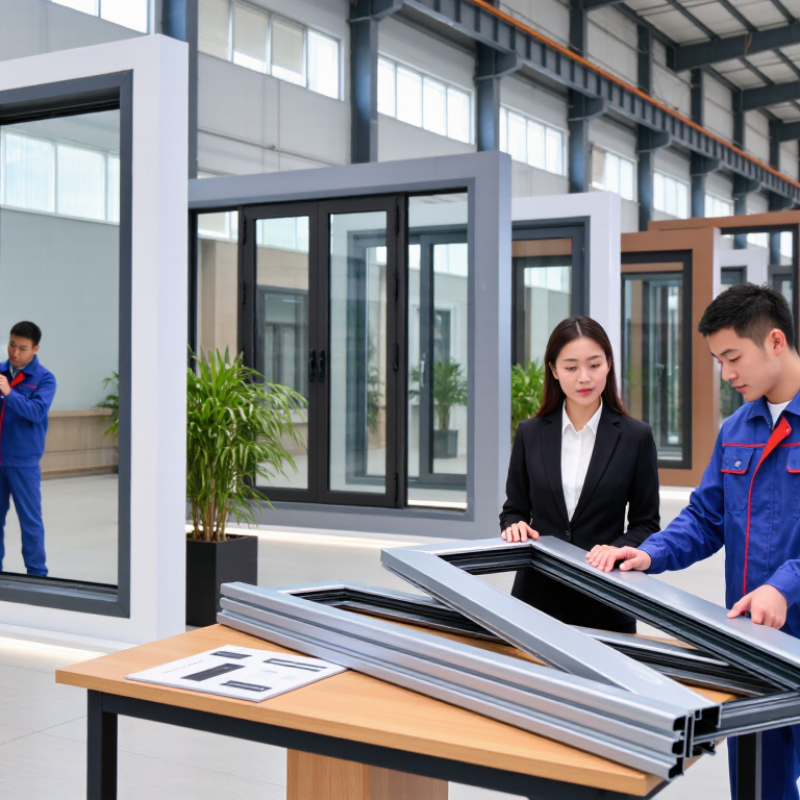
Understanding Aluminium Window and Door Types and Standards
Aluminium windows and doors vary by opening style, frame design, and intended use. Casement units open outward and can provide broad ventilation. Sliding units save space, but their tracks need regular cleaning. A thermal-break frame uses a non-metallic section between inner and outer aluminium profiles. This can reduce heat transfer, though glass choice and installation still matter. Details matter.
Tips: Ask for the exact profile depth, wall thickness, glazing build-up, and hardware specification. Request current test reports, not just a performance claim. For products made in China, check whether the supplier references GB/T 8478-2020, the national standard for aluminium alloy windows and doors. Confirm which product configuration was tested; results for one size or glass type may not apply to another.
Compare air leakage, water penetration, and wind resistance against your project’s climate and building requirements. A coastal site, for example, may need different corrosion protection from an inland home. Also confirm dimensions, opening direction, drainage details, and installation tolerances before production. A polished sample can look convincing, but it may behave differently once fitted on site. I would not treat the lowest quote as the best value until these details match in writing.
Identifying China’s Main Manufacturing Regions
China’s aluminium window and door suppliers are concentrated in several manufacturing regions. Foshan and Guangzhou, in Guangdong, are well known for finished systems, custom fabrication, and access to component suppliers. Shandong’s Linqu area has a strong aluminium-profile industry, so it can suit buyers sourcing profiles or comparing extrusion options. Jiangsu and Zhejiang also have manufacturers serving residential and commercial projects.
Start with the cluster.
A regional label is only a starting point, not proof of quality. Some suppliers make complete windows and doors; others assemble products from purchased profiles and hardware. Ask for drawings, profile-wall thickness, finish specifications, and details of thermal breaks. Compare corner joints, drainage holes, locking points, and gasket fit on a physical sample. Not every time. A polished showroom sample may not match routine production, so request photos or inspection records from a recent order. Check that test documents identify the same product configuration you plan to buy.
Tips
Shortlist suppliers by product type and region, then verify their factory role through a live video walkthrough or visit. Ask who controls extrusion, coating, assembly, and final inspection. Get packing details and lead times in writing, and have one sample checked before approving a larger order.
Evaluating Manufacturers, Product Quality, and Certifications
When comparing aluminium window and door manufacturers in China, look beyond a polished showroom. Ask who designs the profiles, assembles the units, and checks finished products. A factory visit, live or independent, can reveal whether work areas are organized and inspection records are current. Small details matter. Check profile thickness against the quotation, then inspect corner joints, drainage slots, and frame finishes on a sample. A smooth sample helps, but it cannot prove consistent production.
Request test reports for the exact product series and configuration you plan to order. Reports should identify the testing laboratory, date, model, and measured performance. Compare results for air leakage, water penetration, and wind resistance with the conditions at your project site. Ask for the certification’s scope and validity, too. Ask for proof. A certificate may cover one profile or size, not every custom assembly. Confirm the glass, hardware, and opening style match the tested specification.
Quality also depends on what happens after installation. Clarify packaging, delivery checks, replacement-part availability, and who handles technical questions. Request written tolerances and a sample inspection checklist before production begins. I would not treat a confident sales presentation as evidence; it is only one clue. Paperwork can be incomplete, and buyers sometimes miss that. That is a reason to verify, not to assume poor quality. Compare the documents with the physical sample and contract details.
Comparing Factory, Distributor, and Online Purchasing Channels
Buying aluminium windows and doors directly from a factory can offer more control over frame dimensions, glass options, and hardware. It suits projects with unusual openings or larger order volumes. Ask for section drawings, finish samples, and written specifications before paying a deposit. A factory price may look attractive, but freight, packaging, and installation support can change the real cost. Details matter.
A local distributor usually provides easier communication, product viewing, and help with measurements. You may pay more, yet resolving a damaged frame can be simpler when a nearby team handles delivery. Check whether the quoted price includes installation, removal of old frames, and sealing materials. Get the answer in writing.
Online purchasing makes it easy to compare configurations and request quotes from several suppliers. It also makes quality harder to judge from polished photographs. Request close-up images of corner joints, drainage paths, and locking points, plus test reports that match the proposed window system. Confirm sample and production lead times, payment milestones, and who inspects the goods before shipment. A small sample can still differ from a full production batch. Buyers sometimes focus on glass thickness and overlook the frame depth needed for the wall opening. That is an easy mistake to make.
Verifying Quotes, Shipping, Installation, and After-Sales Support
Where to Buy Top Aluminium Windows and Doors in China?
Verifying Quotes, Shipping, Installation, and After-Sales Support
A low quote can hide missing items. Compare the same specifications: frame depth, aluminium wall thickness, glass build-up, hardware, finish, and screens. Ask for shop drawings, sample finish chips, and a written list of exclusions. Get it in writing. Check whether measurements include installation, packaging, taxes, and spare parts. A polished spreadsheet can still miss a site condition, so confirm opening sizes and wall details before production.
Shipping needs its own checklist. UNCTAD’s Review of Maritime Transport 2024 reports that ships carry over 80% of global merchandise trade by volume. Confirm packing method, container loading plan, insurance, destination charges, and damage-claim steps. The World Bank’s 2023 Logistics Performance Index assessed 139 economies across six areas, including tracking and timeliness. Request a trackable schedule, not just an estimated arrival date. Ask who handles delays or damaged frames.
Installation can make good windows perform poorly. Define who prepares openings, installs flashing, anchors frames, seals joints, and tests drainage. Specify acceptable tolerances and provide site photos before delivery. For after-sales support, confirm warranty coverage, response times, and access to matching hardware or replacement glass. Keep the promises measurable. A vague “lifetime warranty” sounds reassuring, but may leave basic questions unanswered. Check again.
FAQS
Casement windows open outward and can provide broad airflow. Check the opening direction and available outdoor space.
Yes. Clean the tracks regularly so dust and debris do not obstruct movement. Small details matter.
It places a non-metallic section between inner and outer aluminium profiles. This can reduce heat transfer, but glass and installation also affect performance.
Compare profile depth, aluminium wall thickness, glazing build-up, hardware, and finish. Confirm dimensions and drainage details before production.
Request current reports for the exact product configuration. Check the model, test date, laboratory, and measured results. Ask for proof.
Look at corner joints, drainage slots, frame finish, and profile thickness. A polished sample is useful, but it cannot prove consistent production.
Check whether it includes packaging, installation, taxes, and spare parts. Ask for shop drawings and a written list of exclusions.
Confirm packing, container loading, insurance, tracking, and damage-claim steps. Define who prepares openings, anchors frames, seals joints, and tests drainage.
Confirm warranty coverage, response times, and access to matching hardware or replacement glass. A vague promise may leave practical questions unanswered. I would verify it again.
Conclusion
Finding the right Aluminium Windows & Doors in China starts with understanding the available designs, materials, performance features, and relevant product standards. Buyers should also consider China’s main manufacturing regions, since regional expertise, production capacity, and supply-chain access can vary. When assessing manufacturers, look beyond price: review product specifications, workmanship, quality-control processes, and applicable certifications, and request clear documentation to support any claims.
Purchasing options include buying directly from a factory, working through a distributor, or using an online supplier. Compare each channel for product range, communication, order flexibility, and service. Before committing, confirm that quotations specify materials, dimensions, finishes, packaging, and delivery terms. Also discuss shipping arrangements, installation requirements, warranty coverage, and after-sales support in writing. Careful checks at each stage can help buyers choose products and suppliers that suit their project, budget, and expectations.

Blog Tags: