B2B Sourcing Intelligence
Frequently Asked Questions by Global Window Buyers & Engineers
Technical, logistics, and manufacturing answers designed to resolve procurement queries for architects, importers, and general contractors.
What is the technical difference between standard aluminum windows and thermal break aluminum windows?
Standard aluminum profiles are continuous solid metal extrusions. Because aluminum is a highly conductive metal (thermal conductivity around 160-200 W/mK), non-thermal aluminum windows readily transfer heat or cold between the exterior and interior of a building, causing high energy loss and interior condensation. In contrast, thermal break aluminum windows feature a rigid structural insulating strip—most effectively Polyamide (PA66 GF25)—placed between the inner and outer aluminum profile chambers. This thermal isolator physically disrupts thermal conduction, dropping frame U-values by up to 70% and preventing surface condensation even during extreme winter freezing or hot summer climates.
Why is PA66 GF25 specified instead of PVC for polyamide thermal break strips?
Polyamide 66 reinforced with 25% short glass fibers (PA66 GF25) matches the exact coefficient of linear thermal expansion as structural aluminum alloy 6063-T5 (approx. 2.3 x 10⁻⁵ / K). When window profiles expand under intense solar heat or contract in freezing conditions, the aluminum and PA66 GF25 strip expand and contract at identical rates. Inexpensive PVC thermal breaks have a significantly different expansion rate, causing structural debonding, frame bowing, corner seal leakage, and complete seal failure within 2–5 years. ZENIC exclusively specifies PA66 GF25 structural strips for long-term mechanical stability.
What U-value performance ranges can ZENIC thermal break windows achieve?
Window thermal performance depends on frame depth, thermal break strip length, and insulated glass unit (IGU) configuration. Standard ZENIC 65mm thermal break systems fitted with double Low-E argon-filled glazing achieve U-values between 1.4 and 1.7 W/m²K. Our advanced 75mm and 90mm Super-Therm multi-cavity systems paired with triple Low-E warm-edge IGUs reach ultra-low U-values down to 1.1 W/m²K (U-Factor 0.19 BTU/h·ft²·°F), exceeding Passive House guidelines and ENERGY STAR Northern zone requirements.
What are the key cost components when importing thermal break aluminum windows from China?
When calculating total landed cost for imported fenestration, buyers must evaluate four primary factors:
1. Raw Material & Specification Level: Frame wall thickness (e.g., 1.6mm vs 2.0mm), profile depth, thermal break strip width, and surface coating type (standard RAL powder vs PVDF AAMA 2605).
2. Glazing Package: Double tempered vs triple laminated Low-E units with warm edge spacers and gas fill.
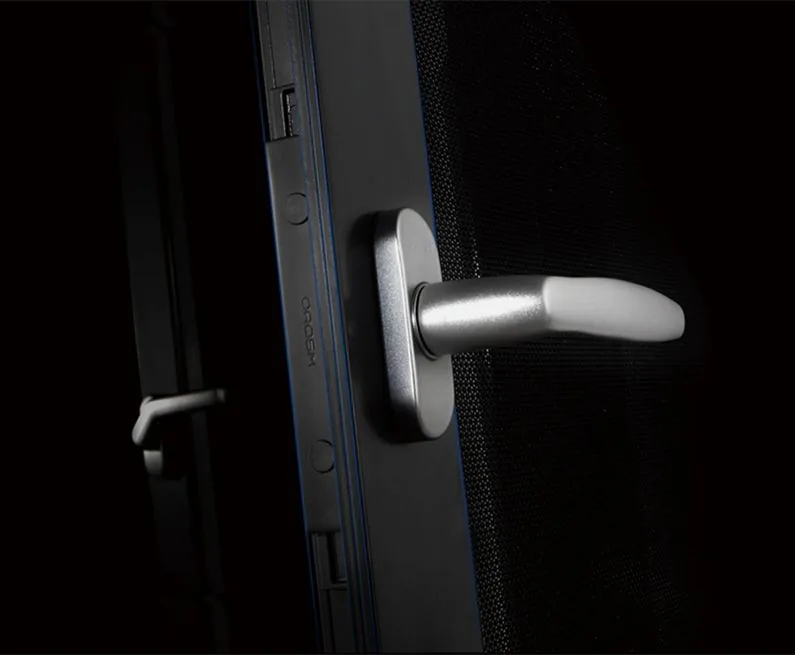
3. Hardware Grade: European multi-point gearboxes (Roto / Siegenia / Hoppe) vs heavy-duty proprietary ZENIC commercial hardware.
4. Freight & Logistics: FCL (Full Container Load) sea shipping, custom fumigation-free plywood crating, import tariffs, and local port clearance fees. ZENIC provides full FOB Foshan/Shenzhen or CIF/DDP cost breakdowns to assist your budget planning.
Can Zenic Window & Door Technology Co., Ltd. manufacture custom OEM profiles according to project drawings?
Yes. As a direct engineering manufacturer, we specialize in OEM and ODM profile customization. If your architectural project requires proprietary profile extrusions, custom sightlines, integrated sub-frame mounting flanges (such as nail fins for North American wood-frame construction), or specialized architectural colors, our engineering team creates custom extrusion dies, performs FEA structural simulations, and provides physical sample extrusions for sign-off prior to mass fabrication.
What is your minimum order quantity (MOQ) and production lead time?
Our standard MOQ is 50 window units or 100 square meters per project order. Mixed types—such as combining casement windows, tilt-and-turn units, fixed ribbon glass walls, and lift-and-slide doors—can be combined within one order to fulfill container volume. Typical manufacturing lead time is 15 to 25 calendar days following shop drawing approval and deposit receipt. Custom profile die creation adds approximately 10 to 14 days to initial tooling setup.
How are finished window units packed to guarantee zero glass breakage during transit?
Export packaging is critical for transoceanic freight. Every ZENIC window unit is wrapped in thick EPE shock-absorbent foam, reinforced with plastic corner guards, sealed in protective stretch film, and loaded upright into custom-built, heavy-duty fumigation-free plywood crates. Rubber isolation pads and high-tensile steel strapping prevent frame friction or shifting during ocean transit. Our glass damage rate during container freight remains below 0.05% across thousands of exported containers.
What warranties are provided on ZENIC thermal break window systems?
Zenic Window & Door Technology Co., Ltd. provides a comprehensive commercial warranty: 10 years warranty on 6063-T5 structural aluminum extrusions and PA66 thermal break integrity; 10 years warranty on AAMA 2605 / PVDF powder coating against peeling or fading; 5 years warranty on insulated glass units against seal failure or internal fogging; and 5 years warranty on mechanical multi-point operating hardware.