Why Choose Aluminium Doors With Windows for Global Buyers?
Global buyers are rethinking how doors perform, not merely how they look. An Aluminium Door With Window can combine daylight, ventilation, security, and long service life in one carefully engineered opening. Grand View Research identifies steady growth in the global aluminium doors market, supported by urban construction, renovation, and demand for durable building materials. Its market analysis also highlights aluminium’s design flexibility and resistance to corrosion.
Energy performance adds another reason for attention. The International Energy Agency reports that buildings consume about 30% of global energy and produce roughly 26% of energy-related emissions. A thermally broken aluminium frame, low-emissivity glass, and accurate installation can reduce heat transfer around busy entrances. The details matter. A narrow thermal bridge can undermine an otherwise impressive specification.
Gerd Götz, former Director General of European Aluminium, describes aluminium as “a permanent material.” That statement reflects its recyclability and long-term value, although it should not become a marketing shortcut. Aluminium is not automatically sustainable. Poor glazing, weak seals, or careless sourcing can reduce its advantages. Reports from Grand View Research and Mordor Intelligence show market growth, yet their figures differ because research methods and product definitions vary. That uncertainty deserves honesty.
For architects, importers, and homeowners, the decision should include U-values, air tightness, drainage, hardware quality, recycled content, and local climate exposure. A coastal project needs different protection from an inland residence. The right Aluminium Door With Window is therefore not simply attractive. It must perform quietly, open smoothly, and remain dependable after years of rain, sunlight, dust, and daily use.
What Are Aluminium Doors With Windows?
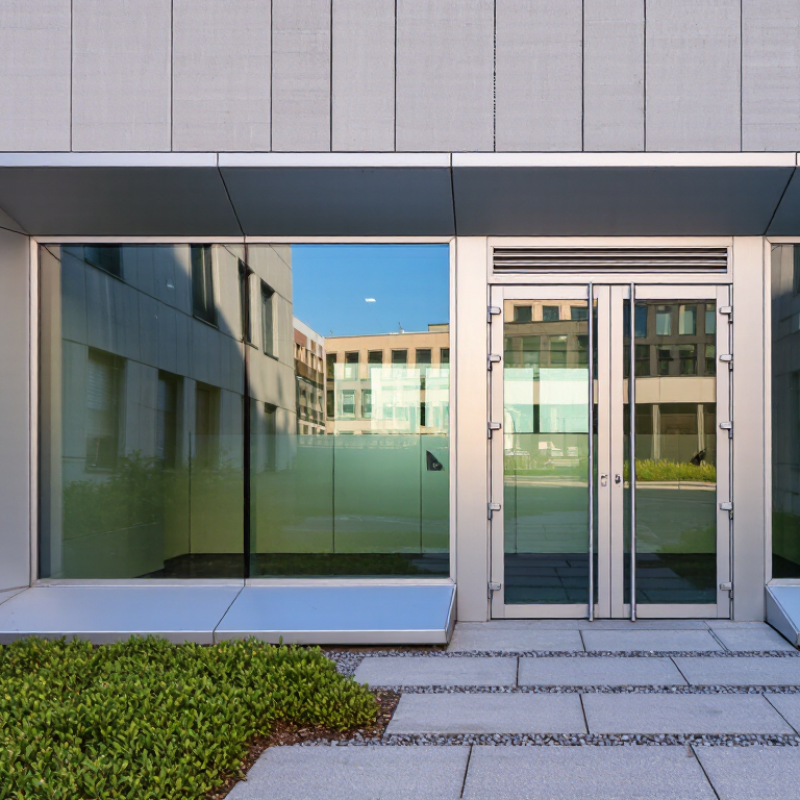
Aluminium doors with windows are door systems that combine a lightweight metal frame with one or more glazed panels. The frame supports the door leaf, hinges, locks, and surrounding structure. The glass admits daylight while maintaining a physical boundary between indoor and outdoor areas. Depending on the design, the window may fill most of the door or appear as a narrow vertical panel.
Aluminium is widely used because it resists corrosion, stays dimensionally stable, and needs limited maintenance. Powder-coated or anodised surfaces can support different architectural styles. Modern profiles may include thermal breaks, which reduce heat transfer through the frame. Double glazing can improve insulation and reduce outside noise. However, performance depends on the complete system, not aluminium alone. Glass thickness, seals, drainage, hardware, and installation quality all matter.
In real projects, these doors suit balconies, patios, entrances, offices, and commercial buildings. A properly fitted threshold helps manage rainwater and drafts. Safety glazing is important where impact is possible, especially near floor level. Buyers should check tested air, water, wind, and thermal performance for the intended climate. Local building codes also affect glass selection, emergency access, and accessibility. Some suppliers describe every aluminium door as energy efficient. That claim needs careful review. Even a strong product can perform poorly when measurements are inaccurate or the frame is installed without proper sealing.
How Do Aluminium Doors With Windows Work?
Aluminium doors with windows work through a coordinated frame, glass, seal, and hardware system. The aluminium frame carries the panel’s weight and transfers pressure to hinges and fixing points. A thermal break, usually made from insulating polyamide, separates the inner and outer frame sections. This reduces heat transfer across the metal. Double or triple glazing adds another insulation layer, while gaskets limit air and water movement. Small drainage channels guide rainwater away from the frame.
Performance depends on the complete assembly, not aluminium alone. The United Nations Environment Programme’s 2024 Global Status Report estimates that buildings consume 32% of global energy and create 34% of global carbon emissions. Therefore, low-emissivity glass, correct installation, and tight seals matter to buyers in hot or cold regions. The International Aluminium Institute also reports that about 75% of all aluminium ever produced remains in use, supporting its long service life and recycling value. Still, a slim frame can mislead. My early assumption was that thinner profiles always performed better; testing often proves otherwise.
Tips: Ask for U-value, air-tightness, water-tightness, and wind-load results. Check whether the glass specification matches the local climate. Inspect corner joints and drainage paths carefully. A beautiful door can still fail when installation is rushed.
Why Choose Aluminium Doors With Windows for Global Buyers?
Aluminium doors with windows combine a durable frame with glazing that allows daylight into a building. The chart compares representative thermal transmittance values for common glazing configurations. A lower U-value indicates better insulation and reduced heat transfer through the glazed section.
Representative glazing U-values are shown in W/m²·K: single clear glazing is approximately 5.8, double clear glazing approximately 2.8, double low-emissivity glazing approximately 1.4, and triple low-emissivity glazing approximately 0.8. Actual door performance varies with frame design, spacer systems, glass coatings, installation quality, and local climate requirements.
What Benefits Do They Offer Global Buyers?
Why Choose Aluminium Doors With Windows for Global Buyers?
For global buyers, aluminium doors with windows offer a practical balance of light, strength, and design flexibility. Large glass panels can brighten rooms while aluminium frames support wide openings without appearing heavy. In humid coastal areas, properly finished aluminium resists corrosion better than many untreated materials. In dry, dusty regions, smooth surfaces are easier to wipe clean. This matters when maintenance teams, tools, and replacement parts are not always nearby.
Thermal performance depends on more than the frame itself. Buyers should check for thermal breaks, suitable glazing, weather seals, and verified test data. Double glazing may improve indoor comfort in colder climates, while solar-control glass can reduce heat gain in warmer regions. Door sizes, opening directions, drainage details, and hardware should match local building practices. A low threshold may help accessibility, but it can also require careful water management during heavy rain.
Aluminium is durable, yet it is not maintenance-free. Hinges may need adjustment after frequent use, especially on large doors. Poor installation can cause air leakage, water entry, or difficult locking, even when the product is well designed. Global buyers should request clear specifications, installation guidance, warranty terms, and sample testing before placing large orders. Packaging also deserves attention. Scratched frames create avoidable costs. Reliable suppliers communicate honestly about lead times, tolerances, glazing options, and technical limits. That honesty is valuable.
Why Choose Aluminium Doors With Windows for Global Buyers? - What Benefits Do They Offer Global Buyers?
| Benefit or Data Dimension | Representative Data | Value for Global Buyers | Important Considerations |
|---|---|---|---|
| Material Density | Approximately 2.70 g/cm³ for aluminium | Provides a relatively lightweight frame while maintaining useful structural strength, helping with handling and installation. | Final door weight depends on frame size, glass thickness, hardware, and panel construction. |
| Thermal Performance | Typical whole-door U-values may range from approximately 1.2 to 2.8 W/m²·K when thermal breaks and insulating glazing are used. | Can support energy-efficient designs in cold, temperate, and hot climates. | Performance varies significantly with frame design, glazing, spacer, seals, installation, and local testing methods. |
| Glazing Options | Common configurations include double glazing around 20–32 mm overall thickness and triple glazing around 36–52 mm, depending on the system. | Allows buyers to balance insulation, daylight, solar control, safety, and sound reduction. | Glass selection should match the climate, building orientation, safety requirements, and applicable regional standards. |
| Durability and Corrosion Resistance | Anodized or powder-coated aluminium can provide durable protection when correctly specified and maintained. | Suitable for many urban, coastal, humid, and high-UV environments. | Coating class, surface preparation, drainage, and exposure conditions affect service life; coastal projects need appropriate specifications. |
| Expected Service Life | Well-designed and properly maintained aluminium door systems are commonly expected to serve for several decades; actual life depends on exposure and use. | Reduces the likelihood of frequent frame replacement and can lower long-term ownership costs. | Hardware, gaskets, rollers, and surface finishes may require earlier inspection or replacement than the main frame. |
| Design Flexibility | Supports hinged, sliding, folding, lift-and-slide, single, and multi-panel door configurations. | Makes it easier to adapt products to residential, commercial, hospitality, and renovation projects worldwide. | Large openings require project-specific structural calculations, reinforcement, hardware, and wind-load verification. |
| Daylight and Visibility | Slim aluminium sightlines can increase the glass-to-frame ratio compared with many bulkier frame designs. | Can improve daylight access, exterior views, and the visual openness of interiors. | Actual glass area is limited by structural requirements, safety regulations, thermal performance, and door operation. |
| Acoustic Performance | Door assemblies with suitable laminated or insulated glazing may achieve approximately 30–45 dB airborne sound insulation, depending on design and testing. | Can help reduce traffic, neighborhood, and general outdoor noise in urban applications. | The weakest component, including seals, thresholds, joints, and installation gaps, can limit the overall result. |
| Maintenance Requirements | Routine cleaning, drainage inspection, seal checks, and periodic hardware lubrication are generally required. | Low-maintenance finishes can reduce ongoing labor compared with materials that require regular painting. | Cleaning frequency should increase in coastal or polluted environments; abrasive cleaners should be avoided. |
| Recyclability | Aluminium can be recycled repeatedly without losing its fundamental material properties. | Supports circular-material strategies and may contribute to green-building objectives when responsible sourcing is documented. | Recycling benefits depend on collection systems, alloy separation, coatings, and verified project documentation. |
| International Specification Compatibility | Products may be specified and tested under regional requirements such as EN 14351-1, NFRC procedures, or local building codes. | Clear performance documentation can simplify comparison, approval, and procurement across different markets. | Buyers should confirm applicable requirements for wind load, water tightness, air permeability, thermal transmittance, safety glazing, and accessibility. |
Note: The figures shown are indicative industry ranges rather than guaranteed product values. Final performance should be confirmed through project-specific calculations, laboratory test reports, and the building regulations applicable to the destination market.
Which Design and Performance Factors Matter Most?
Why Choose Aluminium Doors With Windows for Global Buyers?
For global buyers, design must serve climate, use, and maintenance needs. Slim aluminium frames create wider glass areas and brighter interiors. Yet, attractive proportions alone do not guarantee comfort. The U.S. Department of Energy reports that windows can cause 25–30% of residential heating and cooling energy use. Therefore, buyers should compare U-value, solar heat gain coefficient, air leakage, and visible transmittance before choosing a system.
Thermal breaks are essential in cold regions. They reduce heat transfer through the aluminium frame. In hot climates, low-emissivity glass, suitable solar control, and external shading can limit indoor heat gain. According to the International Energy Agency, buildings consumed about 30% of global final energy in 2022. Small envelope decisions can influence long-term operating costs. Air leakage matters. Ask for tested performance under recognized standards, including water penetration, wind resistance, and repeated-cycle operation.
Design details also affect daily experience. Multi-point locks, smooth rollers, drainage paths, and replaceable seals support safer, quieter use. Powder-coated finishes can improve resistance to weathering, but color selection still deserves care in intense sunlight. Dark frames may absorb more heat. Looks can mislead. I would not rely only on laboratory figures, because installation quality, wall conditions, and local workmanship can weaken real performance. A careful buyer should request test reports, warranty terms, maintenance guidance, and project references from similar climates.
How Should Buyers Choose Suppliers and Maintain Them?
Global buyers should assess the supplier before admiring the door’s finish. The U.S. Department of Energy reports that windows can cause 25–30% of residential heating and cooling energy loss. Poorly sealed aluminium doors may worsen this problem. Ask suppliers for U-value, air-leakage, water-resistance, and solar-gain test results. Request reports from accredited laboratories, not only internal factory documents. Confirm the test standard, climate assumptions, and product configuration. A glass upgrade may change the published performance.
Factory capability matters as much as the sample. Check aluminium alloy specifications, coating thickness, corner-joint methods, drainage paths, and hardware warranties. The ISO 10077-1 standard provides a recognized method for calculating thermal transmittance. Suppliers should explain how their calculations match real installation conditions. Visit a production line when possible. Look for batch records, dimensional checks, and protective packaging. A polished sample can still mislead. This is where many buyers become too confident.
Maintenance should be written into the purchase contract. Clean frames and tracks with mild detergent and water every few months, especially near saltwater. Keep drainage holes open. Lubricate approved moving parts, but never block weep channels with grease. Inspect gaskets for shrinkage, cracking, or loose corners. The 2024 Global Status Report for Buildings and Construction highlights the sector’s continuing energy burden, making airtightness worth monitoring throughout service life. Keep installation photos and inspection records. I would also schedule a professional check after the first wet season; small alignment faults often appear then, although this step is easy to overlook.
FAQS
They combine a lightweight aluminium frame with one or more glazed panels. The glass brings daylight indoors. The frame supports hinges, locks, and seals. Some designs use a full-height glass panel. Others use a narrow vertical window.
They suit balconies, patios, entrances, offices, and commercial buildings. Large glass areas can make smaller rooms feel brighter. A properly fitted threshold helps reduce drafts and rainwater entry. The opening direction should match local space and building practices.
Aluminium resists corrosion and remains dimensionally stable. Smooth finishes are easy to wipe clean. This helps in coastal, dusty, or humid locations. Maintenance remains limited, but not zero. Hinges and locks may still need adjustment.
They can, but aluminium alone does not guarantee energy efficiency. Thermal breaks reduce heat transfer through the frame. Double glazing can improve insulation and reduce outdoor noise. Seals, glass, drainage, and installation also affect results. Claims should be checked carefully.
Double glazing can support comfort in colder regions. Low-emissivity or solar-control glass may reduce heat gain in warmer areas. External shading can help further. Safety glazing is important near floor level. The best choice depends on climate and building use.
Ask for U-value, solar heat gain, air leakage, and visible transmittance data. Request tested water and wind resistance. Repeated-cycle operation testing is also useful. Test reports matter. Attractive frames prove very little alone.
Poor measurements can create gaps around the frame. Incomplete sealing may cause drafts or water entry. Incorrect alignment can make locking difficult. Wall conditions also matter. A well-designed door can still perform poorly after careless installation.
Multi-point locks, durable hinges, smooth rollers, and replaceable seals support daily use. Large doors may need hinge adjustment after frequent operation. Drainage paths should remain clear. Scratched frames create unnecessary costs. I would plan maintenance before ordering.
Confirm dimensions, opening direction, glazing options, finishes, lead times, and tolerances. Review installation instructions and warranty terms. Check packaging for frame protection. Request samples when possible. A small sample can reveal an overlooked problem.
Conclusion
Aluminium doors with windows combine a durable aluminium frame with one or more glass panels, creating an entry solution that brings natural light, ventilation, and visual openness to residential and commercial spaces. An Aluminium Door With Window typically uses hinges, sliding tracks, locks, seals, and glazing systems to provide smooth operation, security, and weather resistance. For global buyers, key advantages include corrosion resistance, low maintenance, long service life, design flexibility, and compatibility with different climates and building styles.
When selecting these doors, buyers should consider frame strength, glass type, thermal insulation, sound control, drainage, ventilation, safety features, and the quality of surface finishes. Door size, opening direction, hardware compatibility, and installation requirements should also match the project’s location and building structure. Choosing a reliable supplier involves checking product specifications, customization capabilities, quality control, packaging, technical support, and after-sales service. Regular cleaning, inspection of seals and hardware, and timely adjustment of moving parts can help maintain performance and appearance for many years.

Blog Tags: