How to Choose Aluminium Sliding Doors in 2026?
Table of Contents
- Define Requirements: Opening Size, Climate, Accessibility, and Use Frequency
- Measure Thermal Efficiency: Target Uw ≤1.4 W/m²K with Low-E Double Glazing
- Verify Weather Ratings: EN 12207 Air, EN 12208 Water, and EN 12210 Wind
- Confirm Safety: Specify EN 12150 Toughened or Laminated Safety Glass
- Assess Durability: Demand 10,000+ Hardware Cycles and Corrosion Protection
- FAQS
- Conclusion
- Related Posts
Choosing Aluminium Sliding Doors in 2026 requires more than comparing frame colours and catalogue prices. The decision affects daylight, ventilation, security, thermal comfort, and long-term maintenance. Grand View Research reports continuing growth in the global aluminium doors and windows market, driven by renovation, energy efficiency, and urban construction. The International Energy Agency also highlights buildings as a major source of global energy demand. That makes glass size and frame performance practical concerns, not decorative details.
Look closely at the whole system. A slim frame may look elegant, but weak thermal breaks can create cold internal edges. Poor drainage may leave water beside the track after heavy rain. A large panel should glide smoothly, even when pushed with one hand. Check the declared U-value, air leakage, water resistance, acoustic rating, glass specification, and hardware warranty. Standards and test methods vary between markets. Read the evidence.
As aluminium fenestration specialist Neil Ginger has said, “Good design is not only what you see; it is what you experience every day.” That principle matters here. A door can photograph beautifully and still feel noisy, stiff, or draughty in winter. My own practical preference is to inspect a full-size display unit before ordering. Small details matter: handle reach, threshold height, wheel adjustment, and cleaning access. Energy reports support performance targets, but they cannot replace careful installation. Some product claims remain difficult to compare. That is where buyers should pause, question assumptions, and choose verified performance over impressive marketing.
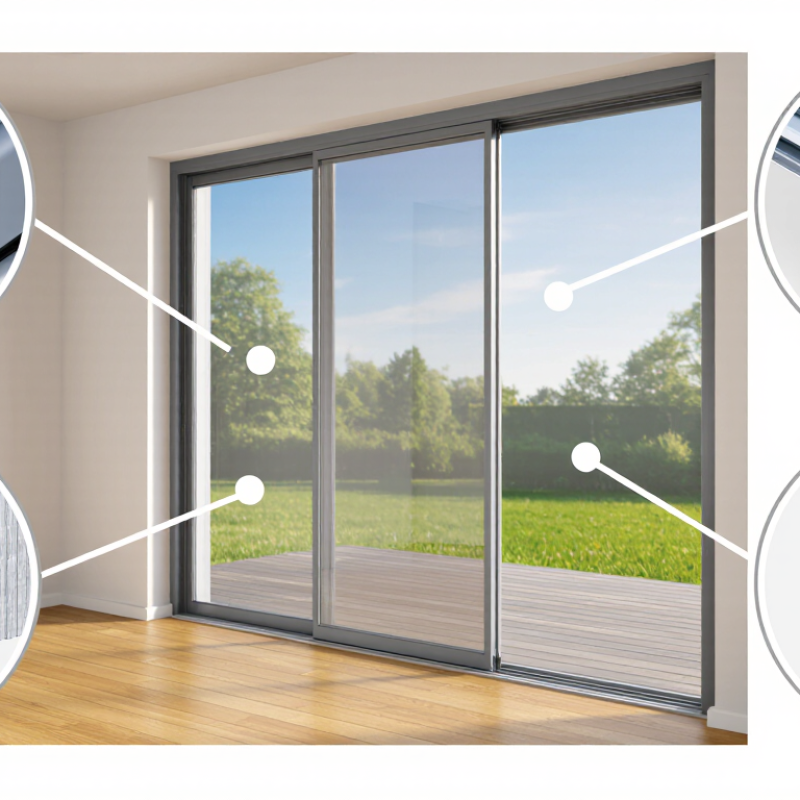
Define Requirements: Opening Size, Climate, Accessibility, and Use Frequency
How to Choose Aluminium Sliding Doors in 2026?
Define your requirements before comparing aluminium sliding doors. Measure the structural opening at three points: top, middle, and bottom. Record the smallest width and height. Uneven walls can affect installation. Consider how often the door will move each day. A busy kitchen needs durable rollers and a strong track. A rarely used balcony may need less complex hardware. Think about furniture, curtains, and the required opening width.
Climate matters more than appearance. In wet or coastal areas, choose corrosion-resistant finishes, reliable drainage, and tested weather seals. In cold regions, thermally improved frames can reduce condensation and indoor heat loss. Ask for verified air, water, and wind performance data. For accessibility, avoid tall thresholds where possible. Select handles that are easy to grip and place them within comfortable reach. A smoother track also helps people using mobility aids.
Tips: Check the frame depth, glass specification, drainage path, and warranty terms. Request installation details, not just product photographs. I have seen attractive doors fail because the opening was measured casually. That mistake is expensive. Also, oversized panels may look impressive but can feel heavy in daily use. Reconsider the maximum panel size after testing the handle, rollers, and locking action together. A local professional should confirm structural support and site conditions before ordering.
How to Choose Aluminium Sliding Doors in 2026?
Define requirements before comparing profiles, glazing, rollers, and locking systems: opening size, climate, accessibility, and use frequency.
Key Reference Values for Door Selection
Start with the required clear opening and threshold height when accessibility matters. For climate performance, the 2021 International Energy Conservation Code lists maximum vertical-fenestration U-factors of 0.40 Btu/h·ft²·°F for Climate Zones 1–3 and 0.30 for Climate Zones 4–8. The accessibility reference values shown are an 815 mm minimum clear opening, a 13 mm maximum threshold height, and 22.2 N maximum opening force.
Reference basis: 2010 ADA Standards for Accessible Design, Sections 309.4, 404.2.3, and 404.2.5; 2021 International Energy Conservation Code, Table R402.1.3. Verify the requirements applicable to the project location and building type.
Measure Thermal Efficiency: Target Uw ≤1.4 W/m²K with Low-E Double Glazing
When choosing aluminium sliding doors in 2026, treat Uw as a whole-door measurement. It includes the frame, glazing, spacer, and seals.
Target Uw ≤1.4 W/m²K with low-E double glazing. A lower number means less heat passes through the closed door.
Low-E coating reflects indoor heat toward the room. The U.S. Department of Energy reports that low-E windows can reduce energy loss through glass by about 30–50% compared with clear glazing. That improvement depends on correct installation.
Ask for the tested Uw value, not only the centre-glass Ug value. The International Energy Agency’s Buildings 2023 report states that buildings consume around 30% of global final energy. Better doors can therefore support measurable energy savings, although results vary with climate, orientation, and heating habits.
Check the thermal break depth in the aluminium frame. Inspect the sill, corner joints, and locking points for continuous seals. A strong glass specification cannot compensate for air leakage around the frame.
Request test evidence from an accredited laboratory, including thermal transmittance and air-permeability results.
The Passive House Institute uses much stricter window benchmarks, often around Uw 0.8 W/m²K, so 1.4 is practical but not exceptional.
I would still question an unusually low claim. Installation quality is often the weak link. A small site gap can undermine laboratory performance.
Verify Weather Ratings: EN 12207 Air, EN 12208 Water, and EN 12210 Wind
How to Choose Aluminium Sliding Doors in 2026?
Verify Weather Ratings: EN 12207 Air, EN 12208 Water, and EN 12210 Wind
A slim aluminium frame looks impressive, but appearance cannot show how it performs during a storm. Check the test report, not only the product brochure. EN 12207 measures air permeability, showing how much air passes through the closed door under pressure. Lower air leakage usually means better comfort and energy control. EN 12208 evaluates watertightness. This matters when wind pushes heavy rain against the track and frame. Ask for the tested water-pressure class and the installation conditions used during testing.
Wind performance is covered by EN 12210. The classification indicates how the door handles pressure, deflection, and repeated loading. Larger panels and exposed coastal elevations need more careful checking. A door tested successfully in a sheltered showroom may perform differently on a high-rise corner. Site height, opening size, drainage, and fixing quality all influence the result. They are easy to overlook.
Look for complete documentation with the tested configuration: glass thickness, rollers, seals, frame size, and locking system. Substituting glass later can change performance. Installation also deserves scrutiny. Even a strong door can leak through poorly sealed joints or a blocked drainage path. I have seen small level errors create frustrating water problems. Testing is essential, but it is not magic. Compare the ratings with your actual climate and exposure, then confirm that the installer can reproduce the tested details.
Confirm Safety: Specify EN 12150 Toughened or Laminated Safety Glass
How to Choose Aluminium Sliding Doors in 2026?
Glass safety matters. For an aluminium sliding door, specify thermally toughened safety glass manufactured to EN 12150. This glass is heat-treated to improve strength and resistance to sudden temperature changes. If broken, it usually crumbles into small pieces rather than sharp, large shards. Ask for the glass thickness, processing details, and compliance documents before approving the order.
Laminated safety glass is another practical choice, especially beside walkways, balconies, or low-level openings. Its internal film helps hold broken pieces together. Do not assume that “laminated” automatically means EN 12150 compliance, because EN 12150 mainly covers thermally toughened glass. Request the correct standard and test evidence for the selected glass construction. The frame, rollers, locks, and glass edges also need careful inspection. A strong pane cannot compensate for poor installation.
Check whether the supplier can explain impact performance in plain language. Glass safety should not depend on a sales promise. Look for visible edge damage, uneven seals, or movement during operation. Small defects matter. In my view, many buyers focus too much on glass appearance and overlook installation accuracy. That is a mistake, though it is easy to make. A qualified installer should confirm the opening size, drainage, packer position, and final door alignment. For exposed homes, consider wind loads and temperature changes as well.
Assess Durability: Demand 10,000+ Hardware Cycles and Corrosion Protection
How to Choose Aluminium Sliding Doors in 2026?
Durability should be tested, not guessed. Ask for evidence showing at least 10,000 hardware cycles under controlled conditions. This figure reflects repeated opening and closing, not occasional showroom use. Rollers, locks, handles, and stops should operate smoothly after testing. Look for test details, including load, cycle speed, and maintenance intervals. Without these details, the number means little.
Corrosion protection matters near coasts, pools, and humid cities. Check whether the aluminium has a durable surface treatment and sealed drainage channels. Inspect corners, screw points, and roller tracks carefully. These areas often collect water and salt. A qualified installer should explain how moisture leaves the frame. I have seen attractive doors fail early because drainage was treated as an afterthought. That mistake is worth remembering.
Tips: Slide the sample door repeatedly before purchase. Listen for grinding. Check for wobble. Request independent test documents, warranty terms, and replacement-part availability. Ask how often rollers need adjustment. A door may survive 10,000 cycles in a laboratory, yet perform poorly when installed unevenly. Measure the opening twice, and question any promise that sounds perfect.
FAQS
Measure the width and height at the top, middle, and bottom. Record the smallest measurements. Uneven walls can affect installation. Measure twice.
Wet or coastal locations need corrosion-resistant finishes, sealed drainage, and tested weather seals. Cold climates benefit from thermally improved frames. Appearance is not enough.
Target a whole-door Uw value of 1.4 W/m²K or lower. Low-E double glazing can reduce heat loss through glass. Ask for tested Uw evidence, not only centre-glass data.
Small gaps around the frame can cause air leakage. Strong glass cannot fix poor installation. Request details about sealing, corner joints, and sill connections.
Ask for evidence of at least 10,000 tested opening cycles. Review the load, speed, and maintenance conditions. Without those details, the number means little.
Check screw points, corners, drainage channels, and roller tracks. Salt and standing water often collect there. A qualified installer should explain the drainage route.
Choose a low threshold and a handle within comfortable reach. Test the rollers, handle, and lock together. A large panel may look impressive but feel heavy.
Review the frame depth, glass specification, drainage path, warranty, and replacement-part availability. Slide a sample door repeatedly. Listen for grinding. Check for wobble. A local professional should confirm structural support and site conditions.
Conclusion
Choosing Aluminium Sliding Doors in 2026 starts with clearly defining your project requirements. Consider the opening dimensions, local climate, accessibility needs, and how frequently the doors will be used. For thermal performance, aim for a Uw value of 1.4 W/m²K or lower, ideally combined with Low-E double glazing to reduce heat transfer and improve indoor comfort. These factors can help balance energy efficiency, ease of operation, and long-term usability.
Weather resistance and safety should also be verified before purchase. Look for test results based on EN 12207 for air permeability, EN 12208 for water tightness, and EN 12210 for wind resistance. Safety glazing should meet EN 12150 for toughened glass or use suitable laminated safety glass where additional protection is needed. Finally, assess durability by requesting hardware tested for at least 10,000 operating cycles, along with effective corrosion protection suited to the installation environment.

Blog Tags: