0%

Choosing the right Aluminium Washroom Door involves more than comparing finishes or catalogue prices. The door must survive constant opening, damp air, cleaning chemicals, and occasional careless use. It should also feel comfortable in the hand, close quietly, and protect privacy without creating a cramped entrance.

David M. Kincaid, a commercial washroom design consultant, says, “A successful washroom door is judged by its daily performance, not its showroom appearance.” This practical view matters. A slim aluminium frame may look modern, yet weak hinges can cause sagging within months. A beautiful anodised finish may also lose its appeal when unsuitable cleaners leave cloudy marks. Check the panel thickness, hinge capacity, lock quality, edge protection, and available replacement parts. Small details matter.

The best Aluminium Washroom Door depends on the building’s actual conditions. A busy airport needs stronger hardware than a quiet private office. A coastal site may require better corrosion resistance. Accessible layouts need suitable clear openings, easy-to-operate handles, and careful swing-space planning. Always confirm relevant local building and accessibility requirements with a qualified professional.

There is no perfect choice. Budget, durability, appearance, maintenance, and installation speed can conflict. That tension deserves honest attention. Ask how the door will perform after five years, not merely how it looks today. Request finish samples, inspect hardware in person, and seek documented product specifications. A reliable supplier should explain limitations clearly, rather than promise that one door suits every washroom.
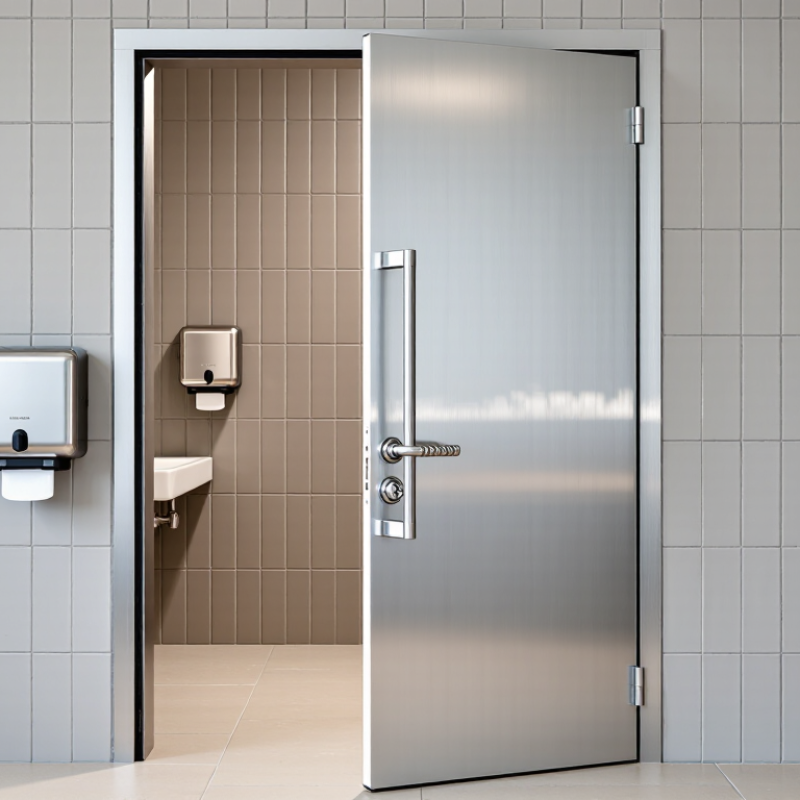
How to Choose the Best Aluminium Washroom Door?

Understand Aluminium Washroom Door Types and Core Features

How to Choose the Best Aluminium Washroom Door?

Understand Aluminium Washroom Door Types and Core Features

A hinged aluminium door suits a washroom with clear floor space and a conventional layout. Sliding doors save space, but their tracks need regular cleaning. Bi-fold designs can help in narrow rooms. Check the opening width, nearby fixtures, and whether the door swings into a busy corridor. Measure twice.

The frame is only part of the decision. Look for a corrosion-resistant finish, secure hinges, smooth edges, and a panel that feels rigid when pressed. For shared washrooms, consider a privacy lock with an occupied indicator and an emergency release. Ventilation matters, too: a suitable louvre can improve airflow, though it may reduce acoustic privacy.

Aluminium is lightweight and does not rust like ordinary steel, but hinges and fixings still need suitable protection in damp conditions. The International Aluminium Institute reports that recycled aluminium uses about 5% of the energy required for primary production. That is a material-level figure, not a guarantee about any specific door’s footprint. Ask suppliers about recycled content and finish durability. I would also test the handle at the actual site; paper specifications rarely reveal how a door feels after repeated use. Small detail. Check that water can drain away from the threshold instead of pooling beside the frame.

Assess Washroom Conditions, Traffic Levels, and Privacy Needs

A washroom door faces more than occasional splashes. Check whether the room stays humid, has working ventilation, or collects water near the threshold. Moisture matters. Aluminium resists rust, but hinges, fixings, and coatings also need to suit damp conditions. A poorly ventilated room may still show wear around these parts. Look closely at the floor and door frame before choosing a finish.

Estimate daily traffic, not just the number of rooms. A door in a busy café or school may be opened hundreds of times, so sturdy hinges and a dependable latch matter. Check that the door swings freely without striking basins, partitions, or people waiting outside. Easy-clean surfaces can save time, though textured finishes may hold grime in small grooves. That trade-off is easy to miss.

Privacy needs vary with the setting. For a changing area, inspect sightlines through gaps around the door and consider a closer-fitting design. A busy shared washroom may benefit from a clear occupied indicator and hardware that feels simple to use. Sound control is less predictable; a tight fit may reduce noise, but it will not create a soundproof room. It is tempting to focus on appearance, yet the daily feel of the door often matters more. That deserves a second look.

How to Choose the Best Aluminium Washroom Door? — Assess Washroom Conditions, Traffic Levels, and Privacy Needs

Washroom Condition or Need What to Assess Suitable Door Features Practical Selection Guidance
Frequent moisture and cleaning Humidity, splashing, ventilation, and the cleaning products used on the door and hardware. Corrosion-resistant aluminium profiles, a durable finish, and hardware suitable for damp environments. Check the finish and hardware-care instructions with the supplier. Good ventilation and regular drying can help reduce moisture-related wear.
Low-traffic washroom How often the door will be used and whether it is in a staff, residential, or lightly used public area. A standard-duty door and hinges matched to the door’s size and expected use. Avoid paying for heavy-duty hardware if the use case does not require it, but confirm that the specified components meet local building requirements.
High-traffic public washroom Peak-hour use, repeated opening and closing, and the likelihood of impact from carts or luggage. Commercial-duty hinges and latches, robust frame connections, and a finish that is practical to clean. Ask for hardware-cycle information where available, and check that replacement parts can be obtained. Set a maintenance schedule for hinges and latches.
Strong privacy requirement Expected visual privacy, door gaps, lock operation, and the facility’s accessibility and emergency-release requirements. Privacy lock with an emergency release, appropriate edge clearances, and a layout that limits direct sightlines. Review the complete cubicle or doorway assembly, not just the door leaf. Verify privacy, accessible operation, and emergency access against applicable local codes.
Limited natural light Whether daylight or visibility into the washroom is desirable, while maintaining appropriate privacy. Opaque panels for full visual privacy, or an approved translucent panel where the design permits it. Use translucent glazing only when it provides the required privacy and complies with safety-glazing rules applicable to the location.
High humidity with limited ventilation Condensation, stagnant air, and moisture around the frame, floor, and hardware. Moisture-tolerant materials and finishes, with a frame and threshold arrangement suited to the site. Address ventilation and drainage as part of the room design. A door alone cannot prevent condensation or moisture damage in a poorly ventilated space.
Accessible route or user needs Clear opening width, approach space, handle height, opening force, and maneuvering clearance. Easy-to-operate hardware and a door arrangement that supports the required clearances. Measure the finished opening and consult applicable accessibility standards and building codes before ordering.
Frequent impact or rough use Potential contact with cleaning equipment, mobility aids, or other objects, and the location of impact zones. Reinforced or suitably robust construction, protected edges where appropriate, and replaceable hardware. Specify the expected use to the supplier and confirm that the complete door, frame, and fixing system is appropriate for the site.
Easy cleaning and maintenance Cleaning frequency, access to fittings, and whether dirt or water can collect around joints. Smooth, cleanable surfaces; simple hardware geometry; and accessible fixings for inspection. Follow the finish manufacturer’s cleaning guidance. Avoid abrasive cleaners unless they are specifically approved for the surface.
Coastal or chemically demanding environment Salt exposure, pool chemicals, cleaning agents, and the potential for dissimilar metals to contact each other. Finishes and hardware selected for the specific exposure, with compatible fixings. Request written suitability guidance for the actual environment. “Aluminium” alone does not establish the corrosion resistance of every finish or component.

Selection note: Confirm dimensions, fire or safety requirements, accessibility, privacy, and installation details with the project designer or local authority before purchase.

Compare Materials, Profiles, Hardware, and Surface Finishes

A washroom door faces repeated splashes, cleaning chemicals, and frequent opening, so compare its frame, panel, and hardware as a system. Aluminium profiles resist moisture, but thin sections can flex around wide panels or heavy hinges. Ask for profile dimensions and reinforcement details, not just a “heavy-duty” label.

The International Aluminium Institute reports that aluminium recycling uses about 5% of the energy required for primary production. That is useful sourcing context, not proof that a finished door will last longer.

For hardware, check hinge load ratings, corrosion-resistant fixings, and whether the lock can be operated easily with wet hands. Stainless steel grade 316 may suit chloride-heavy or coastal environments; grade 304 may be adequate for many ordinary interiors.

Match the finish to cleaning routines. Anodizing gives a hard oxide surface, while powder coating offers more colour choices; either can disappoint if edges, cut-outs, or drainage details are poorly finished. Small detail. Request finish specifications and care instructions. A narrow profile can look clean, yet leave too little room for robust hardware. I would compare a sample in person, since colour and surface texture are difficult to judge on a screen. That takes time, but it can prevent an expensive mismatch.

Check Door Dimensions, Safety Standards, and Installation Requirements

Selecting an aluminium washroom door starts with the opening, not the advertised door size. Measure width and height at several points; older walls are rarely perfectly square. Record the finished floor level, frame depth, and space needed for hinges or sliding hardware. A nominal 900 mm door may provide less usable clearance once its frame and hardware are fitted.

Check accessibility and safety requirements before ordering. The U.S. Access Board’s 2010 ADA Standards specify at least 32 inches of clear opening for applicable doors, measured with the door open 90 degrees. They also limit the opening force for interior hinged doors to 5 pounds, with exceptions such as fire doors. Local rules may differ, so confirm which standards apply to the project. If the door includes glass, verify that the glazing meets the safety-glazing requirements for its location; appearance alone tells you little.

Installation details matter in a damp room. Confirm that the wall can support the frame, the threshold will not obstruct access, and the door clears nearby fixtures when opened. Use corrosion-resistant fixings suited to the surrounding materials, and follow the door-system manufacturer’s installation instructions. A careful measurement can still miss a sloped floor or hidden pipe. Check the opening on site before fabrication. That step is easy to skip.

Evaluate Durability, Maintenance, Warranty, and Total Cost

An aluminium washroom door should withstand repeated opening, damp air, and occasional knocks from carts or bags. Check the frame joints, hinge fixings, and bottom edge, where water and cleaning products can cause wear. A rigid frame helps, but door thickness alone does not prove strength. Ask how the hinges and latch are tested under frequent use. Small details matter.

Maintenance affects how well the door performs over time. Smooth, powder-coated surfaces are generally easier to wipe than textured finishes that trap grime. Inspect seals and hinges periodically, and use cleaners approved for the finish. Harsh chemicals can dull coatings or damage nearby components. There is no maintenance-free option. A useful warranty should state its duration, covered parts, and exclusions in clear language. Read the exclusions. Also check whether installation errors or routine wear are excluded, since those limits can change the value of the coverage.

Compare total cost, not just the purchase price. Include installation, hardware, cleaning needs, and likely replacement of worn seals or hinges. A lower-priced door may cost more if it needs frequent adjustment or has limited parts support. Request written specifications and warranty terms before comparing quotes. Estimates can still miss site conditions, such as uneven openings, so leave room for that uncertainty in the budget.

How to Choose the Best Aluminium Washroom Door?

Benchmark comparison of common washroom door materials using durability, maintenance, warranty coverage, and estimated 10-year ownership cost.

Aluminium offers a strong balance of corrosion resistance, low maintenance, and moderate ownership cost. The scores are indicative industry benchmarks: durability, maintenance, and warranty are rated from 0 to 100, while the cost index uses aluminium as the reference value of 100. Actual service life, warranty terms, and installation costs vary by specification, environment, and supplier.

FAQS

Which aluminium washroom door type suits a small room?

A sliding door saves floor space, but its track needs regular cleaning. A bi-fold door may also work in a narrow room.

What should I measure before choosing a door?

Check the opening width, nearby fixtures, and available swing space. Look for corridor traffic, too. Measure twice.

What features matter in a shared washroom door?

Consider a privacy lock with an occupied indicator and emergency release. Test whether the handle works comfortably with wet hands.

How can I judge whether an aluminium door is sturdy?

Ask about profile dimensions and reinforcement, especially for wide panels or heavy hinges. Press the panel and check for noticeable flex. A “heavy-duty” label alone tells little.

Which surface finish is suitable for a washroom?

Anodizing creates a hard oxide surface, while powder coating offers more colour choices. Check edges and cut-outs for consistent coverage. Finish details matter.

What hardware should I check in a damp washroom?

Look for suitable hinge ratings and corrosion-resistant fixings. Grade 316 stainless steel may suit coastal or chloride-heavy conditions; grade 304 may suit many ordinary interiors.

Can a louvre improve washroom ventilation?

A suitable louvre can improve airflow, but may reduce acoustic privacy. Consider the room layout and sound needs before deciding.

Does recycled aluminium mean a door has a smaller footprint?

Recycling aluminium reportedly uses about 5% of the energy needed for primary production. That material-level figure does not confirm a finished door’s footprint. Ask about recycled content.

What small installation details are easy to miss?

Check that water drains away from the threshold instead of pooling beside the frame. I would also test the handle on site; specifications cannot show how it feels after repeated use.

Conclusion

Choosing the best Aluminium Washroom Door begins with understanding the available door types and their core features, including strength, moisture resistance, ventilation, and privacy. Consider the washroom’s humidity, frequency of use, user traffic, and required level of privacy before selecting a suitable design. Sliding, hinged, or partition-style doors may each serve different layouts and functional needs.

When comparing options, examine the aluminium profiles, panel materials, hardware quality, and surface finishes to ensure they match the environment and appearance requirements. Accurate dimensions, safe operation, accessibility, and professional installation should also be confirmed in advance. Finally, evaluate long-term durability, cleaning needs, warranty coverage, and total cost rather than focusing only on the initial price. A well-selected Aluminium Washroom Door should provide reliable performance, easy maintenance, user safety, and lasting value in demanding washroom conditions.

Amelia

Amelia

Amelia is a professional marketing specialist with a strong understanding of product strategy, customer needs, and digital communication. As a key contributor to the company’s content team, she regularly updates the corporate website with practical, well-researched blog articles that help readers......