Choosing an Aluminum Door is rarely just a matter of appearance. Buyers must consider climate, security, traffic, maintenance, and installation quality. A slim black frame may look elegant in a showroom, yet perform poorly beside salty coastal air. A heavy entrance system may feel secure, but become unnecessary for a quiet interior hallway.
Industry specialist Joe Altieri explains, “The right door balances design, performance, and the way people actually use the space.” That principle guides this overview of the top 10 types of aluminum doors for buyers. The selection includes sliding, hinged, folding, pivot, French, bi-fold, louvered, thermal-break, fire-rated, and automatic systems. Each type solves a different problem.
Some choices are obvious. Others are not.
For example, sliding doors can open a room toward a garden, while folding doors create a wider passage for entertaining. Thermal-break models help reduce heat transfer, but they may cost more upfront. Automatic aluminum doors improve accessibility in busy buildings, though their sensors and operators require careful servicing. These practical differences matter more than a polished product photograph.
This guide focuses on visible details and hidden performance. We examine frame strength, glass compatibility, weather seals, hardware, energy behavior, and installation risks. No ranking is universal. A door that works well in a dry apartment may disappoint in a humid commercial entrance. That uncertainty deserves attention. Buyers should compare specifications, ask for tested performance data, and inspect samples before committing. Even experienced purchasers can overlook small gaps, weak rollers, or unsuitable finishes. A thoughtful Aluminum Door decision is not perfect, but it is informed, measurable, and suited to real daily use.
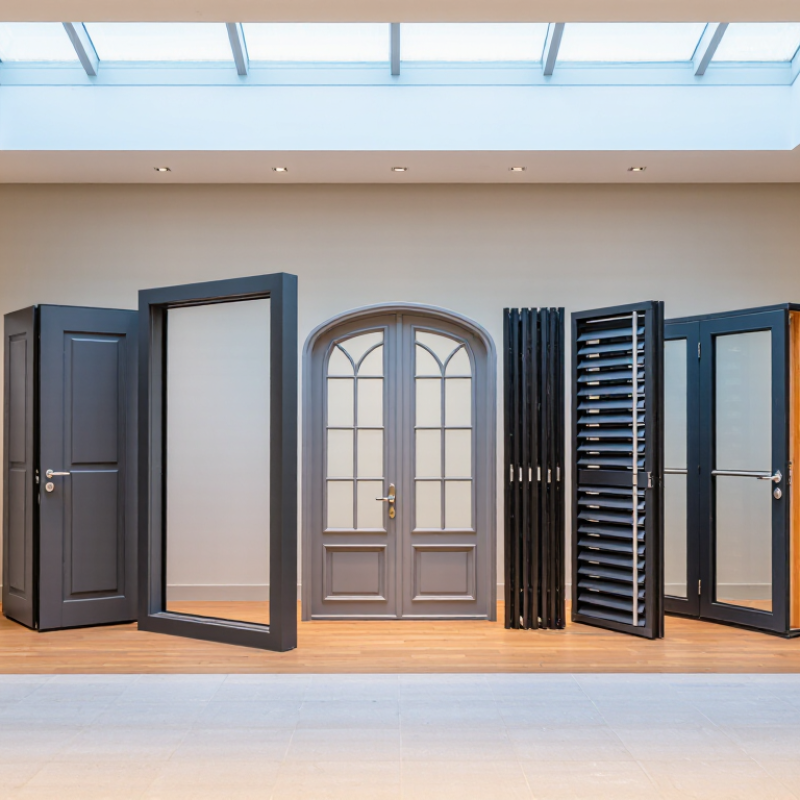
What Are Aluminum Doors and Why Do Buyers Choose Them?
Aluminum doors use extruded metal frames to hold glass, insulated panels, or other infill materials. The frame is typically joined with corner keys or mechanical fasteners, then fitted with hinges, locks, and weather seals. Aluminum is strong for its weight, so profiles can remain relatively slim while supporting broad glass panels. That matters. More daylight can enter a room, and the doorway may feel less visually heavy.
Buyers often choose aluminum for its durability and modest upkeep. It does not swell like untreated wood when exposed to moisture, though finishes can still scratch or fade over time. For comfort, ask whether the door includes a thermal break, which reduces heat transfer through the frame. Check the glazing, seals, and installation details too; a well-made door can still draft if fitted poorly. One honest trade-off: aluminum conducts heat, and basic models may feel cold in winter or warm in direct sun. Compare the full assembly, not just the frame material, and consider your climate, opening size, and maintenance expectations before choosing.
Top 10 Types of Aluminum Doors for Buyers? - What Are Aluminum Doors and Why Do Buyers Choose Them?
| Door Type | How It Opens | Typical Applications | Key Advantages | Buyer Considerations |
|---|---|---|---|---|
| Sliding Aluminum Door | One or more panels slide horizontally along tracks. | Patios, balconies, garden rooms, and wide residential openings. | Saves swing space and can provide broad glazed views. | Check track drainage, screen options, air-sealing details, and maintenance access. |
| Hinged Aluminum Door | A single panel swings inward or outward on side hinges. | Home entrances, utility rooms, offices, and secondary exits. | Simple operation and a familiar format that suits many openings. | Allow clearance for the swing and confirm hinge, lock, and threshold specifications. |
| Bi-Fold Aluminum Door | Multiple hinged panels fold and stack to one or both sides. | Patios, restaurants, event spaces, and large interior openings. | Can open a large portion of the doorway when the panels are folded back. | Requires room for the folded stack; review panel weight, track support, and weather seals. |
| Pivot Aluminum Door | The panel rotates on pivot hardware positioned away from its side edge. | Modern home entrances, galleries, and commercial feature entrances. | Can accommodate large, visually distinctive door panels. | Check opening clearance, floor and headroom, hardware capacity, and closing control. |
| French Aluminum Door | Two hinged panels meet in the center and swing open. | Balconies, gardens, dining rooms, and formal entrances. | Provides a wide opening and a balanced, symmetrical appearance. | Consider the swing area, center meeting seal, and whether one or both panels will be active. |
| Lift-and-Slide Aluminum Door | A handle lifts the panel slightly off its seals so it can slide; lowering it reseals the panel. | Large residential openings and locations needing a substantial sliding panel. | Designed to move heavy panels while providing compression sealing when closed. | Confirm panel limits, threshold design, compatible hardware, and installation requirements. |
| Tilt-and-Turn Aluminum Door | Hardware allows the panel to tilt inward for ventilation or swing inward for access. | European-style residential buildings, balconies, and some commercial interiors. | Offers two opening modes in one framed unit. | Check hardware operation, opening clearance, and suitability for the intended local codes. |
| Revolving Aluminum Door | Several leaves rotate around a central axis within a circular enclosure. | Hotels, offices, airports, and other high-traffic building entrances. | Helps manage pedestrian flow and can reduce direct drafts through an entrance. | Requires suitable space, regular maintenance, and an adjacent accessible swing-door route where required. |
| Louvered Aluminum Door | A hinged or sliding panel contains angled slats that allow airflow. | Plant rooms, service areas, utility spaces, and ventilated enclosures. | Allows ventilation while screening a space from direct view. | Slats reduce visual and weather protection; confirm airflow needs and any fire or security requirements. |
| Fire-Rated Aluminum Door Assembly | Typically operates as a hinged door within a tested, fire-rated frame and hardware system. | Commercial buildings, corridors, and other locations specified by fire-safety plans. | Can provide a certified fire-resistance solution when supplied as a compliant assembly. | Rating depends on the tested assembly, glazing, hardware, installation, and applicable local regulations. |
What are aluminum doors? They are door assemblies that use aluminum frames and, depending on the design, aluminum panels, glass, or other infill materials. Buyers often choose them for their corrosion resistance, relatively low maintenance, design flexibility, and ability to support slender framed glazing. Performance varies by system, glazing, hardware, installation, and local climate.
FAQS
They use extruded aluminum frames with glass, insulated panels, or other infill materials. Hinges, locks, and weather seals complete the assembly.
Aluminum is strong, relatively light, and resistant to moisture-related swelling. Slim frames can support wide glass panels and bring in more daylight.
They usually need modest upkeep. However, finishes may scratch or fade, especially under harsh sunlight or frequent use.
They can be, but the frame is not the whole story. Look for thermal breaks, quality glazing, tight seals, and careful installation.
Aluminum conducts heat. Basic frames may feel cold in winter or warm in direct sun.
Sliding doors move along a track and avoid a wide swing area. Lift-and-slide doors help large panels move more smoothly.
Folding doors can create a broad connection to a garden or patio. Their folded panels still occupy space at one side.
Measure the opening and consider daily movement, wind exposure, traffic, and available clearance. A beautiful door may still feel awkward.
Check reinforced panels, locking points, frame strength, and installation quality. The material alone does not guarantee reliable security.
Conclusion
Aluminum doors are lightweight, durable, corrosion-resistant, and easy to maintain, making them a practical choice for residential, commercial, and industrial buildings. Buyers can choose from many designs, including sliding doors, folding doors, hinged doors, pivot doors, French doors, bi-fold doors, automatic doors, fire-rated doors, insulated doors, and glass-panel doors. Each type offers different advantages in terms of space efficiency, appearance, ventilation, security, and accessibility.
When comparing an Aluminum Door, buyers should consider the building’s purpose, available space, climate, traffic level, and desired energy performance. Important features include frame strength, glass quality, thermal insulation, weather resistance, locking systems, installation requirements, and maintenance needs. Before purchasing, it is also essential to check product dimensions, surface finishes, safety features, warranty terms, and long-term operating costs. By matching the door type and features with the project’s specific requirements, buyers can achieve a reliable, attractive, and functional entrance solution.