Featured CE Certified Aluminium Door & Window Systems
Precision-crafted fenestration solutions tested for wind load resistance, thermal insulation, and soundproof integrity across residential, commercial, and industrial developments.
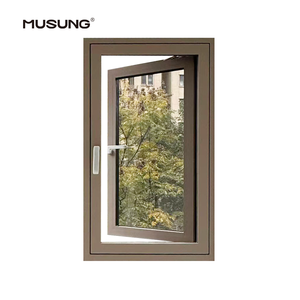
Thermal Break Aluminum Slimline Ultra Narrow Frame Windows and Doors Double Glazed Glass Casement Windows
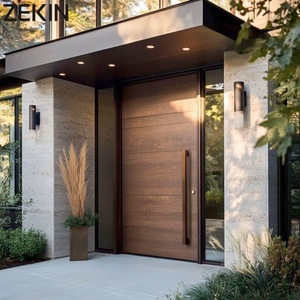
ZEKIN Modern American Design House Heat Insulation Fire Prevention Luxury Entrance Pivot Door House Front Entry Doors
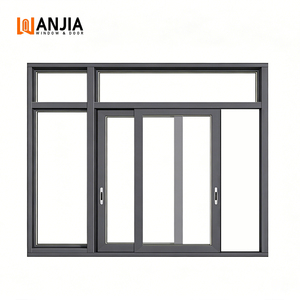
WANJIA Hurricane Impact Resistance Sliding Windows Aluminium Windows And Doors Others Sliding Window For House
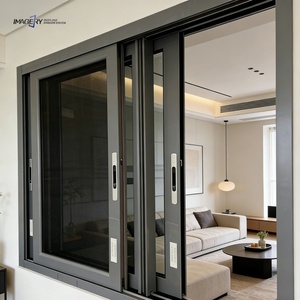
Imagery Non-thermal Break Aluminum Sliding Window Tempered Glass Soundproof with Anti-mosquito Screen for House
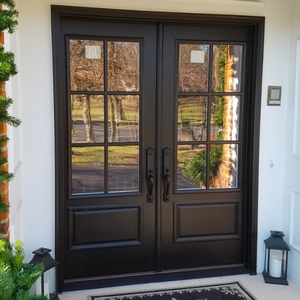
Custom Villa Main Entrance Door Aluminum Casement Door Double Tempered Glass Thermal Insulation For Front Entry Doors
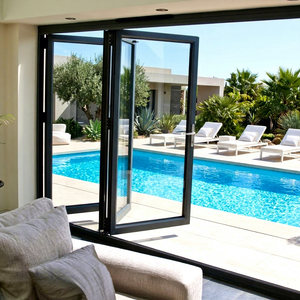
Double Glazing Hurricane Impact Bi-folding Aluminum Patio Folding Door For Residential
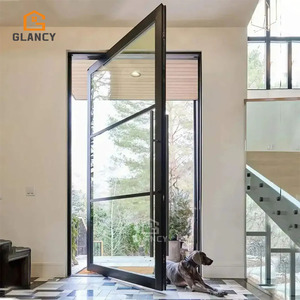
Customized Size Modern Pivot Doors Aluminium External Glass Door Single Patio Door Glass Outdoor for Houses Villa US Australia
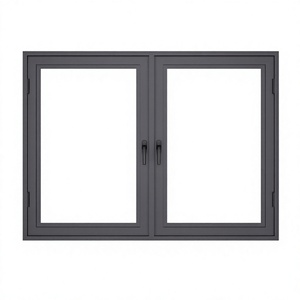
Customized Aluminum Casement Window Pitched Roof Self Opening Vent Window
Engineering CE Certified Aluminium Alloy Doors for Global Architecture
In modern fenestration engineering, achieving official CE Marking under EN 14351-1 requires strict adherence to structural integrity, thermal transmission controls, air permeability, and water tightness. Qualified suppliers must deliver rigorous testing metrics, verified mill test reports, and factory production control (FPC) audit trails.
1. Raw Alloy Metallurgy & Structural Profile Depth
High-performance aluminium doors start with primary 6063-T5 virgin alloy billets. Unlike recycled aluminium scrap which introduces microscopic impurities and degrades structural fatigue resistance, 6063-T5 provides superior tensile strength ($\ge 160 \text{ MPa}$) and yield strength ($\ge 110 \text{ MPa}$).
Frame profiles specified for heavy-duty commercial entrances and high-rise residential sliding systems feature nominal wall thicknesses ranging from 2.0 mm to 3.0 mm. This structural rigidity allows systems to resist wind load pressures up to 1,000 N ($\approx \text{Class C5}$ according to EN 12210 standard).
- Primary 6063-T5 Extrusions: Zero recycled scrap, guaranteeing uniform anodizing and powder coating adhesion.
- Polyamide PA66-GF25 Thermal Strips: Reinforced with 25% glass fiber, matching the thermal expansion coefficient of aluminium to prevent delamination over decades of operational thermal stress.
- Corner Joint Reinforcement: Dual-component corner crimping combined with injected structural corner adhesive ensures liquid-tight frame corners.
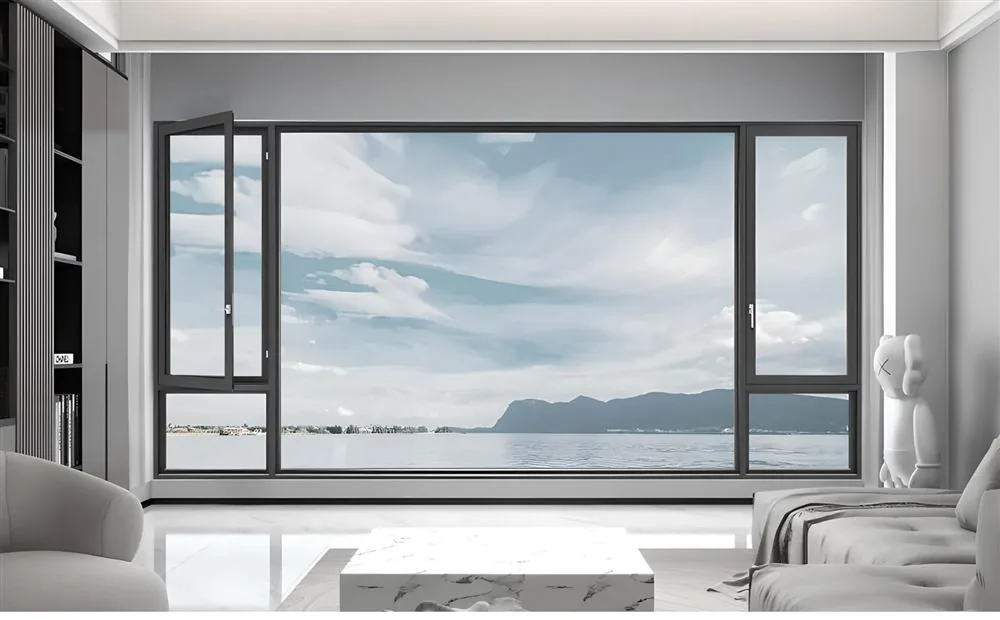
EN 14351-1 Certification
Fully certified under European Harmonized Standards for exterior pedestrian door sets and windows, guaranteeing compliance for commercial tenders throughout the European Economic Area.
EPDM Triple-Gasket Sealing
Continuous automotive-grade EPDM synthetic rubber gaskets eliminate air leakage (EN 12207 Class 4) and prevent water penetration even under 600 Pa storm pressure testing.
Qualicoat Class 2 Finishes
Fluorocarbon PVDF and architectural powder coatings pass 1,000-hour salt spray erosion tests, offering superior UV resistance in high-salinity coastal environments.
Technical Performance Benchmarks (CE Standard Matrix)
Comparative performance metrics for Zenic Window & Door system architectural configurations specified for export procurement.
| Performance Parameter | Test Standard | Achieved Value / Rating | Engineering Value for Specifiers |
|---|---|---|---|
| Thermal Transmittance ($U_{\text{w}}$) | EN ISO 10077-2 | 1.1 to 1.6 W/m²K | Cuts building operational HVAC energy load; satisfies Net-Zero Energy requirements. |
| Air Permeability | EN 12207 | Class 4 (600 Pa) | Prevents draft airflow, dust filtration, and airborne micro-pollutants inside the envelope. |
| Water Tightness | EN 12208 | Class E900 (900 Pa) | Ensures absolute zero water ingress during severe hurricane driving rain conditions. |
| Wind Load Resistance | EN 12210 | Class C5 / B5 (2000 Pa) | Structural security for coastal villas, high-rise residential towers, and exposed façades. |
| Acoustic Insulation ($R_{\text{w}}$) | EN ISO 717-1 | 38 dB to 48 dB | Attenuates urban noise, airport proximity rumble, and heavy traffic rumble. |
| Operating Cycle Durability | EN 12400 | Class 8 (200,000 Cycles) | Long-term hardware durability for high-frequency hotel, office, and luxury villa usage. |
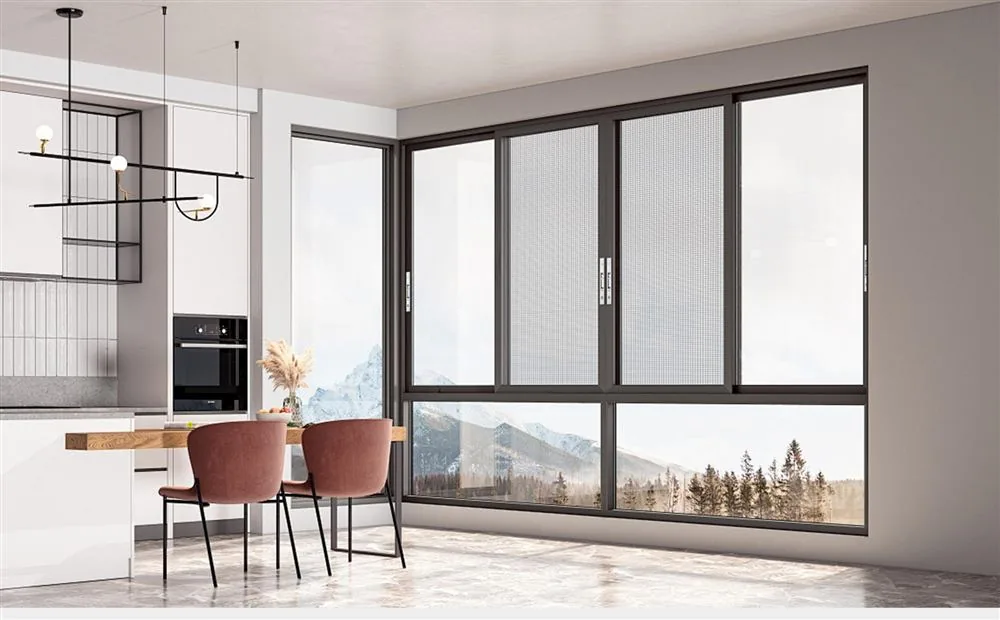
Future Procurement Trends in Aluminium Door Sourcing (2025–2030)
The global architectural opening hardware and fenestration sector is undergoing a massive shift. General contractors, real estate developers, and wholesale distributors are re-evaluating supply chains to meet stricter international building codes and sustainability metrics.
- Mandatory Environmental Product Declarations (EPD): Buyers across Europe and North America now demand carbon footprint transparency. Future procurement contracts heavily weigh low-carbon recycled content extruded using hydroelectric power.
- BIM Level 2 & Digital Twin Integration: Commercial project tenders require manufacturers to furnish parametric 3D BIM models (.RVT / .IFC) complete with precise thermal data, frame nodes, and hardware anchoring details.
- Modular Prefabricated Glazing Units: To mitigate sky-high job-site labor costs in North America, Australia, and Western Europe, buyers are shifting toward pre-glazed, factory-assembled door modules that plug directly into rough structural openings.
- Supply Chain Auditability & Traceability: Ensuring compliance with international labor, raw material sourcing, and quality management protocols (ISO 9001:2015) has become a primary metric during OEM vendor qualification.
Next-Gen Technological Developments in Architectural Aluminium Systems
Technological innovation in aluminium door manufacturing focuses on pushing aesthetic limits while elevating functional thermal performance and security integration.
Ultra-Narrow Sightline Engineering
Structural slimline frames (interlock vertical sightlines as narrow as 18 mm to 25 mm) maximize natural light transmittance without sacrificing structural load capability under high wind pressure.
Motorized Smart Access & Automation
Concealed magnetic levitation drives and smart home integration allow heavy sliding panels up to 500 kg to glide effortlessly via smartphone control, biometric sensors, or wall switches.
Concealed Sub-Frame Drainage Systems
Hidden step-down threshold drainage tracks completely eliminate visible face weep-hole covers, preventing water backflow while achieving clean, modern architectural aesthetics.
Foshan Manufacturing Depth: The Zenic Advantage
Situated in Foshan, Guangdong—the world’s premiere hub for aluminium profile extrusion and architectural hardware—Zenic Window & Door Technology Co., Ltd. brings over 15 years of continuous manufacturing experience to global export projects.
Our 20,000 square meter standardized production base integrates full-process CNC precision cutting centers, automatic corner crimping lines, dynamic structural silicone glazing stations, and strict multi-gate quality assurance controls.
- End-to-End In-House Production: From drawing optimization, aluminum extrusion processing, and thermal break assembly to double-glazed unit (IGU) insertion and final testing.
- Global Certification Portfolio: Product lines tested and certified to NFRC, CE, CSA, AS2047, AAMA, and ISO 9001 quality management systems.
- Custom OEM / ODM Capabilities: Full engineering support for custom profile die creation, RAL color matching, wood-grain heat transfer finishes, and private-label hardware packaging.
- Sea-Worthy Crate Packaging: Every completed door set is protected with EPE shock-absorbing foam, high-density edge guards, and packed into fumigation-free solid plywood crates to guarantee zero transit damage.
Frequently Asked Questions by Overseas Buyers & Specifiers
Essential technical and commercial answers to streamline your aluminium door sourcing process.
How do I verify the authenticity of CE Certification for aluminium alloy doors?
Authentic CE Marking under EN 14351-1 requires the manufacturer to issue a Declaration of Performance (DoP) supported by Type Test Reports from an accredited European Notified Body. The certificate must document test parameters including air permeability (EN 12207), water tightness (EN 12208), wind load resistance (EN 12210), and thermal transmittance ($U_{\text{w}}$ rating according to EN ISO 10077-2). Zenic provides full DoP documentation and third-party test reports for project submittals.
What is your Minimum Order Quantity (MOQ) and standard delivery lead time?
Our minimum order quantity starts from 50 square meters or 20 individual door/window units for standard profile systems. Mixed item orders combining sliding doors, casements, and bi-fold doors within a single container are welcome. Standard production lead time is 15 to 25 working days following final shop drawing approval and deposit receipt. Expedited schedules are available for time-sensitive commercial tenders.
What is the difference between thermal break and non-thermal break aluminium profiles?
Standard aluminium profiles are highly conductive, transferring exterior heat or cold directly inside the building envelope. A thermal break profile incorporates a low-conductive polyamide strip (such as PA66-GF25) structural bridge extruded between the interior and exterior aluminium profile sections. This thermal barrier dramatically reduces heat transfer, prevents interior frame condensation, and lowers building energy consumption by up to 40%.
Can your door systems meet local building codes in North America and Australia?
Yes. In addition to European CE compliance, our engineering team regularly designs door systems to pass AS2047 (Australian Standard for windows and external glazed doors) and NFRC / AAMA testing standards required throughout North America. We offer double and triple Low-E insulated glass units filled with Argon gas to achieve required U-factors and Solar Heat Gain Coefficients (SHGC).
What surface treatment options are available for coastal or high-corrosion zones?
For seaside villas or high-humidity tropical climates, we recommend Qualicoat Class 2 architectural powder coating or PVDF (Fluorocarbon) liquid spraying with a minimum dry film thickness of 40–80 microns. Alternatively, 25-micron anodized finishes provide maximum protection against salt-spray pitting and UV degradation, backed by a 10 to 25-year factory surface finish warranty.
Do you provide custom CAD / BIM shop drawings prior to production?
Yes. Once your architectural window/door schedule or preliminary elevation sketches are submitted, our dedicated engineering office produces comprehensive CAD shop drawings and 3D cross-section details. Production begins only after you and your project architect approve all dimensions, glass specs, opening directions, and hardware configurations.
Partner with a Certified Aluminium Door Manufacturer
Send your project schedule, architectural drawings, or sourcing requirements today. Our team of fenestration engineers will provide technical analysis, shop drawing reviews, and factory-direct pricing within 24 hours.
Get Catalog