Featured CE-Compliant Window Systems
Explore high-performance aluminium composite and thermal break fenestration units manufactured under strict ISO 9001 and CE EN 14351-1 factory standards.
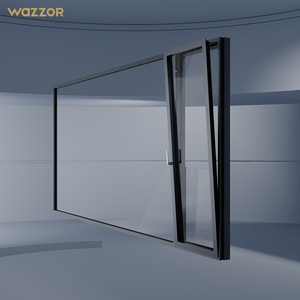
Wazzor Aluminum High-Quality Typhoon-Resistant & Energy-Saving Casement Soundproof Windows
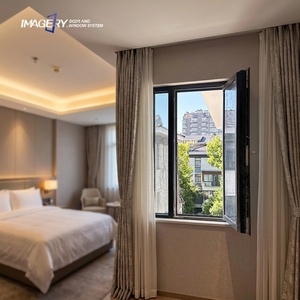
Modern Design Thermal Break Aluminum Casement Windows Triple Glass Sound Proof for Villa
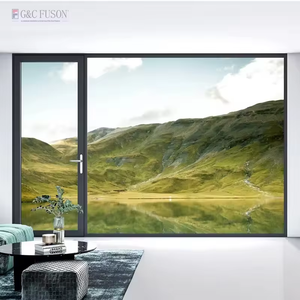
Fuson Canadian Standard Energy Star Luxury Window Thermal Insulation Aluminum Casement Windows
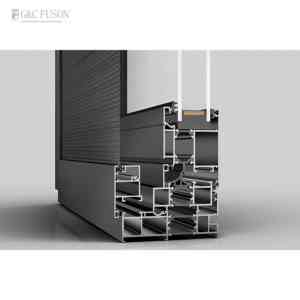
Fuson American NFRC Hurricane Proof Impact Aluminium Frame Doors And Double Glaze Windows
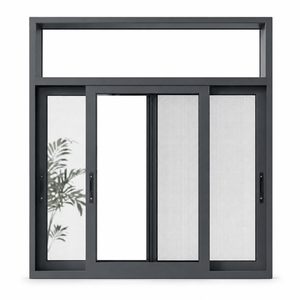
Custom Windows Dark Gray Aluminum Sliding Windows Composite Transom Top Fixed Panel Mesh Screen
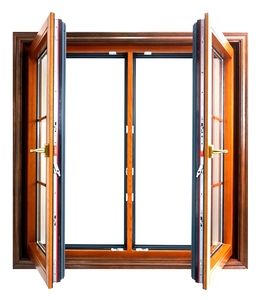
Double-Glazed Wood Aluminum Composite Clad High Insulation Architectural Windows
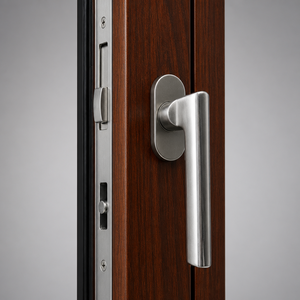
Arched Aluminum Clad Wooden Modern Window Sunburst Fanlight Thermal Break Composite Double Pane
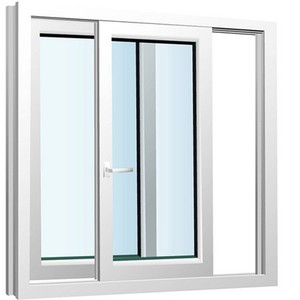
High Quality Hurricane-Proof Double Glazing Windows Aluminum Tempered Glass Sliding Impact Composite
1. Technical Architectural Overview of CE Certified Aluminium Composite Windows
In modern high-performance fenestration design, CE Certified Aluminium Composite Windows represent the convergence of structural durability, thermal physics, and aesthetic refinement. The European CE mark (governed by harmonized standard EN 14351-1:2006+A2:2016) is not merely a trading label; it provides quantitative validation that a window system fulfills essential requirements regarding load-bearing capacity of safety devices, air tightness, water tightness, acoustic isolation, and overall thermal transmittance ($U_w$).
Aluminium composite fenestration—which primarily encompasses aluminium-timber composite profiles and multi-cavity polyamide thermal break aluminium systems—solves the inherent structural limitations of single-material frames. Standard extruded aluminium possesses high structural strength and weather resistance, but exhibits a high thermal conductivity ($k \approx 160-200 \text{ W/m}\cdot\text{K}$). Conversely, solid timber provides magnificent thermal performance and interior organic texture, but demands continuous exterior maintenance when exposed to aggressive UV solar radiation and driving rain. Aluminium composite technology permanently bonds protective exterior aluminium cladding to structural interior profiles using mechanical sliding clips or pressure-equalized polyurethane gaskets, creating a composite barrier that withstands severe weather while maintaining pristine interior environments.
Engineering Fact: The integration of PA66-GF25 (Polyamide 66 reinforced with 25% glass fiber) thermal break strips within aluminium composite profiles matches the coefficient of thermal expansion of the metal frame ($\approx 2.3 \times 10^{-5}/\text{K}$), preventing structural shear stress failure under extreme seasonal temperature deltas ranging from -30°C to +80°C.
Structural Anatomy of Advanced Composite Fenestration
Leading manufacturing facilities in Foshan operate automated CNC cutting, corner-crimping, and profile-milling centers capable of holding tolerances within $\pm 0.5 \text{ mm}$. The internal construction of a CE-certified composite window utilizes a multi-barrier defense strategy:
- Exterior Protective Shell: Heavy-gauge 6063-T5 architectural aluminium alloy with wall thicknesses exceeding 2.0 mm, finished with fluorocarbon (PVDF) coating or QUALICOAT-certified powder spray to resist salt-spray oxidation in coastal regions.
- Thermal Separation Layer: Precision-extruded Polyamide PA66-GF25 structural insulation bars spanning widths from 24 mm up to 39 mm, filled with expanded polyethylene (EPE) or aerogel cores to achieve frame thermal transmittance ($U_f$) as low as $1.2 \text{ W/m}^2\text{K}$.
- Interior Core Options: Select timber species (Oak, Pine, Larch, or Teak) dried to a strict 8-12% moisture content, or secondary acoustic aluminium cavities with embedded multi-chamber air pockets.
- Triple-Sealed Gasket Matrix: Continuous non-fading EPDM (Ethylene Propylene Diene Monomer) weatherstripping forming three distinct sealing zones: outer rainscreen baffle, central pressure-equalization chamber, and interior acoustic seal.
2. Enterprise Factory Advantage & Supply Chain Engineering
Sourcing directly from tier-one Chinese fenestration hubs—specifically specialized production bases in Foshan, Guangdong—delivers unprecedented supply chain scale and cost efficiencies for international commercial contractors, real estate developers, and architectural specifiers. Operating out of fully equipped manufacturing complexes spanning over 20,000 square meters, leading suppliers integrate every phase of manufacture under one roof:
Virgin Alloy Integrity
Exclusively utilizing prime 6063-T5 virgin aluminum billets without recycled scrap contamination. Ensures consistent tensile yield strength ($\ge 110 \text{ MPa}$) and flawless surface finishing.
Automated Corner Crimping
Equipped with dual-head hydraulic corner joiners injected with two-component structural corner glue, achieving complete mechanical frame rigidity and leak-free joint sealings.
Severe Weather Testing
In-house computerized testing rigs evaluate air infiltration (ASTM E283 / EN 12207), water resistance up to 1050 Pa (EN 12208), and wind load deflection up to 5000 Pa (EN 12210).
Standardized Performance Matrix: Composite Systems
To assist technical procurement teams during bid evaluation, the table below outlines the certified performance thresholds achieved by CE-certified composite factory lines:
| Performance Parameter | Test Standard | Certified Value / Performance Rating | Architectural Application |
|---|---|---|---|
| Thermal Transmittance ($U_w$) | EN ISO 10077-2 / NFRC | 1.1 – 1.4 W/m²K (Triple Glazed Low-E) | Passive House & Low-Energy Residential |
| Acoustic Attenuation ($R_w$) | EN ISO 140-3 / ISO 717-1 | 38 dB – 45 dB (Acoustic Interlayer Glass) | Urban High-Rise & Hotel Developments |
| Air Permeability | EN 12207 / ASTM E283 | Class 4 (Highest European Rating) | High-Altitude & Coastal Glazing Walls |
| Water Tightness | EN 12208 / ASTM E331 | Class E1050 (1050 Pa Static Pressure) | Typhoon & Hurricane Prone Zones |
| Wind Load Resistance | EN 12210 / ASTM E330 | Class C5 ($\Delta p = 2000 \text{ Pa}, p_{\text{max}} = 3000 \text{ Pa}$) | Commercial Façades & Coastal Villas |
| Hardware Operating Cycles | EN 13126 / AAMA 910 | 200,000 Uninterrupted Open-Close Cycles | High-Traffic Institutional & Residential |
3. Global Sourcing Trends & Future Procurement Insights (2026–2030)
The global architectural fenestration sector is experiencing a rapid paradigm shift driven by stringent carbon neutral building codes, embodied carbon mandates, and advancing smart-building technologies. B2B buyers and importers must align their factory procurement strategies with key macro trends reshaping the composite window manufacturing landscape:
A. Ultra-Slim Sightlines & Structural Concealed Frames
Architects are increasingly rejecting bulky profile frames in favor of ultra-minimalist aesthetics. Future-ready composite factories are shifting toward structural outer sash designs where glass is structurally bonded via silicone directly to micro-composite frames. Profile face-widths are shrinking from standard 90 mm profiles down to sub-45 mm visible sightlines, maximizing natural daylighting while maintaining thermal envelope integrity.
B. Circular Lifecycle & Low-Carbon Extrusion Hydro-Sourcing
With Europe’s Carbon Border Adjustment Mechanism (CBAM) coming into full enforcement, factories are adopting primary aluminium smelted using hydroelectric power rather than coal-fired power grids. Low-carbon aluminium (emitting $< 4.0 \text{ kg CO}_2/\text{kg Al}$) combined with bio-adhesives in timber composites allows window assemblies to meet Scope 3 emissions quotas required for LEED Platinum and BREEAM Outstanding certifications.
C. Smart Electrochromic & Integrated BIPV Composites
The integration of smart glazing into composite aluminium frames represents a rapidly growing high-margin category. Factories are embedding micro-cables and control channels directly within composite frame profiles during assembly. This allows seamless plug-and-play installation of electrochromic dynamic tinting glass and Building-Integrated Photovoltaic (BIPV) spandrels directly into automated building management systems (BMS).
D. Off-Site Unitized Prefabrication
To mitigate escalating job-site labor costs across North America, Europe, and Australia, real estate developers are shifting away from stick-built window installations. Leading Chinese export factories now deliver fully unitized, factory-glazed window boxes fitted with factory-installed sub-frames, waterproof membrane flashings, and integrated motorized external louvers, reducing installation timelines on site by up to 70%.
4. Comprehensive Procurement FAQ: Risk Mitigation & Factory Verification
Sourcing custom windows overseas requires clear technical specifications and robust quality control protocols. Below are critical technical inquiries faced by procurement managers along with direct engineering solutions:
5. Factory Inspection & Quality Assurance Workflow
Ensuring that overseas production meets rigorous architectural standards requires an end-to-end quality assurance (QA) pipeline. Below is the multi-stage quality control protocol enforced across leading Foshan production bases:
- Raw Material Inbound Inspection (IQC): Ultrasonic wall-thickness testing of aluminum extrusions, spectrometry verification of 6063-T5 alloy composition, and moisture-meter analysis of timber batches.
- Machining & Milling Precision (PQC): CNC double-head cutting centers governed by digital linear encoders to guarantee diagonal frame squareness within $\pm 1.0 \text{ mm}$.
- Corner Joinery Verification: Checking dual-component adhesive distribution inside corner crimping keys to prevent micro-gaps that allow capillary water penetration.
- Glazing & Sealant Application: Automated robot-assisted structural silicone application ensuring uniform sealant depth and void-free adhesion between glass panes and aluminum frames.
- 100% Pre-Shipment Mock-up Assembly: Every batch undergoes full factory assembly, hardware torque testing, latching force verification, and water spray testing prior to protective crating.
- Export Packaging Protocol: Units wrapped in EPE anti-scratch foam, reinforced with rigid plastic corner guards, sealed in vacuum moisture-proof film, and mounted inside fumigated wooden crates designed for forklift handling.
Ready to Request Factory Direct Quotations & Technical Submittals?
Upload your project window schedules, CAD elevations, or architectural tender specs. Our fenestration engineering team provides structural wind load analysis, glass thermal calculations, and factory-direct pricing within 24 hours.