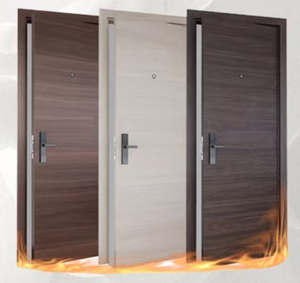
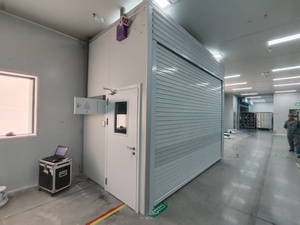
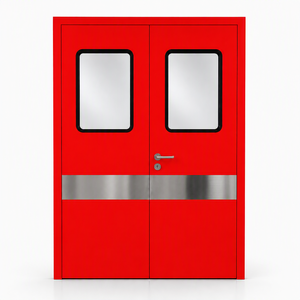
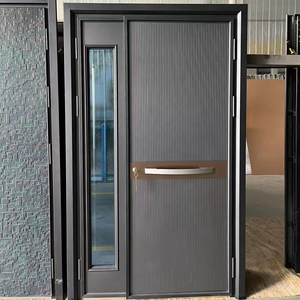
Executive Summary: Thermal Break Aluminium Fire Exit Door Systems
Modern architectural engineering demands an uncompromised balance between structural safety, energy conservation, aesthetic transparency, and stringent life-safety code compliance. In commercial, high-occupancy, and industrial building projects, emergency egress doors serve as the primary defensive barrier against heat radiation, toxic smoke propagation, and physical structural failure during critical fire incidents. Historically, fire-rated doors were dominated by heavy, aesthetically restrictive steel assemblies. However, the industry has experienced a systemic shift toward high-strength 6063-T5 extruded aluminum alloy systems integrated with polyamide (PA66 GF25) thermal breaks and intumescent fire sealing technology.
This technical whitepaper examines the global procurement ecosystem, engineering standardizations, manufacturing workflows, and architectural trends governing CE Certified Aluminium Fire Exit Doors. As leading manufacturers operating out of Foshan, China's premier aluminum supply chain cluster, factory-direct exporters provide global builders, EPC contractors, and architects with fully compliant EN 16034 and EN 1125 life-safety door assemblies customized for international deployment.
EN 16034 & EN 14351-1 CE Marking
Rigorous third-party certification covering fire resistance (EI30 to EI120), smoke control (Sa/S200), and outdoor durability standards for European and global projects.
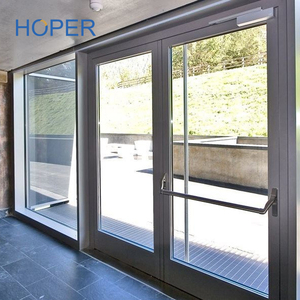
EN 1125 Panic Exit Hardware
Integrated horizontal push-bar panic devices engineered for immediate release under emergency conditions, tested to 200,000 operational cycles.
Intumescent Profile Expansion
Multi-chamber aluminum profiles equipped with sodium silicate or graphite-based seals that expand up to 25x original volume upon heat exposure.
Regulatory Compliance: Decoding CE Certification (EN 16034 vs. EN 14351-1)
For international buyers and procurement officers navigating global building regulations, verifying compliance credentials is the most critical risk mitigation step. The European Union mandates strict legal requirements for emergency exit door assemblies placed on the market:
- EN 16034 (Fire Resistance & Smoke Control): Specifies the performance characteristics for pedestrian doorsets, industrial shutters, and openable windows with fire resistance (E = Integrity, I = Insulation) and smoke containment properties (Sa, S200).
- EN 14351-1 (External Pedestrian Doorsets): Governs non-fire performance attributes such as air permeability, watertightness, wind load resistance, acoustic insulation (Rw), and thermal transmittance (U-value).
- EN 1125 & EN 179 (Emergency Egress Hardware): EN 1125 covers panic exit devices operated by a horizontal push-bar for public spaces where occupants are unfamiliar with the layout. EN 179 covers emergency exit devices operated by a lever handle or push-pad for private or low-occupancy environments.
Our manufacturing base operates under an audited ISO 9001 Quality Management System, ensuring that every batch of extruded aluminum profiles, glass laminates, and EPDM perimeter gaskets matches the technical submittals verified during initial CE type testing.
Technical Specification Matrix: Aluminium Fire Exit Assemblies
To assist structural engineers, architectural specifiers, and estimating teams, the following table summarizes standard technical parameters across key performance tiers:
| Performance Grade | Fire Rating (EN 13501-2) | Glazing Configuration | Profile Wall & Thermal Break | Max Leaf Dimensions | Smoke & Acoustic Rating |
|---|---|---|---|---|---|
| Class EI30 | 30 Minutes Integrity & Insulation | 15mm Intumescent Laminated Glass | 2.0mm 6063-T5 / 24mm PA66 Strip | 1300mm x 2800mm (Single) | Sa / S200 | Rw 38 dB |
| Class EI60 | 60 Minutes Integrity & Insulation | 25mm Multi-Layer Fire Gel Glass | 2.5mm 6063-T5 / 30mm PA66 Strip | 1400mm x 3000mm (Single) | Sa / S200 | Rw 40 dB |
| Class EI90 | 90 Minutes Integrity & Insulation | 35mm Insulated Ceramic Fire Unit | 3.0mm Reinforced Alloy / Double Thermal Break | 1200mm x 2600mm (Single) | Sa / S200 | Rw 42 dB |
| Class EI120 | 120 Minutes Integrity & Insulation | 42mm Fire Ceramic & Intumescent Core | 3.5mm Steel Core Reinforced Aluminum | 1100mm x 2500mm (Single) | Sa / S200 | Rw 44 dB |
Future Procurement & Industry Development Trends (2025–2030)
As global architectural design evolves toward carbon neutrality, high thermal efficiency, and smart building management, the manufacturing and sourcing of aluminum fire exit doors is undergoing dynamic transformation. Commercial buyers and exporters should align procurement strategies with four key emerging trends:
1. Smart Access Control Integration with Fail-Safe Motorized Egress
Modern hospitality, healthcare, and high-rise commercial structures require emergency exit doors to function as perimeter security doors during normal operation while guaranteeing instantaneous unlatching during emergencies. Future-proof doors feature electromagnetic multi-point latching systems connected directly to the central Fire Alarm Control Panel (FACP). Upon signal activation, power is cut to magnetic locks (Fail-Safe operation), immediately allowing push-bar evacuation under EN 1125 protocols while retaining mechanical override capability.
2. Ultra-Narrow Sightlines & Architectural Transparency
Historical fire doors suffered from thick, visually oppressive frames and opaque metal infills. Modern extrusion technology utilizes multi-chamber structural aluminum profiles combined with clear intumescent gel glass (nano-silica composite layers). This allows developers to maintain sleek, daylight-harvesting aesthetics in building corridors and main lobbies without sacrificing structural fire integrity or code compliance.
3. Circular Economy & Low-Carbon Recycled Aluminum Billet Sourcing
With environmental building standards such as LEED, BREEAM, and DGNB dictating supply chain selection, global buyers are prioritizing factories that utilize low-carbon aluminum extruded from hydroelectric-smelted virgin billet combined with post-consumer recycled aluminum (minimum 75% recycled content). Utilizing aluminum exit doors significantly reduces embodied carbon compared to traditional heavy steel assemblies, while remaining 100% recyclable at the end of the building lifecycle.
4. Harsh Environment Resilience: Dual Thermal Break & Marine-Grade Anodizing
Building developments in extreme climate zones—such as high-humidity coastal resorts, desert regions in the Middle East, or sub-zero Nordic climates—require specialized surface treatments and thermal engineering. Procurement trends favor doors treated with PVDF Fluorocarbon coatings or Qualanod-certified marine-grade anodizing (minimum 25 microns) combined with polyamide thermal break profiles to prevent condensation, thermal bridging, and saline corrosion.
Factory Manufacturing Capabilities & Quality Assurance Standards
Operating from a 20,000 square-meter production facility in Foshan, China, our engineering base specializes in complete OEM/ODM production pipelines designed specifically for export logistics:
- Precision CNC Extrusion & Crimping: Dual-head 45-degree CNC cutting machines integrated with heavy-duty hydraulic corner crimping and two-component structural corner adhesives ensure frame joint rigidity and air tightness under severe wind pressures up to 1,000 N.
- Triple EPDM & Intumescent Weather Sealing: Continuous EPDM rubber gaskets combined with co-extruded intumescent strips around leaf perimeters ensure water tightness during heavy rains and airtight smoke sealing during thermal combustion.
- Pre-Assembled Export Packaging: Every completed door unit undergoes 100% factory pre-assembly, hardware function verification, and opening torque testing before receiving EPE protective wrap, edge guards, and fumigation-free plywood crate packaging for containerized ocean freight.
Frequently Asked Procurement Questions (FAQ)
Conclusion: Partnering with Leading Fire Door Exporters
Selecting the right factory partner for CE Certified Aluminium Fire Exit Doors ensures structural safety compliance, streamlined project submittals, and long-term operating durability. By combining high-grade 6063-T5 aluminum alloys, polyamide thermal breaks, intumescent fire seals, and EN 1125 certified hardware, our Foshan manufacturing base delivers factory-direct engineering depth to developers, builders, and distributors worldwide.
Ready to Engineer Your Emergency Exit Systems?
Contact our technical sales team for shop drawings, fire test reports, and factory-direct pricing on custom aluminum egress doors.
Send an Inquiry