CE Certified Product Catalog & Architectural Glazing Systems
Explore our export-grade aluminium-timber composite windows, fire-rated entry doors, motorized lift windows, and structural architectural envelope solutions engineered in Foshan.
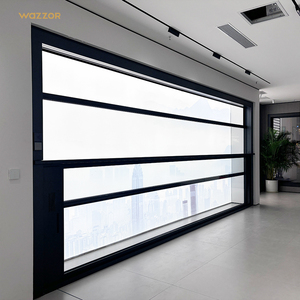
Wazzor Electric Lift Window | Motorized Vertical Operation Sliding System
Send an Inquiry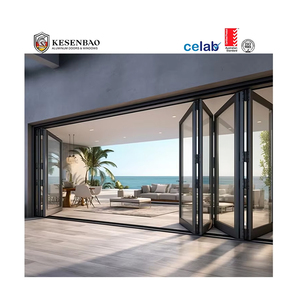
Exterior Large Partition Bi-Fold Door Double Glazed Aluminium Folding System
Send an Inquiry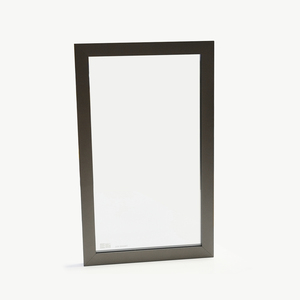
Italy Brand Aluminum Door & Window Frames for Architectural Application
Send an Inquiry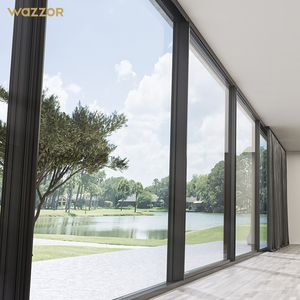
Wazzor Modern Double Glazed Aluminium Frame Slide House Windows & Doors
Send an Inquiry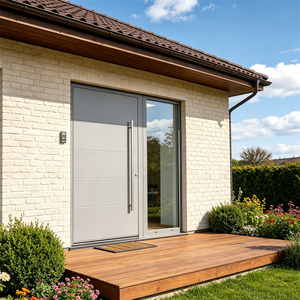
OEM/ODM Customized Modern Soundproof Luxury Glass Entry Security Door
Send an Inquiry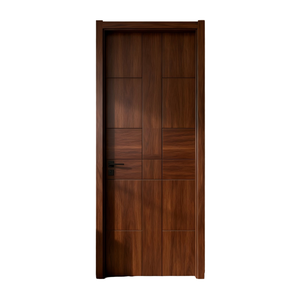
LT JINGMU Luxury Waterproof Aluminum Alloy Interior Doors with Finished Surface
Send an Inquiry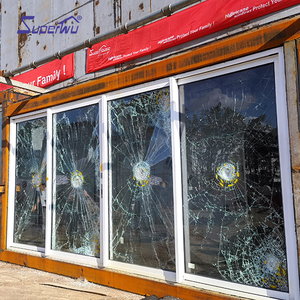
American Certified NFRC NOA Hurricane Impact Glass Aluminium Sliding System
Send an Inquiry20,000m²
Foshan Production Base
0.8 - 1.1
Thermal U-Value (W/m²K)
40+
Global Export Markets
200,000
Hardware Cycle Tested
Structural Engineering & Material Synergy: Why Aluminium Timber Composite Windows Lead Modern Architecture
In contemporary high-performance envelope design, architects and structural engineers face a persistent paradox: balancing the organic aesthetic tactile richness of interior natural timber with the unyielding exterior weather resistance required by extreme climate zones. Aluminium timber composite windows—frequently categorized in global architectural specifications as Alu-Clad Wood or Hybrid Fenestration Systems—solve this dual challenge through rigorous materials science and mechanical disconnect engineering.
As a premier CE-certified manufacturer and global supplier based in Foshan, China, Zenic Window & Door Technology Co., Ltd. engineers composite systems that leverage heavy-gauge, extruded virgin 6063-T5 aluminum profiles on the exterior shell, mechanically coupled to sustainably harvested solid wood interiors (such as European White Oak, American Black Walnut, Larch, or FSC-certified Teak). By creating an isolated dual-layer frame separated by engineered nylon or stainless steel connection clips, our composite windows allow independent thermal expansion and contraction across both materials without causing structural warping, seal failure, or internal stress strain.
Information Gain Metric: Standard solid timber frames suffer from moisture swelling (volumetric change up to 4.5% across seasons), while monoblock aluminum frames exhibit high thermal conductivity ($k \approx 200 \text{ W/m}\cdot\text{K}$). Aluminium-timber composite systems eliminate both failure modes, reducing frame thermal transmission ($U_f$) to below 1.0 W/m²K while delivering maintenance-free exterior durability exceeding 50 years.
CE Marking Compliance: EN 14351-1 Technical Standards Explained
For commercial developers, facade consultants, and importers operating in the European Economic Area (EEA) and global markets accepting harmonized European Norms, purchasing CE Certified aluminium timber composite windows is not merely a legal requirement—it is an assurance of validated structural and thermal integrity under EN 14351-1:2006+A2:2016 (Windows and Doors Product Standard).
Our composite window manufacturing lines subject every production batch to rigorous third-party physical chamber testing under the following mandatory performance parameters:
| Performance Standard | EN Test Method | CE Certification Level | Engineering Significance for Buyers |
|---|---|---|---|
| Air Permeability | EN 1026 / EN 12207 | Class 4 (600 Pa) | Maximum energy retention; prevents warm/cold air infiltration under extreme storm pressures. |
| Watertightness | EN 1027 / EN 12208 | Class E1050 (1050 Pa) | Zero water penetration during hurricane-force driving rain equal to 90 mph wind loads. |
| Wind Load Resistance | EN 12211 / EN 12210 | Class C5 (2000 Pa deflection, 3000 Pa safety) | Structural framing rigidity suitable for high-rise commercial towers and coastal luxury villas. |
| Thermal Transmittance ($U_w$) | EN ISO 10077-1 / 2 | $U_w \le 0.85 \text{ W/m}^2\text{K}$ | Achieves Passive House energy criteria when paired with Low-E triple glazing and argon fill. |
| Acoustic Performance | EN ISO 717-1 | $R_w (\text{C}; \text{C}_{tr}) = 42 - 48 \text{ dB}$ | Dampens ambient city noise, jet engine decibels, and coastal gale forces for quiet interiors. |
Engineering Advantages of Zenic Composite Systems
Why project managers, facade contractors, and international window distributors specify our Foshan manufacturing base.
Floating Mechanical Clip Fastening
Exterior aluminum cladding is joined to the timber frame using German-engineered PA66 snap-on clips, permitting dynamic thermal expansion differential while eliminating structural distortion.
EPDM Triple Gasket Weather Seal
Continuous synthetic EPDM rubber seals around sashes create pressurized multi-chamber drainage and air barriers, preventing draft ingress and interior condensation formation.
200,000-Cycle Heavy Duty Hardware
Fitted with concealed multi-point lock gears, stainless steel friction hinges, and anti-lift security strikers tested to withstand over 200,000 operational opening cycles.
Precision Timber Drying & Lamination
Solid wood cores undergo triple-layer finger-joint lamination and automated vacuum kiln drying (moisture calibrated precisely to 8%–12%) to prevent twisting or micro-cracking.
Architectural Surface Customization
Exterior powder coatings meet Qualicoat Class 2 and AAMA 2605 specifications, complemented by eco-friendly water-based interior timber stains in endless RAL finishes.
Multi-Market Compliance Matrix
In addition to CE marking, our system lines maintain testing records for North American NFRC, Canadian CSA, Australian AS2047, and ISO 9001 quality management standards.
Future Procurement Trends in Global Composite Window Sourcing (2025–2035)
The global market for high-end fenestration is undergoing a structural paradigm shift driven by stringent municipal carbon neutrality mandates, escalating energy costs, and evolving consumer aesthetic preferences. As a leading manufacturer supplying over 40 export markets, Zenic Window & Door Technology Co., Ltd. identifies four major macro trends shaping global procurement over the coming decade:
1. Decarbonization Mandates & Embodied Carbon Metrics
European Union directives (including EPBD regulations) and North American green building codes (LEED v4.1) now evaluate not only operational thermal resistance ($U$-values) but also the embodied carbon footprint of envelope building materials. Timber acts as a natural carbon sink, sequestering approximately 1 tonne of $\text{CO}_2$ per cubic meter of processed wood. Combining timber cores with recyclable 6063-T5 aluminum extrusions provides real estate developers with a optimized Environmental Product Declaration (EPD) profile, assisting projects in achieving net-zero carbon certifications.
2. Rise of Smart Fenestration & Automated Building Integration
Procurement demand is shifting rapidly from manual swing sashes toward motorized, smart-sensor-integrated vertical lift and heavy-duty sliding systems (as highlighted in our Wazzor Electric Lift Window series). Future composite window orders increasingly specify concealed electrical conduits within the timber sub-frame, automated rain/wind sensors, motorized chain actuators, and seamless interface protocols with home automation platforms (KNX, BACnet, Matter).
3. B2B Supply Chain Consolidation via Foshan Manufacturing Ecosystem
Global developers and window wholesalers are increasingly moving away from fragmented sourcing models—purchasing frames from one vendor, glass units from another, and hardware from a third. Procurement trends favor vertically integrated OEM/ODM manufacturing facilities in Foshan, China. Zenic provides end-to-end turnkey manufacturing: from profile extrusion, CNC precision machining, timber lamination, and automated IGU double/triple glazing, to sea-worthy wooden crate packing and direct job-site shipping logistics.
4. Ultra-Slim Sightlines with Structural Heavy-Duty Load Capacity
Modern architectural design trends demand floor-to-ceiling glass expanses with minimal frame visible profiles. Structural innovation in composite window engineering allows ultra-narrow frame sightlines (down to 25mm interlock stiles) while maintaining wind load ratings capable of supporting massive 400kg glass sashes through concealed stainless steel tandem rollers and multi-point locking hardware.
Zenic Manufacturing & Quality Control Gate Process
Our 20,000 square meter production facility in Foshan operates under strict ISO 9001 certified quality management protocols. Every custom window order follows a audited 5-stage quality gate process prior to export dispatch:
01
Shop Drawing Sign-Off
Bilingual CAD & BIM drafting team converts architectural schedules into precision shop drawings with structural wind-load calculation validation.
02
Material Conditioning
Virgin 6063-T5 aluminum billet extrusion; timber kiln dried and moisture tested; powder coat thickness verified via digital gauge.
03
Precision CNC Machining
5-axis CNC profile cutting, corner crimping with dual-component structural corner glue injection, and EPDM gasket fitting.
04
Glazing & Hardware Rigging
In-house automated IGU assembly with warm-edge spacers, Low-E argon gas filling, and 100% hardware smooth operation testing.
05
Fumigated Wooden Crating
Units individual labeled by window tag ID, corner protected with EPE shock-absorbent foam, and sealed in export plywood cases.
Frequently Asked Procurement Questions (FAQ)
Direct answers for architects, general contractors, developers, and trade importers sourcing composite windows from China.
What is the minimum order quantity (MOQ) for custom composite windows?
Our standard project MOQ starts at 50 square meters or approximately 20 to 30 custom window/door units. We accommodate mixed orders—allowing developers and builders to combine fixed, casement, tilt-and-turn windows, and large sliding doors within a single container shipment to satisfy project requirements.
How do you verify CE Certification compliance for European projects?
Every shipment of our CE Certified aluminium timber composite windows includes formal Declaration of Performance (DoP) documents along with third-party laboratory test reports issued under EN 14351-1 standards. These reports verify air tightness, water tightness, structural wind load resistance, and overall thermal U-values for smooth municipal building permit approval in EU member states.
How is timber protected against internal condensation and ambient moisture?
We apply a multi-stage moisture defense strategy. First, solid timber profiles are kiln-dried to an optimal 8%–12% moisture content before processing. Second, the interior wood is isolated from exterior aluminum profiles via nylon isolation clips, creating an unventilated atmospheric pressure equalization zone. Third, we apply eco-friendly, water-borne German Adler or Remmers micro-porous wood finishes that allow timber to breathe while repelling surface humidity.
What is the lead time for custom production and global ocean freight shipping?
Standard factory production lead time is 20 to 30 calendar days following CAD shop drawing approval and deposit receipt. Shipping transit times vary by destination port: approximately 14–18 days to Australia/New Zealand, 20–28 days to the US West/East Coasts, and 25–35 days to European main ports (Hamburg, Rotterdam, Felixstowe). Goods are shipped FOB Foshan or Shenzhen.
Do you offer custom profile extrusions, RAL colors, and OEM branding?
Yes. As an established OEM/ODM manufacturer, Zenic supports full customization. We can match any architectural RAL powder coating color, anodized metallic finish, or wood grain surface. We also support private labeling, custom protective film branding, hardware customization (German Siegenia, Hoppe, GU, or Roto), and custom die extrusion development for large-scale commercial developments.
How do your composite windows compare in U-value against standard UPVC or Thermal Break Aluminium?
While standard thermal break aluminum windows achieve U-values around 1.4 to 1.8 W/m²K, our premium aluminium timber composite systems achieve U-values as low as 0.80 to 1.1 W/m²K when equipped with triple-pane insulated glass units (Low-E coatings, warm edge spacers, and argon gas fill). The natural cellular structure of solid timber acts as a superior insulator compared to hollow plastic or metal profiles.
Ready to Elevate Your Architectural Fenestration Project?
Connect directly with our Foshan engineering and export project management team. Submit your architectural window schedule or elevation drawings today for technical review, CAD drafting support, and factory-direct price quotes within 24 hours.
Send an Inquiry