CE Certified Architectural Fenestration Portfolio
Precision-engineered aluminum window and door systems designed for international compliance, structural integrity, and maximum energy efficiency.
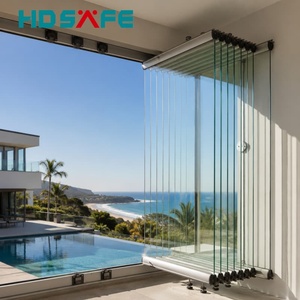
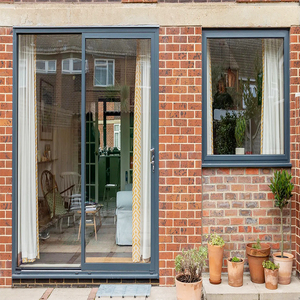
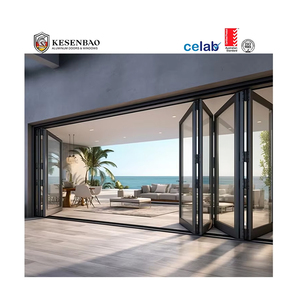
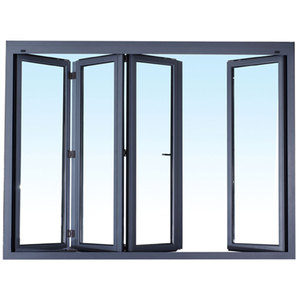
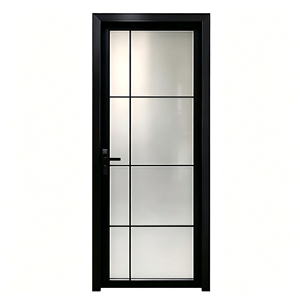
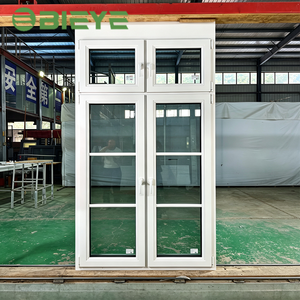
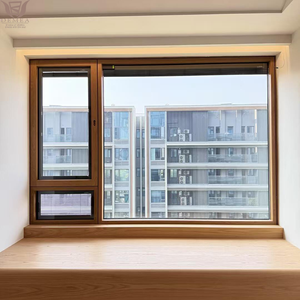
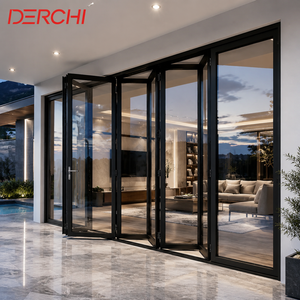
1. Executive Summary & Whitepaper: CE Standard EN 14351-1 Compliance
In the contemporary global construction ecosystem, modern architectural fenestration serves as a critical structural envelope element, balancing spatial aesthetics, structural safety, environmental isolation, and long-term thermodynamic performance. As a premier CE Certified Aluminium Windows & Doors Supplier and Exporter based in Foshan, China, Zenic Window & Door Technology Co., Ltd. delivers fully compliant, high-performance architectural glazing solutions engineered specifically to meet European Union Directives, North American Standards, and Australian Construction Codes.
The European Standard EN 14351-1 specifies material characteristics and performance requirements for windows and external pedestrian doorsets without fire resistance or smoke leakage characteristics. Obtaining authentic CE marking requires continuous factory production control (FPC), rigorous Initial Type Testing (ITT), and verified compliance across critical mechanical and physical vectors:
- Air Permeability (EN 12207): Verified up to Class 4 standards, minimizing unwanted infiltration/exfiltration through continuous multi-cavity EPDM gaskets and micro-compression seals.
- Water Tightness (EN 12208): Engineered to achieve Class E1050 under high-pressure water spray exposure, ensuring absolute water tightness even during extreme hurricane-force storm events.
- Wind Load Resistance (EN 12210): Certified to Class C5 structural resistance, resisting extreme positive and negative pressure deflections ($L/300$ relative frame deflection) via high-tensile 6063-T5/T6 primary aluminum extrusions.
- Thermal Transmittance ($U_w$ Value): Achieving system U-values down to 1.1 W/m²K (and passive house thresholds below 0.8 W/m²K) through imported multi-chamber polyamide PA66-GF25 thermal breaks and argon-filled Low-E insulated glass units (IGU).
- Acoustic Insulation (EN ISO 717-1): Attenuating sound transmission up to 45 dB ($R_w + C_{tr}$), creating quiet interior environments in high-density urban residential and commercial zones.
2. Structural Metallurgy & Thermal Break Engineering
Aluminum profiles used in window and door systems must balance structural rigidity with low thermal conductivity. Raw, uninsulated aluminum exhibits high thermal conductivity ($k \approx 160 \text{ W/m}\cdot\text{K}$), causing severe thermal bridging, interior energy loss, and internal surface condensation. Zenic overcomes this fundamental physical limitation through scientific alloy specification and advanced thermal barrier integration.
Primary Alloy Purity (6063-T5 vs. 6063-T6): We strictly utilize prime virgin 6063-T5 and 6063-T6 aluminum billets, completely omitting recycled scrap aluminum that introduces structural impurities and reduces corrosion resistance. Primary 6063 alloy offers exceptional tensile strength ($\ge 205 \text{ MPa}$ for T6), high yield strength ($\ge 180 \text{ MPa}$), and superior elastic modulus ($70 \text{ GPa}$), allowing structural mullions and large sliding sashes to resist extreme deflection without permanent deformation.
Polyamide Structural Isolation (PA66-GF25): Rather than utilizing low-cost PVC thermal strips that suffer from degradation under UV radiation and high thermal expansion coefficients, Zenic integrates Technoform 25% glass-fiber reinforced polyamide strips (PA66-GF25). The glass fiber reinforcement matches the mechanical thermal expansion rate of the surrounding aluminum profiles ($2.3 \times 10^{-5} /\text{K}$), preventing structural delamination or shear failure during drastic seasonal ambient temperature swings spanning $-30^\circ\text{C}$ to $+80^\circ\text{C}$.
Multi-Chamber Geometry
Engineered extrusion profiles incorporate up to 6 distinct internal chambers, trapping stagnant air columns and optimizing thermal isolation parameters.
EPDM Co-Extruded Seals
Automotive-grade synthetic EPDM continuous gasket lines maintain dimensional memory, elastic recovery, and ozone resistance for over 30 years.
Corner Injection Crimping
Cast aluminum corner keys are pneumatically crimped and pressure-injected with dual-component polyurethane glue, creating indestructible watertight joints.
3. Global Architectural Sourcing Trends (2025–2030)
The global market for architectural aluminum windows and doors is experiencing a massive paradigm shift driven by legislative mandates, carbon neutral commitments, and evolving aesthetic preferences. B2B importers, property developers, and contractors must realign their procurement strategies with four dominant macro trends:
A. Decarbonization & Life Cycle Embodied Carbon (EPD Certification): European and North American building codes (such as the EU Energy Performance of Buildings Directive and California Title 24) increasingly audit not just operational energy consumption, but embodied carbon within construction materials. The adoption of certified green aluminum extruded using hydro-electric energy and verified Environmental Product Declarations (EPD) is becoming mandatory for tier-1 commercial tenders.
B. Ultra-Slim Sightlines & Panoramic Maximum Daylight Factor: Modern architectural designs prioritize seamless indoor-outdoor integration. Demand for traditional thick-framed profiles is dropping in favor of narrow-frame lift-and-slide systems, flush threshold tracks, and concealed sash window configurations that maximize glass surface area while maintaining mechanical deflection resistance.
C. Pre-Glazed Offsite Modular Delivery: Labor shortages and soaring job-site installation costs across Australia, Europe, and the Americas have accelerated the shift toward fully factory-assembled, factory-glazed, and factory-tested fenestration units. Importing pre-glazed windows with pre-installed multi-point hardware reduces job-site labor hours by up to 65% and eliminates site glazing defects.
D. Extreme Weather Resilience & Cyclone Testing: Climate volatility has drastically increased requirements for high wind pressure resistance and water penetration limits. Coastal projects globally now mandate compliance with hurricane impact standards (such as Miami-Dade or Australian Cyclonic Zone AS1170.2 standards), forcing exporters to adopt heavy-duty multi-track locking mechanisms and laminated safety glazing configurations.
4. Comprehensive B2B Procurement Specifications
Technical comparison matrix for specifiers, engineers, and purchasing directors.
| Performance Vector | Technical Benchmark Range | Regulatory Testing Standard | Engineering Value for B2B Buyers |
|---|---|---|---|
| Profile Alloy Grade | 6063-T5 / T6 Primary Billet | EN 755-2 / ASTM B221 | Ensures structural deflection resistance and pristine anodizing / powder coating adhesion. |
| Thermal Transmittance ($U_w$) | 0.8 – 1.4 W/m²K | EN ISO 10077-2 / NFRC 100 | Drastically lowers HVAC energy consumption; ensures local energy code compliance. |
| Air Leakage Resistance | Class 4 ($\le 600 \text{ Pa}$) | EN 12207 / AAMA 101 | Prevents draft, dust, and wind noise infiltration in high-rise constructions. |
| Water Tightness | Class E1050 / 900 Pa | EN 12208 / AS2047 | Guarantees zero water leakage during extreme monsoon or coastal storm events. |
| Acoustic Isolation | 32 dB – 48 dB ($R_w$) | EN ISO 140-3 / ASTM E90 | Essential for luxury hotels, urban apartments, and hospital projects. |
| Surface Coating Thickness | 60 – 120 $\mu\text{m}$ (PVDF / Powder) | Qualicoat Class 2 / AAMA 2605 | Resists UV fading, chalking, and salt-spray corrosion for over 25 years. |
| Hardware Durability | 200,000 Open/Close Cycles | EN 13126 / EN 1191 | Minimizes operational maintenance and long-term warranty liability. |
5. Enterprise Manufacturing Edge & E-E-A-T Capabilities
Operating out of Foshan, Guangdong—the world's premier cluster for aluminum extrusion supply chains—Zenic Window & Door Technology Co., Ltd. represents a state-of-the-art fenestration manufacturing partner. Our 20,000 square meter industrial complex is equipped with German-engineered 5-axis CNC machining centers, automated double-head cutting saws, and robotic corner crimping stations.
Demonstrated Experience (E): With over 15 years of dedicated focus on export fenestration, our engineering team has reviewed thousands of architectural drawing sets, structural elevation plans, and project specifications across 40+ countries. We translate complex structural challenges into ready-to-produce shop drawings within 24–48 hours.
Engineering Expertise (E): Our in-house structural engineering department performs finite element analysis (FEA) to simulate wind load deflections, thermal stress distributions, and glass edge stress. Every window design is vetted for mechanical compliance prior to extrusion cutting.
Authoritative Quality Management (A): Zenic operates under strict ISO 9001:2015 Quality Management Systems. Our products carry verified certification for targeted export markets, including CE Marking (Europe), AS2047 & AS1288 certification (Australia), NFRC & AAMA accreditation (North America), and CSA compliance (Canada).
Trustworthiness & Export Protection (T): Export orders undergo rigid multi-point quality control gates, including 100% dimensional check, corner crimping pull-tests, hardware operation verification, and water pressure chamber testing. All finished goods are wrapped in EPE protective foam, edge-guarded with steel corner protectors, and sealed inside fumigation-free wooden cases suitable for long-distance container ocean freight.