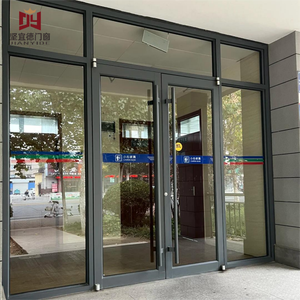
Factory Direct Systems
CE Certified Export Product Portfolio
Engineered for commercial entrance fronts, high-end residential villas, and coastal architectural requirements across European and international markets.
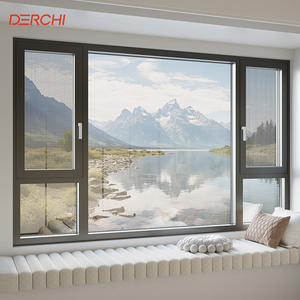
DERCHI High Quality Aluminum Frame Tilt Turn Casement Window Double Glazed Impact Glass
Inquire Now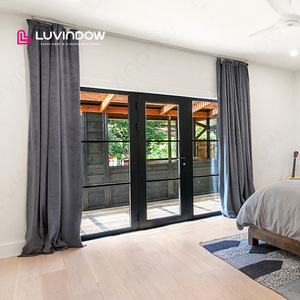
Luvindow Manufacturer Modern Double Exterior/Interior Grill Iron Door Designs Glass Wrought Aluminum Door
Inquire Now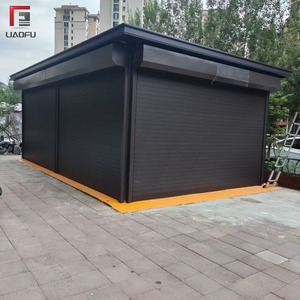
Modern Customized Aluminum Roller Shutter Door For Commercial Shop Front Outdoor Energy Saving Motor
Inquire Now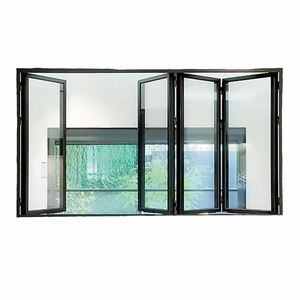
American-Style Aluminum Double-Folded Kitchen Window Electric Vertical Sliding Storefront
Inquire Now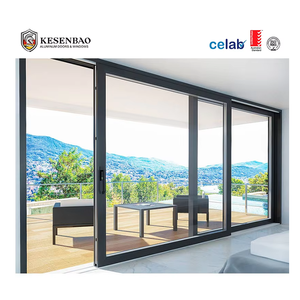
AS2047 Australia Balcony Aluminum Sliding Glass Door Large Double Tempered Glass Stacker Doors
Inquire Now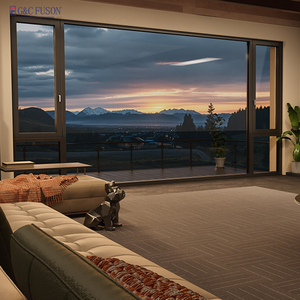
Fuson High Quality Durable Thermal Break Triple Glazing Inward Opening Tilt and Turn Windows
Inquire Now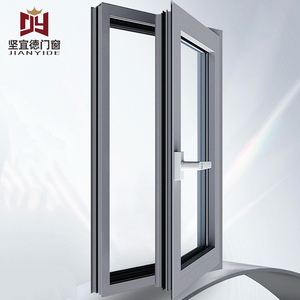
OEM ODM Modern Double Glazed Security Aluminum Swing Windows & Entrance Doors Windproof Feature
Inquire Now20,000m²
Foshan Production Base
1.1W/m²K
Lowest Thermal Transmittance
200kCycles
Hardware Durability Tested
40+
Global Export Markets
Executive Whitepaper: Sourcing CE Certified Aluminum Entrance Systems
In modern architectural engineering, the exterior entrance door serves as both the primary visual statement of a building and its most critical envelope barrier against energy loss, air infiltration, structural wind loading, and forced entry. For commercial developers, facade contractors, and regional window and door distributors sourcing from Asian manufacturing hubs, selecting verified CE Certified aluminum entry door factories & suppliers is no longer merely a regulatory check-item—it is the baseline requirement for legal market access, project liability mitigation, and long-term structural integrity.
The European Harmonized Standard EN 14351-1 (Windows and doors - Product standard, performance characteristics) dictates stringent mandatory testing criteria under the Construction Products Regulation (CPR 305/2011). A legitimate CE marking demonstrates that the door system has undergone rigorous Initial Type Testing (ITT) and operates under a certified Factory Production Control (FPC) system. This technical whitepaper analyzes the core engineering metrics, material metallurgy, thermal break performance, and supply chain strategies necessary to evaluate elite B2B aluminum door manufacturers.
Technical Benchmark
EN 14351-1 Performance Metrics Demystified
Understanding the four mandatory performance pillars required for CE marking and global architectural submittals.
1. Air Permeability (EN 12207 Standard)
Classified from Class 1 up to Class 4. High-performance aluminum entry doors engineered for commercial shopfronts or extreme weather residential applications must achieve Class 4 rating (test pressure up to 600 Pa with leakage below $3 \text{ m}^3/\text{h}\cdot\text{m}^2$). This is achieved through continuous multi-channel EPDM gaskets and precision-extruded corner joints.
2. Watertightness (EN 12208 Standard)
Evaluated under unshielded test conditions (Method A) up to Class E900 (900 Pa pressure under constant water spray). Premier factories utilize pressure-equalized drainage chambers, hidden drainage outlets with non-return valves, and vulcanized EPDM corner boots to prevent water ingress into interior thresholds.
3. Resistance to Wind Load (EN 12210 Standard)
Ranging from Class C1 to C5/B5. High-traffic commercial heavy-duty entrance doors specified for high-rise or coastal wind-zones are manufactured using primary 6063-T5 or 6060-T6 architectural aluminum alloys with wall thicknesses spanning 2.0mm to 3.0mm, preventing frame deflection under extreme gust pressures ($P_1 \ge 2000 \text{ Pa}$).
4. Thermal Transmittance ($U_d$ Value - EN ISO 10077-2)
Uninsulated aluminum frames act as thermal bridges. CE certified entry door systems incorporate multi-cavity Polyamide (PA66 GF25 with 25% glass fiber reinforcement) thermal break strips. When paired with Low-E double or triple glazed insulated units (IGUs), complete door system $U_d$ values are engineered down to 1.1 W/m²K.
Material Metallurgy & Structural Profile Engineering
The structural longevity of an aluminum entry door relies on profile composition and mechanical joining methods. Substandard suppliers frequently utilize remelted scrap aluminum containing impurities that compromise tensile strength and lead to premature surface oxidation under powder coating. Leading Foshan manufacturers enforce rigid raw material verification:
| Engineering Specification | Standard Commercial Grade | CE Certified Export Standard (ZENIC Benchmark) | Architectural Benefit |
|---|---|---|---|
| Aluminum Alloy Billet | Recycled / Mixed Grade | 6063-T5 Virgin Alloy | High tensile strength, zero structural micro-cracks, superior anodizing uniformity. |
| Profile Wall Thickness | 1.2mm – 1.4mm | 2.0mm – 3.0mm Heavy-Duty | Prevents frame sagging under 300kg sash loads; withstands 1,000 N wind pressure. |
| Thermal Break Material | PVC / Low-grade Nylon | Polyamide PA66 GF25 | Identical thermal expansion coefficient to aluminum; zero structural shear breakdown over 30 years. |
| Corner Joinery System | Single Mechanical Screw | Pin-and-Glue Crimped Corner Joint | Injects two-component polyurethane adhesive into corner keys, ensuring absolute frame squareness and zero seam leakage. |
| Sealing Gasket Compound | Standard PVC Gaskets | 6-Seal Continuous EPDM Rubber | Resistant to UV degradation, ozone, and temperatures from -40°C to +120°C with zero shrinkage. |
Information Gain Insight: While basic CE certificates can be acquired for standardized door configurations, customized project specifications require physical verification of the Declaration of Performance (DoP). Ensure your supplier provides factory production control documentation matching the exact profile series, glass build-up, and hardware setup specified in your shop drawings.
Factory Capabilities
Foshan Manufacturing Infrastructure & Quality Control
Integrating 15+ years of fenestration engineering expertise with automated production lines serving 40+ countries.
20,000 m² Integrated Manufacturing
Operating automated CNC double-head cutting saws, 4-axis machining centers, and hydraulic corner crimping equipment under ISO 9001 management standards in Foshan, China.
Hardware Cycle Testing
All multi-point locks, heavy-duty continuous hinges, and automatic drop-down door bottoms are cycle tested to 200,000 operations, backed by a comprehensive 10-year factory warranty.
Sea-Worthy Export Crating
Finished entrance systems are fully pre-assembled, operational-tested, wrapped in protective EPE film, fitted with impact corner guards, and sealed inside fumigation-free plywood crates.
Future Procurement Trends in Architectural Aluminum Door Systems (2025–2030)
The global entrance door market is undergoing a rapid technological evolution driven by stringent energy efficiency directives (such as the EU Energy Performance of Buildings Directive), modern security requirements, and smart home automation. B2B buyers must align their sourcing strategy with four major emerging trends:
1. Integration of Smart Access Control & Motorized Multi-Point Locking
Mechanical keys are rapidly being superseded by integrated biometric scanners (fingerprint recognition), RFID keypads, and smart-phone connected Bluetooth/Wi-Fi access modules embedded directly into the aluminum door profile sash. Leading manufacturers are designing profile channels with internal raceways for low-voltage wiring and motorized automatic multi-point latching locks (e.g., German-engineered GU or Siegenia systems). These locks engage multiple stainless-steel deadbolts upon door closure without requiring manual handle levering, elevating both thermal sealing and security compliance (RC2 / RC3 anti-burglary standards according to EN 1627).
2. Ultra-Low Carbon Aluminum & Circular Material Sourcing
Environmental Product Declarations (EPDs) are becoming mandatory in European commercial tenders. Forward-thinking suppliers are migrating to low-carbon primary aluminum extrusions refined using hydroelectric power (such as Hydro CIRCAL or equivalent certified billets with carbon footprints below $4.0 \text{ kg CO}_2/\text{kg Al}$). Coupled with non-toxic Qualicoat Class 2 powder coating powders, CE certified entrance doors now contribute directly to LEED and BREEAM green building certifications.
3. Flush-Threshold Accessibility & Dynamic Acoustic Sealing
Barrier-free building design regulations (such as DIN 18040 in Europe or ADA compliance in North America) require entrance door thresholds to feature step-over heights under 20mm, or completely zero-barrier flush floor transitions. To maintain air tightness and watertightness without a raised frame rebate, factories are adopting magnetic drop-down bottom seals combined with recessed linear stainless-steel drainage channels, offering sound insulation metrics up to $42 \text{ dB}$ ($R_w$).
4. Large-Format Pivot Systems & Panoramic Glazed Entrances
Residential architecture increasingly favors grand-scale pivot entrance doors measuring up to 2.0 meters in width and 4.0 meters in height. Sourcing these oversized systems requires advanced engineering in offset pivot hinges capable of carrying up to 500 kg loads, integrated multi-axis lock adjusters, and carbon-fiber reinforced anti-warping thermal break profiles designed to neutralize the "bi-metal effect" (where inner and outer aluminum profile faces expand unevenly under extreme temperature differentials between interior and exterior environments).
Procurement FAQ
Frequently Asked Questions by B2B Buyers
Direct answers from factory engineers regarding compliance, minimum order quantities, logistics, and technical customization.
What specific documentation confirms that an aluminum entrance door is genuinely CE certified?
A authentic CE mark requires two primary compliance documents: 1) The Declaration of Performance (DoP) issued by the manufacturer stating specific test values under EN 14351-1, and 2) Initial Type Testing (ITT) reports issued by an accredited European Notified Body (such as IFT Rosenheim, Intertek, or TÜV). The DoP must detail performance metrics including wind resistance (EN 12210), watertightness (EN 12208), air permeability (EN 12207), and thermal transmittance ($U_d$).
What is the typical Minimum Order Quantity (MOQ) and production lead time for factory-direct orders?
Our standard production MOQ starts from 50 units or project-based custom packages. Mixed window and door configurations can be combined within one container load. Standard production lead times begin at 15 to 25 days following shop drawing approval, deposit confirmation, and color match approval. Fast-track options are available for urgent commercial developments.
How do thermal break aluminum entrance doors prevent heat loss compared to non-thermal break profiles?
Non-thermal break aluminum profiles consist of a continuous metal extrusion that rapidly conducts heat between the exterior and interior, leading to high HVAC energy waste and interior glass condensation. Thermal break systems structurally join inner and outer aluminum extrusions using low-conductivity Polyamide (PA66 GF25) insulation bars. This thermal barrier reduces total system heat transfer by up to 60%, achieving $U_d$ values as low as 1.1 W/m²K.
Do you support full OEM/ODM customization for private label distributors and architectural contractors?
Yes. We provide complete OEM/ODM manufacturing services, including custom profile die extrusion, custom hardware integration (Roto, HOPPE, Sobinco, or customized private-label handles), specialized RAL powder coating, anodized finishes, wood-grain heat transfer sublimation, and custom branded packaging. Our in-house engineering team provides full CAD/BIM shop drawings for client sign-off prior to tooling.
What hardware brands and multi-point locking options are available for high-security installations?
We supply top-tier European hardware brands including Siegenia, Roto, GU, and HOPPE alongside our high-specification proprietary lock systems. Available configurations include 3-point, 5-point, and automatic motorized roll-pin and hook-latch locking mechanisms. All locks are tested to 200,000 cycles and compliant with RC2/RC3 European burglar-resistance standards.
How are oversized glass entrance doors packed to prevent damage during ocean transit?
Every completed frame and door sash undergoes factory pre-assembly and functional inspection. Finished units are wrapped in 5mm protective EPE foam, reinforced with plastic corner guards, and placed inside custom-built, fully enclosed fumigation-free plywood crates. Heavy-duty steel straps secure the crates inside ocean containers to withstand roll and pitch during ocean transit.
What certifications do your aluminum doors and windows hold for international markets outside the EU?
In addition to CE marking (EN 14351-1), our product series are engineered and tested to satisfy North American NFRC / AAMA standards, Canadian CSA guidelines, Australian AS2047 / AS1288 standards, and ISO 9001 quality management benchmarks. Test submittals can be provided for project specification approvals.
Request Engineering Submittals & Factory Direct Quotations
Submit your door schedules, elevation drawings, or project specifications. Our facade engineering team will issue detailed shop drawings, technical calculations, and competitive FOB/CIF pricing within 24 hours.