Featured CE-Certified Window & Door Systems
Engineered for commercial, residential, and high-rise developments requiring superior thermal break insulation, soundproofing, and structural integrity.
Architectural-Grade Aluminum Fenestration Engineering: Industry Whitepaper
AUTHOR: Global Technical Engineering Division & Supply Chain Procurement Advisory
The global construction landscape is undergoing a structural transition toward climate-resilient, energy-efficient building envelopes. As regulatory frameworks such as Europe's Energy Performance of Buildings Directive (EPBD), Australia’s NCC AS2047, and North America’s NFRC thermal performance mandates enforce strict lower limits on structural thermal transmittance, architectural specifiers, master builders, and commercial importers can no longer rely on legacy fenestration hardware. Modern architectural aluminum window and door systems serve not merely as building closures, but as highly engineered, pressure-equalized structural components capable of mitigating thermal bridging, acoustic disturbance, and extreme weather loading.
Operating out of Foshan, Guangdong—the epicenter of global aluminum extrusion technology and precision metal processing—Zenic Window & Door Technology Co., Ltd. represents the synthesis of metallurgical mastery, European system design, and scaled lean manufacturing. With a specialized manufacturing plant spanning nearly 20,000 square meters, our facility integrates full-spectrum production capabilities: from precision billet alloy heating and multi-cavity extrusion die configuration to automated Polyamide PA66GF25 thermal barrier insertion, computerized corner crimping, continuous EPDM gasket sealing, and automated insulated glass unit (IGU) glazing.
We utilize exclusively 100% virgin 6063-T5 architectural aluminum alloy billets with structural wall thicknesses ranging from 1.8mm to 2.5mm. Zero recycled aluminum scrap ensures structural rigidity, uniform anodizing acceptance, and extreme yield strength under seismic and typhoon loads.
High-density Polyamide PA66 reinforced with 25% glass fiber (PA66GF25) isolates exterior and interior extrusion chambers. This structural barrier exhibits matching linear thermal expansion coefficients with aluminum, preventing profile shear and thermal transfer.
Our complete system product line carries verifiable compliance documentation for key international jurisdictions, including European CE Marking (EN 14351-1), Australian AS2047 standard certification, North American NFRC thermal ratings, and ISO 9001 quality system auditing.
System Performance Matrix & Technical Specifications
To assist architectural specifiers and wholesale buyers in evaluating technical compliance for regional project submittals, the following comparison matrix details engineering tolerances across ZENIC system classifications:
| Performance Parameter | Standard Non-Thermal Aluminum | Commercial Thermal Break System | ZENIC CE Ultra-Thermal System |
|---|---|---|---|
| Thermal Transmittance (U-Value) | 3.5 - 5.2 W/m²K | 1.8 - 2.4 W/m²K | 1.1 - 1.4 W/m²K |
| Acoustic Attenuation (Rw / STC) | 22 - 28 dB | 32 - 38 dB | 42 - 48 dB (Triple IGU) |
| Wind Pressure Resistance | 1200 Pa - 2000 Pa | 3000 Pa - 4500 Pa | Up to 6000 Pa (Class E6000) |
| Air Infiltration Rate | Level 3 (GB/T 7106) | Level 6 (GB/T 7106) | Class A4 / Level 8 (EN 12207) |
| Water Tightness Rating | 250 Pa | 600 Pa | 900 Pa - 1200 Pa (E1200) |
| Profile Alloy & Temper | 6063-T5 (Recycled mix) | 6063-T5 Virgin Billet | 6063-T5 / T6 High Precision Virgin |
| Hardware Cycle Life | 20,000 Cycles | 100,000 Cycles | 200,000+ Cycles (Siegenia/CMECH) |
Future Procurement Trends in Architectural Fenestration (2025–2030)
As commercial developers, real estate investment trusts (REITs), and general contractors navigate changing macroeconomic and environmental demands, global procurement strategies for aluminum fabrication windows are undergoing four core transformations:
1. Carbon Footprint Traceability & Environmental Product Declarations (EPD)
European and North American procurement tenders increasingly mandate full lifecycle carbon accounting. Future-ready manufacturers must provide Environmental Product Declarations (EPDs) validating low embodied carbon in raw billet smelting, clean hydro-powered extrusion processes, and non-toxic powder coating lines. Sourcing direct from certified factories with transparent supply chains allows project developers to earn LEED v4.1 and BREEAM sustainability credits.
2. Prefabricated Unitized Assembly & Job-Site Labor Reduction
Skyrocketing field labor costs in Australia, Western Europe, and North America have forced builders away from knock-down (KD) field assembly toward factory-glazed, fully hardware-tested unitized systems. B2B buyers now demand fully integrated window modules—complete with sub-frames, integrated stainless steel flyscreens, pre-adjusted multi-point locks, and continuous perimeter flashing fins—shipped ready for crane hoist installation directly into structural rough openings.
3. Smart Motorization & Micro-Ventilation Integration
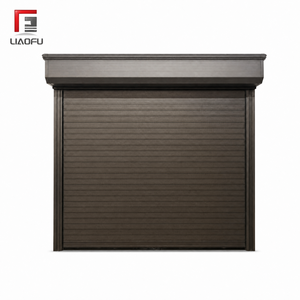
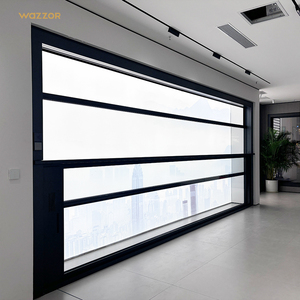
High-end residential villas and commercial facades are increasingly specifying motorized vertical lift windows, electric hidden-hinge casements, and automated roller shutters tied directly to smart home automation and Building Management Systems (BMS). Procurement streams are prioritizing manufacturers with proven electrical integration capabilities, concealed motor pockets, and secondary manual override safety mechanics.
4. De-risking Supply Chains via Direct Manufacturer OEM Partnerships
Navigating regional distributor markups and fragmented sourcing networks creates operational risk for large-scale developments. The market is shifting toward direct-from-factory OEM/ODM procurement models. By partnering directly with a certified manufacturer, procurement teams secure customized profile dies, private-label hardware branding, strict batch-to-batch powder coating color consistency, and guaranteed containerized shipping schedules.
Advanced Product Development & Structural Engineering Trends
To meet the demands of modern architectural design—characterized by slim sightlines, soaring ceiling-height glass panels, and seamless indoor-outdoor living transitions—the engineering of aluminum window systems has evolved rapidly across three critical dimensions:
Traditional weep holes often fail under severe storm wind pressure, forcing rainwater backward into interior wall cavities. Modern ZENIC systems utilize hidden, multi-stage pressure-equalized drainage chambers. Exterior wind pressure is balanced inside the profile cavity, preventing water ingress even during 100km/h driven rainfall events.
Mitre joints represent the main point of failure in low-grade frames. Modern engineering replaces mechanical corner cleats with dual-pin hydraulic corner crimping combined with two-component polyurethane corner injection adhesive. This forms a structural bond that guarantees frame squareness and watertightness for decades.
Architectural aluminum facades exposed to coastal salt spray or aggressive urban smog require superior chemical protection. Premium systems employ Qualicoat Class 2 standard thermosetting powder coatings, 25-micron anodizing, or 70% Fluorocarbon (PVDF) triple-coat paint lines capable of resisting UV fading and chalking for 25+ years.
Frequently Asked Questions for Global B2B Procurement Teams
Clear answers to key technical, logistical, and commercial questions asked by international buyers, architects, and main contractors:
What certifications and test reports do ZENIC products carry for export projects?
ZENIC window and door systems are manufactured under strict ISO 9001:2015 Quality Management protocols. Our primary export product series carry verified compliance testing documentation, including European CE Marking (EN 14351-1), Australian Standard AS2047 (structural wind pressure, air infiltration, water penetration), North American NFRC thermal ratings, and AAMA structural testing. Detailed system test reports from accredited third-party laboratories (such as Intertek and SGS) are provided with engineering shop drawings upon project submittal.
What is your standard Minimum Order Quantity (MOQ) and production turnaround?
Our standard project MOQ begins at 50 units (or approximately 150 square meters of total fenestration area). Mixed orders containing custom casement windows, sliding doors, and entrance systems within a single container are fully supported. Production lead times typically start at 15 to 25 working days following final shop drawing approval, glass specification confirmation, and deposit receipt. FOB Foshan or FOB Shenzhen loading terms are standard, with CIF and DDP delivery available upon request.
How do ZENIC thermal break windows achieve U-values down to 1.1 W/m²K?
Achieving ultra-low thermal transmittance requires a systematic approach to insulating the entire fenestration profile. ZENIC systems pair multi-chambered 6063-T5 extrusions with wide 24mm to 34mm Polyamide PA66GF25 thermal insulating strips, specialized EPDM continuous center seals, and advanced Insulated Glass Units (IGUs). By specifying triple-pane glass configurations filled with 90% Argon gas, warm-edge composite spacers, and dual silver Low-E soft coatings, our assemblies minimize conductive, convective, and radiant heat transfer.
Do you offer fully custom OEM/ODM profile design and private labeling?
Yes. Over 60% of our production volume consists of OEM/ODM custom engineering for real estate developers, window brand owners, and commercial system distributors. Our engineering department develops custom aluminum extrusion dies based on client-provided CAD/BIM models, matching specific architectural sightlines, threshold profiles, and wall depth requirements. We also support custom protective film branding, hardware engraving, and bespoke RAL color matching.
How does ZENIC prevent shipping damage and glass breakage during ocean transit?
All finished window and door units undergo a multi-layer sea-worthy packaging procedure designed for overseas container shipping. Units are wrapped in protective polyethylene scratch resistant film, encased in shock-absorbing EPE foam, fitted with reinforced plastic corner guards, and fully enclosed inside fumigation-free solid plywood crates. Crates are loaded with heavy-duty polyester strapping and internal timber bracing to eliminate motion during transport.
Can ZENIC supply windows tailored to extreme wind loads and coastal salt spray environments?
Yes. For island resorts, coastal villas, and high-rise structures, we specify heavy-duty profiles with structural wall thicknesses up to 2.5mm, reinforced mullion bars, and 316-grade stainless steel friction stays and fasteners. Surface treatments for marine environments include 70% Fluorocarbon PVDF coatings or 25-micron anodizing that resist salt fog corrosion according to ASTM B117 standards.
End-to-End Quality Assurance & Order Execution Process
To ensure absolute fidelity to architect shop drawings and zero job-site rejections, every project executed at our Foshan facility follows a rigorous 4-stage quality gate:
Architectural elevations are converted into precision shop drawings. Wind load pressure, glass deflection, and thermal values are calculated prior to profile cutting.
Extrusions are processed on double-head CNC cutting machines with linear tolerances within ±0.5mm. Hardware lock pockets, drainage slots, and hinge holes are milled automatically.
Polyamide PA66GF25 thermal strips are knurled and inserted. Corner mitres are injected with structural glue and hydraulically crimped to form rigid corner joints.
Insulated glass units are set using structural silicone and continuous EPDM gaskets. Units undergo air/water tightness checks before final sea-worthy crating.
Request Technical Specification & Factory Quote
Planning a residential project, commercial development, or seeking an OEM window manufacturing partner? Send your window schedules, architectural drawings, or technical queries to our engineering team.