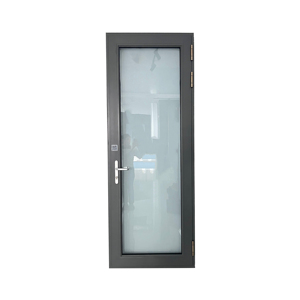
Precision Fenestration Catalog
Featured Heavy-Duty Aluminum Swing & Architectural Door Systems
Explore our CE certified, thermal break aluminum swing doors engineered for high wind loads, extreme thermal efficiency, and commercial durability.
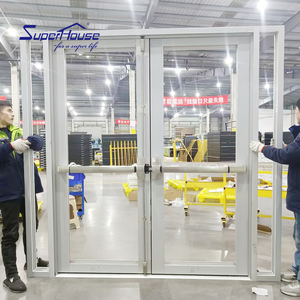
Superhouse High Quality Aluminum Glass Casement Hinged Swing Door with ADA Door Sill and Push Bar for Hotel Commercial Door
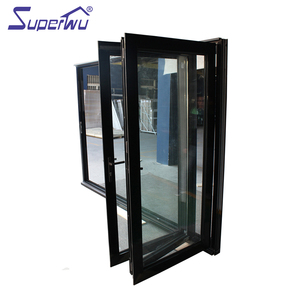
Folding Doors Sliding Room Aluminum With Retractable Fly Screen For Large Folding Door Aluminium Bi-folding Door Swing Glass
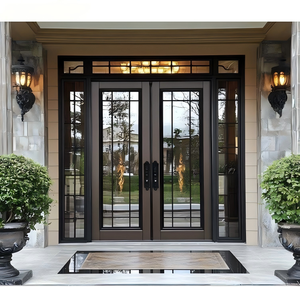
Sunnysky NFRC Customized Hurricane Impact Glass Hinge Door 90PSF High Impact Swing Door Patio Door With Grills
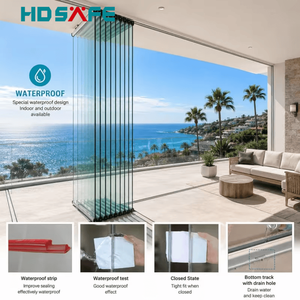
Modern Aluminum Folding Glass Door System Frameless Bifold Door for Balcony & Sunroom
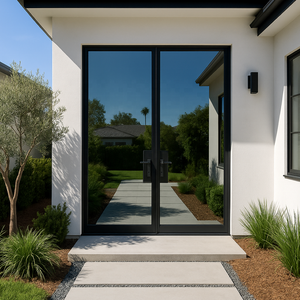
Customized Aluminum Double Glass Swing Doors Heavy Duty Thermal Break Soundproof Security Front Entrance Door for Hotel
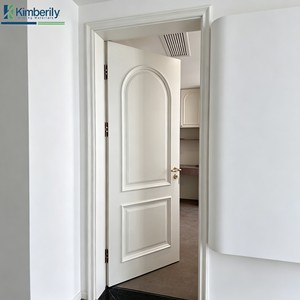
European Standard French Design Thermal Break Aluminum Alloy Casement Door for Outdoor Villa Apartment and Warehouse
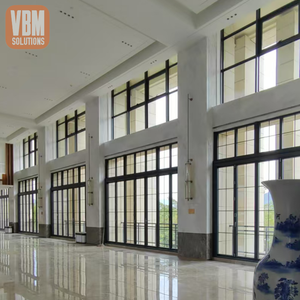
Heavy Duty Commercial Aluminum Folding Doors Large Opening Bi-fold Patio Door for Shop Storefront
Industrial Scale & Performance Verification
Foshan Manufacturing Infrastructure & Quality Metrics
20,000m²
Production Infrastructure
Automated CNC extrusion processing, corner crimping, and assembly lines.
1.1W/m²K
Thermal Insulation Limit
Ultra-low U-factor achievable with PA66-GF25 thermal breaks & Low-E IGUs.
200kCycles
Hardware Durability
Multi-point stainless steel locking systems tested for heavy commercial operation.
40+
Export Destinations
Serving architectural developers across North America, Europe, Oceania, & the Gulf.
Technical Procurement Guide
CE Certified Aluminum Swing Door Manufacturing: Structural Engineering & Compliance Standards
In modern commercial and high-end residential architecture, CE certified aluminum swing doors represent the critical intersection of structural integrity, thermal dynamics, and life-safety performance. Navigating global building regulations requires developers, façade contractors, and architectural specifiers to look beyond aesthetics and evaluate manufacturers based on mechanical tolerances, alloy metallurgy, gasket chemistry, and verified laboratory testing under Harmonized European Standards (EN 14351-1).
As a leading Foshan-based fenestration manufacturer, Zenic Window & Door Technology Co., Ltd. engineers advanced architectural systems designed to withstand extreme wind loads, severe coastal weather conditions, and rigorous operational frequencies. This guide serves as an executive whitepaper on aluminum swing door engineering, procurement strategies, compliance verification, and future technological vectors.
1. European Standard Compliance (EN 14351-1) & CE Marking Mandatory Criteria
The CE marking is not merely a trading mark; it is a mandatory declaration of conformity ensuring that pedestrian doorsets comply with European Union construction product regulations (CPR 305/2011). Authentic CE certified aluminum swing door manufacturers subject their profile systems to third-party Type Testing (ITT) covering critical performance parameters:
- Resistance to Wind Load (EN 12210): Frame profile deflection must not exceed 1/300 of the span under peak static pressure. Premium commercial swing doors are tested to Class C5/B5 (up to 2000 Pa design pressure), guaranteeing structural safety in high-rise coastal installations.
- Watertightness (EN 12208): Utilizing pressure-equalized drainage channels and continuous internal EPDM gaskets, systems achieve ratings up to Class E900 (900 Pa unexposed water spray resistance without internal penetration).
- Air Permeability (EN 12207): Multi-point perimeter compression locking achieves Class 4 airtightness, preventing unwanted exfiltration and infiltrating thermal loss.
- Thermal Transmittance (EN ISO 10077-2): Calculation and physical hot-box testing of frame U-values ($U_f$) and total door unit thermal performance ($U_d$) down to 1.1 W/m²K using polyamide thermal insulation profiles.
| Performance Category | Standard Test Method | CE Certification Class / Target Value | Engineering Implication |
|---|---|---|---|
| Structural Wind Pressure | EN 12210 | Class C5 / B5 (2000 Pa) | Prevents frame permanent deformation & glass blowout during storm conditions. |
| Water Tightness | EN 12208 | Class 9A to E900 (up to 900 Pa) | Concealed internal drainage prevents water pooling even under hurricane rainfall. |
| Air Permeability | EN 12207 | Class 4 (Highest Rating) | Optimizes HVAC efficiency by eliminating thermal air leakage around sashes. |
| Acoustic Insulation | EN ISO 140-3 | STC 42 dB – 45 dB / $R_w$ 44 dB | Multi-layer laminated double IGUs reduce urban environmental noise pollution. |
| Operating Forces | EN 12046-2 | Class 2 (Manual Operation) | Smooth manual operation compatible with ADA commercial accessibility requirements. |
2. Profile Metallurgy & Polyamide Thermal Break Engineering
The core structural backbone of heavy-duty aluminum swing doors relies on primary aluminum alloy extrusion, specifically 6063-T5 or 6061-T6 architectural grade aluminum. Unlike low-cost manufacturers who incorporate contaminated recycled scrap alloy, elite manufacturers utilize virgin aluminum billets with strict magnesium and silicon ratios. This guarantees tensile yield strength exceeding 160 MPa and uniform wall thicknesses between 2.0mm and 3.0mm on load-bearing mullions.
To eliminate aluminum's natural thermal conductivity, profile systems integrate precision-engineered polyamide thermal break strips made of PA66-GF25 (Polyamide 66 reinforced with 25% glass fiber). This material matches the thermal expansion coefficient of aluminum, ensuring that frame assemblies do not warp, delaminate, or shear under extreme temperature differentials between interior conditioned spaces and external weather extremes.
3. Multi-Layer Sealing Mechanics & Hardware Ergonomics
A major cause of premature swing door failure in commercial applications is lock deflection and gasket degradation. Zenic addresses these failure modes through systematic engineering:
- EPDM Continuous Seal Gaskets: Utilizing Ethylene Propylene Diene Monomer synthetic rubber with high elastic memory and UV resistance. Unlike PVC gaskets that shrink and crack over time, vulcanized EPDM gaskets maintain seal compression across a operational temperature range of -40°C to +120°C.
- Corner Assembly Integrity: Profile joints are secured using heavy-duty cast aluminum corner keys combined with hydraulic pin-crimping and two-component structural polyurethane adhesive injection. This prevents frame sagging under the weight of thick double or triple insulated glass units (IGUs).
- Commercial Hardware Integration: Sashes are equipped with German-engineered or premium OEM multi-point locking gear, 3D adjustable heavy-duty barrel hinges capable of supporting sash weights up to 180 kg, and integrated panic bars or ADA-compliant flush thresholds.
The ZENIC Advantage
Why Global Developers Partner with Zenic Technology
From custom CAD design to automated factory assembly, our Foshan manufacturing base ensures rigorous quality control and direct export logistics.
20,000 m² Production Base
Equipped with high-precision CNC multi-axis cutting stations, automatic corner crimping rigs, and dedicated glazing assembly lines in Foshan, China.
Certified Testing Compliance
Product series tested and compliant with international benchmarks including CE (EN 14351-1), NFRC, AS2047, CSA, AAMA, and ISO 9001 management systems.
OEM / ODM Engineering Customization
Full support for custom extrusion dies, anodized or Qualicoat powder-coated RAL finishes, wood-grain thermal transfers, and custom glass specifications.
Pre-Assembly & Glazing QC
Every swing door unit undergoes 100% factory pre-assembly, lock actuation checks, sash alignment testing, and protective EPE foam export crating.
Global Export Supply Network
FOB Foshan or Shenzhen logistics coordination delivering containerized shipments directly to job sites across 40+ countries with lead times from 15 days.
Extreme Thermal & Acoustic Engineering
Custom glass build-ups incorporating double/triple silver Low-E coatings, warm edge spacers, argon gas fill, and laminated acoustic dampening interlayers.
Market Intelligence & Strategic Procurement
Future Trends in Architectural Aluminum Swing Door Procurement (2025–2030)
The commercial fenestration landscape is undergoing rapid transformation driven by aggressive global carbon reduction targets, smart city integration, and evolving architectural design language. Project specifiers and wholesale buyers must realign their procurement strategies with four key industry trends:
1. Decarbonization & Low Embodied Carbon Aluminum
As international green building certifications (LEED v4.1, BREEAM, DGNB) mandate strict embodied carbon metrics, leading swing door manufacturers are transitioning to hydro-powered primary aluminum smelting and certified post-consumer recycled alloys. Specifying aluminum profiles produced with less than 4.0 kg CO2e per kg of raw billet drastically reduces the initial carbon footprint of building envelopes.
2. Invisible Sightlines & Ultra-Slim Architectural Profiles
Architects are demanding larger glazed openings with minimal visible framing. Future procurement favors swing doors featuring narrow 38mm–50mm visual sightlines, concealed hinges, and integrated glass-to-glass corner joints without sacrificing structural wind resistance or thermal performance.
3. Smart Access Integration & Automated Electromechanical Locking
Commercial doors are transitioning from mechanical keys to smart building ecosystem connectivity. Modern swing door systems incorporate hidden motor operators, biometric fingerprint scanners, facial recognition access control, and motorized multi-point locks that communicate directly with centralized Building Management Systems (BMS).
4. Barrier-Free Universal Access Threshold Technology
With tightening accessibility regulations worldwide (such as ADA in North America and DIN 18040 in Europe), zero-step transition thresholds have become standard. Advanced manufacturers utilize magnetic automatic drop-down seals and flush concealed drainage gutters to provide seamless wheel-chair access while maintaining watertightness against wind-driven rain.
Procurement Clarifications
Frequently Asked Questions for Commercial Buyers
Common inquiries from architects, builders, developers, and door importers regarding technical compliance and ordering protocols.
What specific CE documentation do you provide for project submittals?
We provide comprehensive CE Declaration of Performance (DoP) documents, initial type testing (ITT) laboratory reports certified to EN 14351-1, thermal calculation certificates ($U_f$ and $U_d$), and factory production control (FPC) audit documentation required by European building control authorities.
What is your minimum order quantity (MOQ) and sample policy?
Our standard MOQ starts from 50 sets per project order. Mixed order configurations combining casement windows, sliding doors, and swing doors within a single container are supported. Corner profile cut-away samples and hardware desktop displays are available upon request for architectural submittals.
How do your aluminum swing doors perform in hurricane or coastal environments?
For coastal and high-wind regions, we offer hurricane impact-rated series tested up to 90 PSF design pressure. These configurations utilize heavy-wall 6063-T5 aluminum extrusions, SGP (SentryGlas®) laminated safety glass, 316 marine-grade stainless steel hardware, and Qualicoat Class 2 powder coating or PVDF coatings resisting over 3,000 hours of salt spray exposure.
What thermal breaking technology is integrated into your door frames?
Our thermal break doors utilize imported Polyamide PA66-GF25 structural insulation bars. Combined with double or triple-pane insulated glass units (IGU) featuring Low-E coatings, warm edge spacers, and argon gas filling, our systems achieve overall U-values down to 1.1 W/m²K (0.19 BTU/h·ft²·°F).
What is the typical production lead time and export crating method?
Production lead time typically ranges from 15 to 25 days post shop drawing approval and deposit receipt. All swing door assemblies are fully factory-tested, wrapped in protective film, protected with corner guards, and packed into fumigation-free, fully enclosed plywood export crates suitable for ocean freight transportation.
Accelerate Your Project with CE Certified Engineering
Submit your architectural drawings, elevation schedules, or tender documents. Our fenestration engineering team provides structural reviews, U-value calculations, and competitive factory-direct quotations within 24 hours.
Inquire Now