Featured Architectural Exterior Doors & Windows
Precision-engineered thermal break systems custom-manufactured in Foshan, China. Tested to NFRC, CE, CSA, and AS2047 international performance standards.
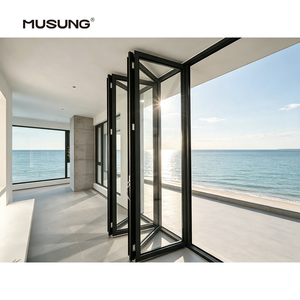
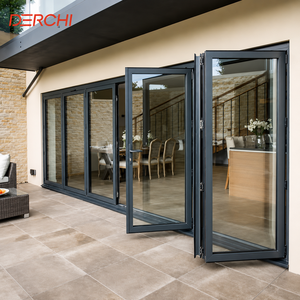
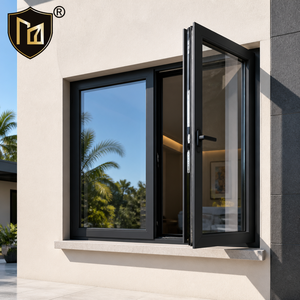
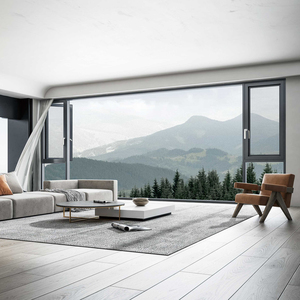
Evaluating China’s Premier Aluminum Exterior Door Manufacturing Ecosystem
The global construction sector is undergoing a structural transition driven by stringent building envelope standards, such as Europe’s EPBD (Energy Performance of Buildings Directive), North America’s revised ENERGY STAR 7.0 criteria, and Australia’s NCC (National Construction Code). As architects and commercial developers strive for net-zero operational carbon, the thermal performance, structural integrity, and air-water tightness of exterior door systems have become central parameters in procurement design.
China—and specifically the Foshan manufacturing cluster in Guangdong province—accounts for over 35% of the world’s high-end architectural aluminum extrusion and fenestration exports. Navigating this industrial ecosystem requires an understanding of alloy metallurgy, structural thermal barrier mechanics, hardware kinematic load bearing, and international regulatory submittal pathways. Top-tier Chinese manufacturers have shifted from commodity profile processing to integrated fenestration system engineering, offering custom profiles capable of meeting low U-values down to 1.1 W/m²K while withstanding severe structural wind pressures exceeding 1,000 N.
Key Procurement Insight: True system doors differ from fabricated generic profile doors. System engineering utilizes optimized multi-cavity aluminum alloys paired with structural PA66 polyamide thermal breaks and continuous, corner-molded EPDM gasket lines to isolate exterior thermal loads completely.
Selecting prime 6063-T5 virgin aluminum alloys over re-melted scrap billets is essential for high-load exterior installations. Virgin 6063-T5 provides superior tensile strength (≥160 MPa) and yield strength (≥110 MPa), ensuring profile dimensional stability during CNC machining, corner crimping, and high-pressure structural sealant application. Furthermore, high-purity aluminum alloys accept advanced surface treatments—including 25-micron PVDF fluorocarbon coatings, anodizing, and powder coating—without surface pitting or micro-cracking when exposed to saline coastal winds or intense ultraviolet radiation.
Core Technological Differentiators of Leading Chinese Manufacturers
Structural Thermal Isolation
Utilization of PA66 GF25 (25% glass fiber reinforced polyamide) insulation strips to physically divide inner and outer profile aluminum extrusions, dramatically reducing thermal conduction.
Hurricane & Impact Resistance
Engineered structural wall thicknesses up to 2.5mm paired with laminated hurricane impact glass assemblies tested to withstand cyclic wind pressures exceeding ASTM E1996 standards.
Multi-Point Perimeter Locking
Integration of heavy-duty multi-point stainless steel locking gear systems (Siegenia / GU / Hoppe) tested to 200,000 continuous operation cycles without mechanical degradation.
Pressure-Equalized Drainage
Concealed hidden interior weep channels operating on pressure-equalization principles prevent water back-surge under high-velocity rainstorms while retaining clean visual sightlines.
Acoustic Decoupling (35-45 dB)
Multi-chamber profile engineering combined with multi-layer EPDM continuous sealing rings and double/triple warm-edge Low-E insulated glass units (IGU) eliminates airborne noise.
Precision Corner Crimping
Corner joints secured via heavy pneumatic crimping machines inject specialized dual-component corner adhesive code, guaranteeing absolute structural rigidity and leak prevention.
Specification & Performance Matrix for Export Fenestration
To assist project specifiers, developers, and procurement executives in selecting the correct system configuration for targeted climate zones, the matrix below details key performance metrics across exterior aluminum door typologies.
| System Typology | Frame Depth | U-Factor (W/m²K) | Wind Pressure (Pa) | Max Glass Cavity | Target Compliance |
|---|---|---|---|---|---|
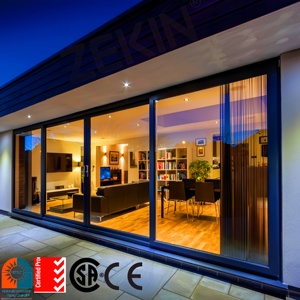
| Heavy-Duty Lift & Slide Door | 110mm – 160mm | 1.2 – 1.4 | ≥ 4,500 Pa | 39mm (Triple IGU) | AS2047 / NFRC |
| Thermal Break Bifold Door | 75mm – 90mm | 1.4 – 1.6 | ≥ 3,500 Pa | 32mm (Double IGU) | CE Marking |
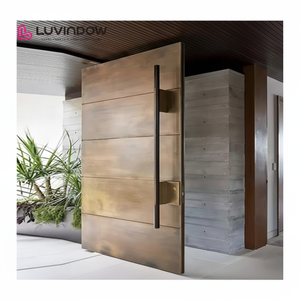
| Architectural Pivot Entry Door | 100mm – 120mm | 1.5 – 1.8 | ≥ 3,000 Pa | 28mm (Insulated Panel) | AAMA / Florida Code |
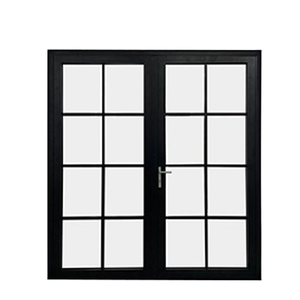
| Thermal Swing French Door | 65mm – 85mm | 1.1 – 1.3 | ≥ 4,000 Pa | 42mm (Low-E Triple) | Passive House Standard |
| Hurricane Impact Sliding Unit | 120mm – 150mm | 1.3 – 1.5 | ≥ 5,500 Pa | 38mm (SentryGlas) | ASTM E1996 / High Velocity |
Global Procurement Trends: Aluminum Exterior Doors (2026–2030)
Strategic B2B sourcing of exterior doors from China is evolving beyond direct FOB unit pricing. Institutional developers and importers must align their supply chain practices with four major macro trends shaping international commercial real estate:
1. Carbon Transparency & Environmental Product Declarations (EPDs)
With the implementation of the European Union’s Carbon Border Adjustment Mechanism (CBAM) and green building rating systems such as LEED v4.1 and BREEAM, overseas buyers increasingly demand EPD certification for aluminum profiles. Leading Chinese factories are shifting toward green hydro-electric powered aluminum smelting and incorporating 20%+ post-industrial circular aluminum alloy profiles to dramatically reduce embodied carbon metrics (kg CO2e per kg profile).
2. Transition to Vacuum Insulated Glass (VIG) & Triple Soft-Coat Low-E
As standard double-glazed Low-E IGUs reach their physical limits around U-values of 1.4 W/m²K, next-generation aluminum exterior doors are adopting hybrid Vacuum Insulated Glass (VIG). VIG technology provides insulating performance (U-values below 0.6 W/m²K) in a slim profile depth, reducing sash structural weights, reducing hinge wear, and allowing for massive floor-to-ceiling glass wall configurations.
3. Smart Access Integration & Concealed Motorization
Modern architectural entry designs demand seamless integration with smart home ecosystems. Top OEM factories in Foshan are embedding concealed motorized drive units inside the top tracks of heavy-duty sliding and bifold doors. These automated systems incorporate biometric fingerprint scanners, RFID sensors, and dynamic safety light curtains directly into the custom extrusion profile without compromising thermal breaks or perimeter weatherproofing gaskets.
4. Risk Mitigation & Complete Pre-Assembled Modular Shipping
High overseas job-site labor costs have reshaped how fenestration products are ordered. Rather than importing knock-down (KD) frames requiring extensive job-site glazing and hardware fitting, international developers prefer factory-glazed, fully corner-crimped, hardware-calibrated units packed in steel-reinforced export crates. This turnkey approach minimizes installation errors, protects warranty submittals, and speeds up structural enclosure on site.
ZENIC Window & Door Technology: Advanced Manufacturing Infrastructure
Operating from a modern 20,000 m² manufacturing plant in Foshan, China, Zenic Window & Door Technology Co., Ltd. (ZENIC) has established itself as an engineering partner for international architects, façade consultants, commercial developers, and high-volume fenestration distributors across more than 40 countries.
Unlike traditional fabricators, ZENIC operates an integrated production workflow spanning custom aluminum extrusion die engineering, precision CNC profile cutting, automated corner crimping, structural glass assembly, multi-stage quality assurance, and export logistics. Every window and exterior door system leaving the factory undergoes rigid structural, dimension, and seal checks to ensure long-term durability in demanding climates.
Virgin 6063-T5 Profiles
Strict use of primary alloy billets with structural profile wall thicknesses up to 2.5mm. Zero reliance on contaminated scrap metal guarantees finish consistency and high wind pressure load ratings.
Six-Seal EPDM Isolation
Continuous synthetic EPDM gaskets paired with PA66 GF25 polyamide thermal break bars deliver tight resistance against air infiltration, water penetration, and condensation.
Full Pre-Assembly Inspection
100% of custom orders are pre-assembled, hardware-tested, and dimensionally verified before entering fumigation-free plywood export crates lined with protective EPE foam.
Frequently Asked Questions by Overseas Buyers
Key technical, regulatory, and commercial answers for architects, project developers, and importers looking to source aluminum exterior doors from China.
What is the minimum order quantity (MOQ) and sample lead time for custom door systems?
How do Chinese aluminum exterior door factories ensure structural code compliance in the US, EU, and Australia?
What is the typical production and shipping timeline for a 40ft High Cube container?
What packing methods are used to prevent glass breakage and frame scratches during ocean transit?
Can OEM factories match specific RAL colors or custom wood-grain architectural finishes?
How do thermal break exterior doors perform in extreme climate zones (desert heat vs sub-zero cold)?
What warranties are offered on structural profiles, glass units, and operating hardware?
Ready to Source Architectural Aluminum Exterior Doors?
Submit your door schedules, CAD elevations, or project specifications directly to our engineering team for technical review, thermal simulation submittals, and a detailed FOB/CIF factory quote within 24 hours.
Get Catalog