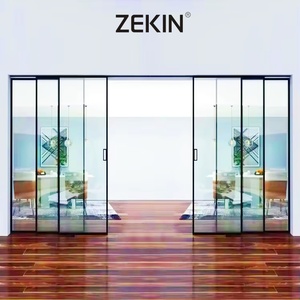
Export Product Portfolio
Factory-Direct Heavy-Duty & Ultra-Slim Sliding Systems
Engineered in Foshan, China to meet international building codes including AS2047, NFRC, Florida High-Velocity Hurricane Zones (HVHZ), and European CE standards.
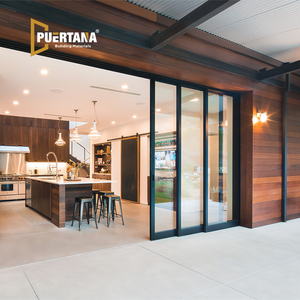
Exterior Conceal Stacking Door Sliding Patio Door Aluminium Hidden Glass Pocket Slide Doors Inside the Wall
Get a Quote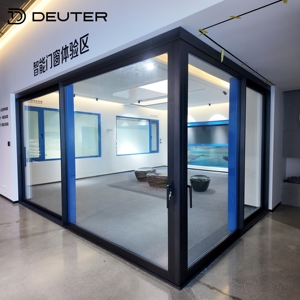
Seamless Corner Aluminum Lift Sliding Doors Thermal Break Heavy Duty Panoramic Patio Glass Doors Large Opening for Modern Villa
Get a Quote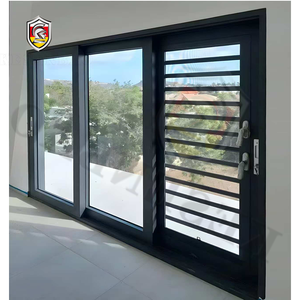
Modern Waterproof Double Tempered Glass Aluminium Sliding Doors with Louver for Villa House
Get a Quote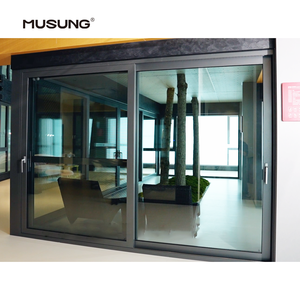
Large Sliding Glass Doors for Patio Aluminum Frame Thermal Insulation Double Glass Sliding Doors
Get a Quote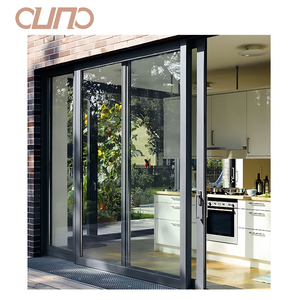
OUNA NOA Florida Standard High Impact 80PSF Hurricane Proof Sliding Door Aluminum Patio Door with Tinted Glass for Villa
Get a Quote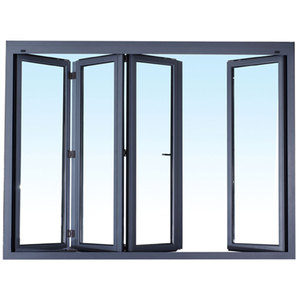
AS2047 Aluminium Frame Tilt Open Window Window Aluminium 3 Track Sliding windows Double Glazed Sliding Window
Get a Quote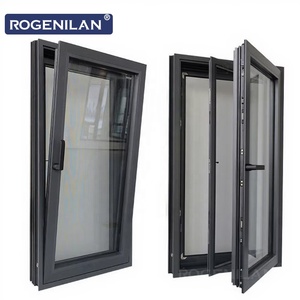
Rogenilan NO.1 Aluminum Double Glass Casement Window Triple Glaze Tilt Turn or Awning Swing Windows for House with Screen
Get a Quote20,000m²
Foshan Production Base
40+
Global Export Markets
1.1W/m²K
Lowest Tested U-Value
200,000Cycles
Hardware Durability Rating
Enterprise Advantage
Why Global Developers & Architects Source from Zenic
Operating from Foshan, Guangdong—the world’s premiere architectural aluminum hub—Zenic Window & Door Technology Co., Ltd. combines advanced CNC extrusion fabrication with rigorous structural engineering. We bridge the gap between Chinese industrial capacity and Western architectural standards.
- ✓ Virgin 6063-T5 Profile Alloy: We use strictly prime aluminum billets with nominal wall thicknesses up to 2.0mm–3.0mm, guaranteeing structural integrity under immense wind pressure.
- ✓ Polyamide PA66GF25 Thermal Barriers: Precision-engineered imported thermal break strips prevent thermal bridging, cutting HVAC energy demands dramatically.
- ✓ Triple-Sealed EPDM Gasket Engineering: Continuous, vulcanized corner-joined EPDM weather-stripping ensures zero water penetration under harsh storm pressures.
- ✓ Custom OEM/ODM System Die Fabrication: In-house CAD drafters provide project-specific shop drawings within 24 hours, accommodating custom sills, mullions, and sub-frames.
Engineering Whitepaper
Technical Trends in Aluminum Sliding Door Systems
As architectural preferences pivot toward expansive glass facades, structural fenestration must balance ultra-slim sightlines with uncompromising thermal and structural loads.
Minimalist Micro-Slim Interlocks
Modern architectural design demands maximum transparency. China's top exporters now engineer interlock profiles as narrow as 16mm to 20mm. By reinforcing slim stiles with internal steel bar inserts or structural carbon fiber strips, these doors support glass panels over 3.5 meters high while maintaining wind load resistance exceeding 1,000 N.
Advanced Thermal Break Physics
Un-insulated aluminum profiles act as severe thermal conductors. Modern high-efficiency sliding doors utilize multi-chambered polyamide PA66GF25 thermal strips filled with expanded polyolefin (PE) insulation foam. This configuration lowers frame U-values below 1.1 W/m²K, making aluminum sliding doors compliant with Passive House requirements.
Florida HVHZ Impact & 80PSF Load
With increasing climate volatility, coastal developments require hurricane-resistant fenestration. Premier Chinese exporters utilize heavy-gauge laminated impact glass (e.g., 6mm Tempered + 1.52mm PVB/SGP + 6mm Tempered) paired with reinforced perimeter anchoring, passing Florida Building Code TAS 201, 202, and 203 cyclic pressure tests at +80/-80 PSF.
Pocket Concealment & Wall Inset
Architectural space optimization has driven the popularity of hidden pocket sliding doors. Wall-inset tracks allow multi-panel configurations to slide smoothly into drywall cavities, opening 100% of the wall space. Dual EPDM pocket brushes ensure thermal separation and prevent ambient noise transmission.
Concealed Sub-Floor Drainage
Traditional raised threshold tracks pose tripping hazards and impede barrier-free access. Next-generation sliding systems incorporate sub-floor channel drainage with linear stainless steel grates. Pressure-equalized weep holes funnel driven rain away from the interior while maintaining a completely flush floor line.
Motorized Smart Automation & Sensors
Heavy-duty lift-and-slide doors weighing over 400kg per sash are now paired with hidden brushless DC motors. Integrated microprocessors feature obstacle detection, soft start/stop, and connectivity with smart home protocols (Zigbee, KNX, Control4) alongside rain and wind automatic closure sensors.
| System Category | Profile Specification | Max Panel Dimensions | Acoustic Rating (Rw) | Water Tightness |
|---|---|---|---|---|
| Slim-Frame Stacker Door | 2.0mm 6063-T5 | 20mm Interlock | 1.8m (W) × 3.5m (H) | 38 dB | 600 Pa (Class 9A) |
| Lift & Slide Heavy-Duty | 2.5mm Profile | 150mm Depth | 3.2m (W) × 4.0m (H) | 44 dB | 1050 Pa (Class E1050) |
| Concealed Pocket Door | 2.0mm Profile | Hidden Track | 1.5m (W) × 3.0m (H) | 36 dB | 450 Pa (Class 8A) |
| Hurricane Impact (80PSF) | 3.0mm Heavy Structural Alloy | 2.2m (W) × 3.2m (H) | 48 dB | 1200 Pa (HVHZ Approved) |
Procurement Intelligence
Future Global Sourcing & Procurement Trends
Understanding structural shifts in overseas procurement enables real estate developers, general contractors, and fenestration importers to mitigate risk and optimize capital expenditure.
1. Shift Toward Fully Prefabricated & Glazed Fenestration Units
On-site labor costs in North America, Australia, and Western Europe have increased by over 35% over the past three years. Consequently, global specifiers are transitioning away from knocked-down (KD) frames that require local glazing assembly. Modern Chinese exporters now supply factory-glazed, fully corner-crimped, and pre-adjusted window and door units. Arriving on-site marked with opening-specific architectural labels, these units drop directly into rough openings, reducing site labor overhead by up to 60%.
2. Third-Party Certification & Full Traceability Audits
Customs clearance and municipal code inspections have become increasingly stringent. Leading Chinese suppliers no longer rely solely on domestic lab testing; they partner with accredited international testing bodies such as Intertek, SAI Global, and NFRC. Importers are requiring comprehensive Bill of Materials (BOM) transparency, including mill test reports (MTR) for aluminum alloys, IGCC/SGCC glass temper validation stamps, and hardware cycle-life test reports prior to shipping container release.
3. High-Durability Fluoropolymer Surface Coatings (AAMA 2605)
For coastal villa projects and high-humidity environments, standard architectural powder coatings fail prematurely via filiform corrosion and chalking. Sourcing trends favor polyvinylidene fluoride (PVDF) coatings compliant with AAMA 2605 specifications. Utilizing 70% resin systems, these finishes resist salt spray corrosion for over 4,000 hours and hold color integrity under heavy UV exposure, supported by 15- to 20-year factory warranties.
4. Specialized Containerization & Zero-Breakage Logistics
Freight damage represents a major risk for architectural glazing projects. Advanced exporters have abandoned traditional loose wooden blocking in favor of steel-reinforced, A-frame transport racks and fumigation-free plywood crates wrapped in moisture-barrier EPE foam. Integrated shock and tilt sensors inside ocean shipping containers ensure accountable transit from Foshan ports directly to overseas job sites.
Factory Precision
Zenic's 4-Stage Quality Control Gate
Every aluminum sliding door leaves our factory only after passing through rigorous quality checkpoints overseen by certified fenestration engineers.
01
Profile Quality Audit
Spectrometric alloy analysis confirms 6063-T5 purity. Web wall thickness is verified via digital calipers, and coating depth is measured using magnetic film gauges.
02
Pin-and-Glue Assembly
German two-component corner corner-crimping adhesive is injected under pneumatic pressure into cast aluminum corner cleats, forming a waterproof joint.
03
Glazing & Seal Verification
Insulated Glass Units (IGU) are set with structural silicone sealant and continuous EPDM gaskets, eliminating air pockets and seal gaps.
04
Pressure Chamber Testing
Random production samples undergo dynamic water jet spraying and positive/negative air pressure chamber testing to verify code compliance before crating.
Buyer Assistance
Frequently Asked Questions for Overseas Importers
Clear answers to crucial engineering, ordering, and trade terms questions.
What is the Minimum Order Quantity (MOQ) for custom project sourcing?
Our standard factory MOQ starts at 50 square meters or 15 custom units per order. We support mixed window and door system types (e.g., combining sliding patio doors, tilt-and-turn windows, and louver pergolas) within a single 20ft or 40ft container to help developers reach optimal freight efficiency.
What production lead times should we budget for project delivery?
Standard manufacturing turnaround is 15 to 25 working days following shop drawing engineering approval and deposit receipt. Custom extrusion die creation (if required for proprietary profile systems) adds approximately 10 to 12 days. Freight transit times vary by destination port (e.g., Australia: 12-16 days; US West Coast: 18-22 days; US East Coast: 28-35 days; Europe: 25-30 days).
What U-values can your thermal break aluminum sliding doors achieve?
Depending on profile frame depth (ranging from 65mm to 150mm), polyamide thermal break width, and double/triple Low-E insulated glass unit configurations, our thermal break sliding door systems achieve total assembly U-values down to 1.1 W/m²K (0.19 BTU/h·ft²·°F), fully complying with ENERGY STAR, NFRC, and European low-energy building performance regulations.
Do you offer third-party structural testing and architectural submittals?
Yes. Zenic provides comprehensive architectural engineering packages including CAD shop drawings, calculation sheets for wind load resistance, glass thermal stress analyses, and certified test reports for AS2047, NFRC, CE, and Florida High Velocity Hurricane Zone (HVHZ 80PSF) compliance.
How do you support OEM/ODM branding for window distributors and fabricators?
We provide comprehensive private-label manufacturing services. This includes custom extrusion profile die engineering, custom hardware stamping, logo laser-etching on lock sets, specialized protective film branding, and customized architectural product catalog documentation tailored for local distribution networks.
What hardware brands are available for your sliding door systems?
We offer hardware configurations to meet project requirements and budget tiers. Options include top-tier German hardware (Siegenia, Hoppe, GU, Roto) as well as premium custom-engineered Zenic multi-point lock systems. All lock mechanisms and roller bogies are manufactured from 304 or 316 marine-grade stainless steel, tested to 200,000 continuous operation cycles without failure.
Initiate Direct Factory Sourcing
Ready to Elevate Your Architectural Project?
Send your project window schedules, CAD elevations, or bill of quantities today. Our engineering team will review your specifications and issue a comprehensive quotation within 24 hours.