Flagship Aluminium Heritage & System Series
Precision-engineered architectural doors and windows engineered for global luxury residential and commercial developments.
1. Whitepaper Executive Summary: China's Role in Global Aluminium Heritage Door Manufacturing
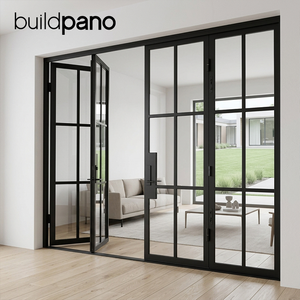
The global architectural sector has witnessed a structural renaissance in traditional fenestration aesthetics, specifically driven by the demand for Aluminium Heritage Doors (frequently referred to as modern Crittall-style, industrial glazing, or retro French door systems). As architects and developers strive to merge early 20th-century industrial minimalism with 21st-century energy conservation standards, thermal break aluminum extrusions have supplanted traditional solid steel profiles. China—and specifically the industrial cluster of Foshan, Guangdong—has emerged as the premier global hub for exporting high-precision, thermal-break heritage fenestration solutions.
Historically, authentic steel heritage doors presented major performance bottlenecks: high thermal transmittance (lack of thermal break), vulnerability to atmospheric oxidation, extreme mass imposing strain on building envelopes, and prohibitive fabrication costs. Modern engineering from leading Chinese manufacturers like ZENIC Window & Door Technology Co., Ltd. has solved this structural dilemma. By deploying ultra-narrow, architectural-grade 6063-T5 extruded aluminum profiles equipped with Polyamide (PA66-GF25) thermal barriers, Chinese exporters supply global markets with heritage systems that fulfill rigorous regional energy conservation codes (such as NFRC, ENERGY STAR, CE Marking, and Australian AS2047 standard compliance) while maintaining narrow sightlines down to 25mm–30mm.
This technical whitepaper outlines the structural parameters, material science, international procurement trends, compliance benchmarks, and sourcing methodologies required by B2B buyers, architectural specifiers, and real estate developers seeking to partner with elite Chinese exporters of aluminium heritage doors.
Structural Weight Optimization
Aluminium heritage profiles reduce overall structural mass by 60% compared to legacy solid steel, significantly mitigating structural load calculations on cantilevered spans and multi-story villa envelopes.
Polyamide Thermal Isolation
Integrated PA66-GF25 structural polyamide break strips isolate indoor and outdoor frame profiles, eliminating conductive energy transfers and thermal bridging in extreme climates.
Qualicoat Class 2 Powder Coating
Architectural surface treatments engineered to withstand 3,000+ hours of accelerated salt spray exposure, ensuring salt-air corrosion resistance in coastal Mediterranean and Australian environments.
2. Structural Engineering & Profile Physics of Heritage Aluminium Doors
Achieving authentic heritage aesthetics without compromising modern building envelope requirements requires advanced metallurgical processing and precise geometric profile engineering. Sourcing engineers must evaluate key profile variables including wall thickness, thermal break insertion methods, applied vs. authentic divided lite (glazing bar) bonding mechanisms, and acoustic dampening capacity.
2.1 Metallurgical Specifications and Thermal Break Integration
Top-tier Chinese heritage door exporters utilize virgin 6063-T5 aluminum alloy billets subjected to controlled artificial aging to achieve a Webster hardness rating of ≥12 HW. Scrap or recycled aluminum content is strictly avoided in structural extrusions to eliminate internal micro-fractures during high-pressure corner crimping operations.
The thermal barrier system relies on mechanical insertion of 24mm to 34mm wide fiberglass-reinforced polyamide strips (PA66-GF25) positioned centrally within the profile core. This multi-cavity chamber design acts as a thermal buffer, limiting solar heat gain coefficient (SHGC) while achieving thermal transmittance overall frame values (U-factor) down to 1.1 W/m²K when combined with argon-filled, low-emissivity double or triple insulated glass units (IGUs).
2.2 Glazing Bar Systems: Astragal Bars vs. True Divided Lites (TDL)
To replicate authentic 1920s grid layouts, exporters implement two primary architectural glazing bar methodologies:
- Simulated Divided Lites (SDL / Applied Astragal Bars): Precision-extruded ultra-slim aluminum grid lines are mechanically fastened or structural-tape bonded to the outer glass surfaces (interior and exterior), paired with an internal aluminum spacer bar within the double-glazed unit. This preserves the acoustic and thermal continuity of a single IGU while delivering authentic historical depth.
- True Divided Lites (TDL): Individual small glass panes are set into structural aluminum transom and mullion grids. While structurally classic, modern heritage projects typically favor SDL configurations to maximize sound transmission class (STC) ratings and water tightness.
| Performance Metrics | Standard Commercial Aluminium Profile | ZENIC Premium Thermal Break Heritage Profile | International Standard Baseline |
|---|---|---|---|
| Profile Alloy & Hardness | Recycled 6063-T5 (<9 HW) | Virgin 6063-T5 (≥12.5 HW) | ASTM B221 / GB/T 5237 |
| Sightline Width (Stile & Rail) | 65mm – 90mm Heavy Sightline | 25mm – 38mm Ultra-Slim Sightline | Architectural Heritage Spec |
| Thermal Transmittance (U-Value) | 2.8 – 3.5 W/m²K | 1.1 – 1.4 W/m²K (Low-E Double/Triple IGU) | NFRC / ENERGY STAR ≤ 1.6 |
| Wind Pressure Load Resistance | 2,500 Pa (Class 3) | 5,000 Pa (Class 5 - Hurricane Rated) | AS2047 / ASTM E330 |
| Acoustic Isolation (Rw / STC) | 28 dB | 42 dB (with Laminated Acoustic Glass) | ISO 10140-2 Compliance |
| Gasket Material & Sealing | Standard PVC Gaskets | Continuous EPDM Rubber + Foam Co-extrusion | EN 12365 Seal Standard |
3. Global Procurement Trends & 2025–2030 Market Forecast for Heritage Fenestration
The global demand for China-exported aluminium heritage doors is shifting from basic residential retrofits toward complex multi-family developments, luxury boutique hospitality, and adaptive reuse architectural projects across North America, Europe, Australia, and the Middle East. Based on operational export data and architectural specifier inquiries, four macro trends will define B2B sourcing strategies over the next five years:
3.1 Decarbonization and Whole-Life Carbon Compliance (EPDs)
International building codes are increasingly mandating Environmental Product Declarations (EPDs) evaluating embodied carbon from raw material extraction to site assembly. Forward-thinking Chinese exporters are transitioning toward low-carbon aluminum smelted using renewable hydroelectric energy, drastically reducing Scope 1 and Scope 2 operational emissions. Importers in the EU (subject to CBAM tariffs) and Australia must ensure their supplier provides verified material traceability certificates.
3.2 Integration of Concealed Smart Access & Motorization
The classic aesthetic of heritage doors is rapidly fusing with modern smart home automation. Next-generation export configurations feature fully concealed multi-point motorized locking gear, bio-metric fingerprint sensors embedded directly into minimalist vertical pulls, and smart glass (electrochromic switchable glass) integrated into the heritage astragal bar layout.
3.3 Demand for Large-Scale Pivot & Panoramic Lift-and-Slide Heritage Systems
Traditional heritage doors were historically limited to narrow hinged swing openings. Modern commercial architectural trends require oversized monumental pivot main entry doors (handling leaf weights up to 400kg) and multi-panel motorized lift-and-slide doors reaching heights over 3.5 meters while maintaining retro industrial gridlines. Exporters equipped with heavy-duty German hardware lines (such as Siegenia, Hoppe, or custom-engineered heavy CNC pivots) dominate high-margin project bidding.
Vacuum Insulated Glass (VIG) Adoption
By replacing standard double-glazing with 8.3mm ultra-thin Vacuum Insulated Glass, heritage profiles can achieve U-values under 0.6 W/m²K while reducing total profile depth to historically accurate 45mm frames.
Concealed Multi-Point Locks
Security expectations in major export markets (such as PAS 24 in the UK or RC3 burglar resistance in Europe) require full-length concealed multi-point locking gear operated via single turn key systems.
Modular Knock-Down (KD) Shipping
To reduce international container freight costs, advanced exporters supply high-precision pre-machined knock-down outer frames fitted with quick-connect corner cleats, allowing low-cost assembly on-site.
4. Corporate Capabilities & Manufacturing Infrastructure: ZENIC Advantage
As a key enterprise based in Foshan, Guangdong—the core hub of Chinese aluminum fenestration—ZENIC Window & Door Technology Co., Ltd. operates as a specialized manufacturer and global exporter of thermal break aluminum window and door systems, heavy-duty sliding panels, pivot doors, and outdoor architectural solutions.
4.1 Industrial Footprint and Quality Control Engineering
Operating a modern manufacturing base spanning nearly 20,000 square meters, ZENIC brings over 15 years of technical refinement to overseas project delivery. Production lines integrate high-precision multi-axis CNC machining centers, fully automated double-head cutting saws, and digital corner crimping units. Every profile cut, corner glue injection, EPDM gasket insertion, and glass assembly is monitored via a strict ISO 9001 Quality Management System protocol.
Prior to sea-worthy packaging, 100% of manufactured window and door units undergo rigorous quality control testing in mock-up testing bays to verify frame squareness, operational hardware torque, hidden drainage performance, and glass seal integrity.
4.2 Global Standard Certifications & OEM/ODM Flexibility
ZENIC’s product series are engineered to meet diverse international building standards. Depending on project specifications and regional codes, products are certified or tested under:
- North America: NFRC (National Fenestration Rating Council), AAMA standards, and CSA certification.
- Australia & Oceania: AS2047 (Windows and External Glazed Doors in Buildings) and AS1288 glass compliance.
- Europe: CE Marking (EN 14351-1), REACH compliant EPDM gasket seals.
- Global Quality: ISO 9001 Quality Management & Intertek laboratory test verified performance reports.
ZENIC fully supports OEM and ODM collaboration for global window distributors, architectural project specifiers, general contractors, and brand owners. Services include custom extrusion die design, bespoke powder coating colors (full RAL spectrum and textured matte finishes), wood-grain heat transfer sublimation, private labeling, and hardware custom-sourcing.
5. B2B Procurement Frequently Asked Questions (FAQ)
Below are detailed responses to the most critical technical and commercial queries raised by international buyers, importers, and project engineers when sourcing aluminium heritage doors from China.
Partner with China's Premier Aluminium Heritage Door Exporter
Submit your project schedules, CAD elevations, or tender requirements to receive comprehensive engineering reviews, shop drawings, thermal calculations, and competitive FOB/CIF factory quotes within 24 hours.