Featured Aluminum Back Doors & Fenestration Systems
Navigating China's Top Aluminum Back Door Manufacturers & OEM Factories
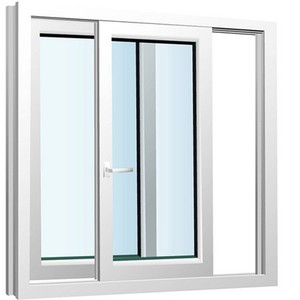
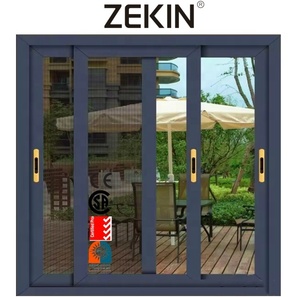
In modern architectural design, back entrance doors—frequently connecting interior kitchens, living rooms, and corridors to rear patios, backyards, and utility quarters—are no longer considered secondary building components. They represent critical structural envelopes requiring sophisticated weatherization, burglar resistance, thermal insulation, and aesthetic alignment.
Global real estate developers, architectural specifiers, and commercial fenestration importers increasingly look to China—specifically the Foshan industrial cluster in Guangdong—for advanced aluminum back door systems. Foshan accounts for a dominant share of global architectural aluminum extrusions, housing specialized factories equipped with multi-axis CNC machining centers, automated corner crimping lines, and electrostatic powder coating plants.
However, selecting the right manufacturing partner demands more than evaluating basic pricing. B2B buyers must evaluate profile alloy purity, thermal break strip compositions, multi-point lock engineering, continuous gasket elasticity, and international lab accreditation (such as NFRC, AS2047, and CE EN 14351-1). This technical whitepaper analyzes the structural standards, future procurement trajectories, and core manufacturing capabilities that define China's leading exterior aluminum back door factories.
Structural, Thermal, and Security Engineering Standards for Exterior Aluminum Back Doors
High-performance back doors must endure severe environmental stresses: constant humidity changes, extreme solar radiation, high wind pressures, and potential mechanical forced-entry attempts. Premier Chinese manufacturers engineer system back doors around three core technical pillars:
1. Prime Aluminum Alloy & Extrusion Geometry
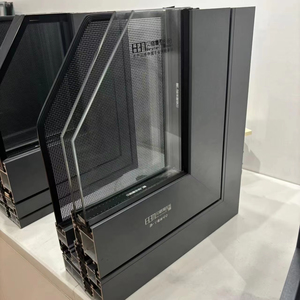
Leading factories reject recycled scrap aluminum in favor of virgin 6063-T5 or 6061-T6 structural aluminum alloys. Profiles feature structural wall thicknesses ranging from 2.0 mm to 3.0 mm for heavy-duty entry and patio back doors. Multi-chamber interior profile structures enhance torsional rigidity, preventing frame deflection over years of operation under high dynamic loads.
2. Polyamide Thermal Break Technology (PA66GF25)
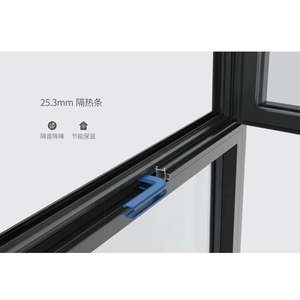
To stop thermal bridge conduction between indoor conditioned spaces and outdoor environments, top back door systems incorporate imported or premium domestic Polyamide PA66GF25 (25% glass fiber reinforced) thermal break strips. Combined with double or triple insulated glass units (IGUs) filled with Argon gas and treated with Low-Emissivity (Low-E) coatings, thermal transmittance values drop as low as U = 1.1 - 1.4 W/m²K, fully compliant with ENERGY STAR®, NFRC, and European passive house criteria.
3. Advanced Weatherization & Sealing Architecture
Inferior doors often leak air and water at threshold corners and sash junctions. China’s premier manufacturers utilize a three-layer, six-seal EPDM continuous gasket system paired with pressure-equalized hidden drainage channels. Corner construction employs injection-molded corner cleats with two-part polyurethane corner adhesive (pin-and-glue corner crimping), guaranteeing airtightness and water tightness even under wind loads exceeding 1,000 N.
| Performance Metrics | Standard Back Door Systems | ZENIC High-Performance Back Door Series | Testing & Compliance Standards |
|---|---|---|---|
| Profile Alloy Grade | Recycled / Mixed 6063-T5 (1.4 mm) | Virgin 6063-T5 Prime Alloy (2.0 mm - 3.0 mm) | GB/T 5237 / ASTM B221 |
| Thermal Insulation (U-Value) | 2.8 - 3.5 W/m²K (Non-Thermal Break) | 1.1 - 1.4 W/m²K (PA66GF25 Thermal Break) | ISO 10077-2 / NFRC 100 |
| Airtightness Performance | Class 2 (q1 ≤ 1.5 m³/m·h) | Class 4 (q1 ≤ 0.5 m³/m·h) | EN 12207 / ASTM E283 |
| Water Tightness | 250 Pa - 300 Pa | 900 Pa (Concealed Pressure Drainage) | EN 12208 / AS4420.2 |
| Hardware Cycle Life | 20,000 - 50,000 cycles | 200,000+ Verified Operations | EN 13126 / AAMA 904 |
| Forced Entry Resistance | Single-Point Latch | German Multi-Point Gear Lock (RC2/RC3 Rated) | EN 1627 / PAS 24 |
Future Procurement Trends & Architectural Innovations (2025-2030)
As global energy codes tighten and residential architecture leans toward indoor-outdoor seamless living, the procurement specs for aluminum back doors are rapidly evolving. B2B buyers and importers should align their supply chains with the following emerging technology trends:
Smart Access & IoT Security Integration
Back entry points are high-risk targets for residential break-ins. The latest trend combines heavy-duty multi-point mechanical locking bolts with concealed electronic smart access systems, including 3D facial recognition, biometric fingerprint sensors, mobile app access, and integration into overall smart home automation security hubs.
Ultra-Narrow Sightlines & Panoramic Glazing
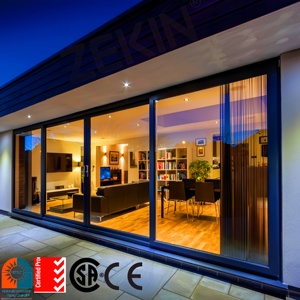
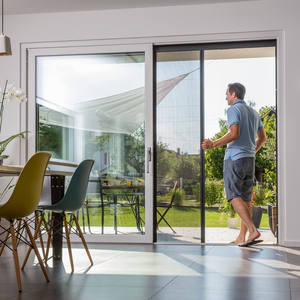
Modern villa and residential developers prefer minimal frame visibility. Contemporary back door systems feature sightlines as narrow as 20 mm to 35 mm while preserving heavy load capacities (supporting individual glass sashes up to 400 kg via stainless steel bottom tracks and tandem needle-bearing rollers).
Eco-Pass Barrier-Free Thresholds
Accessibility standards (ADA in North America, Part M in the UK) require zero-step, flush thresholds for back patio and garden access. Advanced manufacturers employ subterranean thermal break channel drainage thresholds, eliminating tripping hazards without sacrificing water tightness performance under driving rains.
Enterprise Manufacturing Strengths & Export Ecosystem
As a premier Foshan-based fenestration manufacturer, Zenic Window & Door Technology Co., Ltd. operates at the intersection of European technical design and China's high-efficiency industrial ecosystem. Our production infrastructure guarantees absolute consistency for large-scale commercial orders and custom architectural builds alike.
- 20,000 m² Advanced Production Facility: Equipped with fully automated CNC profile cutting centers, digital end-milling units, automatic corner crimping rigs, and double-component adhesive injection systems.
- Rigorous 5-Stage QC Quality Protocol: Raw alloy spectrographic check, profile coating thickness measurement (≥ 40μm for powder, ≥ 25μm for PVDF), assembly dimensional calibration, water tightness lab testing, and pre-shipment sash operation testing.
- Bespoke OEM / ODM Engineering Support: Dedicated engineering teams analyze client architectural CAD drawings, issuing complete structural calculations, wind load simulations, and shop drawings within 24 hours.
- Global Certification Portfolio: Certified and tested to international standards including NFRC (USA), AS2047 / AS1288 (Australia), CE EN 14351-1 (Europe), CSA (Canada), and ISO 9001 quality management standards.
- Heavy-Duty Sea-Worthy Packaging: All glass units and aluminum frames are wrapped in anti-scratch EPE protective foam, fitted with reinforced rubber corner caps, and vacuum-sealed in fumigation-free solid plywood crates to guarantee zero transit damage across 40+ export destinations.
Frequently Asked Questions for Sourcing Aluminum Back Doors
What is the typical Minimum Order Quantity (MOQ) for custom back doors?
What are the standard manufacturing lead times and trade shipping terms?
How do aluminum back doors compare to vinyl (uPVC) or timber doors in exterior applications?
Can back door systems be custom-engineered to meet hurricane or tropical storm building codes?
Do you provide hardware custom options (e.g., German vs Domestic brands)?
Ready to Source High-Performance Aluminum Back Doors Direct from Factory?
Send us your architectural elevations, window/door schedules, or CAD drawings. Our structural engineering team will deliver a comprehensive project quotation, U-value analysis, and CAD shop drawings within 24 hours.