Export Product Portfolio
Featured Architectural Aluminum Systems
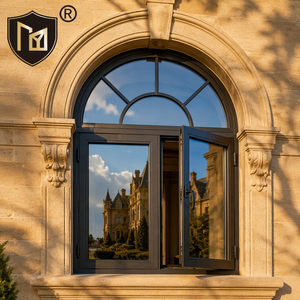
Tilt and Turn Aluminum Casement Window Double Glazed Thermal Break Soundproof NFRC CE European Style Bedroom Villa Custom OEM
Get a Quote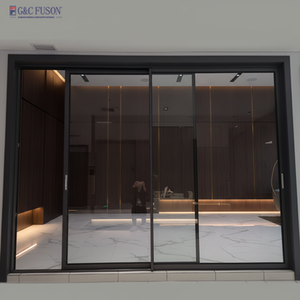
Doors and Windows Manufacturers Horizontal Aluminum Sliding Windows Buildings Screen Window With Wholesale Of New Materials
Get a Quote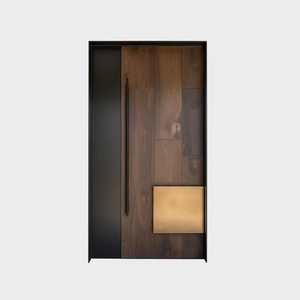
Residential Luxury Modern Pivot Main Entrance Door For Apartment Villa Exterior Front Door Digital Locking Aluminum Pivot Doors
Get a Quote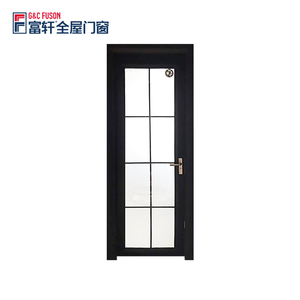
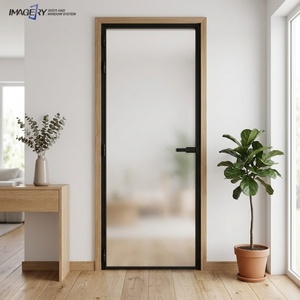
Fuson Tempered Glass Casement Door Aluminium Casement Door Interior Bathroom Swing Door With Private Label Wholesale
Get a Quote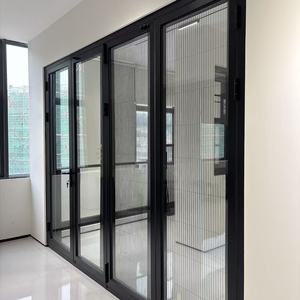
DERCHI Modern Aluminum Sliding Glass Door Soundproof and Windproof Sliding Glass Door for Home Hotel and Office Building
Get a Quote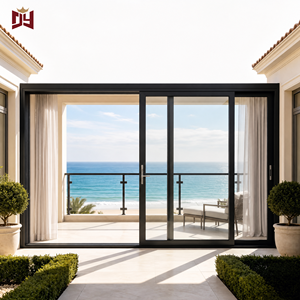
Aluminium Exterior Sliding Doors Heavy Duty Lift and Slide Door for Architectural Projects Custom Size OEM ODM CE Certified
Get a Quote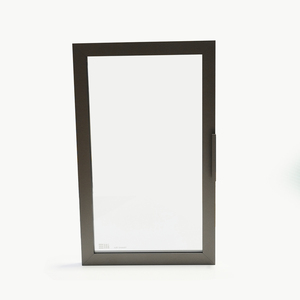
Glass Cabinet Door Air Smart 4Mm Tempered Glass Aluminum Frame Picture Windows For Office And Display Furniture
Get a Quote20,000 m²
CNC Manufacturing Base
1.1 W/m²K
Lowest Thermal U-Value
40+
Global Export Markets
200,000
Hardware Cycle Rating
1. Executive Market & Technical Synthesis: China's Aluminum Double Front Door Manufacturing Paradigm
In contemporary architectural design, the grand entrance serves as both a primary aesthetic statement and a critical envelope barrier against environmental extremes. Global demand for high-performance aluminum double front doors has experienced exponential growth, driven by structural durability requirements, stringent thermal efficiency mandates, and modern minimalist design preferences. As architects, B2B procurement managers, real estate developers, and commercial contractors evaluate international supply chains, China—specifically the Foshan industrial fenestration cluster—stands out as the premier global epicenter for advanced aluminum entrance systems manufacturing.
Historically, solid wood and galvanized steel dominated double front door specifications. However, material science advancements have positioned thermally broken 6063-T5 and 6063-T6 aluminum alloys as superior engineering alternatives. Modern aluminum double entry door systems eliminate common wood failure modes such as warping, swelling, rotting, and seasonal grain degradation. Furthermore, unlike steel doors susceptible to edge corrosion and high thermal conductivity, aluminum entrance systems engineered with structural Polyamide (PA66GF25) thermal breaks achieve U-values as low as 1.1 W/m²K while delivering structural resistance exceeding 1,000 N under high wind pressure testing.
To assist international buyers in navigating the technical nuances of sourcing from China best aluminum double front doors factories & suppliers, this whitepaper provides an exhaustive comparative breakdown of engineering standards, manufacturing processes, hardware integration, energy compliance (NFRC, CE, AS2047), and strategic B2B sourcing criteria.
2. Architectural Engineering Specifications & Performance Matrix
Evaluating premier Chinese factories requires analyzing standardized mechanical and thermal parameters. Below is the structural performance matrix comparing generic aluminum doors against export-grade system doors manufactured by leading Foshan facilities such as ZENIC Window & Door Technology Co., Ltd.
| Performance Parameter | Standard Commercial Grade | Export-Grade Thermal System | Architectural Testing Standard |
|---|---|---|---|
| Alloy Profile Composition | Recycled / Standard 6063-T5 | Virgin 6063-T6 Prime Alloy (2.0–3.0mm Wall) | ASTM B221 / GB 5237 |
| Thermal Insulation (U-Value) | > 3.5 W/m²K (Non-Thermal) | 1.1 – 1.6 W/m²K (PA66GF25 Thermal Strip) | NFRC 100 / EN ISO 10077 |
| Air Infiltration / Permeability | Class 2 (300 Pa) | Class 4 (600 Pa Continuous EPDM Gaskets) | ASTM E283 / EN 12207 |
| Water Penetration Resistance | 250 Pa | 700 Pa (Concealed Sub-Floor Drainage) | ASTM E331 / EN 12208 |
| Acoustic Isolation (STC Rating) | 28 - 32 dB | 42 - 48 dB (Triple Laminated IGU) | ASTM E90 / ISO 140 |
| Hardware Fatigue Life | 50,000 Cycles | 200,000+ Cycles (German/Italian Multi-Point) | AAMA 904 / EN 1191 |
| Surface Coating Salt Spray | 500 Hours Neutral Salt Spray | 3,000 Hours PVDF Fluorocarbon / Qualicoat | AAMA 2605 / ISO 9227 |
Note: Data derived from verified laboratory testing protocols under NFRC, CE, and AS2047 certifying parameters. Actual performance values vary depending on total opening dimensions, structural glass configuration, and threshold detail selection.
3. Global Procurement Trends: Future-Proofing Double Entrance Door Sourcing
The global architecture, engineering, and construction (AEC) sector is undergoing structural changes. Buyers specifying double front door systems from Chinese suppliers must align with five critical technology trends transforming the fenestration landscape from 2025 through 2030:
Integrated Biometric & Smart Access
Mechanical keyed locks are rapidly giving way to motorized multi-point lock bodies fully integrated into profile stiles. Trend leaders specify German-engineered electronic latching systems connected to facial recognition, 3D fingerprint sensors, smart home automation hubs (KNX/Matter), and automated flush drop-down seals.
Super-Insulated Thermal Break Profiles
With energy codes mandating near-zero energy building (NZEB) compliance across Europe and North America, basic non-thermal aluminum is non-compliant for exterior envelopes. Procurement trends require multi-chamber polyamide thermal breaks filled with aerogel or polyurethane foam insulation cores to achieve extreme U-factor targets.
Over-Sized Modern Pivot Architecture
Traditional hinged double doors are increasingly complemented by heavy-duty architectural pivot systems. Capable of supporting single-leaf weights exceeding 500 kg and panel heights up to 4.5 meters, modern pivot mechanisms utilize floor-concealed hydraulic dampers with 90-degree hold-open functionality and soft-close control.
Sustainable Low-Carbon Extrusions
Environmental Product Declarations (EPDs) are becoming standard requirements in B2B RFQs. Leading Chinese factories are adopting hydro-powered aluminum smelting processes, utilizing 6063 alloys with certified recycled content, and deploying chromate-free surface pretreatment lines to support LEED and BREEAM building accreditations.
Bespoke Surface Finishes & Sintered Stone Inlays
Architects are shifting away from plain paint finishes toward complex multi-textured surfaces. Sourcing demand centers around architectural PVDF fluorocarbon coatings, real-touch wood grain powder transfers (Italian Decoral technology), anodized bronze or metallic champagne shades, and composite aluminum panels embedded with sintered ceramic stone inlays.
4. Core Manufacturing Technologies & Structural Innovations in China
The competitive edge offered by top-tier Chinese manufacturers stems from heavy capital investment in high-precision CNC machinery, fully automated extrusion lines, and rigorous engineering protocols. Understanding these internal technology layers is crucial for B2B buyers evaluating supplier capability:
1. Corner Assembly & Structural Jointing Technology:
Inferior doors rely on self-tapping screws or weak mechanical brackets at frame corners, which twist under heavy panel movement and allow air leakage over time. Premier Chinese factories utilize double-pin hydraulic corner crimping combined with two-component polyurethane corner structural adhesives. This creates a monolithic frame joint capable of resisting immense torsional strain and guaranteeing lifetime structural integrity.
2. EPDM Gasket Co-Extrusion & Multi-Channel Weather Sealing:
Air and water tightness rely on rubber sealing quality. Leading suppliers implement automotive-grade continuous EPDM (Ethylene Propylene Diene Monomer) gasket systems across three distinct perimeter seal lines. Corners are vulcanized or molded into continuous 90-degree components rather than cut-and-butt joined, eliminating thermal bridging and water ingress vulnerabilities.
3. Advanced Glazing Unit (IGU) Integration:
Double front doors featuring vision glass panels incorporate high-performance Insulated Glass Units. Standard configurations utilize double or triple toughened safety glass (EN 12150 / ASTM C1048 certified) filled with 90%+ Argon gas, separated by warm-edge Technoform polymer spacers, and treated with off-line dual-silver or triple-silver Low-E coatings. This engineering reduces Solar Heat Gain Coefficients (SHGC) while transmitting high daylight luminosity.
4. Flush-Threshold Drainage & Universal Barrier-Free Design:
Exterior entrance doors face severe storm challenges. Modern Chinese system doors engineer flat, flush-mount ADA-compliant thresholds incorporating pressure-equalized hidden drainage channels. Water entering the outer weather seal collects in a sub-frame gutter and discharges externally via one-way check valves, preventing wind-driven back-flow during typhoon conditions.
5. Step-by-Step Supplier Evaluation & Factory Audit Framework
Sourcing custom fenestration directly from manufacturers in China requires a systematic verification process to eliminate project risk, specification mismatches, and shipping delays. Global procurement teams should execute the following 4-stage audit framework:
Stage 1: Shop Drawing & CAD Verification
Ensure the supplier maintains an internal structural engineering team capable of issuing 2D section drawings and 3D BIM models. Drawings must specify profile cross-sections, wall thickness tolerances, thermal break width, glass makeup, lock point counts, and exact wall anchor details before production sign-off.
Stage 2: Material & Certification Submittals
Demand third-party laboratory test reports for thermal (NFRC/ISO), structural air/water (ASTM/EN), and glass safety compliance. Verify that hardware components (Siegenia, Hoppe, GU, or top-tier Chinese brands like Kin Long/Hopo) carry documented cycle test certificates.
Stage 3: Pre-Shipment Trial Assembly & Inspection
Contract third-party inspection agencies (SGS, TÜV, Intertek) or request live video factory audits during trial assembly. Every unit must be fully assembled, hung in a test rig, checked for diagonal squareness (<1.5mm tolerance), lock pin engagement, and seal compression prior to disassembly or crating.
Stage 4: Sea-Worthy Crating & Export Packaging
Fenestration products are vulnerable to transit damage. Premier factories apply protective film across all aluminum profile faces, wrap frames in EPE foam sheets, install heavy plastic corner guards, and enclose finished units within fully enclosed, fumigation-free ISPM-15 compliant plywood crates with internal steel banding.
6. Enterprise Profile & Competitive Superiority: ZENIC Window & Door Technology
Operating from Foshan, Guangdong—the premier extrusion hub of China—Zenic Window & Door Technology Co., Ltd. represents the apex of export-oriented aluminum fenestration manufacturing. Spanning a modern 20,000 square meter industrial base, ZENIC seamlessly integrates architectural engineering, custom profile extrusion processing, precision CNC machining, double-glazed glass fabrication, and strict quality assurance.
Why International Developers & Specifiers Select ZENIC:
-
✓
Complete Customization & Engineering Support: From ultra-narrow casements and heavy-duty sliding doors to custom modern double entrance doors, ZENIC engineers tailor profile wall thicknesses (up to 3.0mm), thermal strip depths, and lock mechanisms to match exact project blueprints.
-
✓
100% Factory Pre-Assembly Inspection: Unlike suppliers shipping knocked-down components without testing, ZENIC hangs every double entrance door unit on specialized factory alignment frames to verify hinge tolerances, latch alignment, and water-seal compression before packing.
-
✓
Certified Global Compliance: Systems engineered by ZENIC are tested and certified under NFRC (North America), CE (Europe), CSA (Canada), AS2047 (Australia), and ISO 9001 quality management guidelines.
-
✓
Streamlined B2B Lead Times & Logistics: Leveraging close proximity to Shenzhen and Guangzhou container ports, standard production runs ship within 15–25 days from final drawing approval, supported by full FOB, CIF, or DDP logistics coordination.
7. Comprehensive Procurement FAQ: Answers for Commercial Buyers
What is the Minimum Order Quantity (MOQ) for custom aluminum double front doors?
Our standard production MOQ starts at 50 square meters or 10 full sets for commercial or residential project orders. However, for pilot orders, mock-up testing, or luxury villa projects, mixed container orders combining double front doors with thermal break windows, sliding doors, and bi-fold doors are gladly accommodated to meet freight efficiency requirements.
How do aluminum double front doors compare in U-Value to solid wood or fiberglass?
While solid wood offers natural low conductivity, it lacks dimensional stability in humid or extreme coastal weather. Modern thermally broken aluminum doors engineered with 24mm to 34mm multi-chamber Polyamide (PA66GF25) strips match or exceed wood performance, achieving system U-values down to 1.1 W/m²K (equivalent to R-value ~5.1) when paired with Low-E triple glazing, without the risk of warping or rot.
What is the lead time from drawing sign-off to container loading?
Upon final approval of CAD shop drawings and deposit receipt, standard manufacturing lead times range between 15 to 25 calendar days. Complex custom orders requiring specialized PVDF color matching, custom die extrusion, or specialized smart lock integration may require 30 days. Shipping transit time depends on the destination port (e.g., 14-18 days to US West Coast, 28-35 days to Europe or US East Coast).
Can smart biometric digital locks be pre-installed at the factory?
Yes. ZENIC offers full OEM integration of automated multi-point lock systems. We work with leading international lock manufacturers (KABA, GU, FUHR) as well as certified smart digital hardware incorporating fingerprint access, PIN keypads, facial scanning, RFID, and smartphone app control. Lock bodies are precision CNC-mortised into profile stiles at the factory and functionally tested prior to crating.
How do you ensure surface coatings withstand harsh marine or desert climates?
For coastal applications subject to high salinity or desert regions with high UV exposure, we specify AAMA 2605 compliant PVDF (Fluorocarbon) coating or Qualicoat Class 2 / Class 3 powder coatings. These surface treatments undergo 3,000-hour continuous salt spray testing and accelerated weathering exposure to guarantee zero chalking, peeling, or color fading for up to 20 years.
What documentation is provided for customs clearance and architectural submittals?
We provide a comprehensive export package with every shipment, including structural CAD shop drawings, glass safety compliance certificates (SGCC/EN12150), NFRC/CE thermal test reports, commercial invoice, detailed packing list with opening-by-opening unit labeling, bill of lading, certificate of origin, and ISPM-15 wood crate fumigation documentation.