Engineering-Grade Aluminum Door & Window Systems
Precision-engineered aluminum glass swing doors, folding systems, thermal break storefronts, and architectural window profiles certified to NFRC, CE, and AS2047 international standards.
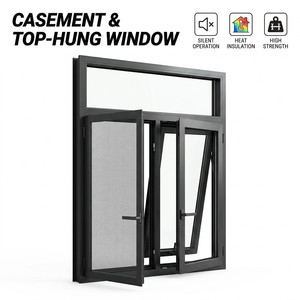
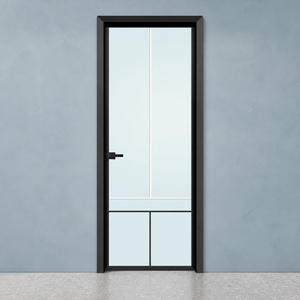
1. Technical Architecture & Metallurgy of Architectural Aluminum Swing Doors
Modern commercial and high-end residential architecture places unprecedented structural and thermal demands on fenestration systems. As global building codes transition toward Net-Zero Energy (NZE) standards, selecting the appropriate aluminum glass swing door manufacturer in China requires a deep structural understanding of profile extrusion metallurgy, thermal break chemistry, hardware kinematics, and insulated glass unit (IGU) dynamics.
1.1 Billet Metallurgy and Profile Wall Geometry
The structural integrity of heavy-duty aluminum swing doors relies fundamentally on the specification of the primary alloy. Premium Chinese manufacturers utilize primary 6063-T5 or high-tensile 6060-T6 aluminum extrusions rather than secondary recycled scrap. Recycled aluminum frequently contains trace impurities that cause microscopic void formations, reducing ultimate tensile strength and accelerating intergranular corrosion in coastal saltwater microclimates.
- Structural Wall Thickness: Heavy-duty commercial swing doors require primary profile wall thicknesses ranging from 2.0 mm to 3.0 mm, fulfilling ASTM B221 and GB 5237 structural requirements. This guarantees minimal deflection under high wind load pressures (testing up to 1,000 N or wind loads exceeding 3.0 kPa).
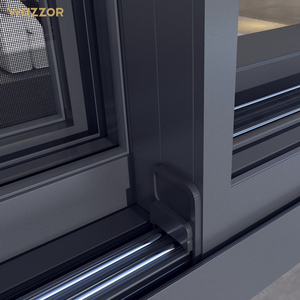
- Multi-Chamber Geometry: Premium door frames feature multi-cavity internal profiles engineered to prevent torsional twisting under continuous cycle usage, maintaining frame squareness over decades of operation.
1.2 Advanced Polyamide Thermal Break Technology
Aluminum is inherently conductive ($k \approx 200 \text{ W/m}\cdot\text{K}$). To meet global energy conservation targets (such as North American NFRC certifications or European Passive House standard thermal criteria), structural profiles must incorporate thermal barrier strips.
Leading manufacturers employ Polyamide 66 reinforced with 25% short glass fibers (PA66 GF25). This composite material matches the linear thermal expansion coefficient of aluminum ($\approx 2.3 \times 10^{-5} /\text{K}$), preventing delamination during extreme seasonal temperature differentials ranging from -30°C in Nordic regions to +55°C in Gulf Cooperation Council (GCC) desert settings. Incorporating multi-cavity PA66 strips up to 34 mm wide enables door assemblies to achieve system U-values as low as 1.1 W/m²K.
1.3 Glazing Engineering & Acoustic Mitigation
The vision glass component constitutes 75% to 85% of total opening surface area. Achieving optimal thermal and acoustic insulation requires engineered double or triple insulated glass units (IGUs):
- Coatings & Gas Infill: Double-glazed (6mm Tempered + 12Ar + 6mm Low-E) or triple-glazed units filled with 90%+ Argon gas and high-performance magnetron sputtering soft-coat Low-E layers effectively block solar heat gain (SHGC < 0.25) while maintaining high visible light transmittance (VLT > 65%).
- Hurricane Impact Resistance: For coastal zones vulnerable to tropical cyclones (e.g., Florida, Australia, Caribbean), specialized swing doors integrate laminated safety glass comprising SentryGlas® (SGP) or polyvinyl butyral (PVB) interlayers, successfully passing TAS 201/202/203 missile impact and cyclic pressure testing.
- Acoustic Performance: Asymmetric glass pane thicknesses combined with acoustic laminates achieve Sound Transmission Class (STC) ratings exceeding 42 dB, insulating interior hotel suites and luxury villas from ambient urban traffic noise.
Structural Swing Door Categories for Global Projects
Heavy-Duty Storefront Entrance Doors
Engineered for commercial spaces, retail arcades, and luxury hotel lobbies. Features reinforced corner crimping, hydraulic heavy-duty transom concealed door closers, and high-frequency opening stamina tested to 200,000 uninterrupted operating cycles.
Thermal Break French Double Swing Doors
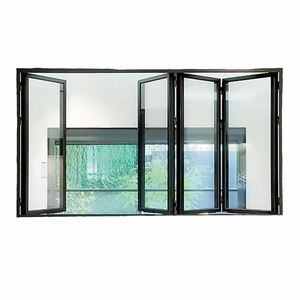
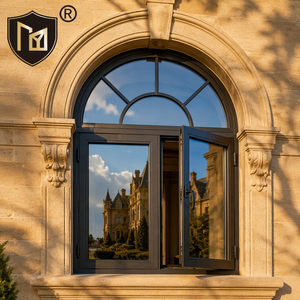
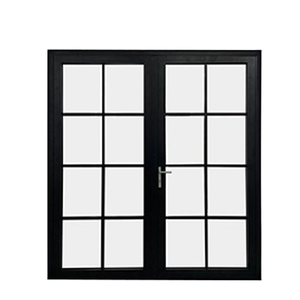
Combines timeless European aesthetics with ultra-modern energy efficiency. Incorporates concealed multi-point locking gear, continuous EPDM triple-gasket seals, and removable colonial decorative grids for classic residential architectural designs.
Hurricane Impact Outward Swing Doors
Designed specifically to withstand coastal storm surges and extreme weather events. Certified under AS2047 and Florida Building Code standards, featuring stainless steel heavy-duty friction hinges and multi-point deadbolt locking options.
Technical Specification Benchmarks
Comparative parameter framework for architects, specifiers, and commercial purchasing managers.
| Engineering Parameter | Standard Specification | High-Performance System | Testing Standard |
|---|---|---|---|
| Aluminum Profile Alloy | 6063-T5 (Wall Thickness 1.4 – 2.0mm) | 6063-T5 / 6060-T6 (2.0 – 3.0mm Structural) | ASTM B221 / GB 5237 |
| Thermal Break Bar Material | Standard PVC / Nylon Strips (14mm) | Polyamide PA66 GF25 (24mm – 34mm Cavity) | DIN 16941 / EN 14024 |
| Overall U-Value (Thermal) | 2.2 – 2.8 W/m²K | 1.1 – 1.6 W/m²K (Triple Low-E Glazed) | NFRC 100 / EN ISO 10077 |
| Water Tightness Rating | 300 Pa | 600 Pa – 900 Pa (Triple EPDM Gasket) | AAMA 501 / EN 12154 |
| Air Infiltration Rating | Level 4 Standard | < 0.1 CFM/ft² (Concealed Pressure Drain) | ASTM E283 / AS4420 |
| Hardware Fatigue Stamina | 50,000 cycles | 200,000+ Cycles (German / Custom Multi-point) | EN 13126 / AAMA 904 |
| Surface Coating Finish | Standard Powder Coating (40-60 µm) | PVDF Fluorocarbon (Qualicoat Class 2 / 3) | AAMA 2605 / ISO 9227 |
2. Future Sourcing Trends & Innovations in Aluminum Glass Doors (2026–2035)
As the international architectural envelope industry evolves, purchasing directors and developers must anticipate key technological shifts driving modern fenestration procurement from Chinese supply chains.
2.1 Ultra-Slim Sightlines & Flush Architectural Thresholds
Minimalist design aesthetics continue to dominate modern villa and commercial development. Traditional bulky aluminum door frames are increasingly replaced by ultra-narrow stile profiles (sightlines under 25 mm). In parallel, flush zero-threshold drop-down sealing mechanisms are replacing step-over bottom frames. These automatic acoustic drop seals employ internal spring mechanisms that deploy seamlessly upon door closure, ensuring barrier-free ADA-compliant accessibility while preventing wind-driven rain penetration.
2.2 Smart Building & Biometric Hardware Integration
Next-generation swing doors are no longer purely mechanical barriers; they function as integrated smart building access points. Future procurement trends indicate exponential demand for:
- Motorized Concealed Actuators: Electronic automated swing mechanisms completely hidden within the header transoms, responsive to building management systems (BMS) and emergency fire evacuation protocols.
- Smart Biometric Handles: Door handles integrating capacitive fingerprint recognition, RFID, keypads, and Bluetooth mesh encryption, eliminating physical mechanical key logistics for multi-family residential developments.
2.3 Environmental Product Declarations (EPD) & Circularity
Driven by European Union Carbon Border Adjustment Mechanisms (CBAM) and global LEED v4.1 certifications, major developers now evaluate supplier carbon footprints. Leading Foshan manufacturers are investing in low-carbon primary smelting processes powered by hydroelectricity, along with recyclable non-hazardous powder coatings certified under international environmental standards.
Why Partner with Zenic Window & Door Technology
Based in Foshan, China—the epicenter of global aluminum extrusions—ZENIC delivers turn-key OEM and ODM manufacturing capabilities for commercial builders, architects, and wholesale distributors worldwide.
20,000 m² Advanced Production
Houses automated CNC double-head cutting centers, 45° precision corner crimping machines, glass insulating lines, and integrated quality control stations under one roof.
Global Certification Matrix
Engineered systems certified or compliance-tested to NFRC, CE Marking, AS2047, CSA, AAMA, and ISO 9001 quality management protocols for seamless customs clearance.
Complete OEM / ODM Flexibility
From custom extrusion die development and dual-color anodizing to private labeling and specialized hardware integration, we build to your exact drawing schedules.
Sea-Worthy Export Logistics
Every assembled door unit undergoes 100% pre-shipment inspection, wrapped in multi-layer protective EPE foam, corner guards, and sealed in fumigation-free plywood crates.
Frequently Asked Sourcing Questions
Answers to key logistical, structural, and custom manufacturing questions asked by international buyers.
What is the Minimum Order Quantity (MOQ) for custom aluminum swing doors?
Our standard project MOQ starts at 50 pieces or 100 square meters. However, we support consolidated container loading where mixed window types (e.g., casement windows, tilt-and-turn windows, sliding doors, and swing storefronts) are combined within a single project order to meet minimum container volumes effortlessly.
What is your standard production lead time for export orders?
Standard fabrication lead times begin at 15 to 25 calendar days following CAD shop drawing approval and deposit receipt. Lead times may adjust based on special profile finishes (such as custom RAL powder coating colors or wood-grain transfer) and complex multi-laminated glass configurations. Products ship FOB Foshan or FOB Shenzhen.
What thermal performance (U-value) can your swing doors achieve?
Depending on profile depth, polyamide thermal break width (up to 34 mm), and insulated glass configurations (such as triple-pane Low-E glass units with Warm-Edge spacers and Argon infill), our engineered systems achieve overall thermal transmittance values as low as 1.1 W/m²K (0.19 BTU/h·ft²·°F), helping projects earn LEED energy credits.
How do you ensure surface coating durability in harsh coastal environments?
For installations located within 1,500 meters of ocean coastlines, we specify 70% PVDF (Fluorocarbon) coatings or Qualicoat Class 2 marine-grade powder coatings. These treatments pass 3,000+ hours of continuous neutral salt spray (NSS) corrosion testing according to ISO 9227 standards, preventing surface chalking, pitting, and color fading.
What hardware brands and warranty terms are available?
We supply top-tier international hardware options including German Siegenia, Hoppe, Sobinco, and custom-engineered heavy-duty Zenic hardware systems. All mechanical locking systems and load-bearing friction hinges are backed by a comprehensive 10-year factory warranty, tested to 200,000 continuous operation cycles.
What quality assurance checks are performed before container packing?
Every fabricated unit passes through a 5-step quality gate: 1) Profile dimension and coating thickness verification, 2) Corner crimping shear test, 3) Hardware alignment and smooth swing operation check, 4) EPDM gasket continuous seal inspection, and 5) Water spray penetration testing. Full photo/video inspection reports are provided to the buyer before crating.
Ready to Request CAD Shop Drawings & Factory Quotes?
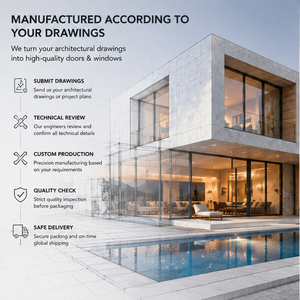
Submit your architectural drawings or door schedules. Our structural engineering team will review your specifications and issue a detailed technical proposal within 24 hours.