Strategic Sourcing Guide: Selecting Top-Tier China Aluminum Impact Window Manufacturers
In the contemporary global construction landscape, sourcing architectural fenestration directly from Chinese manufacturing centers has evolved from a simple cost-reduction tactic into a core strategic advantage. Foshan, located in Guangdong Province, stands as the global epicenter of aluminum extrusion and facade technology. However, for commercial developers, general contractors, structural engineers, and window wholesalers, navigating the technical nuances of China Best Aluminum Impact Windows Manufacturers & Factory selection requires a rigorous evaluation of metallurgical alloys, impact structural glazing, hardware cycling tolerances, and international code compliance.
This technical whitepaper provides an exhaustive procurement framework. By examining structural engineering benchmarks, raw material integrity, design pressure (DP) calculations, and thermal performance metrics, buyers can establish reliable supply chains that meet or exceed North American, European, and Australian building codes.
Key Takeaway for B2B Procurement Officers
Evaluating an impact window supplier extends beyond profile thickness. High-velocity hurricane zones (HVHZ) demand an integrated system approach: prime 6063-T5 aluminum framing, structural SentryGlas® (SGP) laminated glass, continuous EPDM triple-sealing gaskets, and certified multi-point locking mechanisms operating as a unified structural unit.
1. Metallurgical Excellence & Structural Profile Anatomy
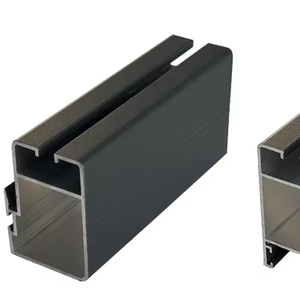
The foundation of any high-performance impact window resides in the structural integrity of its extruded aluminum alloy frame. Leading Foshan manufacturing plants utilize prime 6063-T5 or 6061-T6 aluminum billets rather than recycled scrap metal. Recycled scrap introduces microscopic impurities and air pockets that severely diminish tensile strength and render profiles susceptible to micro-cracking under cyclic wind pressure.
Structural wall thickness is another non-negotiable metric. While standard architectural windows often utilize 1.2mm to 1.4mm profile walls, true hurricane impact-rated casement, sliding, and tilt-turn systems specify nominal wall thicknesses ranging from 2.0mm to 3.0mm in load-bearing chambers. Internal web structures feature multi-chamber reinforcement cavities designed through Finite Element Analysis (FEA) to distribute wind pressures across the perimeter anchoring substrate.
2. Impact Glazing Engineering: SGP vs. PVB Interlayers
Impact resistance is determined by the laminated glass assembly's ability to absorb kinetic impacts from windborne debris without breaking the envelope seal. Top-tier Chinese factories offer two distinct elastomeric interlayers:
- Polyvinyl Butyral (PVB): The standard industry interlayer for mid-range impact applications. Excellent clarity and adhesion; ideal for wind zones requiring compliance up to ASTM E1996 Large Missile Level C.
- SentryGlas® Ionoplast (SGP): Five times stiffer and up to 100 times tougher than traditional PVB interlayers. SGP laminated units remain upright even if both glass panes suffer severe impact fractures, making them the imperative specification for High-Velocity Hurricane Zones (HVHZ) and coastal high-rise structures.
Furthermore, energy-efficient impact fenestration integrates double-glazed or triple-glazed insulated glass units (IGU) featuring argon gas filling, warm-edge silicone spacers, and low-emissivity (Low-E) coatings. This hybrid configuration delivers both extreme hurricane protection and low solar heat gain coefficients (SHGC), essential for tropical and subtropical coastal climates.
3. Comprehensive System Performance Matrix
To assist procurement managers in establishing baseline project RFQ parameters, the following evaluation matrix details technical standards across primary product categories:
| Product Category | Frame Depth & Alloy | Glazing Configuration | Impact / DP Rating | Thermal U-Factor |
|---|---|---|---|---|
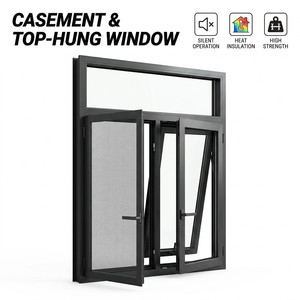
| Heavy-Duty Impact Casement | 75mm - 90mm | 6063-T5 (2.0mm) | 6mm Tempered + 1.52SGP + 6mm Tempered Low-E | DP 70 / ASTM E1996 | 1.1 – 1.4 W/m²K |
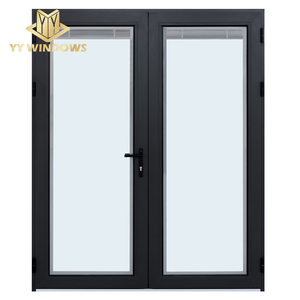
| Architectural French / Hinged Doors | 100mm - 120mm | 6063-T6 (2.5mm) | 8mm Tempered + 2.28PVB + 8mm Tempered | DP 65 / Missile Level D | 1.3 – 1.6 W/m²K |
| Panoramic Lift & Slide System | 120mm - 160mm | 6063-T5 (3.0mm) | 6mm + 1.52SGP + 6mm + 12Ar + 6mm Low-E | DP 60 / HVHZ Compliant | 1.2 – 1.5 W/m²K |
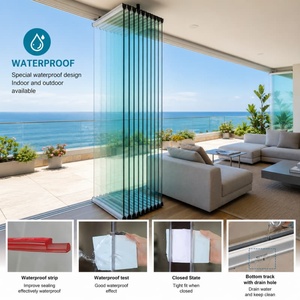
| Bi-Fold Exterior Balcony Wall | 75mm - 110mm | 6063-T5 (2.2mm) | 6mm Tempered + 1.14PVB + 6mm Tempered | DP 55 / AAMA Certified | 1.4 – 1.8 W/m²K |
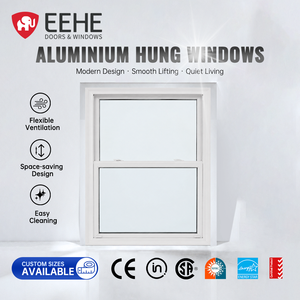
| Single / Double Hung Sliding Window | 65mm - 85mm | 6063-T5 (2.0mm) | 5mm + 1.52PVB + 5mm Insulated Low-E | DP 50 / NFRC Listed | 1.3 – 1.6 W/m²K |
4. Future Sourcing & Global Procurement Trends (2025–2030)
The global window market is undergoing a rapid transformation driven by stringent energy codes, decarbonization mandates, and evolving architectural aesthetics. Importers and commercial buyers sourcing from China must align with four key industry vectors:
A. Transition to Bioclimatic & Motorized Integration: Modern architectural designs favor seamless transitions between outdoor and indoor spaces. Leading Chinese factories are embedding concealed linear drives, motorized tilt-turn mechanisms, and smart rain sensors directly into frame profiles. These systems automatically adjust based on weather telemetry while maintaining structural impact ratings when fully locked.
B. Ultra-Slim Sightlines with Structural Glass Bonding: The market demand for ultra-minimalist frames has driven manufacturers to adopt structural silicone structural glazing (SSG) techniques. By bonding the laminated glass unit directly to the interior frame lip, structural loads are shared, permitting frame sightlines as narrow as 20mm without compromising design pressure limits.
C. Carbon Transparency & Environmental Product Declarations (EPD): European and North American developers increasingly mandate third-party verified EPDs. Leading Foshan manufacturers are migrating to green hydro-powered aluminum smelting sources and low-VOC powder coating lines (such as AkzoNobel and PPG fluorocarbon systems), enabling projects to earn valuable LEED and BREEAM sustainability points.
D. Advanced Surface Treatments for Extreme Coastal Zones: Salt spray corrosion remains the primary killer of seaside fenestration. Premier factories now utilize multi-stage chrome-free pre-treatment washing followed by PVDF (fluorocarbon) electrostatic spraying exceeding 50 microns in thickness. This coating standard successfully passes 3,000-hour neutral salt spray tests (ISO 9227), preventing blistering or chalking in tropical island exposures.
5. Manufacturing Process & Quality Control Protocol
Achieving defect-free, site-ready window assemblies demands rigorous operational standards across the manufacturing pipeline. A top-tier factory operates under a four-gate quality management system (QMS):
Gate 1: Material Receipt Inspection. Spectrometric testing of incoming aluminum ingots to confirm 6063 alloy composition, accompanied by ultrasonic flaw detection on raw glass sheets and durometer testing of EPDM rubber seals.
Gate 2: Precision CNC Milling & Corner Crimping. Profiles are processed on multi-axis German CNC machining centers. Corner joints are reinforced with cast aluminum corner keys, injected with dual-component structural epoxy sealant, and mechanically crimped under hydraulic pressure to guarantee air tight, water tight corner integrity.
Gate 3: Automated Glazing & Sealant Curing. Glass units are bedded with structural silicone in climate-controlled clean rooms, preventing dust entrapment and ensuring uniform structural bond lines.
Gate 4: Pre-Shipment Mockup Assembly & Testing. Randomly sampled finished units are mounted on diagnostic test benches to evaluate air infiltration (ASTM E283), water resistance (ASTM E331), and operational hardware force before being packed in fumigated plywood crates with foam corner protectors.