Architectural Engineering & Sourcing Guide for Aluminum Lanai Doors
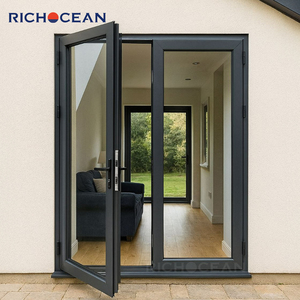
A Lanai door—traditionally defined as a heavy-duty multi-panel exterior glass door system connecting indoor living rooms to outdoor sunrooms, covered verandas, pool decks, and coastal patios—represents one of the most critical structural and thermal envelopes in high-end residential and commercial architecture. Originating in tropical and coastal regions like Florida and Hawaii, modern lanai door systems have evolved globally into complex architectural fenestrations requiring high design pressure (DP) resistance, low thermal transmittance, and absolute water-tightness under severe weather conditions.
When sourcing from a China aluminum lanai doors manufacturer or factory, international developers, architects, and importers must evaluate suppliers beyond simple price-per-square-meter metrics. True manufacturing competence encompasses metallurgical profile grading, thermal break technology, EPDM co-extrusion sealing systems, structural glass integration, and strict compliance with international building codes such as AAMA, NFRC, CE, and AS2047 standards.
Information Gain Key Takeaway: Unlike standard sliding patio doors, structural Lanai doors installed in coastal zones require minimum frame profile depths between 110mm to 150mm, polyamide (PA66-GF25) thermal barriers, and specialized stainless steel multi-track recessed thresholds capable of handling wind loads exceeding 1,000 N and water resistance over 700 Pa.
1. Metallurgical Benchmarks & Profile Structural Engineering
The core structural integrity of an aluminum lanai door system depends entirely on the chemical composition and mechanical properties of the aluminum profile. Premier Chinese manufacturers like Zenic Window & Door Technology Co., Ltd. (operating out of Foshan, Guangdong) exclusively utilize 6063-T5 or 6063-T6 prime architectural aluminum extrusions with non-recycled alloy content.
Structural wall thickness plays a vital role. While budget residential windows utilize 1.2mm to 1.4mm profile walls, commercial-grade and cyclone-resistant heavy-duty lanai sliding and bi-fold doors require main load-bearing wall thicknesses ranging from 2.0mm to 3.0mm. This structural density prevents frame deflection when spanning expansive openings up to 6 meters in height and 12 meters in width.
| Material Parameter | Standard Residential Grade | Zenic High-Performance Lanai Specification | Engineering Benefit |
|---|---|---|---|
| Aluminum Alloy Billet | Recycled / Mixed Ingot | 6063-T5 Virgin Billet | Higher tensile strength & corrosion resistance |
| Profile Wall Thickness | 1.4mm – 1.6mm | 2.0mm – 3.0mm Structural Reinforcement | Resists wind pressures up to DP60 - DP100 |
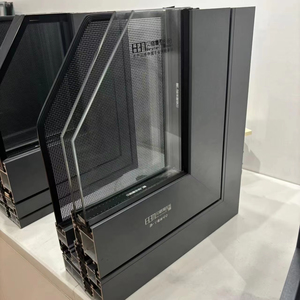
| Thermal Insulation Bar | PVC or Low-Grade Nylon | Technoform Polyamide PA66-GF25 (25% Glass Fiber) | Prevents thermal bridging, withstands 250°C powder coating |
| Sealing Gasket | Standard PVC / Rubber | Three-Layer Continuous EPDM Gaskets | UV resistant, maintains elasticity from -40°C to +120°C |
| Hardware Load Rating | 50 kg - 80 kg per sash | Heavy-Duty German Siegenia/HOPO (up to 300-400 kg) | Friction-free glide for giant insulated glass panels |
2. Thermal Performance & Polyamide Thermal Break Technology
Historically, non-thermal aluminum frames were infamous for heat conductivity, leading to high HVAC bills and interior condensation. Contemporary architectural standards demand advanced thermal break aluminum lanai door systems. The system separates the interior and exterior aluminum profiles using structural polyamide insulating struts (PA66-GF25).
By engineering multi-chamber profiles filled with high-density polyurethane (PU) foam or aerogel insulation, thermal transmittance values ($U_f$) are drastically reduced. Combined with double or triple-glazed Low-E insulated glass units (IGUs) containing argon gas fill and warm-edge spacers, overall door U-values reach as low as 1.1 W/m²K to 1.4 W/m²K (0.20 to 0.25 BTU/h·ft²·°F), satisfying strict energy codes across North America (ENERGY STAR) and Northern Europe (Passive House standard components).
3. Surface Treatment Engineering: PVDF Coating vs. Powder Coating
Lanai doors are constantly exposed to harsh ambient conditions—intense solar radiation, high humidity, pool chlorine vapors, and salt-laden ocean air. A reliable factory must offer surface treatments certified to international finish performance standards:
- AAMA 2605Fluorocarbon PVDF Coating: Formulated with 70% Kynar 500 resin, PVDF coatings provide maximum resistance against chalking, fading, and chemical degradation. Essential for coastal lanai installations within 1 mile of salt water.
- AAMA 2604Super-Durable Powder Coating: Utilizing AkzoNobel or PPG powders, this finish offers superior scratch resistance and color consistency across 250+ RAL colors, backed by 15-to-25-year manufacturer warranties.
- Italian Wood-Grain3D Thermal Transfer Wood-Grain: Combines the structural benefits of aluminum with the aesthetic warmth of natural timber (Oak, Teak, Walnut), completely immune to termite attack, warping, or rotting.
Future Sourcing & Procurement Trends for Global Importers (2025–2030)
As global construction supply chains digitize and emphasize environmental sustainability, procurement strategies for aluminum windows and doors are undergoing structural changes. Importers, project developers, and hardware wholesalers sourcing from China must adapt to four dominant market shifts over the next decade:
1. Smart Motorization & Automation
Architectural demand is rapidly shifting towards motorized glass walls integrated with smart home automation (KNX, Zigbee, Control4). Lanai sliding doors now incorporate concealed brushless linear drives, safety infrared sensors, and magnetic locks capable of pushing 400kg sashes at the touch of a button.
2. Severe Hurricane & Impact Rating
Coastal building codes in Florida (HVHZ), Australia (Cyclonic Zone C/D), and the Caribbean require strict impact certification. Future procurement demands laminated glass with SentryGlas (SGP) interlayers and multi-point deadbolt locking hardware certified to withstand missile impacts and DP100 pressures.
3. Ultra-Slim Panoramic Sightlines
The market for bulky aluminum frames is shrinking. Contemporary architecture demands ultra-slim interlock stiles as narrow as 18mm to 25mm. Concealed outer frames embedded directly into finished plasterwork maximize glass area and deliver unobstructed outdoor views.
4. Decarbonized & Certified Supply Chains
Institutional buyers in Europe and North America now mandate Environmental Product Declarations (EPD) and low-carbon aluminum billets smelted using renewable hydro-electric power. Importers are choosing Chinese factories with ISO 14001 environmental management and verified carbon footprint data.
Product Development Trends in Lanai Door Systems
Product innovation at leading Chinese factories like Zenic focuses heavily on resolving the traditional pain points of exterior glass walls: heavy operation, threshold trip hazards, water ingress during torrential storms, and insect intrusion.
Invisible Flush Thresholds with Cascade Micro-Drainage
Traditional sliding doors feature raised bottom tracks (50mm to 70mm high) that create awkward stepping obstacles between interior living areas and exterior lanais. Modern product development has pioneered zero-threshold flush drainage systems. The bottom track is recessed completely beneath the finished floor level, featuring integrated stainless steel drainage channels that handle rainfall discharge rates up to 120 liters per minute per meter. Concealed water traps and pressure-equalized weep holes prevent water back-flow even under hurricane-force wind pressure.
Integrated Retractable Screen & Louver Systems
Lanai living is synonymous with fresh air. However, insect control remains a major priority. Advanced door systems integrate dual-track or triple-track designs featuring high-strength stainless steel security mesh (0.8mm 304/316 marine-grade mesh) or ultra-fine motorized pleated flyscreens. These screen panels slide independently within the primary door frame, providing structural burglar protection while allowing 85% airflow ventilation.
Enterprise Manufacturing Advantage: Zenic Window & Door Technology
Located in Foshan—the world’s undisputed capital of aluminum processing and fenestration manufacturing—Zenic Window & Door Technology Co., Ltd. stands as a premier supplier for international commercial projects and luxury residential developments.
Advanced CNC Machining
Our 20,000m² manufacturing facility is equipped with automated 5-axis CNC cutting and milling centers. Every profile corner is joined using German pin-and-glue corner crimping technology, ensuring flawless 90-degree frame alignments and structural rigidity.
Rigorous Quality Gates
100% of manufactured units undergo factory pre-assembly, dimensional verification, hardware functional testing, and air/water tightness checks before entering our automated packaging line.
Export-Grade Packaging
All door units are protected with EPE shock-absorption foam, heavy-duty plastic wrapping, reinforced corner guards, and packed into fumigation-free solid plywood crates to guarantee zero transit damage across ocean routes.