1. The Architectural Sourcing Landscape: China's Aluminium Bathroom Window Supply Chain
When procurement managers, commercial architects, and facade engineering specifiers evaluate a China top aluminium bathroom window supplier, they navigate complex challenges unique to wet-zone architectural envelopes. Unlike standard residential window units specified for living areas or dry commercial offices, bathroom fenestration demands strict structural resistance to moisture-induced degradation, high internal vapor pressure, microbial accumulation, and persistent humidity gradients between indoor and outdoor microclimates.
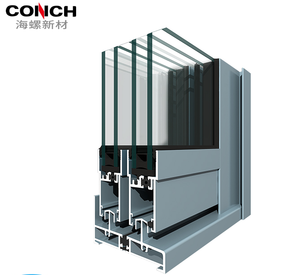
China—and specifically the Foshan industrial cluster in Guangdong Province—has established itself as the global epicenter for precision extruded aluminium window systems. Zenic Window & Door Technology Co., Ltd., leveraging Foshan's robust industrial ecosystem, has re-engineered conventional fenestration profiles into high-performance, water-impermeable architectural barriers. Modern aluminium bathroom windows manufactured in top-tier Chinese facilities no longer represent simple utility openings; they incorporate multi-chamber 6063-T5 structural alloys, polyamide thermal breaks (PA66GF25), continuous EPDM vulcanized sealing gaskets, and advanced privacy glazing assemblies certified under international standards such as AS2047, CE, NFRC, and CSA.
Information Gain Key Takeaway: High-humidity environments require fenestration systems engineered with micro-pressurized drainage paths and hydrophobic gasket compounds. Standard window profiles installed in wet areas experience up to 40% faster seal degradation due to soap scum buildup, alkaline moisture contact, and localized vapor saturation.
Technical Matrix: Comparative Analysis of Aluminium Alloy Fenestration in High-Humidity Environments
| Performance Specification | Standard Commercial Window Profile | ZENIC High-Performance Bathroom System | Engineering Benefit |
|---|---|---|---|
| Aluminium Alloy Billet | Recycled / Mixed Grade Aluminum | Virgin 6063-T5 Architectural Profile | Prevents structural fatigue, micro-pitting, and surface delamination under humidity. |
| Frame Profile Wall Thickness | 1.2 mm – 1.4 mm | 2.0 mm Heavy-Duty Structural Wall | Resists wind load deflection (up to 1,000 N) and hardware fastener pull-out. |
| Thermal Separation | Non-Thermal Break or PVC Strip | 24mm – 34mm Polyamide PA66GF25 | Eliminates interior frame condensation; U-values achieved down to 1.1 W/m²K. |
| Gasket Material & Sealing | Standard Thermoplastic Rubber (TPR) | Three-Layer Continuous Co-extruded EPDM | Prevents water ingress; resistant to alkaline cleaning chemicals and UV wear. |
| Hardware Surface Coating | Basic Electroplating (Zinc) | SS304 / Multi-Layer Dacromet Coating | Exceeds 1,000 hours in neutral salt spray testing (ISO 9227 compliant). |
2. Structural Engineering Standards for Bathroom Fenestration
Specifying aluminium bathroom windows requires an in-depth understanding of physics at the building envelope boundary. Moisture mitigation relies not only on surface sealants but on pressure-equalized frame designs. When warm, humid air inside a bathroom contacts cool window surfaces, thermal conduction causes condensation. If the window profile lacks thermal separation, moisture collects inside frame channels, leading to mold growth, fastener corrosion, and structural decay of surrounding drywall.
Top Chinese suppliers solve this problem through Polyamide Thermal Break Technology. By inserting a reinforced polyamide (PA66 with 25% glass fiber) strip between the inner and outer extruded aluminum profiles, the thermal bridge is broken. This technical configuration yields distinct advantages:
Multi-Chamber Extrusion
Internal webs increase inertia against wind loading while creating isolated air pockets that dampen acoustic transmission and block heat transfer.
Pressure-Equalized Drainage
Concealed weep holes and stepped interior drainage channels force wind-driven rain and interior runoff outward without back-siphoning.
Epoxy Corner Injecting
Corner joints utilize mechanical aluminum corner cleats combined with dual-component corner injection glue for rigid, leak-proof frame joints.
3. Global B2B Purchasing Trends: 2025–2030 Outlook
As international energy codes tighten—such as Title 24 in California, the National Construction Code (NCC) in Australia, and EPBD directives in Europe—the procurement criteria for B2B buyers importing from China are shifting dramatically. Buying decision-makers are moving away from low-cost single-glazed units toward high-value, multi-functional fenestration packages.
Key Sourcing Trends Driving the Global Market:
- Smart Glass Integration (PDLC Switchable Film): Project developers are specifying insulating glass units (IGUs) incorporating Polymer Dispersed Liquid Crystal technology. With a single wall switch or automated home sensor, frosted privacy glass switches to transparent, eliminating the need for sanitary-risk fabric blinds in wet rooms.
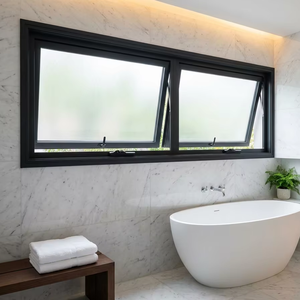
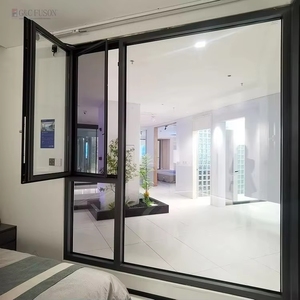
- Micro-Ventilation Awning & Top-Hung Configurations: Awning and top-hung window designs remain the dominant choice for luxury residential and hospitality projects. By hinging at the top and opening outward from the bottom, these units allow continuous ventilation during heavy rain while preventing water ingress.
- Concealed Ultra-Narrow Frame Aesthetics: Minimalist architectural design demands slimmer sightlines. Modern profile engineering utilizes structural silicone bonding (SSG) to maximize visual glass areas without compromising structural load capacities.
- Sustainable Low-Carbon Extrusion Sourcing: Environmental Product Declarations (EPDs) are becoming standard requirements in global tenders. Top suppliers are adopting low-carbon primary aluminum smelted via hydropower and implementing closed-loop scrap recycling systems.
4. Engineering Deep-Dive: Privacy Glazing Technologies for Modern Bathrooms
Privacy is a paramount requirement in bathroom design. However, privacy must not sacrifice natural light transmission. Chinese window factories now offer specialized glass configurations engineered for performance and aesthetic flexibility:
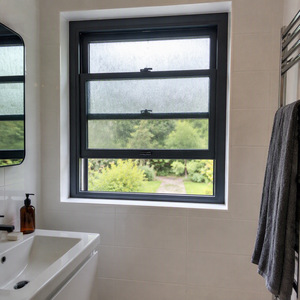
A. Acid-Etched Low-Iron Frosted Glass: Unlike surface-applied frosted films that peel under steam and humidity, acid-etched glass alters the outer surface of the glass pane chemically. This results in a smooth, satin-like finish that diffuses light evenly while resisting fingerprint smudges and soap film adhesion.
B. Double Tempered Low-E Insulated Units: Combining an acid-etched outer pane with a inner Low-E (Low Emissivity) coated pane creates an energy-efficient barrier. The sealed IGU chamber, filled with 90% pure Argon gas and sealed with warm-edge butyl spacers, stops moisture ingress into the air cavity, preventing internal fogging permanently.
C. Ceramic Fritted Patterned Glazing: For large-scale commercial developments, ceramic frit is fused directly onto glass surfaces during the tempering process. This creates customizable opacity gradients, combining architectural branding with functional privacy control.