1. The Global Landscape of Aluminium-Framed Glass Kitchen Doors
Modern residential architectural design is undergoing a massive shift towards integrated living spaces. In both luxury real estate developments and urban multi-family residences, the kitchen is no longer a isolated service quadrant—it is the visual center of the contemporary home. Consequently, the demand for China-manufactured aluminium framed glass kitchen doors has surged dramatically among real estate developers, contractors, and global architectural hardware importers.
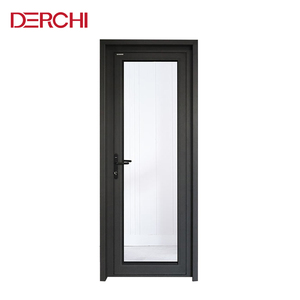
Architects specify aluminium glass doors over traditional solid timber or hollow PVC doors due to their unparalleled structural rigidity, resistance to high-humidity cooking micro-environments, ultra-narrow frame sightlines, and zero-warp longevity. Foshan, located in Guangdong Province, China, stands as the global epicenter of this manufacturing niche, controlling over 70% of high-end architectural extrusion output globally.
Key Material Standards in Chinese Extrusion Factories
When evaluating top tier manufacturers in China, engineering teams focus strictly on the chemical composition of the profile alloy. Premium factories operate exclusively with virgin 6063-T5 structural aluminium billet rather than remelted secondary scrap alloy. 6063-T5 provides an optimal balance of tensile yield strength (≥ 110 MPa), superior anodizing/powder-coating adhesion, and high dimensional stability under thermal variance.
- Wall Thickness Rigidity: Premium interior kitchen partition doors feature structural profile wall thicknesses ranging from 1.4 mm to 2.0 mm, guaranteeing zero frame deflection over 3000 mm opening heights.
- Anodizing & Surface Finishes: Fluorocarbon (PVDF) electrostatic spraying and micro-ceramic anodizing ensure high oil-fume cleanability, grease resistance, and anti-scratch durability.
- Glass Integration: SGCC / CE-certified 5 mm to 8 mm toughened safety glass, available in fluted (moru), smoked grey, bronze tint, or ultra-clear low-iron options to suit privacy and acoustic preferences.
2. Information Gain Benchmarks: Comparing Material Performance
To assist procurement directors and facade consultants in making data-driven sourcing decisions, the table below contrasts Foshan industrial-grade aluminium systems with alternative framing materials commonly found in regional markets.
| Performance Metric | Foshan 6063-T5 Aluminium | Stainless Steel Slimline | uPVC Rigid Frame | Solid Hardwood |
|---|---|---|---|---|
| Structural Yield Strength | 110 – 130 MPa (T5 Temper) | 205 – 240 MPa | 40 – 50 MPa | Variable (35 – 65 MPa) |
| Frame Sightline Minimalist Index | Ultra-Slim (10 mm – 18 mm) | Slim (15 mm – 25 mm) | Bulky (55 mm – 80 mm) | Medium (45 mm – 70 mm) |
| Moisture & Oil Vapor Resistance | 100% Waterproof / Oleophobic | High Corrosion Risk at Welds | High Chemical Stability | Prone to Swelling & Rotting |
| Color Fastness (UV / Heat) | Qualicoat Class 2 (20+ Years) | Requires Constant Polishing | Yellowing after 3–5 Years | Requires Bi-annual Varnishing |
| Production Scalability & Cost | High Efficiency / Cost Optimal | Extremely High Labor Cost | Low Cost / Low Value | High Material Scarcity |
3. Industry & Architectural Design Development Trends (2025–2030)
As kitchen layouts evolve from completely closed spaces to semi-open and multi-functional gathering hubs, Chinese factories are pioneering several revolutionary product trends:
Trend A: The "Invisible" Pocket Sliding & Folding Partition System
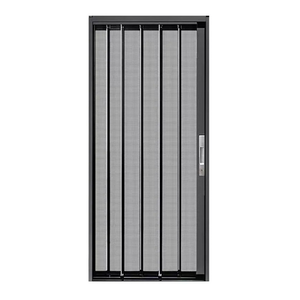
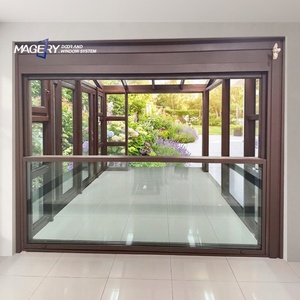
Urban apartments in metropolitan centers demand space-efficiency without sacrificing spatial containment. Advanced Foshan factories now manufacture multi-track sliding and pocket-folding aluminium doors with recessed top-hung tracks. When fully open, the glass panels slide cleanly into wall cavities or stack neatly against side columns, instantly transforming a closed oily-smoke kitchen into a modern open-concept space.
Trend B: Acoustic Damping & Smoke Sealing Multi-Gasket Engineering
Modern Asian and Western cooking styles generate varying degrees of high-heat airborne grease, humidity, and operational noise. Sourcing trends show an increased demand for interior aluminium doors fitted with dual-durometer EPDM (Ethylene Propylene Diene Monomer) rubber seal strips and magnetic soft-close latches. This technical refinement delivers sound insulation ratings up to STC 32 dB while completely locking in kitchen fumes.
Trend C: Smart Glass & Micro-Slim Frame Integration
Luxury residential projects are increasingly specifying PDLC (Polymer Dispersed Liquid Crystal) switchable smart glass integrated within 16 mm ultra-narrow aluminium door frames. With the press of a remote or a voice command, the clear kitchen glass door turns instantly opaque, hiding unwashed dishes or cooking clutter from living room guests while maintaining an elegant metallic border design.