Featured Commercial Architectural & Fire Door Systems
Precision-engineered fenestration solutions tested for structural durability, thermal break performance, safety compliance, and architectural integration.
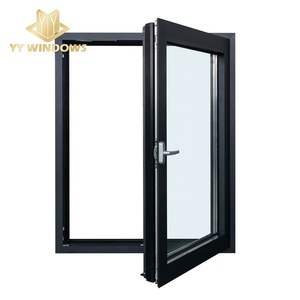
YY Facades Thermal Break Aluminum Floor to Ceiling Bay Windows
Get a Quote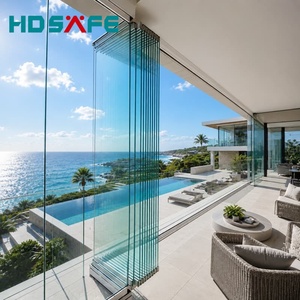
Panoramic Aluminum Bifold Door Modern Folding Glass System
Get a Quote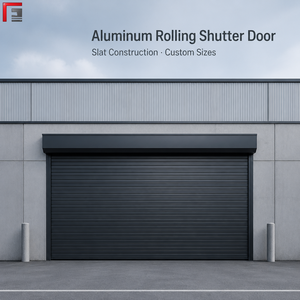
Aluminum Automatic Roller Shutter Door for Residential & Garage
Get a Quote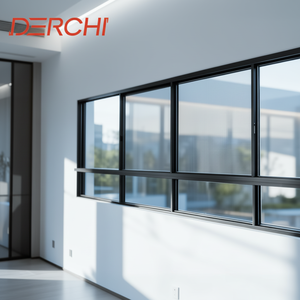
DERCHI CE Certified Double Glazed Aluminum Horizontal Sliding Window
Get a Quote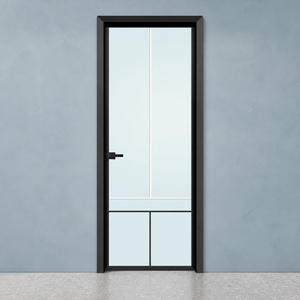
Energy Saving Thermal Break Aluminum Hinged Entry Door System
Get a Quote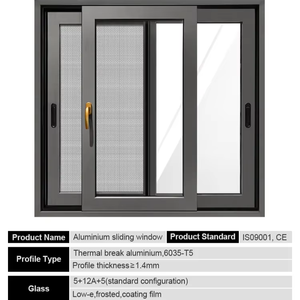
Custom Ventilation Aluminum Sliding Window with Laminated Safety Glass
Get a Quote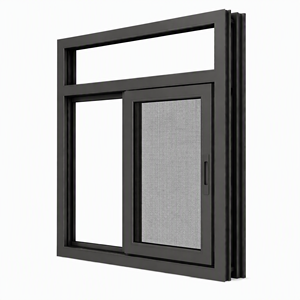
Thermal Break Aluminum Sliding Window with Stainless Security Mesh
Get a Quote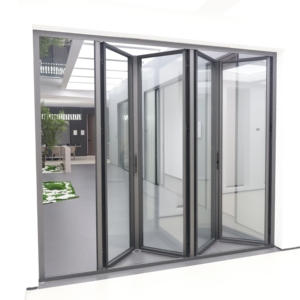
Lolands Modern Large Bi-Fold Heat Insulation Burglar-Proof Door
Get a QuoteEngineering Standards & Technical Integrity of Aluminium Internal Fire Doors
In modern commercial architecture, healthcare facilities, high-rise residential towers, and industrial complexes, internal fire-rated doors serve as critical life-safety compartmentation barriers. Historically, specifiers relied heavily on bulky hollow metal steel or traditional solid-core timber assemblies. However, the architectural demand for natural daylighting, refined aesthetics, slim sightlines, and corrosion resistance has positioned extruded aluminium internal fire door systems as the preferred solution among top tier architects and MEP engineers worldwide.
Fire Resistance Ratings (EI Standards)
Internal fire doors must satisfy two core performance parameters under European EN 1634-1 and British BS 476-22 testing standards: Integrity (E), which prevents flame and hot gas passage, and Insulation (I), which limits thermal radiation transfer to the unexposed face to under 140°C average rise. Leading Chinese suppliers engineer profiles achieving EI30, EI60, EI90, and EI120 protection.
Intumescent Composite Core Technology
Standard raw aluminium melts at approximately 660°C. To survive furnace temperatures exceeding 1000°C during standard ISO 834 fire curves, internal profiles utilize high-density ceramic fiber insulating cores combined with multi-stage intumescent graphite matrix seals that expand up to 25 times their volume at 180°C–200°C, sealing all perimeter gaps.
Acoustic & Smoke Control Gasketing
Fire door assemblies must act as dual-purpose containment boundaries. Engineered EPDM continuous gaskets combined with drop-down automatic floor bottom seals achieve cold smoke leakage control ($S_a$) and warm smoke control ($S_{200}$), alongside acoustic sound attenuation ratings up to $R_w$ 42 dB.
Aluminium Internal Fire Door Technical Performance Parameters
The following comparative framework outlines the technical specifications provided by top-tier Chinese manufacturing suppliers for architectural submittals.
| Performance Standard | EI30 System Grade | EI60 System Grade | EI90 / EI120 System Grade |
|---|---|---|---|
| Fire Integrity & Insulation | 30 Minutes (EN 1634-1) | 60 Minutes (BS 476 / EN) | 90 to 120 Minutes (UL 10C / EN) |
| Aluminium Profile Alloy | 6063-T6 Architectural Alloy | 6063-T6 High Tensile Strength | 6060-T66 Structural Heavy Duty |
| Internal Core Filling | Flame-Retardant Polymer Strip | High-Density Mineral Wool / Silicate | Proprietary Fire Ceramic Gel Matrix |
| Glazing Configuration | 15mm Clear Monolithic Fire Glass | 22mm Insulated Fireproof Gel Glass | 35mm Multi-Layer Fire Laminate |
| Acoustic Isolation ($R_w$) | $R_w$ 35 dB - 38 dB | $R_w$ 38 dB - 42 dB | $R_w$ 42 dB - 45 dB |
| Surface Finishing Options | Qualicoat Powder Coating, Anodized Class 15, Fluorocarbon PVDF, Anti-Bacterial Woodgrain | ||
Foshan Manufacturing Powerhouse & Quality Assurance
Headquartered in Foshan, Guangdong—the world’s premiere center for precision aluminum extrusion and structural fenestration manufacturing—Zenic Window & Door Technology Co., Ltd. operates a state-of-the-art 20,000 square meter industrial facility. Driven by advanced multi-axis CNC machining centers, automated corner-crimping equipment, and strict quality control protocols, Zenic delivers project-ready architectural door and window systems to developers across more than 40 countries.
Unlike standard commercial fabricators, Zenic enforces a strict zero-recycled scrap aluminum policy, using exclusively prime 6063-T5 / T6 virgin alloy extrusion billets with structural wall thicknesses of 2.0mm and above. Every internal fire door assembly undergoes rigorous dimension validation, hardware cycle stress testing (rated to 200,000 operating cycles), and multi-layer sea-worthy plywood protective packaging before container departure from Foshan or Shenzhen ports.
Why Source Internal Fire Doors from China?
China’s fenestration ecosystem provides unparalleled advantages in vertical integration. Sourcing internal fire doors from premier Foshan suppliers allows international developers to reduce capital expenditure by 35% to 50% without compromising third-party certified fire integrity. With fully customizable OEM/ODM drawing approvals, custom hardware selection (such as Dormakaba, Geze, or Allegion panic systems), and flexible MOQs starting at just 50 units, Chinese suppliers offer agile manufacturing capabilities tailored for fast-track construction schedules.
Product Development Trends in Aluminium Fire Door Systems
Driven by evolving global building safety codes and architectural trends, the design of internal fire-rated aluminium doors is shifting rapidly toward slim aesthetic profiles, smart access integrations, and bio-passive material science.
Ultra-Slim Sightlines & Fully Flush Frames
Modern interior design demands invisible structural framing. Next-generation fire doors utilize high-tensile structural alloy formulations that allow frame profile face widths to shrink down to 45mm while maintaining EI60 fire protection. Concealed heavy-duty 3D adjustable fire-rated hinges ensure completely flush wall alignment.
Nano-Gel Fire-Proof Glazing Integration
Moving away from traditional wire-mesh glass, modern fire doors utilize multi-layer clear laminated glass filled with transparent nano-gel interlayers. Under thermal stress, the gel crystallizes into an opaque, rigid heat shield, blocking thermal radiation and ensuring full transparency during normal operational building life.
Smart Access & Mechatronic Integration
Internal fire doors are increasingly specified with electromagnetic hold-open devices tied directly to the building’s centralized Fire Alarm Panel (FAP). In an emergency event, power is cut, releasing auto-closers to seal fire zones, while motorized multi-point locks integrate with RFID, biometric, and emergency egress hardware.
Future Procurement Trends for International Building Projects (2025–2030)
Global procurement strategies for commercial fenestration are undergoing a major shift. Purchasing managers, MEP contractors, and real estate developers are moving away from piecemeal local component assembly toward turnkey OEM factory procurement models. When sourcing internal fire doors from leading suppliers in China, international buyers are prioritizing three structural procurement trends:
1. EPD Certification & Carbon Footprint Transparency
With green building standards such as LEED v4.1 and BREEAM demanding Environmental Product Declarations (EPD), top Chinese suppliers are adopting clean-energy hydro-electric aluminum smelting and closed-loop powder coating processes. Sourcing doors with verified low embodied carbon ensures developers achieve green building credits without compromising budget constraints.
2. BIM Object Integration & Digital Twin Specification
Modern project workflows require seamless digital integration. Leading suppliers now supply full Revit BIM objects containing precise structural weight, thermal conductivity parameters, opening swing clearances, and fire certification metadata. This allows architects to embed Chinese-manufactured door assemblies directly into digital twin models during initial design phases.
3. Modular Pre-Assembled Delivery & Door Schedules
On-site labor costs in Europe, North America, and Australia continue to escalate. Future procurement contracts dictate that fire doors arrive fully factory-glazed, with pre-cut hardware lock pockets, installed intumescent seals, and laser-etched opening tag numbers matching site architectural door schedules for rapid installation.
4. Comprehensive Multi-Region Compliance Verification
Export buyers require seamless regulatory acceptance. Qualified manufacturers provide full test submittal packages incorporating international laboratory reports (such as Intertek, SGS, or UL), confirming compliance across EN 1634-1, BS 476, UL 10C, and Australian AS 1530 standards under a single unified profile system.
Frequently Asked Questions for Sourcing Aluminium Fire Doors
Key insights for project managers, architects, and procurement officers evaluating fire-rated door systems.
How do aluminium fire doors compare with traditional steel or wooden fire doors?
Aluminium fire doors offer superior aesthetic flexibility, narrow sightlines, high strength-to-weight ratios, and exceptional corrosion resistance compared to steel doors, which can rust in humid conditions, or wood doors, which are prone to warping and moisture absorption. When filled with intumescent fire core materials and ceramic insulating inserts, engineered aluminium doors achieve equivalent fire ratings (EI30 to EI120) while supporting large, fully vision-glazed panels.
What is the difference between Fire Integrity (E) and Fire Insulation (I)?
Fire Integrity (E) measures the door system's structural ability to withstand physical fire exposure without permitting flames, smoke, or hot gases to pass through cracks or gaps. Fire Insulation (I) measures the door's capacity to limit heat transmission from the fire side to the non-fire side, ensuring the unexposed face remains cool enough (under 140°C average temperature rise) to prevent spontaneous combustion of adjacent interior materials and allow safe human evacuation.
What is the minimum order quantity (MOQ) and standard delivery lead time?
Minimum order quantities for factory-direct projects start from 50 pieces per order, with the ability to combine mixed window and door types, profile depths, and glass specifications within one shipment. Standard manufacturing lead times range from 15 to 25 calendar days following shop drawing engineering approval and deposit confirmation. Ocean freight shipping is arranged FOB Foshan or Shenzhen ports.
Can Chinese aluminium fire doors be customized with specialized panic hardware and locks?
Yes. Premier suppliers provide full OEM/ODM engineering support. Profiles can be CNC-milled to accept globally recognized hardware brands including Dormakaba, Geze, Briton, LCN, and Allegion. Systems support panic escape bars, magnetic hold-open locks, concealable overhead automatic door closers, and motorized smart access control mechanisms integrated with building automation systems.
What testing documentation is provided for international project submittals?
Suppliers provide comprehensive submittal packages including raw profile alloy mill certificates, glass test certificates, intumescent expansion data sheets, acoustic performance reports, and official third-party fire test reports from accredited laboratories (Intertek, SGS, TUV) validating performance against EN 1634-1, BS 476-22, UL 10C, or AS 1530 standards.
How are glass panels protected during transit from China to overseas project sites?
Finished door units are packed using heavy-duty EPE protective foam wrap, rigid plastic corner guards, sealed moisture-proof barrier foil, and non-fumigation plywood crates. Each container is loaded with structural strapping to prevent shifting during oceanic transport, resulting in a zero-breakage track record across global shipments.
Consult with Foshan Fenestration Engineers Today
Submit your architectural door schedule, CAD elevations, or project fire integrity specifications. Receive detailed engineering shop drawings, factory pricing, and production lead times within 24 hours.