Featured Aluminium Jali & Security Door Systems
Engineered for luxury residential villas, commercial complexes, and modern architectural developments worldwide. Manufactured directly in Foshan, China.
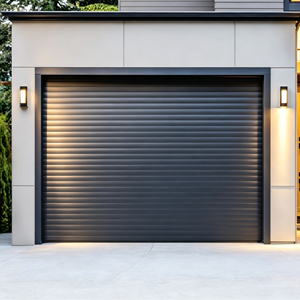
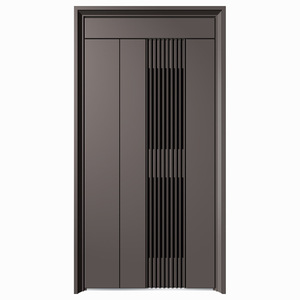
Architectural Engineering of Aluminium Jali Door Grill Systems
In modern architectural design, the integration of security, natural ventilation, thermal insulation, and aesthetic elegance remains a primary challenge for building specifiers and procurement managers. Traditional door grill designs rely heavily on wrought iron or mild steel, which suffer from high maintenance requirements, susceptibility to corrosion, excessive structural weight, and poor thermal performance. The evolution of architectural extruded aluminium jali door systems has revolutionized high-end residential, villa, and commercial fenestration across global markets.
As a leading China top aluminium jali for door manufacturer & supplier, operating from Foshan—the world’s premiere aluminium extrusion hub—our manufacturing facility combines structural 6063-T5 alloy engineering with state-of-the-art laser CNC cutting and precision mesh integration. Aluminium jali (lattice/grill) doors serve a dual architectural purpose: establishing an impenetrable security barrier while enabling continuous micro-ventilation and solar shading without compromising visual privacy.
Structural Integrity (6063-T5)
Utilizing high-tensile virgin aluminium extrusions with wall thicknesses up to 2.0mm. Engineered to resist structural deformation under extreme wind loads (up to 3,500 Pa).
Thermal Break Integration
Incorporating multi-chamber Polyamide (PA66 GF25) thermal barriers to stop thermal bridging, delivering overall door assembly U-values down to 1.1 W/m²K.
Multi-Point Security Locks
Equipped with German-engineered multipoint locking mechanisms, anti-burglary hinges, and bulletproof 304/316 stainless steel high-density mesh backings.
Material Evolution: Why Aluminium Outperforms Wrought Iron & Wood Jali
For centuries, Islamic architectural lattice work (Jali or Mashrabiya) and traditional Asian grill patterns were carved from teak wood or forged from iron. However, modern commercial and luxury residential projects require materials capable of surviving high atmospheric moisture, UV degradation, coastal salt spray, and rigid energy efficiency codes. Below is an engineering comparison matrix for architectural project specifiers:
| Performance Parameter | Extruded Aluminium Jali System | Wrought Iron / Mild Steel | Hardwood / Teak Lattice |
|---|---|---|---|
| Corrosion Resistance | Superior (Qualicoat Powder Coating / Anodized) | Poor (Prone to rust, requires constant repainting) | Moderate (Subject to rot, termites, and fungal growth) |
| Structural Weight to Strength | Optimal (Lightweight, low frame stress) | Heavy (High floor load, strain on hinges) | Moderate (Deforms under moisture fluctuations) |
| Thermal Insulation Capability | Excellent (When paired with PA66 Thermal Break) | Very Poor (High thermal conductivity) | Fair (Natural insulator, but leaks air easily) |
| Customization Precision | Micro-Metric CNC Laser Cutting | Manual welding variances | Manual hand-carving inconsistencies |
| Maintenance Cycle | Zero Maintenance (20+ Year Coating Lifespan) | Frequent sanding and rust treatment (1-2 Years) | Frequent varnishing and oil treatment (1-3 Years) |
Future Sourcing & Architectural Trends for Aluminium Jali Doors (2025-2035)
As global architectural design shifts toward smart building integration, sustainable construction, and extreme weather resilience, the demand for high-performance aluminium jali doors is undergoing significant technological advancement. Sourcing directors and project developers must align with manufacturers capable of delivering next-generation fenestration solutions.
1. Micro-Ventilation paired with High-Density Security Mesh
Contemporary residential architecture demands uninterrupted fresh airflow without compromising security or insect control. Modern aluminium jali entry doors feature multi-layer composite structures: an exterior architectural aluminum lattice pattern, a middle layer of 0.8mm high-tensile 304/316 marine-grade stainless steel security mesh (capable of passing shear-knife penetration tests), and an interior double-glazed thermal insulated glass unit (IGU) that can open independently on a dual-swing hinge.
2. Thermal Break Multi-Chamber Engineering
Energy codes such as NFRC, CE, and AS2047 are imposing stricter U-value requirements across Europe, North America, and Australia. Future aluminium jali doors utilize poly-carbonate and polyamide 66 thermal break strips integrated directly into the structural aluminum profile frame. This separation of indoor and outdoor profile extrusions eliminates condensation buildup, reduces HVAC energy costs by up to 35%, and achieves U-values under 1.1 W/m²K.
3. Smart Keyless & Biometric Access Control Integration
Luxury villa main entrance jali doors are increasingly specified with hidden, fully integrated smart lock mortise hardware. High-volume suppliers in China now pre-engineer door jambs to house facial recognition sensors, biometric fingerprint readers, motorized automatic drop-down bottom seals, and IoT smart home connectivity directly into the aluminium extrusion frame during CNC machining.
4. Carbon-Neutral Production & PVDF/Anodized Surface Finishes
Green building certifications (LEED, BREEAM) require verifiable low-carbon aluminum manufacturing. Top Foshan suppliers are transitioning to recycled low-carbon primary billet melting, water-based powder coatings, and heavy-metal-free anodizing processes. Advanced Fluorocarbon (PVDF) spray finishing ensures that custom gold, metallic bronze, black, and wood-grain transfer finishes resist salt spray corrosion for over 30 years without fading.
Manufacturing Superiority: The Foshan Supply Chain Advantage
Our production facility, Zenic Window & Door Technology Co., Ltd., operates in Foshan, Guangdong—the world capital of aluminum extrusion and architectural hardware fabrication. Our factory spans over 20,000 m² of modern manufacturing space equipped with automated German-imported CNC cutting centers, 45-degree hydraulic corner crimping machines, and automated polyurethane corner sealing glue injection lines.
- Virgin Billet Quality: We exclusively use prime 6063-T5 aluminum alloy, rejecting recycled scrap to ensure uncompromised tensile strength and flawless surface coating adhesion.
- Corner Joint Precision: All door sash corners feature cast aluminum corner cleats with dual-pin mechanical insertion and two-component structural corner glue injection for absolute water tightness and frame rigidity.
- Triple EPDM Sealing: Continuous EPDM rubber weatherstripping gaskets line every frame profile, ensuring wind tightness, sound attenuation up to 42 dB, and zero rain penetration even during hurricane conditions.
- Comprehensive Export Testing: Every custom jali door batch undergoes strict quality control checks for dimensional tolerance, coating thickness (standard 60-80 microns for powder coating), lock mechanism cycling (tested to 200,000 operational cycles), and air/water tightness verification before export packing.
Frequently Asked Questions (FAQ)
Essential technical insights for B2B importers, project contractors, architects, and wholesale distributors sourcing aluminium jali doors from China.
What is the Minimum Order Quantity (MOQ) for custom aluminium jali doors?
Can the aluminium jali grill design be customized according to architect CAD drawings?
What is the typical production lead time from deposit to ocean shipment?
How do aluminium jali doors perform in coastal or high-humidity tropical climates?
What international testing standards and certifications do your door systems meet?
What hardware options and security locks are available with your entrance jali doors?
How are finished jali doors packaged to prevent damage during ocean transit?
Partner with China's Premier Aluminium Jali Manufacturer
Send your project door schedules, elevation drawings, or CAD files today. Our experienced fenestration engineers will provide technical analysis, structural advice, and a detailed commercial quote within 24 hours.
Send an Inquiry