B2B Architectural Procurement: Why China Top Aluminium Laundry Door Suppliers Master Utility Space Fenestration
In modern multi-family residential projects, high-end villas, and hospitality developments, utility spaces—specifically laundry rooms, sculleries, and wet zones—represent one of the most challenging micro-climates inside a structure. As architects transition away from legacy wooden frames and fragile uPVC profiles, high-precision aluminium alloy doors have surfaced as the global standard.
1. Enterprise Manufacturing Superiority & Foshan Supply Chain Integration
Operating from Foshan, Guangdong Province—the epicenter of global architectural aluminum extrusion and hardware manufacturing—top Chinese manufacturers like Zenic Window & Door Technology Co., Ltd. leverage a complete industrial cluster. Access to prime 6063-T5 virgin aluminum billets, automated fluorocarbon (PVDF) powder coating lines, and precision CNC profile processing allows Foshan suppliers to deliver custom fenestration solutions with unparalleled cost-to-performance ratios.
Unlike regional fabricators who assemble pre-cut commodity profiles, specialized B2B suppliers execute full-cycle engineering. From raw profile extrusion, polyamide thermal break strip insertion (PA66GF25), pneumatic corner crimping with dual-component adhesive injection, to robotic IGU (Insulated Glass Unit) sealing, every step occurs within a centralized quality management system certified under ISO 9001:2015.
Virgin 6063-T5 Alloy
We enforce a strict zero-recycled-scrap policy. 2.0mm minimum wall thickness provides structural integrity under heavy cyclic usage.
EPDM Continuous Sealing
Automated triple-seal gasket integration stops vapor migration, preventing laundry room moisture from bleeding into main living quarters.
OEM / ODM Engineering
Custom profile extrusion dies, private label branding, RAL color matching, and hardware configuration tailored to your market specifications.
2. Industry Development Trends (2025–2030) for Laundry & Interior Utility Doors
The global interior fenestration market is undergoing radical technological pivots. When sourcing from a China top aluminium laundry door supplier, commercial buyers must align their procurement schedules with these four macro industry trends:
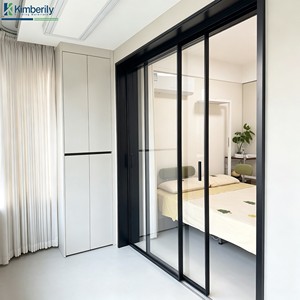
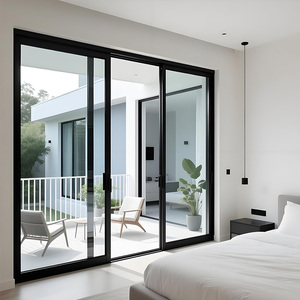
- Minimalist Slim-Frame & Concealed Track Engineering: Modern residential design demands invisible sightlines. Emerging systems reduce visible aluminum face widths to under 16mm while utilizing concealed top-hung roller tracks that eliminate bottom floor trip hazards, creating seamless floor transitions between hallway and laundry zones.
- Smart Glass Integration (PDLC Switchable Film): High-end villa projects increasingly specify aluminum glass laundry doors embedded with Polymer Dispersed Liquid Crystal (PDLC) technology. At a switch click or via smart home integration, clear glass instantly turns opaque, hiding laundry room clutter during guest entertaining.
- Enhanced Sound Attenuation (Rw / STC Damping): Modern washing machines and tumble dryers operate at 55–75 dB. Next-generation laundry doors feature double-glazed laminated glass (e.g., 5mm + 0.76PVB + 5mm) with argon gas fills, delivering acoustic insulation ratings of Rw ≥ 38 dB.
- Surface Finish Advancement (Anti-Fingerprint Anodizing & Micro-Arc Oxidation): Wet rooms expose door hardware to chemical detergents, steam, and softeners. Advanced suppliers utilize anodic oxidation coating thickness up to Class 15 (AA15) or fluorocarbon (PVDF) coatings tested against 3,000 hours of neutral salt spray (NSS).
3. B2B Sourcing Strategies & Procurement Insights for International Buyers
Procuring custom aluminum doors from China requires clear protocol alignment between developer architects, general contractors, and factory engineers. To eliminate job-site installation friction and submittal rejection, international purchasing teams should implement the following steps:
- CAD Shop Drawing Authorization: Demand full 2D section details and 3D node assembly drawings prior to deposit payment. Verify frame depth (ranging from 65mm narrow systems up to 150mm heavy-duty sliding series), glass bite depth, and threshold drain slot geometry.
- Compliance & Test Report Verification: Ensure profile and glass assemblies meet destination building codes. Zenic product lines align with North American NFRC and AAMA standards, European CE marking, and Australian AS2047 structural performance benchmarks.
- Export Packaging Integrity: Interior glass doors require rigorous crating. Standard supplier export protocols should include shrink wrapping, high-density EPE foam edge protectors, custom corner guards, and fully enclosed, non-fumigation plywood cases suitable for multi-modal ocean freight.