Engineered Aluminium Clad Wood Series
Explore our premium architectural window and door solutions manufactured to meet stringent NFRC, CE, and AS2047 energy codes.
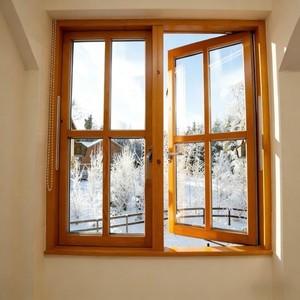
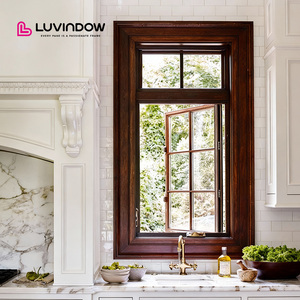
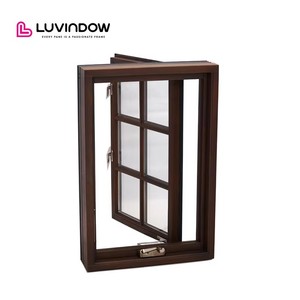
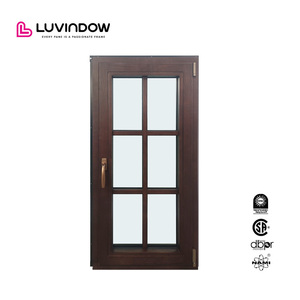
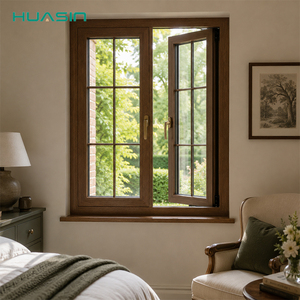
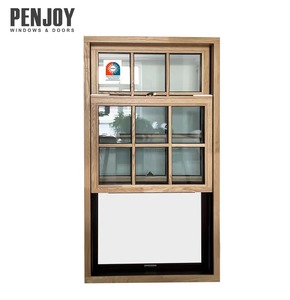
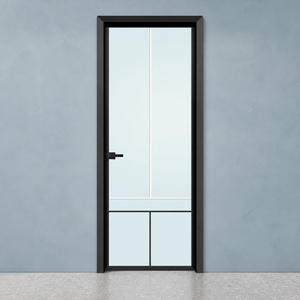
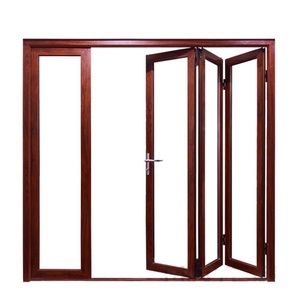
Engineering Excellence in Chinese Aluminium Wood Fenestration Export
Modern architectural design demands a delicate equilibrium between operational energy efficiency, biophilic interior aesthetics, and structural durability against severe environmental exposure. As a leading premier China top aluminium wood windows factory & exporter based in Foshan—the epicenter of global aluminum extrusion innovation—we engineer hybrid fenestration systems that seamlessly merge structural 6063-T5 aluminum exterior cladding with sustainably harvested interior timber frames.
Traditional single-material windows present inherent physical tradeoffs: standard solid wood frames deliver exceptional natural insulation and interior warmth but require intensive external maintenance when subjected to UV radiation, coastal moisture, and temperature fluctuations. Conversely, structural aluminum extrusions provide extreme atmospheric resistance and precise narrow-sightline aesthetics but possess high thermal conductivity if not isolated by sophisticated thermal barrier breaks. Hybrid Aluminium-Clad Wood (Alu-Wood) systems represent the definitive engineering resolution to these historic architectural challenges.
Anatomy of High-Performance Aluminium Clad Wood Systems
Our OEM/ODM structural designs rely on a multi-layered composite assembly that isolates thermal bridge transfers while preserving structural rigidity under dynamic wind-load stress:
- Exterior Protective Shield: Heavy-duty 2.0mm minimum wall thickness extruded 6063-T5 aluminum profiles treated with AkzoNobel powder coating, fluorocarbon (PVDF) spraying, or anodized finishes to withstand salt-spray exposure up to 3,000 hours.
- Structural Timber Core: Precision-milled, finger-jointed laminated solid wood (Red Oak, Larch, Teak, or Pine) dried in vacuum kilns to a strict moisture content of 8% to 12%. This process completely neutralizes internal wood tension, preventing warping, splitting, or swelling under variable ambient humidity.
- Thermal Expansion Decoupling: Polymer clip attachment mechanisms connect the exterior aluminum cladding to the inner wooden structural core. Because aluminum and timber possess disparate coefficients of thermal expansion ($\alpha_{Al} \approx 23 \times 10^{-6}/\text{K}$ vs $\alpha_{Wood} \approx 5 \times 10^{-6}/\text{K}$), rigid mechanical connection causes structural distortion. Our float-clip technology accommodates independent thermal movement without compromising air sealing.
- Triple-Gasket Sealing Geometry: Continuous EPDM (Ethylene Propylene Diene Monomer) gasket loops combined with pressure-equalized hidden drainage channels ensure zero water penetration under hurricane-force rain pressure.
| Performance Index | Technical Benchmark Standard | Engineering Significance for Overseas Buyers |
|---|---|---|
| Thermal Transmittance (U-Value) | 0.8 to 1.1 W/m²K (NFRC / CE Certified) | Exceeds Passive House requirements and reduces HVAC building energy consumption up to 40%. |
| Acoustic Isolation (STC / OITC) | STC 42 dB – 48 dB (with PVB Acoustic Glass) | Dampens ambient urban noise and jet-engine frequencies for luxury residential comfort. |
| Wind Load Resistance | Class P3 $\ge 5000 \text{ Pa}$ (AS2047 / AAMA 101) | Certified structural integrity for high-rise residential towers and coastal villa applications. |
| Air Infiltration / Water Tightness | Class 4 / Class 9A ($\ge 600 \text{ Pa}$) | Prevents micro-drafts, internal humidity loss, and wind-driven rain penetration. |
| Hardware Lifecycle Endurance | 200,000 Operational Opening Cycles | Fitted with Siegenia, Hoppe, or Roto multi-point lock systems with 10-year factory warranties. |
Future Product Development Trends in Wood-Aluminium Fenestration
As global energy efficiency standards evolve—exemplified by Europe's Energy Performance of Buildings Directive (EPBD) and North America's ENERGY STAR® Version 7.0 standards—procurement specs are shifting rapidly. The next decade of aluminium wood window engineering will be dominated by four core innovations:
1. Vacuum Insulated Glass (VIG) Integration: By substituting standard argon gas cavities with 0.1mm micro-vacuum chambers, system profile depths can be drastically reduced while achieving center-of-glass U-values as low as 0.4 W/m²K. This allows ultra-slim sightline designs without sacrificing thermal performance.
2. Smart Electrochromic & BIPV Glazing: Electronically switchable tinting glass integrated directly into triple-glazed wood windows provides dynamic solar heat gain coefficient (SHGC) control, allowing modern structures to automatically optimize internal lighting and reduce cooling loads dynamically.
3. Minimalist Flush-Concealed Sash Architectural Framing: Modern minimal-frame aesthetics hide the exterior aluminum frame within the building's insulation envelope. Interior timber sashes are engineered with fully concealed hinges capable of supporting sash weights up to 180 kg.
4. Bio-Based Polyurethane Thermal Strips: Replacing petroleum-based PA66 polyamide break strips with bio-resins lowers the embodied carbon footprint of the structural profile by 35%, assisting developers seeking LEED Platinum and BREEAM Outstanding green building certifications.
Global Procurement Trends: Sourcing Direct from China Manufacturers
International architectural firms, general contractors, and commercial developers are increasingly moving away from local intermediaries to establish direct factory partnerships with Tier-1 Chinese exporters. Sourcing directly from an established Foshan OEM factory yields several tangible strategic procurement advantages:
- Capital Expenditure Optimization: Direct factory procurement cuts distributor markup margins by 30% to 50% without compromising profile wall thickness or hardware specifications.
- Bespoke Customization Capability: Custom profile extrusion extrusion dies, unique wood stain matching, specialized dual-color anodizing, and non-standard geometric window shapes are accommodated natively in-house.
- Comprehensive Pre-Shipment Testing: Advanced factories conduct water tightness mockups, air infiltration testing, and structural corner crimp pull testing prior to container packing.
- Precision Unitized Container Packaging: Finished units are individual wrapped in anti-scratch EPE protective film, enclosed in custom wooden crates, and sequenced according to floor installation plans for seamless site delivery.
Why Partner with Our Foshan Manufacturing Base?
Combining German-calibrated CNC machinery with localized supply chain density to deliver world-class fenestration engineering.
Virgin 6063-T5 Extrusions
We strictly utilize 100% primary aluminum billet extrusions. We never use recycled scrap, ensuring uniform structural yield strength and flawless surface anodizing.
Pin-and-Glue Corner Injection
Frame joints are connected using precision mechanical corner cleats combined with imported two-component structural corner sealing epoxy, eliminating frame corner gap leakage.
International Testing Compliance
Our aluminum-wood windows are independently tested and certified for NFRC thermal performance, CE marking, Australian AS2047 standard, and ISO 9001 quality management.
FSC-Certified Timber Sourcing
Every piece of solid wood integrated into our window systems is harvested from sustainably managed forests, backed by full chain-of-custody documentation.
Sea-Worthy Export Logistics
Heavy-duty, fumigation-free plywood crates with internal EPE foam lining protect glass units during transoceanic transit, guaranteed zero breakage arrival.
Dedicated B2B Engineering Support
Our bi-lingual facade engineers convert architectural CAD drawings into full shop-drawings, structural calculation reports, and thermal simulation files within 48 hours.
Frequently Asked Sourcing Questions
Clear answers to technical, commercial, and logistical questions standard for overseas window procurement.
What is the typical Minimum Order Quantity (MOQ) for custom projects?
Our standard MOQ starts from 50 square meters (or approximately 20-30 window units). We support combined project orders where casement windows, tilt-and-turn windows, and heavy-duty sliding doors are mixed within a single container shipment to satisfy MOQ thresholds for custom villa and commercial developments.
What thermal U-values can your aluminium clad wood windows achieve?
Depending on profile depth (ranging from 68mm to 120mm), wood timber species, and glass configuration, our systems achieve overall window U-values down to 0.8–1.1 W/m²K. Utilizing triple-pane glass insulated with 90% Argon gas, Low-E thermal coatings, and Warm-Edge composite spacers allows us to easily meet global Passive House standards.
How do you prevent solid wood interior frames from warping in humid climates?
We use finger-jointed 3-ply or 4-ply laminated timber rather than single solid wood pieces. Each timber layer's grain direction is oriented oppositely to neutralize internal physical strain. Furthermore, the wood is kiln-dried to a precise moisture content of 8-12% and coated with four layers of eco-friendly German Remmers water-based microporous paint, allowing the wood to breathe while repelling humidity.
What is the standard production lead time for an export container order?
Standard manufacturing lead time is 25 to 35 business days following shop drawing approval and deposit receipt. For complex custom wood species (e.g., imported American Black Walnut) or specialized powder coating finishes, lead times may extend to 40 days. Expedited production schedules are available for time-sensitive commercial contracts.
Do you offer OEM/ODM private labeling services for regional distributors?
Yes, we provide full OEM and ODM services. We can extrude proprietary profile dies, apply custom laser-etched branding logos on hardware and protective films, design custom corner display samples, and tailor protective packaging to reflect your company's branding.
How are product quality and dimensional accuracy verified prior to shipping?
Every manufactured unit undergoes a strict 5-stage Quality Control inspection: 1) Raw profile dimension and coating thickness check; 2) Timber moisture and surface defect inspection; 3) Frame squareness and corner crimp strength testing; 4) Glazing unit seal and optical quality clearance; 5) Operational hardware cycle test. We provide detailed QC inspection reports and video documentation prior to container sealing.
Ready to Upgrade Your Architectural Fenestration Supply Chain?
Upload your window schedules, architectural elevations, or CAD drawings. Our facade engineering team will deliver a comprehensive technical quotation and shop drawing package within 24 hours.