Export-Ready Coated Aluminium Door & Window Systems
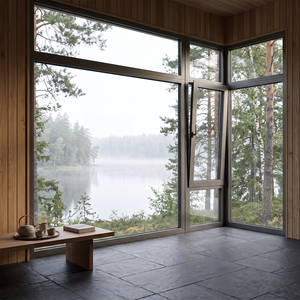
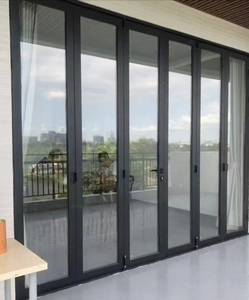
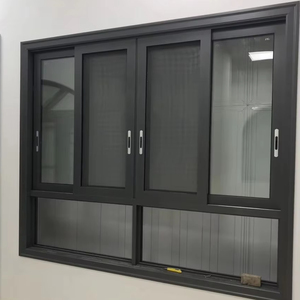
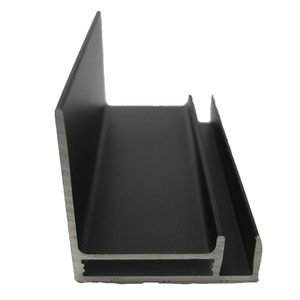
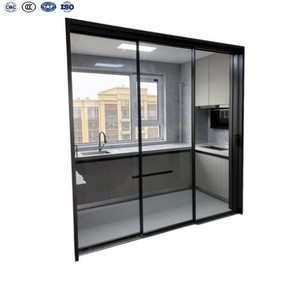
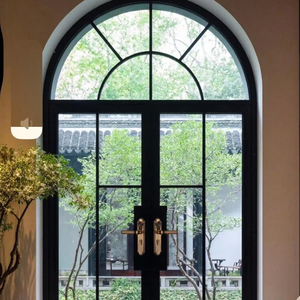
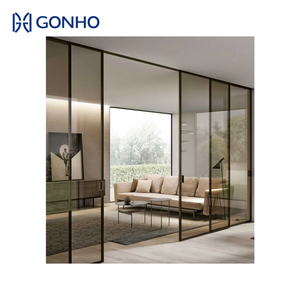
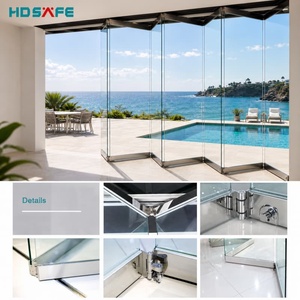
1. China Wholesale Aluminium Coated Doors Manufacturing Landscape
The global architectural sector has witnessed a profound shift toward lightweight, corrosion-resistant, high-strength fenestration solutions. Among structural material options, aluminium coated doors and profile extrusions stand as the definitive benchmark for commercial, residential, and hospitality developments. Sourcing directly from premier manufacturing hubs such as Foshan, Guangdong—the epicenter of global aluminium processing—provides B2B procurement managers, real estate developers, and architectural specifiers with unprecedented engineering customization, cost efficiency, and structural reliability.
As a established manufacturer, Zenic Window & Door Technology Co., Ltd. operates an integrated 20,000 m² smart manufacturing ecosystem. Producing high-performance thermal break aluminium doors, sliding systems, bi-fold doors, and custom profile extrusions, our facility combines automated CNC machining, corner crimping precision, pressure-equalized sealing, and advanced surface coating technologies. By adhering strictly to international standards including ISO 9001:2015, CE Marking, NFRC, AS2047, CSA, and AAMA, we ensure every exported unit withstands stringent wind pressure, intense atmospheric radiation, and severe salt-spray environments.
Core Information Gain Insight: The longevity of an aluminium coated door relies 30% on alloy structural composition (6063-T5 vs. recycled alloys) and 70% on surface coating pretreatment (chromate-free conversion layers, fluorocarbon PVDF vs. standard powder coating thickness). Precision pretreatment guarantees 20+ years of color retention without chalking or delamination.
2. Surface Coating Technologies: Chemical Engineering & Metallurgy
To evaluate wholesale aluminium doors effectively, buyers must understand the surface finishing processes available. The primary function of an engineered surface coating is twofold: providing barrier protection against chemical weathering and ambient moisture, while executing architectural aesthetic requirements.
PVDF Fluorocarbon
Utilizes 70% Kynar 500 / Hylar 5000 resin systems. Engineered for high UV environments, coastal regions, and high-rise exteriors. Meets AAMA 2605 requirements with superior weatherability.
Architectural Powder Coating
Thermosetting polyester and polyurethane resins compliant with Qualicoat Class 1, 2, and 3. Offers a broad spectrum of RAL colors, matte textures, and scratch-resistant finishes.
Anodizing & Electro-Coating
Electrolytic oxidation creates an integral aluminium oxide layer (15–25 microns). Electro-coating (E-coating) seals pores for exceptional abrasion and chemical resistance.
Technical Comparison Matrix: Coating Performance Parameters
| Coating Specification | Film Thickness (μm) | Salt Spray Resistance (ASTM B117) | UV Retention (Delta E) | Target Application Zone |
|---|---|---|---|---|
| PVDF (2-Coat / 3-Coat) | 35 – 50 μm | 4,000+ Hours | < 5 Units after 10 Years | Coastal, Marine & High-Rise Towers |
| Qualicoat Class 2 Powder | 60 – 80 μm | 2,000+ Hours | < 5 Units after 5 Years | Commercial Office & Luxury Residential |
| Super Durable Polyester | 60 – 90 μm | 1,500 Hours | Standard Weathering Resistance | Interior Partitions & Inland Suburban |
| Hard Anodized (AA25) | 20 – 25 μm | 3,000 Hours | Metallic Integrity (No Fading) | Industrial, Modern Minimalist Doors |
| Wood-Grain Heat Transfer | 60 – 70 μm | 1,000+ Hours | Biophilic Aesthetics | Residential Entryways & Courtyards |
3. Future Sourcing & Procurement Trends (2025–2030)
International fenestration procurement is undergoing fundamental transformation driven by decarbonization mandates, smart automation, and localized building envelope energy metrics. B2B buyers must align their supply chains with the following overarching industry trends:
1. Low-Carbon Billet & Recycled Aluminium Sourcing
Global green building standards (LEED v4.1, BREEAM) now enforce embodied carbon accounting. Wholesale buyers increasingly require primary billets smelted using renewable hydropower or certified secondary post-consumer recycled content, reducing carbon intensity per frame kilogram by up to 65%.
2. Ultra-Low U-Value Thermal Break Integration
Simple non-thermal aluminium profiles are being phased out in export markets. Standard doors now integrate multi-chambered polyamide thermal break strips (PA66-GF25 reinforced with 25% glass fiber) combined with polyurethane foam filling, pushing total assembly U-values below 1.1 W/m²K.
3. Heavy-Duty Multi-Point & Motorized Automation
Modern architectural layouts demand large glazed spans. Door systems now incorporate concealed, heavy-duty tandem rollers capable of supporting sash weights up to 400 kg, alongside motorized actuator systems integrated with smart home protocols (Zigbee, KNX, Bluetooth).
4. Prefabricated Knock-Down (KD) & Flat-Pack Crating
Rising sea freight costs have driven innovation in logistics. Manufacturers now supply precision-machined Knock-Down (KD) systems with pre-punched corner connectors, allowing 300% more door frames to be shipped per 40ft High Cube container while preserving factory-grade assembly precision.
4. Product Development & Structural Engineering Innovations
Engineered aluminium entry and sliding door systems are no longer mere structural barriers; they are dynamic components of modern building design. Key technological breakthroughs pioneered at our Foshan facility include:
Micro-Slim Sightline Frame Geometry
Concealed sashes with vertical interlocking stiles as narrow as 20 mm maximize natural lighting while maintaining structural moment of inertia for wind resistance exceeding 5,000 Pa.
Trackless & Flush Threshold Water Drainage
Proprietary concealed sub-surface drainage channels clear rain water rapidly (up to 350 mm/hr capacity) while providing zero-barrier ADA-compliant threshold transitions.
Hurricane Impact Glazing Structural Bond
Structural silicone glazing (SSG) paired with laminated SGP (SentryGlas®) interlayers provides shatterproof performance, passing ASTM E1886/E1996 cyclic missile impact testing.
Quality Control Pre-Shipment Metric: Every customized order dispatched from Zenic Window & Door Technology undergoes a 5-step Quality Gate: 1) Profile wall thickness verification (minimum 2.0 mm structural), 2) Coating adhesion cross-hatch test (ISO 2409), 3) Water tightness pressure chamber test, 4) Hardware cycle fatigue testing (200,000 operations), and 5) EPE protective wrap with fumigated export plywood crating.
5. Frequently Asked Procurement Questions (FAQ)
Direct answers to essential technical, logistics, and quality assurance queries for international buyers.
Our standard minimum order quantity (MOQ) starts at 50 pieces per project. To accommodate mixed-use commercial and luxury residential developments, buyers can combine various opening configurations—including sliding doors, bi-fold doors, tilt & turn windows, and French doors—within a single container order to fulfill the MOQ requirement.
For seaside or tropical locations, we recommend our PVDF 3-coat fluorocarbon system (AAMA 2605) or Qualicoat Class 3 powder coating. These specialized treatments carry a written factory warranty ranging from 15 to 25 years against blistering, cracking, chalking, and color fading exceeding 5 Delta E units.
Standard fabrication lead time is 15 to 25 calendar days following shop drawing sign-off and deposit receipt. For projects requiring brand-new profile extrusion dies, add 10 days for matrix design, milling, and sample verification testing. Expedited shipping via FOB Foshan or Shenzhen ports is managed by our dedicated export team.
Yes. Over 60% of our production volume consists of OEM/ODM orders for overseas door distributors, system suppliers, and real estate developers. We supply custom profile extrusions, customized hardware branding, protective film branding, custom RAL color matching, and full CAD/Revit BIM object support for architectural integration.
Depending on destination market requirements, we provide comprehensive test reports and compliance certificates including ISO 9001:2015 quality management documentation, CE marking for Europe, NFRC thermal performance ratings for North America, and AS2047 window structural compliance documentation for Australia and New Zealand.
All coated door frames are wrapped in anti-scratch protective film, padded with thick EPE foam at all exposed corners, and packed in reinforced, fumigation-free plywood crates with internal steel strapping. Double and triple insulated glass units feature plastic spacers and desiccant packs to avoid thermal shock and fogging during ocean transit.
6. Why Source From Zenic Window & Door Technology Co., Ltd.
Choosing the right Chinese manufacturing partner is critical to project execution, risk mitigation, and margin performance. Our operational model blends engineering depth with direct manufacturing scale:
Global Export Footprint
Active export projects spanning 40+ countries across North America, Europe, Australia, the Middle East, and Southeast Asia.
In-House Tooling & Coating
Integrated vertical extrusions, matrix die creation, CNC precision milling, and automated powder/PVDF coating lines under one roof.
Guaranteed Engineering QA
100% pre-shipment assembly checking, hardware alignment testing, water chamber pressure validation, and full tracing documentation.
Accelerate Your Architectural Door Sourcing Today
Submit your architectural elevation drawings, window schedules, or custom profile specifications. Our structural engineers and B2B project managers will respond with CAD proposals, thermal evaluations, and wholesale quotes within 24 hours.