Wholesale Product Showcase
Engineered thermal-break aluminum profile systems, luxury exterior doors, and hurricane-rated casement solutions.
Whitepaper: Precision Surface Coating & Surface Engineering in Modern Architectural Windows
In high-performance fenestration systems, the exterior architectural coating is not merely an aesthetic choice—it serves as the primary barrier against environmental degradation, atmospheric corrosion, ultraviolet degradation, and thermal stress. As a leading manufacturer centered in the Foshan aluminum cluster, Zenic Window & Door Technology Co., Ltd. integrates state-of-the-art aluminum surface finishing with structural thermal break profiles to exceed global building code requirements.
1. Fluorocarbon PVDF vs. Architectural Powder Coatings vs. Anodizing
Selecting the optimal surface finish depends strictly on environmental exposure, climatic aggressiveness (such as ISO 12944 corrosion categories C1 to C5-M), and target design lifespan. Below is an engineering comparison of primary surface treatments utilized in China wholesale aluminum coated window exports:
- Fluorocarbon (PVDF - Polyvinylidene Fluoride) Coating: Utilizing 70% Kynar 500 / Hylar 5000 resin formulas, PVDF coatings deliver unparalleled resistance to chalking, fading, and chemical erosion. Meeting AAMA 2605 specifications, PVDF is highly recommended for coastal high-rise structures, tropical projects, and extreme UV environments.
- Architectural Thermosetting Powder Coating: Utilizing super-durable polyester powders compliant with AAMA 2604 standards, powder coating offers superior scratch resistance, zero volatile organic compounds (VOCs), and thousands of customized RAL color options. Ideal for high-traffic commercial facades and modern residential villas.
- Advanced Anodizing & Electrocoating (E-Coating): Electrochemical anodic oxide layer formation provides an integral surface hardness exceeding 300 HV. Coupled with electrophoretic sealing, this process retains metallic luster while exhibiting exceptional resistance to salt spray corrosion (exceeding 3,000 hours in ASTM B117 testing).
2. Polyamide Thermal Break Integration (PA66GF25)
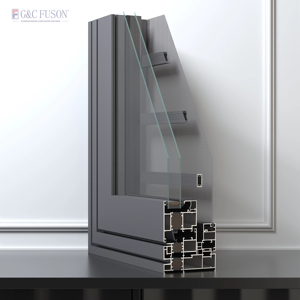
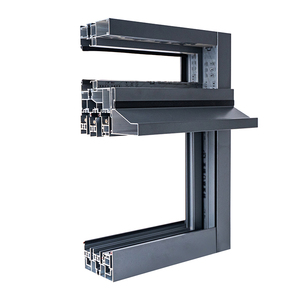
Uncoated or uninsulated aluminum extrusions possess high thermal conductivity ($k \approx 200 \text{ W/m}\cdot\text{K}$), which leads to significant thermal bridging, interior condensation, and elevated HVAC operational costs. Our engineered coated windows integrate multi-chambered Polyamide PA66 reinforced with 25% glass fiber (PA66GF25). This design drops structural conductivity to $k \approx 0.3 \text{ W/m}\cdot\text{K}$, enabling multi-pane fenestration assemblies to achieve overall window system U-values as low as 1.1 W/m²K (NFRC certified).
| Coating / Specification | Standard Complied | Salt Spray Resistance | UV / Chalking Resistance | Recommended Application |
|---|---|---|---|---|
| 3-Coat PVDF Fluorocarbon | AAMA 2605 / GB/T 5237.5 | > 4,000 Hours (C5-M Heavy Marine) | 20 Years Structural Guarantee | Luxury Coastal Villas, High-Rise Towers |
| Super-Durable Powder Coating | AAMA 2604 / QUALICOAT Class 2 | > 2,000 Hours (C3-C4 Industrial) | 10-15 Years Color Retention | Suburban Residential, Commercial Offices |
| Hard-Anodized E-Coating | AAMA 611 / QUALANOD | > 3,000 Hours (Marine Environment) | Integral Metallic Stability | Architectural Curtain Walls, Louver Systems |
| Wood-Grain Thermal Transfer | QUALIDECO Specifications | > 1,500 Hours (Standard Urban) | High Scratch & Abrasion Resistance | Biophilic Residential Facades, Resorts |
Why Partner with ZENIC Fenestration Manufacturing
Rooted in Foshan, China—the world's core hub for architectural aluminum processing.
Virgin 6063-T5 Structural Extrusions
We mandate 100% prime primary aluminum billet extrusions with standardized wall thicknesses (2.0mm to 3.0mm), eliminating structural deflection under extreme wind loads (up to 1,000 N pressure testing).
Six-Seal EPDM & Corner Glue Injection
Precision corner crimping combined with dual-component corner structural adhesive and continuous vulcanized EPDM gaskets guarantees air permeability and zero water penetration during tropical rainstorms.
Full International Certification Compliance
Our products are engineered and batch-tested to satisfy rigorous market standards: NFRC & AAMA (North America), CE marking (Europe), AS2047 & AS1288 (Australia), and ISO 9001 quality management.
Custom OEM/ODM Engineering Support
From custom extrusion die development and dual-color profile thermal break splitting to hardware branding and bespoke glass specs (Low-E, Argon gas, hurricane laminated), we provide complete turnkey ODM service.
Seaworthy Protective Export Crate Packaging
Finished window frames undergo protective film wrapping, EPE corner buffer guards, and loading into fumigation-free, fully sealed solid plywood crates to guarantee 0% transit damage upon sea freight arrival.
Future Procurement Trends in Wholesale Architectural Windows (2025–2030)
Global fenestration sourcing is undergoing a structural paradigm shift driven by stringent energy efficiency directives, rising building lifecycle standard requirements, and supply chain rationalization. Procurement directors, real estate developers, and wholesale importers must align their sourcing strategies with three primary global macro-trends:
Trend 1: Decarbonization & Low-Carbon Aluminum Sourcing
With regulations such as the EU Carbon Border Adjustment Mechanism (CBAM) and North American Title 24 energy standard updates taking full effect, building envelopes require documented embodied carbon footprint verification. Forward-thinking suppliers in China are shifting toward hydroelectric-powered primary aluminum smelting and certified recycled billet blending (with zero mechanical strength compromise) to deliver low-carbon aluminum windows that satisfy LEED Gold and BREEAM sustainability metrics.
Trend 2: Demand for Prefabricated Unitized Systems & Rapid Assembly
Escalating on-site labor costs across North America, Europe, and Australia have triggered massive growth in prefabricated, factory-glazed unitized fenestration. Importers no longer seek unglazed knocked-down (KD) profiles; instead, they demand fully assembled, pre-glazed, pre-calibrated window and door modules that feature factory-installed multi-point German or Italian hardware. This direct factory unitization reduces job-site installation timelines by up to 60%.
Trend 3: Smart Glass Integration & Bioclimatic Architectural Living
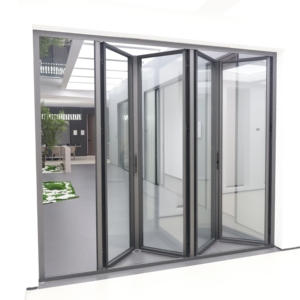
Modern architectural design increasingly blurs the boundary between indoor and outdoor spaces. Sourcing demand has skyrocketed for large-span panoramic lift-and-slide doors, motorized slim-sightline casements, electrochromic (smart tinting) glass units, and integrated bioclimatic louver pergolas. Direct wholesale partnerships with factories capable of producing composite outdoor living solutions allow distributors to maximize gross margin per container shipped.
Technological Innovations in Coated Aluminum Fenestration Systems
Product R&D at Zenic Window & Door Technology Co., Ltd. continuously pushes the boundary of modern structural fenestration. Below are key technological breakthroughs integrated into our export series:
1. Ultra-Narrow Interlock Sightlines with Structural Silicone Glazing (SSG)
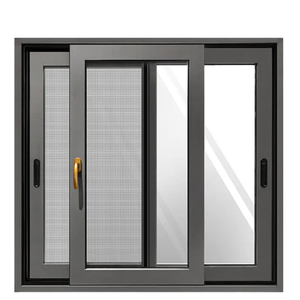
To meet modern minimalist aesthetic demands without sacrificing structural integrity, our premium panoramic sliding series incorporates 21mm ultra-slim vertical interlock profiles. Utilizing structural silicone sealant bonding directly between the double-glazed insulated glass unit and the thermal profile frame, wind load resistance is transferred directly to the glass pane, achieving structural pressures exceeding 3,000 Pa.
2. Multi-Cavity Low-E Triple Glazing with Argon Gas Infill
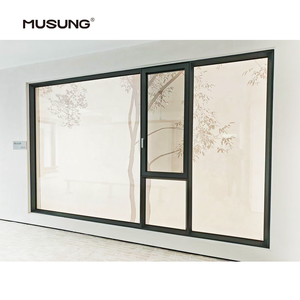
Our energy-efficient casement and tilt-and-turn series utilize triple-pane, double-cavity configurations (e.g., 6mm Low-E + 12Ar + 6mm Clear + 12Ar + 6mm Low-E). Fitted with warm-edge composite spacers and 90%+ pure Argon gas infill, these assemblies dramatically cut Solar Heat Gain Coefficients (SHGC to < 0.22) and provide sound insulation performance exceeding 42 dB STC rating—ideal for airport corridors and urban metropolis towers.
3. Concealed Drainage & Pressure-Equalized Rain Screen Design
Traditional weep-hole caps are prone to wind-driven water backing up into room interiors during typhoons. Our engineered windows feature internal hidden downward drainage channels operating on the pressure-equalization principle. Water drains rapidly under gravity through concealed bottom frame slots, completely preventing water backflow while maintaining a smooth frame aesthetic.
Frequently Asked Questions (FAQ)
Essential insights for overseas importers, contractors, and wholesale distributors.
What is your Minimum Order Quantity (MOQ) for wholesale projects?
What is the average production lead time from order confirmation?
Can your thermal break aluminum coated windows satisfy localized energy building codes?
Do you offer customized OEM/ODM profile designs and hardware branding?
How do you guarantee finish durability against harsh salt spray and coastal UV exposure?
Request Engineering Quotes & Free Sample Packs
Submit your architectural window schedule or elevation drawings today. Our senior fenestration engineers will provide shop drawings, structural calculations, and wholesale price quotes within 24 hours.
Contact Us