Featured Engineering Export Catalog
Precision-engineered aluminum windows, heavy-duty sliding systems, and thermal break entrance doors manufactured in Foshan, China for global architectural projects.
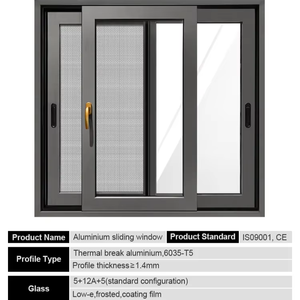
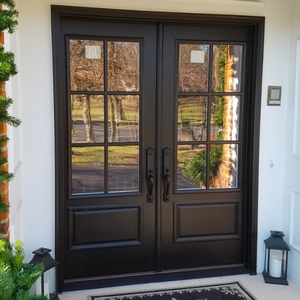
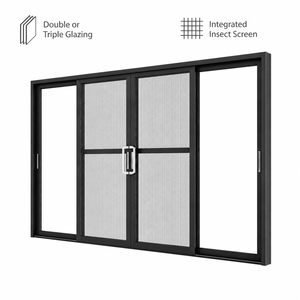
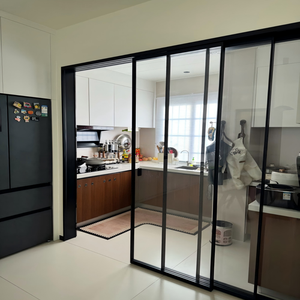
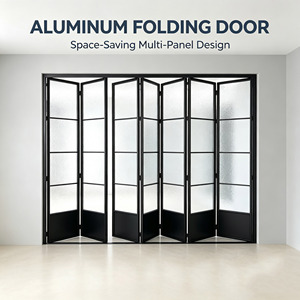
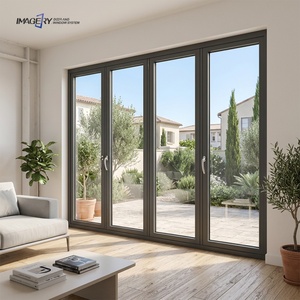
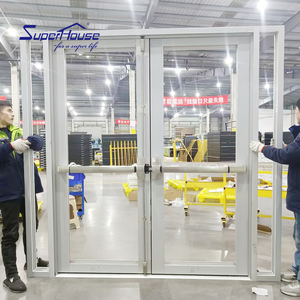
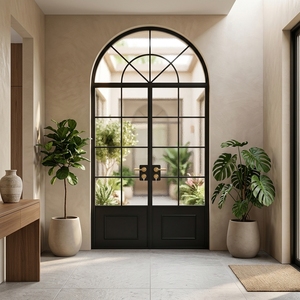
Executive Summary: Navigating China Wholesale Aluminium Sash Windows Procurement
The global architectural fenestration sector is undergoing a profound paradigm shift. Driven by rigorous energy codes (such as IECC 2024 in North America and EPBD regulations in the EU), real estate developers, facade engineers, and wholesale importers are requiring structural aluminum systems that achieve ultra-low thermal transmittance without compromising wind load resistance or aesthetic minimalism. As China’s premier extrusion and fabrication hub, Foshan (Guangdong Province) has established an integrated supply chain capable of delivering enterprise-grade thermal break aluminium sash windows, tilt-and-turn units, and panoramic sliding assemblies at optimized scale.
This technical whitepaper authored by Zenic Window & Door Technology Co., Ltd. serves as an authoritative guide for international procurement directors, commercial contractors, and architectural specifiers. We explore the physics of polyamide thermal insulation, structural alloy metallurgy, international testing compliance (NFRC, AS2047, CE, AAMA), and future-proof procurement strategies for large-scale developments.
1. Engineering & Material Excellence: Metallurgy and Thermal Mechanics
Achieving structural longevity and superior thermal envelope ratings requires stringent control over raw material composition and profile geometry. At our Foshan production facility, quality control begins with raw aluminum billet verification.
6063-T5 Architectural Billet Metallurgical Precision
We utilize exclusively primary virgin 6063 aluminum alloy tempered to T5 hardness standards, completely eliminating recycled scrap metal that introduces micro-impurities and brittle structural shear planes. The mechanical profile yields a tensile strength exceeding 160 MPa and a yield strength above 110 MPa. This robust structural backbone permits slim profile sightlines while safely supporting massive triple-glazed insulated glass units (IGUs) weighing up to 250 kg per sash.
Polyamide PA66-GF25 Thermal Break Technology
Traditional non-thermal break aluminum acts as a rapid thermal conductor, transferring exterior heat into air-conditioned spaces or allowing interior heating to radiate outwards during cold winters. Our system incorporates high-density PA66-GF25 (Polyamide 66 reinforced with 25% glass fiber) thermal barriers. This specific composite matches the thermal expansion coefficient of aluminum ($2.3 \times 10^{-5}/K$), preventing profile warping, seal degradation, or delamination across extreme ambient temperature swings spanning from -30°C to +80°C.
| Performance Parameter | Zenic Standard Specification | International Standard Equivalent | Engineering Benefit |
|---|---|---|---|
| Profile Alloy & Temper | Primary 6063-T5 (2.0mm Wall Thickness) | ASTM B221 / EN 755-2 | High structural resistance against hurricane-force wind load pressure. |
| Thermal Transmittance ($U_w$) | 1.1 W/m²K – 1.4 W/m²K | NFRC 100 / EN ISO 10077-1 | Complies with ENERGY STAR and EU Passive House energy requirements. |
| Gasket Sealing System | Continuous EPDM Ternary Rubber (3-Layer) | ASTM C864 / DIN 7863 | Zero water penetration at 700 Pa static wind-driven rain pressure. |
| Acoustic Isolation ($R_w$) | 38 dB – 45 dB (with Laminated IGU) | ISO 140-3 / ASTM E90 | Significant ambient noise reduction for luxury hospitality and urban projects. |
| Hardware Durability | Stainless Steel 304 Multi-Point Lock | EN 13126 / AAMA 904 | Tested to 200,000 continuous open-close operation cycles without failure. |
2. Future Procurement & Global Sourcing Trends (2025–2030)
As international supply chains evolve, wholesale buyers of aluminium sash windows and system doors must adapt to dynamic market forces. Strategic sourcing is no longer merely about finding the lowest unit price; it requires evaluating complete lifecycle cost, carbon compliance, and custom modular integration capabilities.
Trend 1: Decarbonization and Low-Carbon Aluminum Extrusion
European and North American regulatory bodies are introducing carbon border adjustments (such as the EU CBAM). In response, Chinese forward-thinking factories are transitioning extrusion production lines to utilize hydro-powered aluminum smelter feedstocks. Sourcing low-carbon extruded aluminum profiles allows real estate developers to score higher LEED v4 and BREEAM sustainability ratings while avoiding environmental tax tariffs.
Trend 2: Integrated Smart Home Automation & Concealed Hardware
Modern architectural design trends overwhelmingly favor minimal sightlines and smart building automation. Sourcing trends show exponential demand growth for hidden hinge casements, smart motorized lift-and-slide doors, and automated ventilation sash systems connected to building management systems (BMS). Integrated rain sensors, electrochromic smart glass, and concealed magnetic contact locks are rapidly shifting from premium options to standard contract specifications.
Trend 3: Prefabricated Modular & Unitized Window Assemblies
On-site labor costs in North America, Australia, and Western Europe continue to escalate. Consequently, general contractors are insisting on factory-assembled, fully glazed, pre-gasketed fenestration units shipped directly to construction sites. Zenic’s specialized factory packaging protocol ensures window units arrive complete with mounting fin flanges, perimeter sub-frames, and labeled opening tags, reducing job site installation labor hours by up to 40%.
3. Enterprise Strengths & E-E-A-T Capabilities: Zenic Window & Door Technology
Operating out of a state-of-the-art 20,000 square meter manufacturing plant in Foshan, China, Zenic Window & Door Technology Co., Ltd. has established itself as an authoritative leader in OEM/ODM export fenestration. Over 15+ years of dedicated export experience to more than 40 countries underpins our deep expertise in international building codes.
Comprehensive In-House Quality Assurance Gate
To eliminate defect propagation, every single production order undergoes a 5-step quality verification audit prior to ocean transport freight packaging:
- Dimensional Precision Audit: Laser-gauge check of frame height, width, and diagonal squareness within a strict ±0.5mm tolerance band.
- Corner Crimping Structural Integrity Test: Hydraulic corner crimping backed by two-component structural corner injection sealant guarantees zero joint opening under dynamic shear load.
- Water Tightness Chamber Testing: Sample units from each production batch undergo pressurized water spray testing simulating wind-driven monsoon downpours.
- Powder Coating Adhesion & Thickness Check: Dry-film thickness measurement (ensuring 60–80 microns for AAMA 2604 powder coating compliance) and cross-hatch adhesion testing.
- Protective Packaging: Multi-layer protection using EPE anti-scratch foam, hardboard edge caps, shrink wrap, and fumigation-free solid timber or plywood marine crates.