Featured Commercial & Residential Window Systems
Manufactured to international architectural standards. Select any system below to inspect thermal specifications or request tailored project quotes.
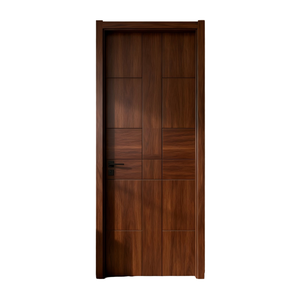
LT JINGMU Luxury Modern Magic Waterproof Aluminum Alloy Interior Doors for Dining Room
Get Catalog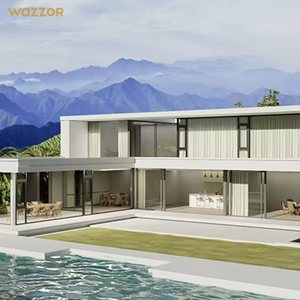
Wazzor Foshan Supplier OEM Interior Windproof Sound Proof Insulated Aluminum Casement Windows
Get Catalog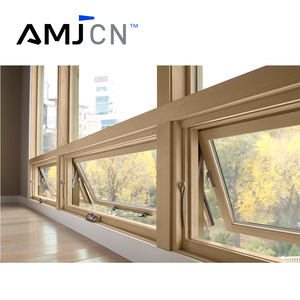
Pitched Aluminium Roof Windows Aluminum Skylight Awning Casement Metal Roof Swing Window
Get Catalog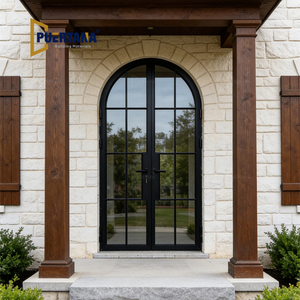
Thermally Broken Black Framed Steel Look Aluminum Glass French Door Crittall Style Heritage Doors
Get Catalog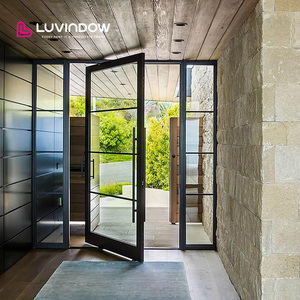
Luvindow Custom Modern USA Standard Business Shop Entrance Metal Aluminum Glass Door for Villa
Get Catalog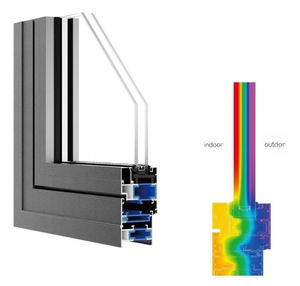
New Innovation Double Glazed Inward-opening Aluminum Thermal Break Casement Windows
Get Catalog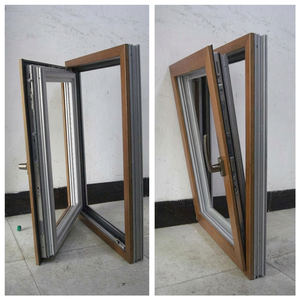
Soundproof Energy Saving Swing Double Glazing Triple Glazed Aluminum Casement Windows for Passive House
Get Catalog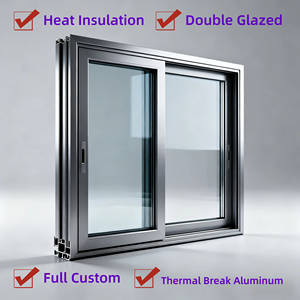
Full Custom Insulated Double Glazed Heat Insulation Shutters Aluminum Sliding Windows for Construction
Get CatalogEnterprise Advantage: Foshan Engineering & Manufacturing Benchmark
Operating out of Foshan, Guangdong—the recognized epicenter of China's premium aluminum profile extrusion and architectural hardware industry—Zenic Window & Door Technology Co., Ltd. stands as a premier direct-factory manufacturer specializing in high-performance thermal break aluminum system windows, structural sliding doors, and architectural shading solutions. Our modern 20,000+ square meter manufacturing base is outfitted with heavy-duty CNC profile machining centers, automated corner-crimping equipment, precise glue injection technology, and cleanroom double-glazed assembly lines.
Unlike regional trading intermediaries, Zenic executes comprehensive end-to-end quality control from raw billet alloy verification to finished unit sea-worthy packaging. We exclusively utilize prime 6063-T5 aluminum extrusions with nominal wall thicknesses of 2.0mm to 3.0mm, completely rejecting recycled aluminum scrap to guarantee structural yield strength, wind-load pressure resistance, and flawless surface preparation for architectural coatings.
Strict Compliance Standards
Engineered to satisfy global building codes, supported by NFRC, CE, AS2047, CSA, and ISO 9001 certifications across key structural lines.
Precision OEM/ODM Customization
Custom profile extrusion dies, private labeling, tailored mullion dimensions, and custom hardware integration for wholesale brands.
Optimized Lead Times & Packing
Standard export orders dispatched from 15 days, protected by EPE foam wraps, edge guards, and fumigation-free plywood crates.
Technical Whitepaper: Engineering High-Gain Thermal Break Double Pane Windows
In modern commercial and high-end residential fenestration design, aluminum frames without thermal barriers act as thermal bridges, rapidly transferring thermal energy between building exteriors and interiors. To counter this efficiency loss, premium Chinese manufacturers employ multi-chamber profile geometries joined by structural polyamide strips.
1. Polyamide Thermal Barrier Technology (PA66GF25): The structural bridge connecting inner and outer aluminum extrusions is manufactured from Polyamide 66 reinforced with 25% glass fiber (PA66GF25). This specific composite matches the thermal expansion coefficient of aluminum ($2.3 \times 10^{-5}/K$), ensuring that the assembled profile maintains mechanical integrity without shearing or warping during drastic temperature fluctuations from -30°C to +80°C.
2. Insulated Glass Unit (IGU) Physics: High-performance double pane windows utilize an insulated glass sandwich comprising two panes of tempered safety glass (typically 5mm or 6mm nominal thickness) separated by a warm-edge composite spacer. The internal cavity—typically 12mm to 20mm in width—is filled with 90%+ concentration Argon gas, which exhibits significantly lower thermal conductivity ($0.016 \text{ W/m}\cdot\text{K}$) compared to ambient dry air ($0.026 \text{ W/m}\cdot\text{K}$).
3. Low-Emissivity (Low-E) Sputtered Coatings: Applied via magnetron sputter vacuum deposition (MSVD), micro-thin silver layers selectively reflect long-wave infrared thermal radiation while permitting high visible light transmittance (VLT). In cooling-dominated climates (e.g., Middle East, Coastal regions), double Low-E configurations minimize Solar Heat Gain Coefficient (SHGC) down to 0.23, dramatically reducing HVAC power consumption.
4. Triple-Seal Gasket System & Pressure Equalization: Air leakage and rainwater infiltration are mitigated through three continuous sealing lines utilizing ternary ethylene propylene diene monomer (EPDM) synthetic rubber gaskets. The outer weather strip blocks wind-driven rain, the central pressure-equalized chamber drains moisture outward through hidden downward flap valves, and the interior acoustic gasket prevents air filtration, yielding sound insulation performance up to STC 42 dB.
Evolution of Chinese Fenestration Manufacturing: Precision Corner Crimping & Surface Finishing
The global perception of Chinese window manufacturing has undergone a profound shift, driven by heavy investments in automated European CNC machinery and rigorous raw material sourcing. Historically, traditional aluminum frames relied on simple mechanical corner cleats secured by self-tapping screws—a design prone to joint separation, water leakage, and frame racking over long service lives.
Modern export-tier factories in Foshan have standardized Corner Crimping with Structural Epoxy Injection. Hydraulic corner crimping machines press corner keys into the hollow chambers of the 6063-T5 aluminum profiles under multi-ton pressure. Simultaneously, two-component polyurethane or structural epoxy resin is injected through specialized port holes. The adhesive flows through internal distribution channels, completely bonding the corner cleat to the aluminum profile walls. This process creates a hermetically sealed, rigid joint capable of enduring wind pressures exceeding 5,000 Pascals without structural deformation.
Surface finishing technology has similarly evolved to meet stringent architectural durability demands. Premium double pane aluminum windows undergo automated multi-stage pre-treatment (chromate-free conversion coating) followed by vertical electrostatic powder coating using AkzoNobel or PPG architectural powders. For severe marine environments, 70% Fluorocarbon PVDF (Polyvinylidene Fluoride) coatings provide extreme resistance to salt spray corrosion (passing ISO 9227 3,000-hour testing), ultraviolet degradation, and chemical pollutants.
Global Procurement Trends: What B2B Buyers & Developers Must Anticipate
Wholesale window buyers, estate developers, and façade engineers face evolving energy conservation mandates, shifting supply chain dynamics, and heightened buyer expectations. Key sourcing trends shaping the next decade include:
1. Net-Zero Energy & Low U-Values
Building codes in North America (IECC) and Europe (EPBD) require system U-values under 1.2 W/m²K. Importers are transitioning from basic double pane units to warm-edge triple pane glazing filled with Argon or Krypton gas.
2. Ultra-Slim Sightlines & Panoramic Glazing
Architectural demand favors minimal frame visibility. Structural design focuses on concealed sash profiles, flush sill thresholds, and narrow interlock widths (as slim as 20mm) that maximize glass surface area while sustaining high wind loads.
3. Smart Glass & Automated Actuation
Integration of electrochromic dynamic tinting glass and integrated motorized chain actuators compatible with central Building Management Systems (BMS) and smart home automation systems.
Buyer Reference: Aluminum Double Pane Window Specification Matrix
This technical matrix outlines standard performance parameters for primary aluminum double pane window configurations manufactured for export projects.
| Window System Type | Frame Depth | Glass Configuration | U-Value (W/m²K) | Acoustic (STC) | Water Tightness | Wind Load Resistance |
|---|---|---|---|---|---|---|
| Thermal Break Casement | 65mm – 90mm | 5mm + 12Ar + 5mm Low-E | 1.4 – 1.8 | 38 – 42 dB | 600 Pa (Class 9A) | 4,500 Pa (Class C5) |
| Tilt & Turn System | 75mm – 120mm | 6mm + 16Ar + 6mm Low-E | 1.1 – 1.5 | 40 – 44 dB | 700 Pa (Class E750) | 5,000 Pa (Class C5) |
| Heavy-Duty Sliding | 110mm – 150mm | 6mm + 12Ar + 6mm Toughened | 1.8 – 2.2 | 35 – 38 dB | 450 Pa (Class 8A) | 3,500 Pa (Class C3) |
| Passive House Triple Pane | 90mm – 150mm | 5mm Low-E + 12Ar + 5mm + 12Ar + 5mm | 0.8 – 1.1 | 42 – 48 dB | 900 Pa (Class E900) | 5,500 Pa (Class C5) |
B2B Importer's Guide: Direct Factory Audits & Container Loading Optimization
Procuring wholesale custom fenestration directly from Chinese factories provides significant cost efficiency, but requires systematic risk management across profile engineering, factory audits, and transport logistics.
1. Verifying Mill Test Reports & Alloy Purity: Prior to contract execution, buyers should request certified Spectrometric Mill Test Reports confirming chemical composition for 6063-T5 aluminum (Magnesium 0.45–0.9%, Silicon 0.2–0.6%). Alloy purity prevents structural sagging and ensures powder coating adhesion strength.
2. Evaluating Structural Drawings & BIM Models: A competent manufacturer must supply CAD elevation drawings, cross-sectional detailing, and anchor placement calculations for architect approval before extrusions begin. At Zenic, senior engineers review shop drawings against local wind load coefficients (e.g., ASCE 7-16 in the US or Eurocode 1) to determine structural mullion reinforcement requirement.
3. Export Packaging & Container Loading Strategy: Window glass damage during oceanic transport is overwhelmingly caused by improper crate stabilization inside standard sea shipping containers. Custom fenestration should be packaged using non-fumigation plywood crates, corner protection blocks, shock-absorbing EPE film, and heavy-duty steel banding. Crates must be packed tight and braced with dunnage bags to restrict lateral movement during heavy maritime transport.
Procurement FAQ for Wholesale Buyers & Developers
What is the minimum order quantity (MOQ) for custom aluminum double pane windows?
Our standard project minimum order quantity starts at 50 units or 100 square meters. Importers can combine different window types (e.g., casement, tilt & turn, fixed, sliding doors) within a single order to satisfy container loading efficiency. For trial wholesale orders or mock-up approval phases, sample orders are supported.
What is the lead time for shop drawing approval and container shipment?
Standard fabrication lead time ranges from 15 to 25 working days following CAD shop drawing sign-off and deposit receipt. Lead times vary depending on special surface finishes (e.g., custom RAL powder coat colors, fluorocarbon PVDF, or architectural wood-grain transfers) and custom IGU glass specifications (e.g., laminated acoustic glass or smart tinting panes).
What U-values can Zenic aluminum thermal break windows reach?
Depending on profile depth (65mm to 150mm), polyamide strip width (up to 34mm), and glass configuration, our thermal break double pane windows achieve system U-values down to 1.4 W/m²K. Upgrading to triple pane low-E units filled with Argon gas brings system thermal performance down to 1.1 W/m²K, meeting passive house standards.
Do your window systems comply with local North American or Australian building codes?
Yes. Our export window series undergo physical testing to global performance standards, including NFRC (National Fenestration Rating Council) energy certification for North America, CE marking (EN 14351-1) for Europe, and AS2047 / AS1288 certification for structural integrity, water tightness, and acoustic performance in Australia.
How are finished window orders packaged to prevent glass breakage during sea shipping?
Finished windows undergo full multi-layer protective packaging: initial scratch-resistant plastic film wrapping, heavy EPE foam corner buffer guards, corrugated outer protection, and fully enclosed, fumigation-free solid plywood export crates. Crates are sized specifically to maximize container volume while allowing easy forklift unloading at project sites.
Can you manufacture custom profile dies for OEM window brands?
Yes. We support custom extrusion die design and production for wholesale distributors, profile system houses, and large real estate developers. Our tooling department can cut, extrude, and test custom aluminum profile dies within 14 days based on provided CAD drawings or physical cross-section samples.
Accelerate Your Fenestration Sourcing with Factory-Direct Pricing
Share your architectural elevations, project window schedules, or custom OEM profile drawings. Our senior engineering team will provide comprehensive technical shop drawings, structural wind load analysis, and competitive factory quotes within 24 hours.
Get Catalog