Export-Grade Aluminum Window & Door Systems
Direct factory supply engineered for residential, commercial, and hospitality developments. Certified to global standards (CE, NFRC, AS2047, CSA).
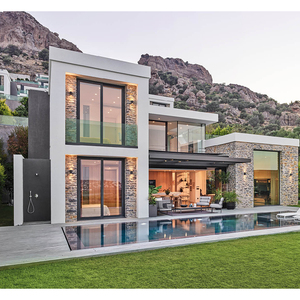
Custom Modern Anthracite Quality Double Glazed Aluminium Window
Glazing: Double Tempered Low-E
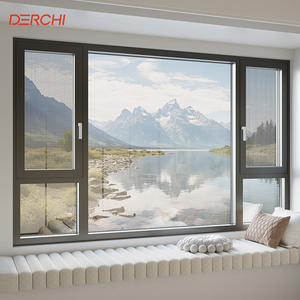
DERCHI High Quality Aluminum Frame Tilt Turn Casement Window Double Glazed
Hardware: German Multi-Point Lock
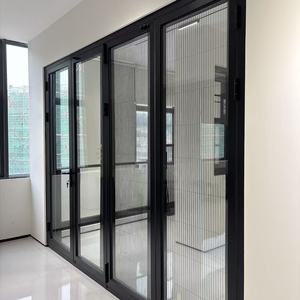
DERCHI Modern Aluminum Soundproof & Windproof Sliding Glass Door
Application: Villa, Hotel & Commercial
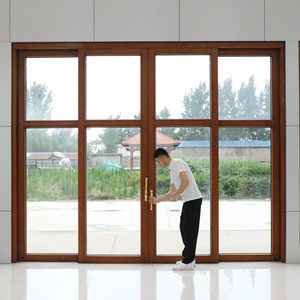
Aluminium Clad Wood Double Sliding Doors with Grid Design
Seal: Triple EPDM Gasket System
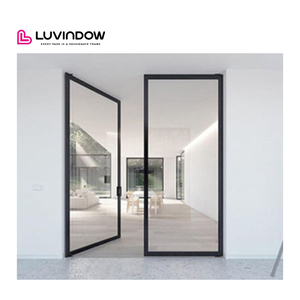
Modern Style Frameless Aluminum Swing Casement Entry & Interior Door
Finish: Anodized / Powder Coated
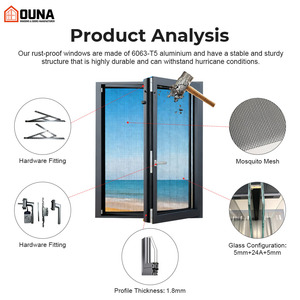
OUNA NFRC Thermal Break Energy Efficient Swing Tilt & Turn Window
Rating: High Energy Saving Grade
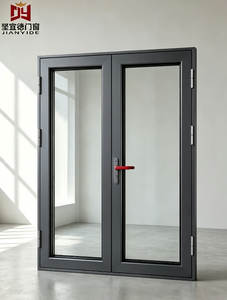
Thermal Break Aluminium Casement Doors CE Certified Custom OEM/ODM
Performance: Waterproof & Windproof
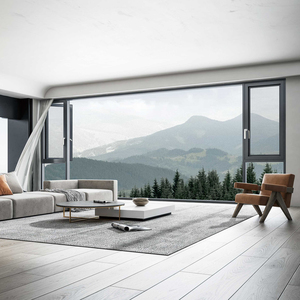
Thermal Break Casement Aluminum Windows with 27A Insulated Glass
Type: Awning & Casement Combination
Executive Overview: China’s Role in Global System Fenestration Manufacturing
The global construction and architectural sector has undergone a massive paradigm shift. As energy codes become more stringent (such as Europe's EPBD directives, North America's ASHRAE 90.1, and Australia's NCC requirements), modern architectural envelopes rely heavily on advanced high-performance aluminum window and door systems. China—specifically the industrial center of Foshan, Guangdong—has evolved into the world's primary epicenter for high-precision thermal break aluminum fenestration production and OEM/ODM engineering.
Procuring directly from China wholesale aluminum system windows factories grants international real estate developers, general contractors, architectural firms, and wholesale importers a distinct competitive advantage: superior technical structural engineering, rapid custom extrusion capabilities, and world-class thermal and acoustic isolation performance, delivered at scalable production economics.
Primary 6063-T5 Aluminum Profile Alloys
Utilizing high-purity virgin aluminum billets extruded to precise wall thicknesses (1.4mm to 2.0mm+ structural wall thickness). Delivers structural yield strength exceeding 110 MPa and ultimate tensile strength above 160 MPa, capable of withstanding extreme wind loads exceeding 1,000 N.
Polyamide PA66-GF25 Thermal Barriers
Eliminating thermal bridging across metal sashes by crimping glass-fiber-reinforced (25% polyamide 66) structural thermal strips. Reduces structural thermal conductivity to help achieve ultra-low system U-factors down to 1.1 W/m²K when combined with warm-edge insulated glass units.
Pressure-Equalized Hidden Drainage
Integrated concealed internal drainage channels designed on the rain-screen principle. Prevents water back-pressure during hurricane-force downpours while maintaining a sleek, unobstructed frame aesthetic without visible external plastic weep hole caps.
Detailed Structural & Engineering Specifications
When specifying structural window systems for international export orders, technical compliance and empirical test data dictate specification compliance. Factories operating within Foshan's premier manufacturing ecosystem integrate advanced 4-axis CNC machining, pneumatic corner crimping with dual-component corner injection glue (cast aluminum corner keys), and triple-seal continuous EPDM gaskets.
| Engineering Parameter | Standard Wholesale Specification | Technical Impact & Benefit for Buyers |
|---|---|---|
| Alloy Matrix & Temper | Virgin 6063-T5 / 6060-T6 Architectural Grade | Guarantees dimensional stability, superior anodizing/powder coating adhesion, and resistance to structural deformation. |
| Frame Depth Profile | 65mm, 70mm, 90mm, 110mm, 120mm, 150mm Series | Allows custom selection based on building elevation structural wind load calculations and required glass unit pocket depth. |
| Glazing Pocket & IGU | Double (5+12A+5 / 6+27A+6) & Triple (5+12A+5+12A+5) Low-E | Achieves customized Solar Heat Gain Coefficient (SHGC: 0.22 - 0.45) and sound transmission loss up to STC 42 dB. |
| Sealing Polymer | Automotive-Grade EPDM Gaskets (Continuous vulcanized corners) | Maintains elasticity across -40°C to +80°C environments, preventing air infiltration (ASTM E283) and draft penetration. |
| Hardware Integration | German Siegenia / Hoppe / Sobinco / Custom Multi-Point Locks | Tested for 200,000+ continuous opening cycles, supporting heavy sash weight capacities up to 250kg for panoramic openings. |
| Surface Finishes | AkzoNobel Powder Coating, PVDF Fluorocarbon, Anodized, Wood Grain | Offers AAMA 2604/2605 compliance with a 15 to 25-year anti-fading warranty under aggressive marine or desert UV exposure. |
Future Procurement Trends in the Global Aluminum Window Market (2025–2030)
As global construction moves rapidly toward decarbonization and intelligent facade integration, international buyers must align with Chinese export factories that invest in next-generation manufacturing technology. The following four key trends shape future wholesale procurement strategies:
1. Transition to Low-Carbon & Recycled Billet Sourcing
Environmental, Social, and Governance (ESG) criteria are moving from voluntary goals to mandatory procurement requirements in Europe and North America. Leading Chinese exporters are now sourcing hydro-powered, low-carbon primary aluminum billets (with carbon intensity under 4.0 kg CO2/kg Al compared to the industry average of 12.0 kg CO2/kg Al). Buyers utilizing these certified green profiles can earn LEED v4 and BREEAM credits for their commercial real estate projects.
2. Ultra-Low U-Value Passive House Systems
The boundary between traditional window design and Passive House standards is disappearing. Sourcing trends show exponential demand for window systems achieving overall whole-window U-factors of ≤0.80 W/m²K (0.14 Btu/h·ft²·°F). Factories are accomplishing this by combining multi-chamber polyamide insulation cavity fills (such as aerogel or expanded polyurethane foam cores) with warm-edge stainless steel spacers and triple Low-E argon-filled units.
3. Architectural Slim Sightlines & Panoramic Motorized Sliding Systems
Modern luxury residential and resort design favors invisible frames that maximize natural day-lighting. Wholesale manufacturers are expanding production of minimalist, recessed-frame sliding doors with interlock sightlines as narrow as 18mm to 25mm. Furthermore, integrated smart automation—incorporating heavy-duty concealed electric actuators compatible with KNX, Lutron, or smartphone smart home protocols—is now a standard OEM option.
4. Digital Twin BIM Modeling & Prefabricated Offsite Assembly
To reduce expensive job-site labor costs in North America, Europe, and Australia, wholesale procurement is moving toward fully assembled, unitized fenestration shipments. Leading exporters provide 3D BIM (Building Information Modeling) Revit files for seamless integration into architectural blueprints. Windows arrive on site pre-glazed, factory-tested, pre-drilled with installation flanges, and tagged by building opening markers for rapid plug-and-play installation.
Engineering Evolution: System Windows vs. Standard Aluminum Profiles
Understanding the distinction between legacy non-thermal aluminum windows and modern architectural System Windows is vital for project specifiers and wholesale distributors.
Legacy Standard Aluminum Windows
- Single uninsulated hollow aluminum profile chambers.
- Direct thermal conduction leading to interior condensation and energy loss.
- Simple single-point latch hardware prone to draft leaks and forced entry.
- Basic overlapping corner joints secured by mechanical tapping screws.
- High U-values ranging from 3.5 to 5.8 W/m²K.
Modern High-Performance System Windows
- Multi-chamber polyamide (PA66-GF25) structural thermal isolation.
- Concealed internal pressure-equalized rain-screen drainage system.
- Peripheral multi-point security locking gear surrounding the sash frame.
- Corner key pneumatic crimping combined with dual-component adhesive injection.
- Ultra-low U-values ranging from 1.1 to 1.8 W/m²K.
Enterprise Advantage & Production Quality Gates
Partnering with an established exporter in Foshan ensures that your project receives structural engineering oversight from extrusion design to containerized sea transport. Manufacturers operate strict multi-stage Quality Assurance (QA) gates throughout the production workflow:
- Raw Material Spectral Verification: Billet chemistry is verified via optical emission spectrometers to ensure strict adherence to 6063-T5 aluminum elemental ratios (Si: 0.2–0.6%, Fe: <0.35%, Mg: 0.45–0.9%).
- Anodizing & Coating Thickness Audit: Surface treatment thickness is measured with eddy-current gauges (powder coatings ≥60μm; PVDF coatings ≥40μm; anodizing layers ≥15μm) to guarantee marine-environment corrosion resistance.
- Air, Water, and Structural Mock-Up Testing: Prototype window units undergo rigorous chamber testing evaluated against ASTM E283 (Air Leakage), ASTM E331 (Water Penetration Resistance at static pressures up to 700 Pa), and ASTM E330 (Structural Performance at ultimate design pressures).
- Pre-Shipment Trial Assembly & Glazing Inspection: Every order undergoes 100% full-scale trial assembly on factory floor test rigs to check sash operation, diagonal squareness tolerances (<1.5mm variance), hardware latching force, and glass double-seal integrity before crating.
Frequently Asked Questions by Wholesale Buyers
Clear, authoritative technical and commercial answers for developers, architects, and importers sourcing window systems from China.
What is the typical Minimum Order Quantity (MOQ) for custom system windows?
Our baseline factory MOQ starts at 50 pieces per project schedule, or approximately 100 square meters. For custom profile extrusions requiring dedicated die fabrication, the profile extrusion MOQ is typically 500 kg per section design. Mixed product orders combining casement windows, tilt-and-turn units, and heavy-duty sliding patio doors can be consolidated within a single 20ft or 40ft High Cube (HC) container to optimize freight costs.
What production lead time should be budgeted for export shipments?
Standard fabrication lead time is 15 to 25 working days following final CAD shop drawing sign-off and deposit receipt. For specialized custom colors outside standard RAL charts or custom-ordered high-performance insulated glass units (such as triple-laminated electrochromic smart glass), lead times range from 25 to 35 days. Sea shipping times vary by destination port (e.g., 14–18 days to US West Coast, 28–35 days to European main ports, 12–16 days to Australia).
How do China factory U-values compare to US NFRC or European CE standards?
Our thermal break system windows are engineered and tested strictly according to international standards. When fitted with double Low-E argon-filled units, our systems achieve whole-window U-factors of 1.4 to 1.8 W/m²K (0.25–0.31 Btu/h·ft²·°F). When upgraded to triple-pane units with warm-edge spacers, values drop to 1.1 W/m²K (0.19 Btu/h·ft²·°F), fully complying with US ENERGY STAR® guidelines, European CE (EN 14351-1), and Australian AS2047 energy regulations.
Can the factory support custom OEM/ODM profile designs and architectural specifications?
Yes. As a primary OEM/ODM manufacturer, our engineering department provides complete design support. We convert architectural drawings into full CAD elevation shop drawings, structural wind-load calculation reports, and 3D BIM models. Custom die extrusion molds can be produced within 7 to 10 days. We also offer private-label branding, customized protective film logo printing, and specialized hardware integration based on project requirements.
What export packaging measures prevent glass breakage and frame scratching during ocean transit?
Export packaging uses a comprehensive five-layer protection system: (1) Surface protective film on all exposed aluminum profiles; (2) EPE shock-absorbing foam wrapped around each frame; (3) Heavy-duty hard plastic edge guards on all four corners; (4) Fully enclosed fumigation-free ISPM-15 compliant plywood crates; and (5) Internal steel banding with air-bag cushioning inside shipping containers to prevent movement during heavy ocean swells.
Ready to Request a Factory-Direct Technical Quote?
Submit your architectural window schedule, elevation drawings, or project tender specifications. Our senior fenestration engineers will provide shop drawings, thermal calculations, and factory-direct wholesale pricing within 24 hours.