Featured Commercial & Residential Aluminium Systems
Direct from Foshan manufacturing headquarters — engineered to comply with NFRC, CE, AS2047, and AAMA standards.
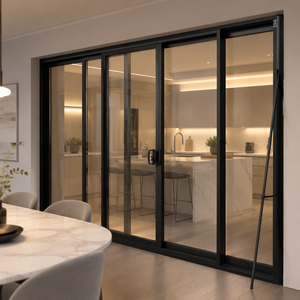
Customized Size Sliding Doors Double Glass Aluminum Doors Heat Insulation Energy Efficient Balcony Sliding Patio Door for Sale
Contact Us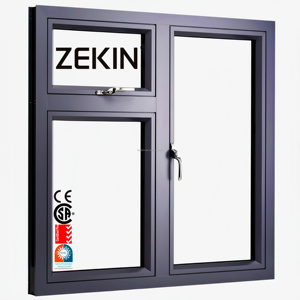
NFRC AS2047 Certification Thermal Break Aluminum Window Engineering Projects Big Glass Panel Awning Window Swing Casement Window
Contact Us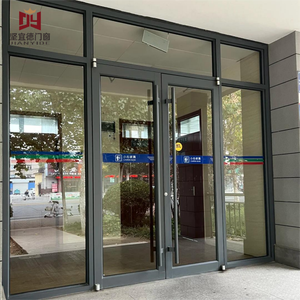
Heavy Duty Commercial Aluminum Entrance Door | KFC Style Windproof Double Glazed Shopfront Door with High Thermal Insulation
Contact Us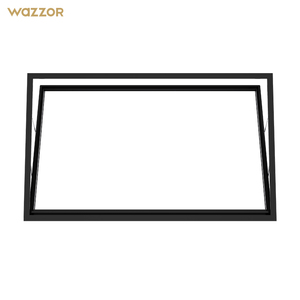
WAZZOR AAMA Certified Impact Resistant Hurricane Proof Ventilation Window for Storm Shelter
Contact Us
Soundproof Aluminum Exterior Doors Full View Design Slim Profile Hinged Doors for Apartments Bedrooms Entry Upscale Modern
Contact Us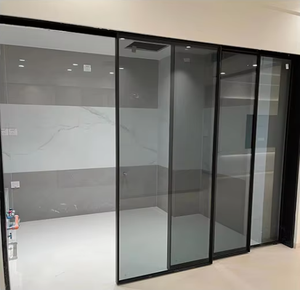
Modern Design Sliding Patio Door System Exterior Flush Aluminum Alloy Double Glazing Tempered Glass Waterproof Kitchen Door
Contact Us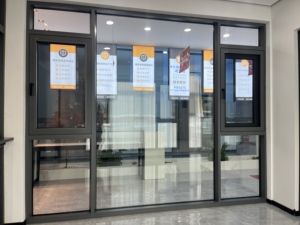
Anthracite Aluminum Double Inward Casement Window with Top Transom and Removable Insect Screen for Modern Homes
Contact Us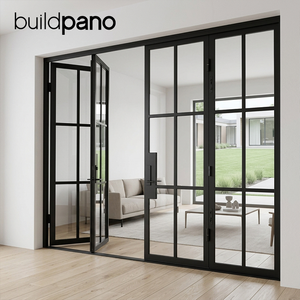
Luxury Retro Style Heritage Villa Garden House Interior Partition Kitchen French Aluminum Folding Glass Door
Contact UsWhy Leading Global Specifiers Partner with Zenic
A complete OEM/ODM manufacturing supply chain built specifically for B2B importers, general contractors, and real estate developers.
Prime 6063-T5 Structural Profiles
Fabricated using 100% pure aluminum alloy billets without recycled scrap. High tensile strength walls (1.4mm to 2.5mm thickness) ensure unmatched wind-load resistance and longevity.
Polyamide Thermal Break Technology
Integrated PA66GF25 reinforced polyamide strips form an unbroken thermal barrier, preventing thermal bridging, drastically lowering HVAC energy costs, and eliminating interior surface condensation.
Triple EPDM Multi-Layer Gaskets
Automotive-grade continuous EPDM sealing around sashes and frames provides superior acoustic insulation (up to 45 dB reduction) and complete water tightness against hurricane-force rain.
Multi-Point Security Locksets
Fitted with heavy-duty European hardware (Siegenia, Hoppe, Sobinco, or custom Zenic lines) tested to exceed 200,000 operation cycles with burglar-resistant multi-locking points.
Custom OEM/ODM Extrusion & Finishes
Full customization covering profile die design, powder coating (AkzoNobel), PVDF fluorocarbon coatings, anodizing, and authentic wood-grain heat-transfer finishes.
Seaworthy Heavy Export Packaging
Crated in custom fumigation-free plywood boxes with protective EPE film wrap, plastic corner guards, and moisture absorbing agents to ensure zero freight damage.
Architectural Manufacturing Whitepaper: Custom OEM Aluminium Swing Window Sourcing & Global Supply Chain Dynamics
In contemporary high-performance architecture, fenestration systems have evolved far beyond basic building openings. Sourcing high-specification fenestration requires a deep understanding of structural alloy performance, thermal efficiency engineering, and international code compliance. As a leading Custom OEM Aluminium Swing Window Exporter & Supplier operating out of Foshan, Guangdong—China’s epicenter for advanced aluminum extrusion and fenestration engineering—Zenic Window & Door Technology Co., Ltd. delivers institutional-grade structural window solutions engineered for residential master developments, luxury villa enclosures, and multi-family commercial projects worldwide.
Aluminium swing windows (frequently categorized as casement windows or side-hung swing sashes) represent the benchmark for structural air-tightness, wind load resistance, and acoustic dampening. Unlike horizontal sliding systems that rely on brush seals, swing window sashes compress directly against continuous circumferential EPDM rubber gaskets upon closure. This mechanical compression lock mechanism provides a superior seal against moisture ingress, structural air infiltration, and acoustic vibration. In this comprehensive technical guide, we analyze the engineering fundamentals, thermal dynamics, customizable profile choices, international testing criteria, and global market trajectory for aluminum swing windows.
1. The Engineering Dynamics of Modern Thermal Break Swing Windows
The core structural advantage of aluminum lies in its high strength-to-weight ratio, structural rigidity, and immunity to rot, swelling, or UV degradation. However, raw aluminum exhibits high thermal conductivity (approximately 160–200 W/m·K). To solve this thermal transmission challenge, modern high-efficiency fenestration relies on Polyamide Thermal Break Technology.
Our OEM manufacturing facility utilizes multi-chamber structural aluminum profiles coupled with PA66GF25 (Polyamide 66 reinforced with 25% structural glass fiber). This mechanical thermal strip physically separates the interior extrusion from the exterior profile. Because polyamide exhibits a thermal conductivity of less than 0.3 W/m·K, heat transfer across the window envelope is reduced by up to 90%. When integrated into modern high-rise façades or passive energy residential builds, this structural separation allows our swing window systems to achieve total window U-values as low as 1.1 W/m²K.
Structural Alloy Selection & Extrusion Precision
All Zenic custom aluminium swing windows are constructed exclusively from prime-grade 6063-T5 aluminum alloy extrusions. We enforce strict raw material quality control, rejecting recycled or scrap-admixed billet material. The T5 artificial aging heat treatment endows the frame profile with exceptional tensile yield strength (minimum 110 MPa) and Webster hardness (≥12 HW). This structural stability enables our factory to produce ultra-large swing window sashes exceeding 2,400mm in height without sacrificing frame deflection thresholds under heavy wind pressure loads.
Sealing Mechanics & Water Tightness Engineering
Water intrusion remains a primary failure point for low-tier commercial window installations. Zenic swing windows counter water pressure through a three-layer sealing architecture:
- Outer Rain-Screen Seal: Deflects driving wind-rain and blocks major debris ingress.
- Center Pressure Equalization Seal: Creates an internal air-pressure balance cavity, preventing static differential pressure from pulling rainwater inward.
- Inner Acoustic & Air Seal: A heavy continuous EPDM gasket pressed tightly against the inner frame rebate, ensuring airtight performance under positive and negative wind loads.
2. OEM/ODM Customization Matrix for International Procurement
As a global B2B Aluminium Swing Window Exporter, Zenic provides end-to-end OEM and ODM services. Overseas developers, distributors, and architects frequently require bespoke profile configurations tailored to regional architectural norms, structural load standards, and local weather patterns.
| Performance Parameter | Standard OEM Specifications | High-Performance / Heavy-Duty Options | Architectural Benefits |
|---|---|---|---|
| Profile Depth | 60mm - 75mm Frame Series | 90mm - 120mm Thermal Break Series | Deeper profiles accommodate thicker triple-pane units and wider thermal breaks. |
| Wall Thickness | 1.4mm - 1.8mm (Residential Code) | 2.0mm - 3.0mm (Commercial / High-Rise) | Prevents structural frame warping and ensures secure hardware screw anchoring. |
| Glass Configuration | 5mm + 12Ar + 5mm Double Low-E | 6mm + 16Ar + 6mm + 16Ar + 6mm Triple Laminate | Delivers extreme solar heat gain coefficient (SHGC) control & soundproof performance. |
| Hardware Integration | Zenic Precision Multi-Point Locks | Siegenia / Hoppe / GU German Hardware | Burglar resistance up to RC2/RC3 rating with friction stay support for heavy sashes. |
| Surface Treatment | Architectural Powder Coating (RAL) | PVDF Fluorocarbon / Anodized / Wood Grain | Salt-spray resistant coating guaranteed up to 20-25 years against chalking/fading. |
| Flyscreen System | Integrated Nylon Mesh | High-Strength 304 Stainless Steel Mesh | Provides security, child safety, and pest control without obstructing light transmission. |
Architectural Opening Styles: Inward vs. Outward Swing Windows
Global procurement preferences differ dramatically by region. Our OEM manufacturing lines accommodate all opening typologies:
1. Outward Opening Swing Windows (Casement): Preferred across North America, the UK, Australia, and Southeast Asia. Sashes swing outward toward the exterior, saving indoor floor space while allowing interior window blinds or decorative curtains to operate unimpeded. Outward sashes also benefit from natural wind sealing; as external winds blow against the window, the sash is pushed tighter against the exterior frame gaskets.
2. Inward Opening Swing & Tilt-Turn Windows: Preferred across Continental Europe and cold climate zones. Inward opening swing windows allow effortless, safe cleaning of exterior glass surfaces from inside the building. When configured with dual-function tilt-turn gearboxes, tilting the top of the sash inward delivers draft-free micro-ventilation while maintaining home security.
3. Global Market Dynamics & Sourcing Trends (2025–2035 Horizon)
The global demand for high-performance aluminium swing windows is undergoing a massive transformation driven by three core catalysts: strict building decarbonization regulations, extreme weather events, and modern minimalist architectural designs.
A. Regulatory Push for Carbon Neutrality & Zero-Energy Buildings (ZEB)
Governments across North America (via updated ENERGY STAR v7.0 and NFRC guidelines), Europe (EPBD Directive), and Australia (NCC Section J) have instituted aggressive energy efficiency thresholds for new building envelopes. Windows account for up to 35% of a building's overall heating and cooling energy loss. Procurement trends show a decisive shift toward high thermal break swing windows specified with Low-E glass coatings, warm-edge composite spacer bars, and argon gas cavity filling. B2B buyers now prioritize manufacturers with verifiable thermal test certificates over low-cost commodity producers.
B. Resilience Against Extreme Weather & Impact Requirements
With coastal urban centers experiencing heightened storm intensities, demand for storm-proof and hurricane-impact structural swing windows has surged. In markets like Florida (USA), the Caribbean, coastal Australia, and Pacific island nations, windows must withstand severe cyclic wind pressure tests and flying debris impact. OEM suppliers are now required to engineer heavy-gauge aluminum walls, laminated impact glass panels (SentryGlas / PVB interlayers), and heavy-duty stainless steel multi-point locking pins that resist wind forces exceeding 5,000 Pascals.
C. Minimalist Sightlines & Flush Architectural Aesthetics
Modern architectural trends heavily favor slim profile sightlines, maximum visual daylighting, and clean geometric profiles. Zenic’s engineering R&D team has spearheaded hidden-hinge and concealed sash swing window series. By tucking the hinge mechanisms entirely inside the frame channel and reducing visible aluminum profile width, architects can maximize the glass-to-frame ratio while maintaining high structural performance.
4. Quality Assurance, Factory Infrastructure & E-E-A-T Competence
Zenic Window & Door Technology Co., Ltd. operates a state-of-the-art 20,000 square meter industrial manufacturing plant in Foshan, China. To maintain full transparency and technical compliance required by top-tier international developers, our facility enforces a rigorous four-stage Quality Assurance (QA) protocol on every production batch:
Stage 1: Incoming Raw Material Verification
All aluminum extrusions undergo spectral analysis to verify 6063 alloy chemical composition, followed by hardness and wall thickness testing. Powder coating resins are tested for adhesion strength, impact tolerance, and thickness consistency (maintaining an optimal layer between 60 to 80 microns).
Stage 2: Precision CNC Machining & Corner Crimping
Manual assembly risks mechanical tolerance deviations. Zenic utilizes automated double-head CNC cutting equipment and heavy hydraulic corner-crimping machinery. Joint corners are injected with specialized structural corner glue (two-component epoxy) and secured with stainless steel alignment cleats, ensuring complete structural corner rigidity and absolute water-impermeability at frame joints.
Stage 3: Glazing & Hardware Functional Testing
Double and triple glazed units are sealed using automated structural silicone extruders. Sashes are fitted with specified hardware and mounted onto test rigs to evaluate opening torque, multi-point lock alignment, latch smooth operation, and seal compression uniformity before final approval.
Stage 4: Crate Packing & Export Containerization
Every window unit is individually labeled according to the client’s architectural project window schedule (e.g., W-01, W-02). Units are wrapped in protective non-scratch EPE film, fitted with reinforced plastic edge protectors, and secured inside heavy-duty, fumigated plywood export crates equipped with forklift entry skids.
5. Comprehensive Frequently Asked Questions (FAQ) for Global Buyers
What makes Zenic a preferred OEM aluminium swing window exporter?
What is the Minimum Order Quantity (MOQ) and production lead time?
How low can the thermal U-value reach on Zenic swing windows?
How do you ensure window dimensions fit our construction site drawings?
What surface finishes are available for coastal or high-corrosion environments?
What certifications can Zenic provide for project submittals?
Partner with a World-Class Aluminium Swing Window Exporter
Ready to elevate your next residential or commercial project with precision-engineered thermal break windows? Contact our engineering team today to receive custom CAD drawings, factory-direct wholesale pricing, and technical project submittals.