Export-Grade Fenestration & System Solutions
Precision-Engineered Thermal Break Windows, Heavy-Duty Doors and Custom Architectural Profiles
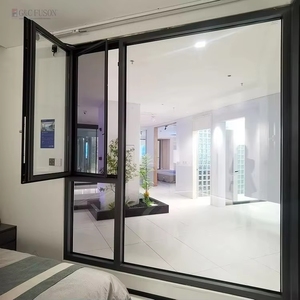
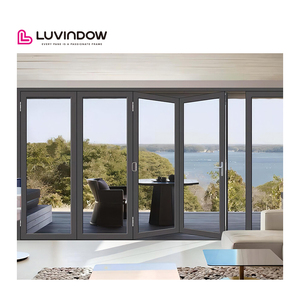
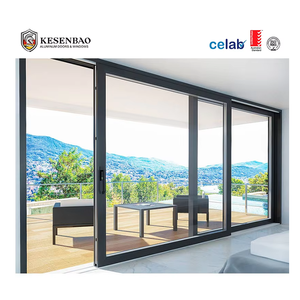
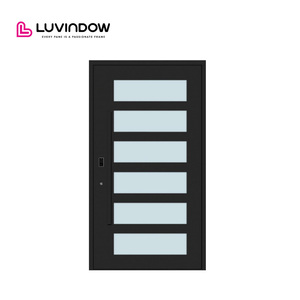
Architectural Engineering Whitepaper: Advanced Subterranean Fenestration Systems
In modern architectural design and multi-family residential engineering, basement window installations present distinct physical and structural challenges that above-grade fenestration rarely encounters. Operating under continuous contact with subterranean soil thermal masses, micro-climatic humidity surges, and potential hydrostatic pressure, basement window assemblies demand stringent material specifications, precise thermal break integration, and unyielding water management protocols.
Historically dominated by basic steel frames or low-cost unplasticized polyvinyl chloride (uPVC), the commercial and high-end residential basement market has undergone a structural shift toward OEM/ODM architectural aluminum systems. Aluminum alloy 6063-T5—when engineered with polyamide thermal barrier strips (PA66GF25)—combines supreme tensile strength, dimensional stability under extreme freeze-thaw cycles, and unmatched resistance to subterranean dampness and organic degradation.
Information Gain Insight: Unlike standard above-ground fenestration, basement aluminum windows must withstand localized soil moisture vapor pressure up to 100% relative humidity while preventing thermal bridge condensation on interior frame faces. ZENIC’s engineered profiles achieve this via multi-chambered polyamide break cavities integrated with pressure-equalized concealed drainage systems.
Critical Physics of Sub-Grade Window Design
Designing high-performance aluminum basement windows requires addressing three fundamental physical failure points common in sub-grade environments:
- Thermal Bridging & condensation Management: Soil temperatures remain significantly lower than ambient summer air and cooler than heated indoor winter spaces. Uninsulated aluminum profiles create severe thermal bridges, resulting in dew-point condensation that fuels interior mold growth (Aspergillus and Stachybotrys). OEM thermal break profiles utilize a 24mm to 34mm PA66GF25 polyamide barrier, raising the temperature of interior aluminum surfaces safely above the condensation threshold.
- Hydrostatic & Gravity Water Penetration: Rainfall runoff down exterior lightwells or window wells creates localized hydrostatic head pressure against the window frame base. Traditional face-drained windows fail when exterior water levels rise slightly. Modern OEM/ODM basement window profiles utilize multi-stage EPDM continuous vulcanized rubber gaskets combined with stepped, pressure-equalized hidden internal drainage channels that flush water outward under negative pressure differentials.
- Egress Code Compliance & Structural Safety: Under international building codes such as the International Residential Code (IRC Section R310), basement sleeping rooms and habitable spaces must feature emergency escape and rescue openings. OEM manufacturing allows precise custom sizing to achieve net clear opening widths exceeding 20 inches (508 mm), net clear opening heights of 24 inches (610 mm), and minimum clear openings of 5.7 sq. ft. (0.53 m²), all while keeping operating forces below 15 lbs.
OEM/ODM Customization Matrix & Technical System Architecture
As a leading specialized OEM/ODM manufacturer headquartered in Foshan’s prime aluminum cluster, our facility provides end-to-end custom engineering for regional brand owners, commercial developers, and system distributors across 40+ countries. We translate complex architectural drawings into fully certified, batch-produced fenestration packages.
Core Basement Window Typologies Manufactured
Hopper Windows (Inward Tilting)
Ideal for compact basement walls and window wells. Bottom-hinged inward tilting sashes offer efficient overhead micro-ventilation while preventing direct rain ingress. Fitted with multi-stage friction stays and compression handles.
Egress Inward Tilt-Turn Systems
Dual-function engineering: turns 90° inward like a door for full emergency evacuation clear space, or tilts 15° at the top for secure, draft-free ventilation. Equipped with multi-point locking gearboxes tested to 200,000 cycles.
Subterranean Horizontal Gliding Units
Designed for wide-opening low-height basement concrete cutouts. Utilizes stainless steel dual-tandem roller tracks, anti-lift security blocks, and hidden frame drainage to withstand heavy exterior wash-downs.
System Technical Specifications Matrix
| Engineering Parameter | Standard System Specification | Heavy-Duty / High-Performance Option | Target Code Compliance |
|---|---|---|---|
| Primary Alloy Standard | 6063-T5 Architectural Aluminum (1.8mm - 2.0mm) | 6063-T6 High-Tensile Structural Alloy (2.2mm - 3.0mm) | GB/T 5237, ASTM B221, EN 755 |
| Thermal Barrier Material | 24mm Polyamide PA66GF25 Thermal Break Strip | 34mm Multi-Chambered Aerogel-Filled PA66 Strip | NFRC 100/200, EnEV, Passive House |
| Overall Thermal Transmittance (Uw) | 1.4 - 1.6 W/m²K (Double Glazed Low-E) | ≤ 1.1 W/m²K (Triple Glazed Warm Spacer + Argon) | Energy Star Northern Zone, CE EN 14351-1 |
| Water Tightness Rating | Class 9A (600 Pa Pressure Test) | Class E1050 (1050 Pa Pressure Test) | ASTM E331, AS2047 High Wind/Rain |
| Acoustic Isolation (Rw) | 32 dB (Standard Double IGU) | 42 dB - 45 dB (Laminated Acoustic Glass IGU) | ISO 10140-2, ASTM E90 |
| Air Infiltration Rating | Level 4 (Q1 ≤ 0.5 m³/m·h) | Custom Compression Gaskets (≤ 0.1 m³/m·h) | ASTM E283, EN 12207 Class 4 |
| Surface Finish & Coating | Qualicoat Class 1 Powder Coating (60-80μm) | Qualicoat Class 2 / PVDF Fluorocarbon 3-Coat | AAMA 2604, AAMA 2605 Corrosion Test |
Future Procurement & Manufacturing Trends (2025–2030)
Global fenestration procurement is undergoing a rapid evolution driven by tighter building envelope energy codes, carbon-accounting legislation, and shifting labor dynamics on construction sites. B2B buyers, real estate developers, and wholesale distributors sourcing from China must align their product roadmaps with key emerging industry trends:
1. Carbon-Footprint Traceability & Recycled Billet Utilization
European and North American regulatory bodies are increasingly auditing embodied carbon within imported aluminum building components. Leading OEM suppliers are transitioning from traditional fossil-fuel extruded aluminum to low-carbon billets smelted via hydroelectric power or incorporating up to 75% post-consumer recycled aluminum. This cuts embodied carbon from 18 kg CO₂/kg Al down to under 4.0 kg CO₂/kg Al without sacrificing tensile yields.
2. Prefabricated Sub-Frame & Quick-Mount Installation Systems
With job-site labor costs escalating dramatically across western economies, traditional wet-plaster window installations are being replaced by modular dry-installation systems. OEM custom manufacturers now supply precision galvanized steel or thermal-composite sub-frames. Sub-frames are cast directly into precast concrete or ICF (Insulated Concrete Forms) basement walls during foundation pouring, allowing finished aluminum windows to snap-lock into place during final interior fit-out, eliminating on-site measuring errors and reducing field installation labor by up to 65%.
3. Smart Sensor Micro-Ventilation & Automated Security Interlocking
Modern subterranean spaces are increasingly designed as primary living areas, home theaters, and luxury suites. Consequently, basement windows are integrating concealed 24V DC motor actuators linked to smart building management systems (BMS). Integrated relative humidity (RH) sensors auto-tilt hopper or awning windows when basement moisture exceeds 60%, maintaining healthy indoor air quality (IAQ) while automatically locking shut upon rain detection or security boundary triggers.
Manufacturing Infrastructure & Quality Control Integrity
Operating out of a 20,000 square meter state-of-the-art production base in Foshan, China, our manufacturing complex operates under strict ISO 9001:2015 certified total quality management workflows. We bridge raw industrial capacity with bespoke architectural engineering.
Precision CNC Fabrication
German-imported 5-axis CNC machining centers execute extrusion cutting, lock-gear slotting, hidden drainage milling, and corner-crimping pilot holes with ultra-tight tolerances within ±0.1mm.
Dual-Component Corner Crimping
Profile joints are mechanically crimped with heavy-duty cast aluminum corner keys combined with dual-component epoxy glue injection. This prevents frame sag, micro-cracking, and corner water seepage over decades of use.
Export-Grade Sea-Worthy Crating
Finished glazed units receive full EPE wrap protection, anti-scratch film overlays, impact-resistant corner guards, and are sealed inside fumigation-free solid plywood crates designed for multi-modal container transport.
Comprehensive B2B Procurement FAQ
Partner with a World-Class OEM/ODM Fenestration Factory
Accelerate your project procurement with engineering-grade aluminum basement windows, customized profile extrusions, and certified window hardware systems direct from Foshan, China.
Get a Quote