Export Product Recommendations
Factory-direct OEM/ODM thermal break sliding doors, casement systems, roller shutters, and architectural curtain wall fenestration engineered for strict global building standards.
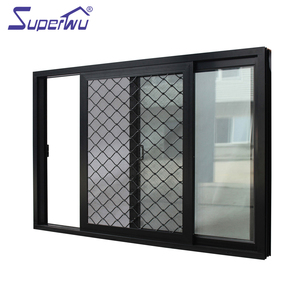
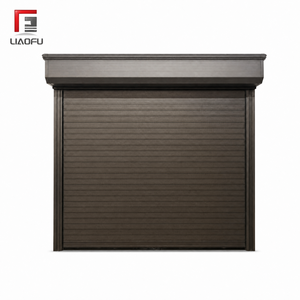
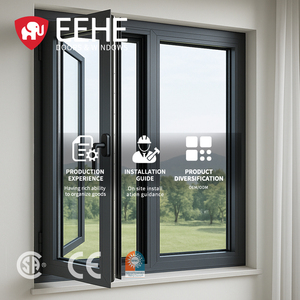
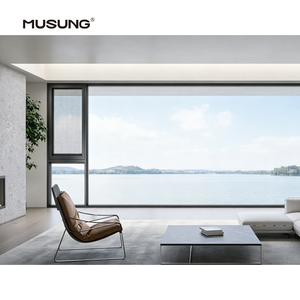
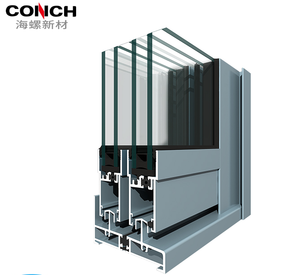
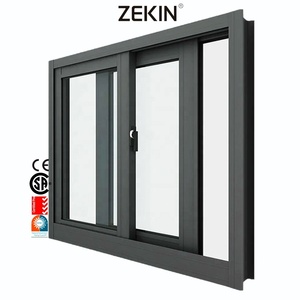
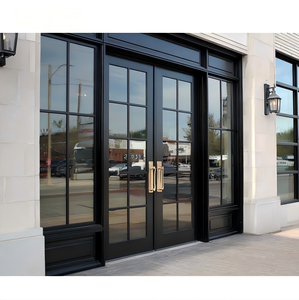
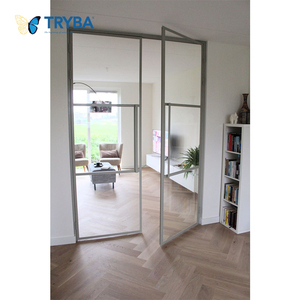
Why Global Architects & Developers Partner With Us
Operating directly out of Foshan—the world's capital for aluminum profile extrusion and architectural hardware—we provide certified, low-U-value thermal break fenestration customized to exacting B2B OEM/ODM requirements.
Virgin 6063-T5 Structural Profiles
We exclusively utilize prime 6063-T5 aluminum alloy extrusions with 2.0mm minimum structural wall thickness. Zero recycled scrap metal ensures maximum structural integrity, corrosion resistance, and flawless surface finish adhesion for PVDF and powder coatings.
Six-Seal Thermal Break Isolation
Equipped with high-performance PA66GF25 polyamide thermal barriers and triple-layered continuous EPDM weatherstripping gaskets. Achieves thermal transmittance levels as low as U-value 1.1 W/m²K to satisfy strict Net-Zero energy codes.
200,000-Cycle Hardware Engineering
Fitted with certified multi-point locking systems and heavy-duty stainless steel tracks rated for sash loads up to 600kg. Tested to withstand wind pressures up to 1,000 N and certified for 200,000 operational cycles without mechanical degradation.
Engineering Excellence: Structural & Thermal Architecture of Glazed Aluminum Doors
In contemporary commercial architecture and high-end residential development, glazed aluminum door systems act as the primary interface between indoor micro-climates and harsh environmental loads. Specifying custom OEM/ODM aluminum glazed doors requires a granular understanding of profile extrusion engineering, structural thermal bridging prevention, and advanced fenestration glazing assembly techniques.
1. Prime Profile Selection & Alloy Metallurgy
The foundation of long-term structural durability in heavy-duty aluminum doors lies in raw material selection. ZENIC system windows and doors employ prime 6063-T5 and 6063-T6 aluminum alloys extruded under strict metallurgical tolerances. Unlike secondary or recycled aluminum scrap—which suffers from microscopic inclusions and inconsistent tensile strength—virgin 6063-T5 aluminum guarantees a minimum tensile strength of 185 MPa and yield strength of 145 MPa. This structural rigidity enables ultra-narrow sightlines while supporting extreme wind load pressures exceeding 3.0 kPa (equivalent to Category 5 hurricane resistance standards under AS2047 and ASTM E1300 validation).
2. Polyamide Thermal Barrier Mechanics (PA66GF25)
Aluminum exhibits an inherently high thermal conductivity ($k \approx 200 \text{ W/m}\cdot\text{K}$). To prevent thermal bridging across exterior glazed envelopes, our OEM/ODM manufacturing process integrates structural polyamide thermal break strips reinforced with 25% glass fiber (PA66GF25). These thermal barriers feature an ultra-low conductivity ($k \approx 0.3 \text{ W/m}\cdot\text{K}$), matching the thermal expansion coefficient of aluminum profiles. This precise mechanical calibration prevents profile warping, debonding, or shear failure during severe seasonal temperature differentials ranging from -30°C to +80°C.
Precision Corner Crimping & Hydrophobic Drainage
Frame rigidity and air/water tightness rely heavily on mechanical corner assembly. Every frame junction is constructed using heavy-duty cast aluminum corner keys combined with automated pneumatic pin-crimping and two-component polyurethane corner adhesives. This creates a solid, hermetically sealed joint that resists rotational torque during heavy sash operation.
Furthermore, our systems integrate hidden pressure-equalized drainage channels. Water entering the glass rebate during driving rainstorms is immediately routed downward and discharged through concealed exterior weep holes equipped with anti-backdraft wind caps, eliminating water ingress up to 750 Pa static pressure.
Future Sourcing & Global Procurement Trends for Aluminum Glazed Systems (2025–2030)
As global construction markets transition toward Net-Zero carbon emissions, the procurement paradigm for aluminum glazed doors and windows is undergoing a profound structural evolution. B2B importers, real estate developers, and general contractors must align their supply chain criteria with the following emerging technological imperatives:
1. Decarbonization & Low-Carbon Aluminum Sourcing
Environmental Product Declarations (EPDs) are rapidly becoming mandatory submittal requirements in North America, Europe, and Australia. Sourcing partners are moving away from coal-powered extrusion plants toward hydro-powered low-carbon aluminum suppliers. Buyers are demanding verified carbon footprint certifications (target: <4.0 kg CO2e per kg of raw aluminum) to secure LEED v4.1 and BREEAM building accreditations.
2. Ultra-Narrow Sightlines with Panoramic Motorization
Architectural design language heavily favors invisible structural framing that maximizes natural daylight penetration. Sourcing trends indicate a massive shift toward minimal-frame panoramic sliding doors with interlock profiles as narrow as 18mm. Simultaneously, smart building integration is driving demand for built-in, silent motorized drive units compatible with KNX, Control4, and automated building management systems (BMS).
3. High-Performance Insulated Glass Units (IGU) & Vacuum Glazing
Standard double-glazing is being rapidly replaced by high-performance triple-pane IGUs featuring dual Low-E coatings, warm-edge silicone structural spacers (such as Technoform or Swisspacer), and 90%+ Argon gas fill ratios. Future-proof procurement schedules are also evaluating Hybrid Vacuum Insulated Glass (VIG), which delivers thermal U-values below 0.6 W/m²K within slim, light-weight glass profiles.
Key Industry Technologies Shaping B2B Aluminum Door Manufacturing
To deliver competitive OEM/ODM advantages, export suppliers must maintain state-of-the-art manufacturing infrastructure. Key technological innovations currently defining high-end fenestration production include:
- 5-Axis CNC Precision Profile Machining: Automated 5-axis CNC machining centers execute multi-angled milling, lock-case routing, and drainage slotting in a single clamping setup, guaranteeing dimensional tolerances within $\pm 0.1\text{mm}$ across profiles up to 6.5 meters long.
- Automated Dry Glazing vs. Structural Silicone Bonding: Contemporary system doors utilize pre-formed EPDM gaskets for rapid field replacement, alongside factory-applied two-part structural silicone bonding (Dow Corning 983) for hurricane-rated impact systems.
- Advanced Surface Coating Systems: Fluoropolymer PVDF wet coatings (Kynar 500) and AkzoNobel powder coatings provide exceptional salt-spray corrosion resistance exceeding 3,000 hours under ASTM B117 testing, making profiles suitable for severe coastal marine environments.
Global Compliance & Multi-Standard Verification
Exporting to over 40 countries demands versatile engineering design capable of passing heterogeneous building code audits. Our OEM/ODM project support includes full engineering submittal packages certified under:
- NFRC & AAMA (North America): Thermal transmittance (U-factor), Solar Heat Gain Coefficient (SHGC), and air leakage testing according to NFRC 100/200/400 standards.
- AS2047 & AS1288 (Australia): Deflection, air infiltration, water resistance, and structural pressure testing for coastal Australian environments.
- CE & EN 14351-1 (Europe): Mandatory performance standards for windows and external pedestrian doorsets.
OEM/ODM Technical Specification Guide
Comprehensive engineering benchmarks for procurement managers, project specifiers, and hardware importers.
| System Series | Frame Depth | Thermal U-Value Range | Glazing Compatibility | Max Wind Pressure | Hardware & Cycle Rating |
|---|---|---|---|---|---|
| 65-90 Thermal Casement | 65mm – 90mm | 1.1 – 1.6 W/m²K | 5mm+12A+5mm Double / Triple Low-E | 3.5 kPa (AAMA Class CW) | Siegenia / Hoppe (200,000 Cycles) |
| 110 Heavy Duty Lift-Slide | 110mm – 140mm | 1.3 – 1.8 W/m²K | 6mm+16A+6mm Toughened Laminated | 4.0 kPa (AS2047 Standard) | Custom Heavy-Duty Rollers (600kg Sash) |
| 83 Narrow Frame Balcony | 83mm | 1.4 – 1.9 W/m²K | 5mm+14A+5mm Double Glazed | 2.8 kPa | Multi-point Concealed Lock |
| Commercial Storefront Swing | 100mm – 150mm | 1.5 – 2.1 W/m²K | 8mm – 12mm Monolithic / Double IGU | 3.0 kPa | DORMA / Custom Floor Spring System |
| Insulated Roller Shutter | Custom Slat Profile | R-Value up to 2.5 | Foam-Filled Polyurethane Aluminum Slat | 2.5 kPa Wind Resistant | Somfy Motorized Tubular Drive |
Frequently Asked Questions by B2B Buyers
Answers to common commercial procurement, shipping, engineering, and private label manufacturing queries.
What is your minimum order quantity (MOQ) for custom OEM/ODM projects?
How do you ensure shop drawing accuracy and site-fit precision before production?
What shipping protection and sea-worthy packaging standards do you utilize?
Can you manufacture systems compliant with hurricane impact or extreme thermal requirements?
What is your standard production lead time and export trade terms?
Request Your Project Shop Drawings & Quotation
Connect directly with our Foshan engineering team. Send your architectural elevations or project window schedule to receive technical submittals, factory pricing, and container load optimization layouts within 24 hours.