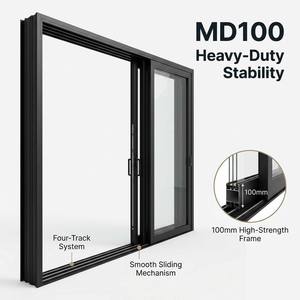
Export Product Portfolio
Featured Aluminium Clad & System Door Series
Engineered to comply with stringent global building codes (NFRC, CE, AS2047). Featuring thermal breaks, multi-point locking, and hurricane impact resilience.
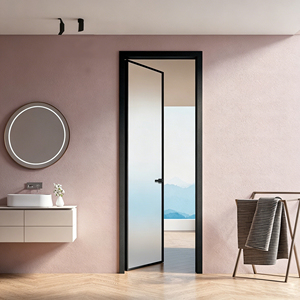
Eloyd Modern Aluminum Double Door French Doors Exterior Glass Front Terrace External Pantry Casement Soundproof Kitchen Villa
Get Catalog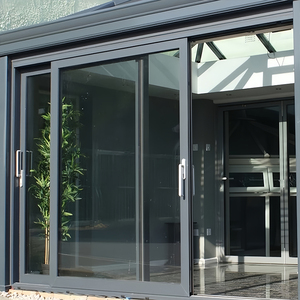
OUNA Aluminum Alloy Doors And Windows Modern Exterior Aluminum Door Patio Commercial Outdoor Heavy Duty Sliding Doors
Get Catalog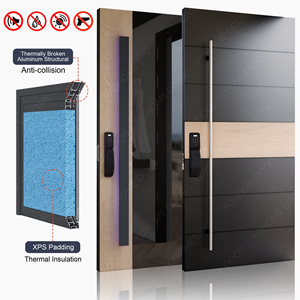
European Standard Big House Door Entry Main Security Door for Apartment Aluminum Clad Wood Entry Modern Doors for House
Get Catalog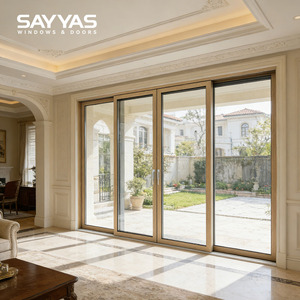
Aluminum Hurricane Impact Sliding Glass Doors Aluminum-Clad Wood Interior Living Room Double Glazing Tempered Glass 5 Year
Get Catalog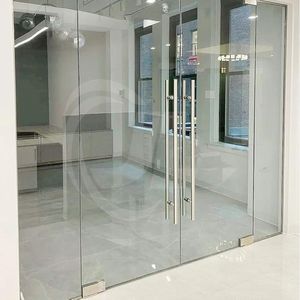
Modern Minimalist Design Exterior Aluminum Casement Door Impact Proof Glass Door
Get Catalog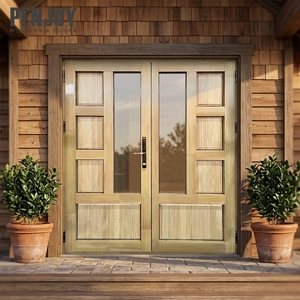
PENJOY High-End Luxury Villa Aluminum Clad Wood French Doors Entry Exterior Soundproof Thermal Break Energy Saving Modern
Get Catalog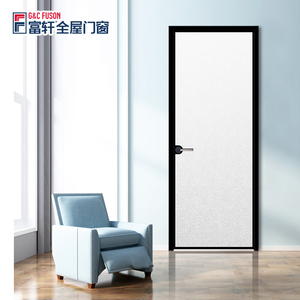
2025 Cool Contemporary Style High Quality Waterproof Casement Door Tempered Glass Side Opening Aluminium Casement Door
Get Catalog1. Executive Summary: The Structural Paradigm of Aluminium Clad Doors
The global architectural landscape is undergoing a decisive shift toward high-performance building envelopes. As stringent thermal efficiency standards—such as Passive House (Passivhaus), ASHRAE 90.1, and the EU Energy Performance of Buildings Directive (EPBD)—take legal precedence across North America, Europe, and Australia, fenestration systems are no longer treated as passive aesthetic apertures. They are critical engineered components responsible for acoustic insulation, carbon mitigation, and structural resistance to climate extremes.
Among modern fenestration solutions, aluminium-clad doors represent the highest synthesis of material science: fusing the extreme weatherability, torsional rigidity, and maintenance-free lifespan of exterior extruded aluminum with the natural thermal resistance, acoustic damping, and aesthetic elegance of interior solid timber or thermal-break polyamide matrices. This whitepaper systematically evaluates the engineering architecture, procurement dynamics, technical benchmarks, and top global manufacturers defining the aluminium clad door export landscape in 2025 and beyond.
Technical Insight: Aluminium-clad door systems leverage a dual-material composite design. The outer extrusion absorbs solar radiation, severe wind loads, and precipitation, while the decoupled interior core preserves conditioned internal microclimates, reducing building HVAC energy demand by up to 34%.
2. Engineering Anatomy: Thermal Break & Composite Integration
To evaluate a top-tier aluminium clad door manufacturer, procurement specialists and architectural specifiers must look beyond surface aesthetics into profile engineering. High-performance aluminum clad wood and system doors rely on three key technical pillars:
A. Extrusion Alloy & Surface Fluorocarbon (PVDF) Metallurgy
Leading Chinese fenestration hubs like Foshan utilize high-precision 6063-T5 prime aluminum alloy extrusions with wall thicknesses ranging from 2.0mm to 3.0mm for heavy-duty commercial and luxury residential applications. Recycled aluminum scrap is strictly prohibited in structural load-bearing profiles due to impurity inclusions that induce micro-fissures under stress. Exterior aluminum cladding undergoes multi-layer Fluorocarbon (PVDF) spray coating or AkzoNobel architectural powder coating meeting QUALICOAT Class 2 standards, guaranteeing salt-spray resistance exceeding 3,000 hours in harsh coastal marine environments.
B. Polyamide Thermal Break Bars (PA66 GF25)
Metal extrusions exhibit high thermal conductivity ($k \approx 200 \text{ W/m·K}$). To counteract thermal bridging, premium manufacturers integrate 24mm to 34mm multi-cavity Polyamide PA66 GF25 (25% glass fiber reinforced) thermal barrier strips. This structural break isolates the exterior aluminum profile from the internal atmospheric layer, preventing condensation formation even when indoor-outdoor ambient temperature differentials exceed 45°C.
C. Triple-Sealing Matrix & EPDM Continuous Gaskets
Air permeability and water tightness are primarily governed by gasket memory and corner joinery. Advanced systems implement three-tier continuous automotive-grade EPDM (Ethylene Propylene Diene Monomer) rubber gaskets combined with vulcanized corner seals. Combined with hydraulic pin-and-glue corner crimping, this configuration ensures structural frames withstand wind pressure ratings exceeding 1,000 N/m² and water resistance reaching 900 Pa.
Structural Integrity
Built with 6063-T5 virgin alloy with wall thickness up to 3.0mm, tested to resist hurricane-force winds and cyclic structural fatigue.
Thermal Efficiency
Multi-chamber PA66 GF25 thermal breaks combined with warm-edge spacers yield door U-values down to 1.1 W/m²K (R-value ~ 5.15).
Security & Hardware
German-engineered Siegenia or HOPPE multi-point locking systems rated for 200,000 opening cycles and RC2/RC3 burglar protection.
3. Technical Comparison: Aluminium-Clad vs. Alternative Fenestration Materials
When specifying high-end exterior doors for commercial developments or luxury residential projects, choosing the correct substrate matrix is pivotal for long-term ROI. The table below outlines how aluminium-clad wood systems compare against unclad aluminum, UPVC, and solid timber.
| Performance Parameter | Aluminium-Clad Doors | Standard Thermal Break Aluminum | uPVC / Vinyl Doors | Solid Timber Doors |
|---|---|---|---|---|
| Thermal Insulation (U-Value) | 0.8 - 1.2 W/m²K | 1.4 - 2.0 W/m²K | 1.2 - 1.6 W/m²K | 1.1 - 1.5 W/m²K |
| Exterior Maintenance | Zero Maintenance (PVDF / Powder) | Zero Maintenance | Medium (Fading/Yellowing) | High (Re-staining every 2 yrs) |
| Structural Wind Load | Extreme (> 3,500 Pa) | High (> 3,000 Pa) | Low - Medium (< 1,800 Pa) | Medium (< 2,200 Pa) |
| Acoustic Damping (STC) | STC 42 - 48 dB | STC 35 - 40 dB | STC 32 - 36 dB | STC 38 - 42 dB |
| Design Life Expectancy | 40 - 50+ Years | 30 - 40 Years | 15 - 20 Years | 20 - 30 Years |
| Commercial ROI & Value Addition | Highest (Luxury Benchmark) | High | Moderate | Moderate / High |
4. Global Procurement & Future Sourcing Trends (2025–2030)
As the international construction supply chain adapts to post-industrial manufacturing paradigms, international door buyers, distributors, and real estate developers are updating their sourcing criteria. The next five years will be shaped by four major macro trends:
Trend 1: Demand for Low-Carbon & Net-Zero Fenestration
Developers in North America and Europe are requesting Environmental Product Declarations (EPD) for fenestration imports. Manufacturing aluminium clad doors using low-carbon hydro-powered aluminum billets significantly cuts embedded carbon footprints, enabling commercial projects to earn higher LEED v4 and BREEAM sustainability credits.
Trend 2: Smart Glass & Photovoltaic Integration (BIPV)
Modern modern sliding and casement doors are increasingly integrating dynamic electrochromic glass (smart tinting) and Building-Integrated Photovoltaics (BIPV). Aluminium clad frames are uniquely suited to house internal wiring channels and sensor arrays due to their rigid structural profiles, turning large patio openings into energy-generating surfaces.
Trend 3: Hurricane Impact & Severe Weather Compliance
With volatile coastal storms rising globally, international specifiers require high-water-pressure and impact-rated units certified to ASTM E1886 / E1996 (Florida Building Code HVHZ) and Australian AS2047 standards. Doors must withstand heavy missile impacts (9-lb 2x4 lumber fired at 50 ft/s) without seal failure or glass dislodgement.
Trend 4: Direct Factory Sourcing & OEM Customization from Foshan Hubs
The traditional multi-tiered distribution chain is giving way to direct manufacturer-to-developer procurement. Backed by advanced 5-axis CNC machining centers, leading Foshan manufacturers provide complete OEM/ODM customization—from tailored structural extrusion dies to custom RAL anodizing—delivering factory-direct cost efficiencies without sacrificing precision tolerance (±0.5mm).
5. Enterprise Manufacturing Strengths & Quality Control Protocol
Representing the apex of Southern China’s architectural aluminum hub, ZENIC Window & Door Technology Co., Ltd. operates a streamlined 20,000 m² manufacturing ecosystem tailored specifically for international project export. Our production protocol is engineered around four core quality gates:
01. Raw Material Billet Audit
We use exclusively 100% prime virgin 6063-T5 aluminum alloy extrusions. Every batch is certified with spectrographic chemical composition analysis to guarantee tensile strength ($\ge 160 \text{ MPa}$) and yield strength ($\ge 110 \text{ MPa}$).
02. Precision CNC Milling & Assembly
Automated German CNC machining centers execute double-mitre corner cuts, locking pocket routing, and drainage slotting with sub-millimeter accuracy, ensuring frame corner joints remain completely airtight and watertight.
03. Glazing & Pressure Testing
All glass units incorporate tempered safety glass with argon gas filling and warm-edge structural spacers. Finished assemblies undergo rigorous air infiltration, static water pressure, and hardware stress cycle testing.
Every unit leaving our plant is individually labeled by floor and opening schedule number, protected with thick EPE foam wrap and non-fumigation plywood crates. This safeguards units through maritime transport and enables quick, organized installation once delivered to your job site.
6. Frequently Asked Questions (FAQ) for Global Importers
What is the minimum order quantity (MOQ) for custom aluminium clad door orders?
Our standard Minimum Order Quantity starts from 50 pieces per project. We support mixed orders, allowing buyers to consolidate different door types (e.g., heavy-duty sliding doors, French casement doors, and entry doors) within a single container to meet threshold requirements for project-specific orders.
What thermal U-values can your aluminium clad door systems achieve?
Depending on profile depth, polyamide thermal break width (24mm–34mm), and triple-pane Low-E insulated glass configurations, our thermal break aluminium clad systems achieve thermal transmittance values down to 1.1 W/m²K (0.19 BTU/h·ft²·°F), fully complying with Northern US, Canadian, and European energy codes.
What export certifications and building code standards do your products hold?
Our product lines are tested and certified under global standards, including NFRC and AAMA (USA), CE (Europe), AS2047 (Australia), CSA (Canada), and ISO 9001 quality management systems. Test reports for specific wind-load, water-tightness, and thermal performance are available for project submittals.
What is the typical production lead time and ocean shipping timeframe?
Standard factory production lead time is 15 to 25 business days following CAD shop drawing approval and deposit receipt. Shipping time varies by destination port: approximately 14–20 days to US West Coast/Australia, and 28–35 days to US East Coast, Europe, or Middle Eastern ports (FOB Foshan / Shenzhen).
Do you provide OEM / ODM private labeling and customized hardware options?
Yes. We provide complete OEM and ODM services for global distributors, developers, and brands. This includes custom extrusion profile die tooling, private brand labeling, custom RAL powder coating, and optional hardware integration (including German ROTO, Siegenia, HOPPE, or client-specified custom locksets).
Partner with a World-Class Door Manufacturer
Submit your architectural drawings, door schedules, or project specifications today. Our engineering team will review your project details and deliver a technical quote within 24 hours.
Get Catalog