Featured Crittall-Style & Architectural Door Systems
Explore our top engineered aluminum exterior door series, combining industrial steel aesthetics, multi-chamber thermal breaks, and structural durability for worldwide export projects.
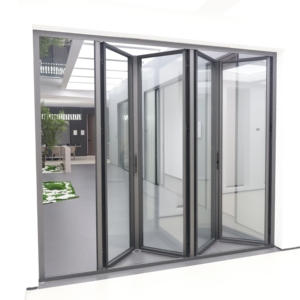
Heavy-duty folding patio system featuring multi-chamber insulation profiles, burglar-proof locking points, and continuous EPDM seals.
Send an Inquiry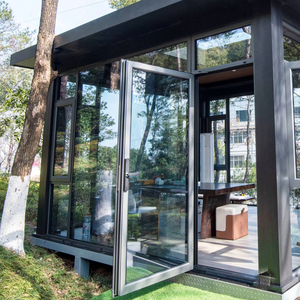
Slim-profile French door system designed with thermal break technology, custom glazing bar options, and 5-year structural warranty.
Send an Inquiry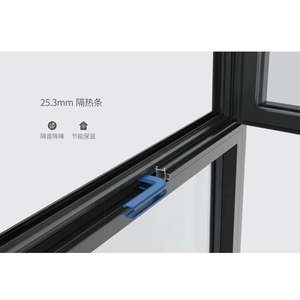
High-acoustic performance airproof aluminum frame series engineered for commercial hospitality projects and coastal weather resistance.
Send an Inquiry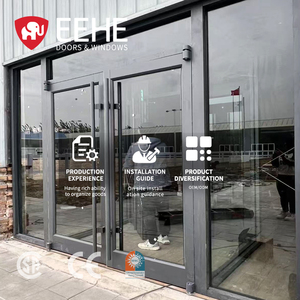
Ultra-slim profile commercial storefront entry systems with energy-efficient tinted double glazing and high-traffic heavy-duty hardware.
Send an Inquiry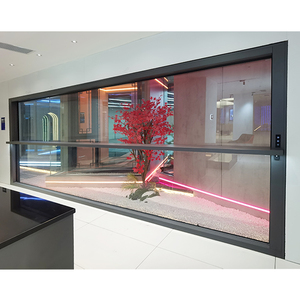
Automated guillotine glass systems delivering seamless spatial transitions, ideal for modern luxury balconies and outdoor dining terraces.
Send an Inquiry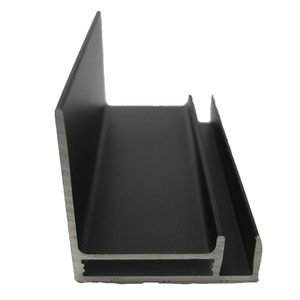
Custom 6063-T5 raw extruded profiles and thermal break bars engineered for proprietary Crittall-style door fabrication projects.
Send an Inquiry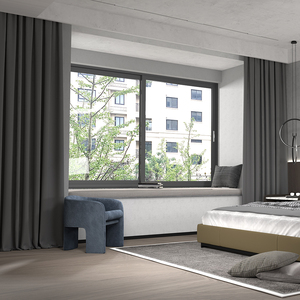
Precision-engineered sliding and casement doors achieving up to 45dB sound reduction for urban residential and commercial developments.
Send an Inquiry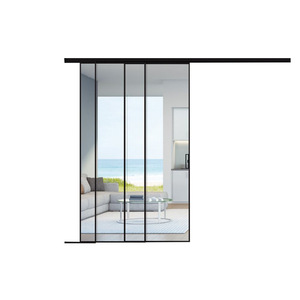
Ultra-narrow frame telescopic sliding system with zero-threshold accessible hanging rail options, perfect for flexible spatial zoning.
Send an InquiryExecutive Summary: The Evolution of Industrial Steel-Look Fenestration
The global demand for Aluminium Crittall-style external doors has experienced exponential growth across luxury residential, boutique hospitality, and modern commercial developments. Originally invented by Francis Crittall in the late 19th century using hot-rolled steel, the iconic minimalist grid aesthetic—characterized by slender sightlines and multi-pane geometry—has undergone a monumental technological transition.
While historic steel doors offered unprecedented visual elegance, contemporary building energy codes (such as Part L in the UK, NFRC standards in North America, and AS2047 in Australia) demand strict thermal performance, moisture management, and structural air tightness. Today’s architectural landscape favors extruded thermal-break aluminum profiles engineered to replicate authentic steel sightlines while drastically eliminating cold bridging, condensation, and corrosion vulnerabilities.
Technical Information Gain: Steel vs. Aluminum Crittall Fenestration
Unlike traditional solid hot-rolled steel which exhibits high thermal conductivity ($k \approx 50 \text{ W/m}\cdot\text{K}$), modern aluminum Crittall-style exterior doors utilize extruded 6063-T5 alloy profiles split by low-conductivity Polyamide (PA66GF25) thermal barriers ($k \approx 0.3 \text{ W/m}\cdot\text{K}$). This structural innovation prevents thermal bridging, allows dual-color anodizing/powder coating (internal vs. external RAL shades), and significantly reduces overall weight while maintaining extreme wind-load deflection capabilities ($>1000 \text{ N}$).
Top 10 Aluminium Crittall Style External Doors Manufacturers & Factories
Navigating the global supply chain for high-performance architectural doors requires evaluating raw material sourcing, profile extrusion tolerances, surface treatment standards, and international compliance certifications. Below is an authoritative technical benchmark of the leading global manufacturers and export factories dominating the steel-look aluminum fenestration sector:
| Manufacturer / Factory | HQ Location | Core Profile Specialty | Max Thermal U-Value | Compliance & Certifications |
|---|---|---|---|---|
| ZENIC Window & Door Technology | Foshan, China | Custom Thermal Break Aluminium Crittall Systems | 1.1 W/m²K | ISO 9001, CE, AS2047, NFRC, CSA |
| Reynaers Aluminium | Duffel, Belgium | Slim-line Architectural Heritage Systems | 1.3 W/m²K | Qualicoat, EN 12207, ISO 14001 |
| Schüco International | Bielefeld, Germany | High-End Steel Contour Aluminum Profiles | 1.0 W/m²K | DIN EN ISO 9001, CE, Passive House |
| Smart Architectural Aluminium | Yatton, United Kingdom | Heritage 47 & Alitherm Heritage Doors | 1.4 W/m²K | Kitemark, PAS 24, BSI Certified |
| Origin Frames Ltd. | High Wycombe, UK | Bespoke Aluminum French & Bi-fold Doors | 1.2 W/m²K | Secured by Design, ISO 9001 |
| Aluk Group | Luxembourg | Optio 58BW Steel Replacement Series | 1.4 W/m²K | CE Mark, CWCT, Qualicoat |
| Alumil Aluminium Systems | Kilkis, Greece | Supreme S91 & Heritage Ultra-Slim Doors | 1.1 W/m²K | Rosenheim Tested, CE, AAMA |
| Cortizo Aluminium | Padrón, Spain | Cor Vision & Industrial Heritage French Doors | 1.2 W/m²K | Qualanod, Qualicoat, AAMA |
| Crestview Doors & Windows | Guangdong, China | Commercial Steel-Look Storefront Systems | 1.5 W/m²K | ISO 9001, CE Certified |
| Duration Windows | Essex, United Kingdom | Steel Replacement Heritage Aluminum Doors | 1.4 W/m²K | PAS 24, Document L Compliant |
Future Procurement & Manufacturing Trends (2025–2030)
The external door manufacturing sector is undergoing rapid technological convergence driven by environmental regulations and minimalist design preferences. Procurement managers, architects, and real estate developers must align their supply chain specifications with four key structural trends:
1. Applied Glazing Bars vs. Authentic Structural Muntins
Historical steel Crittall doors relied on individual glass panes slotted into separate steel muntin frames. Modern thermal performance requirements make this obsolete, as multiple individual IGUs (Insulated Glass Units) create severe air-leakage points and high thermal transmittance. The future of procurement relies on Astragal Glazing Bars (Applied Georgian Bars) bonded onto high-performance continuous double or triple glass units using high-tack structural VHB tapes combined with internal duplex spacer bars. This recreates the authentic industrial grid visual while guaranteeing airtightness up to Class 4 (EN 12207).
2. Ultra-Slim Interlockers & Concealed Drainage Engineering
Architectural specifications are pushing frame sightlines below 30mm. Leading B2B factories are replacing visible outer face frames with flush-threshold, concealed subterranean drainage channels equipped with anti-backflow check valves. Stainless steel multi-wheel roller carriages integrated into the profile base allow heavy double-glazed sashes exceeding 300kg to slide effortlessly.
3. Advanced Surface Treatments: Qualicoat Class 2 & Anodized Textures
Because external Crittall doors are directly exposed to solar UV, salt spray, and extreme thermal cycling, standard industrial powder coatings fail within 5 to 7 years. Premium procurement protocols now stipulate Qualicoat Class 2 super-durable architectural powder coatings or anodized matte finish coatings tested to withstand 3,000+ hours of continuous salt spray exposure (ASTM B117 standard) without blistering, chalking, or color shifting.
4. Smart Lock Integration & Multi-Point Burglary Protection
Due to the ultra-narrow stiles of Crittall-style profiles, traditional mortise locks cannot be accommodated. Modern manufacturing relies on specialized gear-driven multi-point locking systems (featuring top and bottom hooks, deadbolts, and central latch mechanisms) that fit within profile grooves as narrow as 15mm. These are increasingly integrated with hidden motorized actuators for biometric access control, smart home automation, and remote security monitoring.
Enterprise Manufacturing Advantage: ZENIC Window & Door Technology
Based in Foshan, Guangdong—the global powerhouse of high-grade aluminum extrusion and fenestration engineering—ZENIC Window & Door Technology Co., Ltd. operates a state-of-the-art 20,000 m² manufacturing facility dedicated to OEM and ODM export projects.
ZENIC Integrated Manufacturing Standard
- Raw Billet Control: 100% prime virgin 6063-T5 aluminum alloy extrusions; zero scrap re-melt content ensures uniform tensile strength ($\ge 160 \text{ MPa}$).
- Precision CNC Corner Crimping: Dual-component corner key assembly combined with German-imported cold-weld structural adhesives eliminates frame corner joint separation.
- Sealing Ecosystem: Continuous EPDM gaskets formulated for $-40^\circ\text{C}$ to $+120^\circ\text{C}$ operation maintain long-term elasticity without shrinkage.
- Rigorously Certified: Complete system lines tested to NFRC, CE, CSA, AS2047, and ISO 9001 international standards.