Export-Grade Aluminium System Products
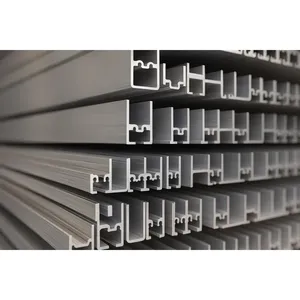
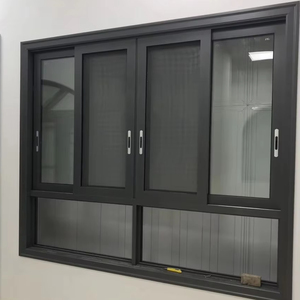
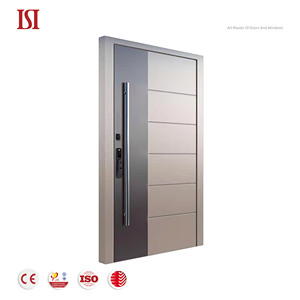
Verified architectural aluminium extrusion profiles, thermal break window units, and heavy-duty double glazed door systems for international project procurement.
Executive Summary: Navigating Global Aluminium Fenestration Procurement
In the rapidly evolving global architectural ecosystem, sourcing high-performance fenestration systems from top aluminium double glazed windows exporters has shifted from a mere price-per-square-meter metric to a multifaceted compliance, thermal efficiency, and carbon-footprint strategy. As strict energy performance mandates—such as the EU Energy Performance of Buildings Directive (EPBD), Australia’s NCC AS2047 standard, and North America’s NFRC/ENERGY STAR benchmarks—take effect, developers, architectural specifiers, and commercial importers require granular technical clarity before initiating high-volume procurement contracts.
This comprehensive industry whitepaper, published by the technical engineering team at ZENIC Window & Door Technology Co., Ltd. (Foshan, China), analyzes the technological shifts, supplier evaluation models, thermal break engineering standards, and future sourcing trajectories shaping the global architectural aluminium window trade over the 2025–2030 horizon.
Industry Development Trends: The Evolution of Double Glazed Aluminium Systems
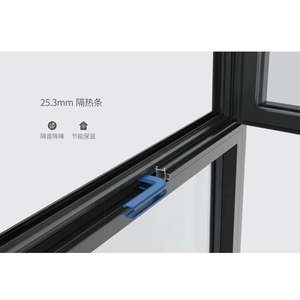
The traditional non-thermal aluminium profile is rapidly being phased out across primary export destinations in favor of advanced multi-chamber thermal break profiles paired with low-emissivity (Low-E) insulated glass units (IGU). Driven by zero-carbon targets, structural minimalism, and smart building integration, four key technological macro-trends dominate current manufacturing operations:
Low-E Insulated Glass Units (IGU) & Gas Infill Technology
Standard double glazing has evolved into specialized, multi-layered atmospheric barriers. Top exporters now standardize double-pane glass structures featuring 5mm Low-E + 12Ar (90% Argon Gas fill) + 5mm Clear Tempered glass configurations. Warm-edge composite spacers (e.g., Technoform or Swisspacer) replace conductive aluminium spacers, reducing edge-of-glass U-values by up to 0.2 W/m²K and virtually eliminating interior perimeter frost during extreme winter conditions.
Future Sourcing Trends for International B2B Buyers (2025–2030)
Procurement directors managing multi-family developments, luxury resort construction, or distribution networks must adapt to fundamental shifts in international trade, material sourcing, and environmental accountability:
1. Embodied Carbon & CBAM Compliance: European Union importers are subject to the Carbon Border Adjustment Mechanism (CBAM), requiring certified carbon footprint data for primary aluminium imports. Leading exporters in Foshan are adopting primary 6063-T5 virgin billets produced with hydro-electric power or incorporating minimum 30% post-consumer recycled aluminium (recycled billets), delivering verifiable Environmental Product Declarations (EPDs).
2. Fully Assembled vs. KD (Knock-Down) Crate Shipping: While KD shipping maximizes container volume, rising labor costs in North America, Australia, and Western Europe make site assembly prohibitive. B2B buyers increasingly specify fully assembled, pre-glazed, corner-crimped window units protected in custom-built, ocean-ready plywood crates with integrated lifting straps.
3. Integrated Motorization & Smart Home Connectivity: Concealed motorized chain actuators, integrated solar-powered louvers, and smart electrochromic (PDLC) switchable privacy glass double glazing are transitioning from niche luxury options to standard specification lines for modern commercial and high-end residential projects.
Technical Comparison: System Materials & Thermal Performance Matrix
To assist procurement officers in technical evaluation, the following data visual matrix compares standard non-thermal aluminium, modern 6063-T5 thermal break systems, uPVC, and traditional wood double-glazed window profiles:
| Performance Parameter | Thermal Break Aluminium (ZENIC) | Standard Non-Thermal Aluminium | uPVC / Vinyl Framing | Engineered Solid Timber |
|---|---|---|---|---|
| U-Value Range (W/m²K) | 1.1 – 1.8 | 2.8 – 3.8 | 1.3 – 2.0 | 1.4 – 2.1 |
| Structural Integrity / Wind Load | Exceptional (>5000 Pa) | High (3000 Pa) | Moderate (<2200 Pa) | High (3500 Pa) |
| Service Life Expectancy | 40 – 50+ Years | 30 – 40 Years | 15 – 25 Years | 20 – 30 Years (High Maint.) |
| Profile Wall Thickness | 1.4mm – 2.0mm Nominal | 1.2mm – 1.4mm | 2.0mm – 2.5mm Multi-chamber | N/A (Solid Section) |
| Finish Options & Durability | PVDF / AAMA 2605 Powder / Anodized | Basic Powder Coating | Laminated Foil / White Poly | Stain / Paint Coating |
| Fire Rating Safety | Non-Combustible (Class A) | Non-Combustible (Class A) | Self-Extinguishing (Melts) | Combustible (Charring) |
Enterprise Manufacturing Authority & E-E-A-T Capabilities: ZENIC Foshan Base
Located in Foshan, Guangdong—the world’s premier industrial cluster for architectural aluminium extrusions—ZENIC Window & Door Technology Co., Ltd. represents over 15 years of dedicated B2B manufacturing and international export excellence. Our 20,000 m² state-of-the-art facility integrates extrusion profile design, precision CNC machining, corner crimping, automated insulating glass unit assembly, and rigorous pre-shipment quality control under one standardized roof.
Every export order is subject to a strict 5-stage Quality Assurance protocol: profile coating thickness verification (electromagnetic gauge testing), diagonal tolerance verification (≤1.5mm), water tightness testing, air infiltration check, and fumigation-free plywood box packaging.