Engineered Aluminum Door & Window Systems
High-performance structural partition, casement, sliding, and thermal break systems engineered for global residential, commercial, and hospitality projects.
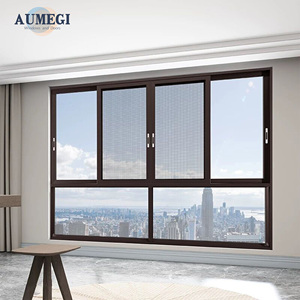
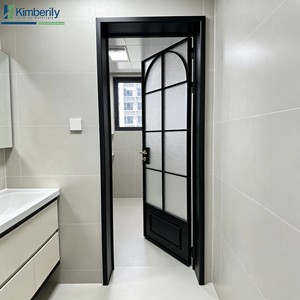
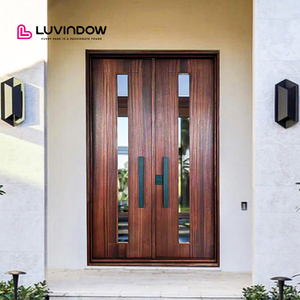
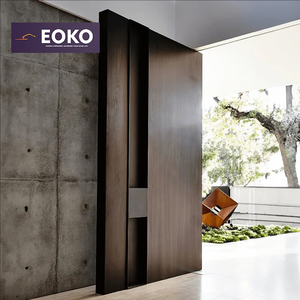
1. Executive Summary: The Evolution of Architectural Aluminum Partitions
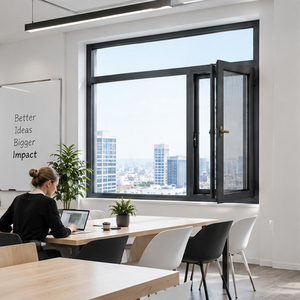
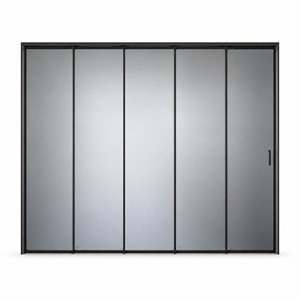
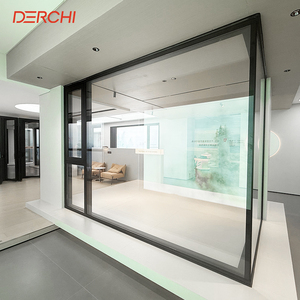
Modern architectural design is undergoing a paradigm shift towards continuous spatial flow, micro-climate envelope management, and aggressive thermal efficiency. Aluminum partition doors—once considered purely interior divider systems—have evolved into highly sophisticated engineering assemblies capable of structural acoustic isolation, extreme weather sealing, and ultra-slim visual profiles.
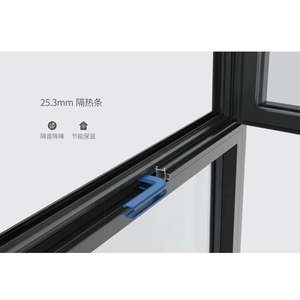
As international energy codes sharpen across North America (NFRC/ENERGY STAR), Europe (CE standards), and Australia (AS2047 compliance), the criteria for identifying top-tier aluminum partition door suppliers and exporters have shifted from simple extrusion capabilities to end-to-end technical mastery. Sourcing partners must now demonstrate advanced thermal break integration (PA66GF25 polyamide profiles), multi-layer EPDM continuous weather stripping, and structural load capabilities reaching 1,000+ Pascals of wind load resistance.
Key Market Dynamics Driving Exporter Selection
When procurement heads, architectural developers, and commercial contractors evaluate top aluminum door suppliers in hubs like Foshan, China, several core metrics dictate vendor viability:
- Alloy Metallurgy & Temper Verification: Shift from standard recycled alloys to 100% virgin 6063-T5 structural aluminum profiles with minimum 2.0mm wall thickness.
- Acoustic Isolation Engineering: Multi-chamber internal cavity designs coupled with laminated acoustic IGU (Insulated Glass Units) achieving Rw sound reduction up to 45 dB.
- Concealed & Flush Hardware Integration: Precision CNC milling for hidden track systems, heavy-duty rollers rated for 600kg panel capacity, and multi-point security locking setups.
Future Procurement & Sourcing Trends
Anticipating technological advancements and code shifts for global architectural partition imports.
Ultra-Slim Sightlines with Thermal Integrity
The market demand for minimal 15mm-20mm visible interlock profiles has forced manufacturers to re-engineer profile stiffness. Future exporters must offer steel-reinforced structural aluminum profiles that maintain micro-slim aesthetics without sacrificing structural deflection limits under high wind loads.
Accelerated DfMA Production Workflows
Design for Manufacture and Assembly (DfMA) is cutting project timelines. Top suppliers now utilize fully automated 5-axis CNC machining centers to ensure sub-millimeter tolerances on corner crimping, pin-and-glue corner joints, and pre-drilled hardware mortises prior to export shipment.
Decarbonized & Low-Carbon Aluminum Sourcing
ESG compliance is becoming a mandatory procurement hurdle in Western markets. Tier-1 aluminum door exporters are adopting hydro-powered aluminum smelting sources and documenting Environmental Product Declarations (EPDs) to support LEED and BREEAM building certifications.
2. Engineering Benchmark: Technical Criteria Matrix
To accurately assess the structural, thermal, and mechanical properties of leading aluminum partition doors, procurement teams must analyze standardized laboratory test data. Below is a comparative technical matrix representing export-grade architectural standards:
| Performance Parameter | Standard Commercial Grade | Export Technical Benchmark (ZENIC Grade) | Engineering Impact |
|---|---|---|---|
| Alloy Composition | Recycled 6063 Aluminum | Virgin 6063-T5 Billet | Prevents micro-fractures, ensures superior powder-coat adhesion. |
| Profile Wall Thickness | 1.2mm – 1.4mm | 2.0mm – 3.0mm Heavy Duty | Increases wind load structural resistance to 1,000 N+. |
| Thermal Insulation (U-Value) | > 2.8 W/m²K | Down to 1.1 W/m²K | Reduces building HVAC energy consumption by up to 35%. |
| Gasket Sealing System | Standard PVC Strips | Three-Layer Continuous EPDM | Eliminates air infiltration and water leakage under pressure. |
| Hardware Testing Cycle | 50,000 Cycles | 200,000 Certified Cycles | Drastically lowers post-handover facility maintenance costs. |
| Corrosion Resistance | Standard Anodizing | Qualicoat Class 2 Powder Coat | Prevents salt-spray pitting in harsh coastal environments. |
ZENIC Window & Door Technology Capabilities
Operating from Foshan, China—the world's epicenter of aluminum fabrication—ZENIC supplies engineered door and window systems to over 40 countries.
20,000 m² Advanced Production Base
Our Foshan manufacturing facility houses fully automated European CNC profile cutting, automatic corner crimping, pin-and-glue injection systems, and dust-free glass assembly lines. Every unit undergoes rigorous dimensional, water-tightness, and hardware function testing prior to packaging.
Global Certification Compliance
Engineering products for international export requires strict compliance verification. ZENIC product series are rigorously tested to satisfy NFRC and AAMA standards for North America, CE marking for Europe, and AS2047/AS1288 accreditation for Australia and Oceania projects.
Full OEM/ODM & Engineering Support
We provide comprehensive CAD shop drawing generation, thermal simulation modeling, custom profile extrusion dies, specialized wood-grain transfers, and private labeling for developers, architects, and wholesale distributors worldwide.
Frequently Asked Questions for Importers
Addressing key logistical, technical, and commercial inquiries for global door and window procurement.
What is the Minimum Order Quantity (MOQ) for custom project sourcing?
Our standard export minimum order quantity starts at 50 pieces or 100 square meters per project schedule. We allow mixed orders comprising casement windows, thermal break partition doors, sliding systems, and fixed glazing within a single container shipment to accommodate high-end custom villa developments and multi-family commercial projects.
What lead times can overseas buyers expect from Foshan production?
Standard manufacturing timelines range from 15 to 25 working days following final CAD shop drawing sign-off and deposit receipt. Specialized custom finishes (such as custom RAL fluorocarbon spraying or metallic anodizing) or custom glass setups (triple-glazed Low-E with argon fill) may add 5 to 7 days to the production cycle.
How does ZENIC guarantee thermal and air-tight performance?
We utilize imported European polyamide PA66GF25 thermal insulation strips engineered into multi-chamber profiles. Combined with three-tier continuous EPDM perimeter gaskets, pressure-equalized hidden drainage systems, and warm-edge glass spacers, our window and door assemblies achieve certified U-values down to 1.1 W/m²K.
What export packaging protocols are used to eliminate transport damage?
All finished units undergo a 4-layer export packaging protocol: 1) Protective anti-scratch film on aluminum profile surfaces; 2) EPE foam corner guards; 3) Heavy-duty corrugated shrink wrapping; and 4) Fully enclosed, fumigation-free plywood crates with internal rubber dampening pads suitable for sea freight container transportation.
Can ZENIC manufacture strictly to local building codes (e.g., AS2047, NFRC)?
Yes. Our engineering department designs systems specifically aligned with regional structural and energy performance standards. We supply full test report submittals for water penetration, air infiltration, structural deflection, and thermal insulation to support project approval by local building authorities.
Request Custom Engineering Drawings & Wholesale Quote
Partner with Foshan’s premier aluminum window and door exporter. Submit your architectural schedules, elevation plans, or bill of quantities (BOQ) for immediate technical review and competitive factory-direct pricing.
Inquire Now