Factory Direct Architectural Glass Door & Window Series
Tested to AS2047, NFRC, and CE International Standards. Engineered for High-End Commercial & Residential Projects.
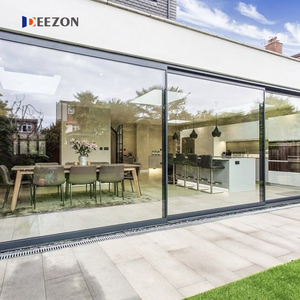
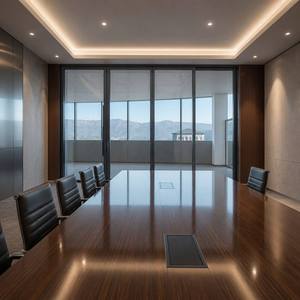

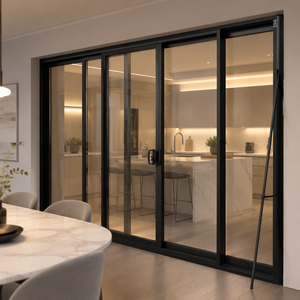
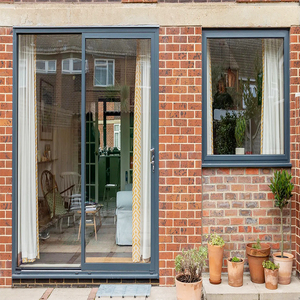
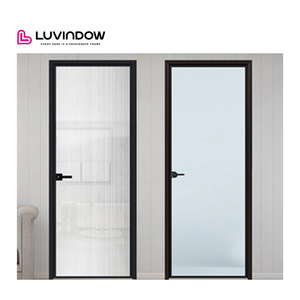
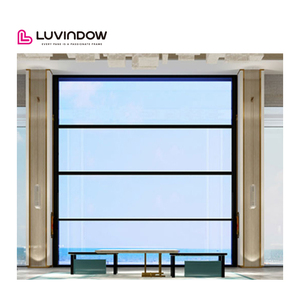
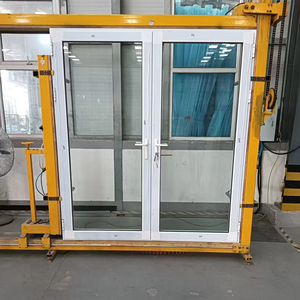
Top 10 Aluminum With Glass Door Factories & Exporters: Global B2B Sourcing Analysis
The global demand for high-performance architectural fenestration has driven significant technological advances in aluminum glass door manufacturing. Architectural firms, real estate developers, and international procurement agencies face an increasingly complex vendor landscape. Selecting a premier factory requires analyzing structural metal alloys, thermal barrier engineering, weatherization testing, and cross-border compliance standards.
China—and specifically the Foshan manufacturing cluster in Guangdong—remains the global epicenter for aluminum extrusion and architectural door fabrication. The world's top 10 aluminum glass door exporters maintain rigorous manufacturing standards to compete across North American, European, Middle Eastern, and Oceanian markets. This benchmark whitepaper delineates the technical metrics, engineering protocols, and material standards that separate tier-one manufacturers from standard fabricators.
Information Gain Matrix: When evaluating a B2B manufacturer for aluminum glass doors, standard quote comparisons are insufficient. Importers must evaluate profile wall thickness (minimum 2.0mm for heavy-duty structural doors), polyamide thermal break quality (PA66 GF25), corner assembly methods (pin-and-glue vs standard mechanical screws), and verified laboratory performance certificates (AS2047, NFRC, CE, AAMA).
Key Evaluation Criteria for Benchmark Fenestration Manufacturers
To establish the top tier of aluminum door factories globally, structural engineers and fenestration consultants utilize five foundational criteria:
- Raw Material Metallurgical Integrity: Utilization of 100% primary virgin 6063-T5 architectural aluminum billets rather than remelted scrap alloy. Virgin alloys guarantee uniform tensile strength, superior surface anodizing capability, and structural resistance under high wind loads.
- Thermal Barrier Polymer Engineering: Integration of glass-fiber-reinforced Polyamide (PA66 GF25) thermal breaks. Inferior PVC strips deform under thermal stress and fail to deliver low U-values in severe climates.
- Air-Water Tightness & Weather-Stripping Systems: Deployment of multi-chambered, continuous EPDM (Ethylene Propylene Diene Monomer) gasket lines combined with pressure-equalized hidden drainage paths.
- Precision Structural Fabrication: Hydraulic corner crimping coupled with dual-component corner adhesive injections (pin-and-glue construction) to eliminate water penetration at frame joints.
- International Testing Compliance: Third-party accredited certifications including Australian AS2047/AS1288, North American NFRC/AAMA, and European CE marking.
Architectural Fenestration: Technological Trends & R&D Horizons
The aluminum glass door industry is experiencing a profound transformation driven by stringent global energy codes, urban acoustic requirements, and architectural preferences for seamless indoor-outdoor transitions. Leading exporters are investing heavily in specific technological horizons:
1. Polyamide PA66 GF25 Thermal Break Optimization
Modern building energy codes demand unprecedented thermal isolation. Advanced multi-cavity thermal break profiles split internal and external aluminum frames using 24mm to 34mm PA66 GF25 polyamide strips. Combined with argon-gas-filled Low-E triple glazing and warm-edge spacers, thermal break sliding and stacker doors achieve overall U-values down to 1.1 W/m²K, reducing HVAC load by up to 40% in residential and commercial installations.
2. Minimalist Ultra-Slim Sightlines & Panoramic Glazing
Architectural design favors maximum daylight transmission and unobstructed views. Technological advances in structural glass bonding allow visible vertical stile widths as narrow as 20mm to 25mm while supporting panel weights up to 400kg. Heavy-duty concealed stainless steel roller tracks and flush floor thresholds eliminate physical barriers while maintaining watertight integrity under driving rain.
3. Motorized Automation & Smart Building Integration
High-end residential and commercial developments increasingly incorporate motorized vertical sliding (guillotine) systems and automated lift-and-slide doors. Brushless DC motors combined with smart sensor networks enable automatic weather closing, obstacle detection, voice-controlled operation, and integration into centralized Building Management Systems (BMS).
4. Extreme Weather Resistance & Acoustic Decoupling
Coastal and tropical developments require doors engineered for extreme weather. High-grade aluminum glass door systems utilize triple continuous EPDM sealing rings, storm-proof interlocks, and multi-point locking mechanisms tested to withstand extreme wind pressures up to 5,000 Pa. Acoustic double-laminated glass configurations achieve sound transmission class (STC) ratings exceeding 42 dB.
Future B2B Procurement Trends in Global Fenestration (2025–2030)
Sourcing architectural metalwork and glazed door systems from overseas factories requires an understanding of structural shifts in international trade, environmental regulations, and logistics:
1. Environmental Product Declarations (EPD) & Carbon Footprint Auditing
Global developers are requiring Environmental Product Declarations (EPD) to qualify for LEED v4.1 and BREEAM certifications. Leading Chinese aluminum door manufacturers are transitioning to low-carbon aluminum smelted with renewable hydroelectric power, enabling commercial projects to verify embodied carbon metrics from raw profile to job-site delivery.
2. Factory-Assembled Prefabricated Units
To counteract high job-site labor costs in North America, Western Europe, and Australia, procurement strategy has shifted from knock-down (KD) kits to fully factory-assembled, glazed, and hardware-fitted door units. Units are shipped pre-adjusted in protective custom plywood crates, allowing crane-assisted, rapid insertion directly into rough building openings.
3. BIM (Building Information Modeling) Integration
Pre-construction collaboration now requires direct factory BIM Level 2 compliance. Enterprise exporters provide architects and general contractors with parametric Revit (.rfa) files containing accurate profile geometry, thermal conductivity parameters, and anchor detail specifications early in the design phase.
Architectural Door System Performance Benchmark Matrix
Engineering parameters for standard and high-performance aluminum glass door configurations produced by tier-one export factories:
| System Type | Profile Wall Thickness | Thermal Barrier | Max Panel Load | U-Value Range | Water Tightness | Wind Load Rating |
|---|---|---|---|---|---|---|
| AS2047 Stacker Sliding Door | 2.0 mm structural | PA66 GF25 (24mm) | 300 kg / sash | 1.4 - 1.8 W/m²K | 450 Pa - 600 Pa | Up to 3,500 Pa |
| Slim Frame Panoramic Sliding | 2.0 mm - 3.0 mm | Concealed Thermal Isolation | 400 kg / panel | 1.3 - 1.6 W/m²K | 400 Pa - 550 Pa | Up to 3,000 Pa |
| Heavy-Duty Lift & Slide Door | 2.0 mm - 2.5 mm | PA66 GF25 Multi-Cavity | 400 kg / sash | 1.1 - 1.5 W/m²K | 600 Pa - 900 Pa | Up to 4,500 Pa |
| Exterior Bi-Fold Folding Door | 2.0 mm structural | Polyamide Strip (20mm) | 100 kg / leaf | 1.6 - 2.0 W/m²K | 350 Pa - 500 Pa | Up to 2,500 Pa |
| Commercial French Swing Door | 2.0 mm structural | PA66 GF25 Insulated | 150 kg / leaf | 1.5 - 1.9 W/m²K | 400 Pa - 600 Pa | Up to 3,000 Pa |
| Motorized Vertical Guillotine | 2.5 mm - 3.0 mm | Thermal Break System | 250 kg / sash | 1.4 - 1.8 W/m²K | 450 Pa - 700 Pa | Up to 3,200 Pa |
Factory Advantage: Zenic Window & Door Technology Co., Ltd.
Headquartered in Foshan, Guangdong—the world's primary hub for high-end aluminum extrusion—Zenic Window & Door Technology Co., Ltd. operates a specialized 20,000 m² production base engineered exclusively for overseas architectural exports. For over 15 years, ZENIC has delivered fully integrated fenestration solutions to architects, developers, general contractors, and wholesalers across 40+ countries.
Prime 6063-T5 Profiles
ZENIC uses virgin 6063-T5 aluminum extrusions with 2.0mm structural wall thickness. Recycled alloy scrap is strictly prohibited, ensuring dimensional stability and clean anodized/PVDF finishes.
Pin-and-Glue Fabrication
Frames feature hydraulic corner crimping combined with dual-component corner glue injection. Continuous three-layer EPDM gaskets eliminate air leakage and water infiltration.
Rigorously Tested Hardware
Every system integrates imported multi-point locking hardware rated for 200,000 continuous operation cycles and supported by a 10-year manufacturer structural warranty.
Complete Export Logistics & Packaging Integrity: Finished glazed units undergo 100% inspection for dimensional tolerance, hardware action, and water tightness. Goods are wrapped in heavy-duty EPE protective foam, corner-shielded, and packaged in fumigation-free solid plywood export cases for containerized ocean transport.
B2B Procurement FAQ: Importing Aluminum Glass Doors
Direct answers from factory fenestration engineers to common technical, commercial, and logistical questions raised by global buyers:
What certifications are required when importing aluminum glass doors into Australia or North America?
How does PA66 GF25 thermal break technology differ from standard non-thermal profiles?
What is the minimum order quantity (MOQ) and production lead time for custom door orders?
How are heavy glazed units protected against ocean transport breakage?
Does the factory support OEM profile customization, custom powder coating colors, and hardware branding?
What structural glass parameters should be specified for high wind or coastal locations?
Ready to Source High-Performance Aluminum Doors for Your Project?
Send us your door schedules, project drawings, or architectural specifications. Our engineering team provides shop drawings, structural load evaluations, and direct factory pricing within 24 hours.
Send an Inquiry