Architectural Aluminium Windows, Louvre & Door Systems
Direct-from-factory custom fenestration solutions tested to global structural and thermal engineering standards.
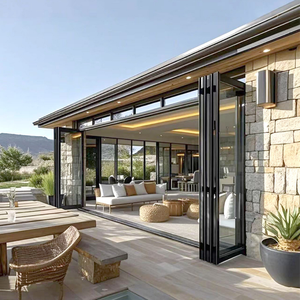
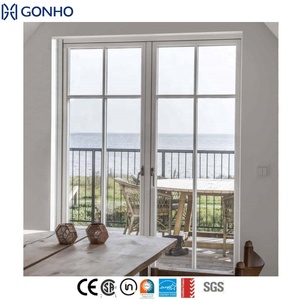
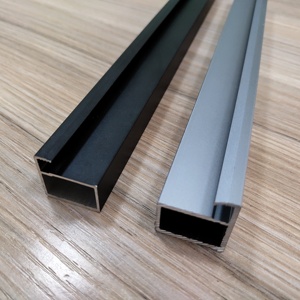
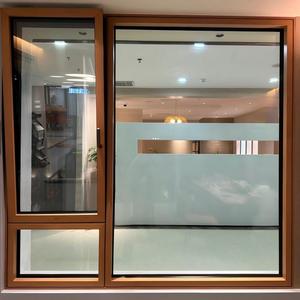
Architectural Louvres & Structural Aluminium Engineering in China
The Strategic Shift in High-Performance Fenestration Sourcing
In modern architectural design, aluminium louvre window systems have evolved from simple ventilation grilles into sophisticated building envelope components that directly dictate solar heat gain, aerodynamic pressure management, and structural facade aesthetics. As global energy standards tighten—driven by directives such as Europe’s nZEB (nearly Zero-Energy Buildings) and North America’s updated ENERGY STAR v7.0 performance metrics—the global procurement baseline for structural aluminium fenestration has shifted dramatically towards high-precision, thermal-break engineered louvre profile assemblies.
China, and specifically the industrial ecosystem centered around Foshan, Guangdong, has established itself as the undisputed epicenter of global architectural aluminium extrusion and fenestration technology. China's top aluminium louvre window suppliers offer unprecedented material capabilities: utilizing high-tensile 6063-T5 and T6 prime alloy billets, advanced polyamide thermal break strip integration (PA66GF25), automated multi-point corner crimping, and surface treatment facilities certified to international standards such as Qualicoat Class 2, AAMA 2605, and ISO 9001.
“Information Gain Insight: Specifying architectural aluminium louvres requires looking beyond simple aesthetic blade profiles. High-yield structural performance depends on profile wall thickness (≥2.0mm for heavy-duty commercial openings), internal gasket durometer consistency, and dynamic motorization torque integration.”
Navigating the complex supplier landscape in China requires commercial buyers, project developers, and architectural firms to evaluate manufacturers based on rigorous engineering parameters. A leading manufacturer must demonstrate complete control over the fabrication value chain—from initial extrusion matrix design and structural wind-load simulations (ASTM E330 / AS2047) to precision CNC machining, double/triple insulated glass unit integration, sea-worthy protective packaging, and technical shop drawing validation.
Global Procurement & Future Trends (2025–2030)
Key technological and market shifts reshaping how developers and wholesalers source aluminium louvres and window systems.
Bioclimatic & Smart Automation Integration
The convergence of building management systems (BMS) with automated mechanical louvre blades is accelerating. Future-proof procurement favors suppliers offering integrated linear actuators (KNX, Somfy, Zigbee protocols) that adjust blade angles in real time based on solar tracking and anemometer wind data.
Hyper-Thermal Efficiency (Polyamide PA66GF25)
Non-thermal break systems are being rapidly phased out in tier-1 markets. Modern procurement specifications demand multi-chamber polyamide thermal break strips reinforced with 25% fiberglass, reducing overall assembly thermal transmittance (U-values) down to 1.1 W/m²K when combined with argon-filled low-E glass.
Extreme Wind-Load & Cyclone Ratings
Coastal and tropical high-rise developments demand structural louvre windows capable of resisting positive and negative pressures exceeding 3,500 Pascals. Leading suppliers now utilize reinforced internal steel mullions and concealed pin-and-glue corner keys to ensure structural integrity under cyclic wind loading.
Technological Breakthroughs in Aluminium Louvre Fabrication
Advanced Profile Extrusion & Surface Engineering
The functional reliability of an aluminium louvre window depends heavily on profile cross-section design and alloy purity. Top Chinese manufacturers have abandoned low-grade re-melted scrap in favor of 100% virgin 6063-T5 aluminum ingots. Extrusions undergo precise multi-stage heat treatment to achieve Webster hardness readings of ≥12 degrees, ensuring structural resistance against physical distortion over decades of constant mechanical operation.
Furthermore, surface treatment technology has advanced significantly. Fluorocarbon PVDF coating systems and micro-textured powder coatings (Kynar 500 equivalent) provide extreme resistance against UV radiation, salt-spray corrosion (tested over 3,000 hours under ASTM B117 standards), and chemical degradation in harsh marine or industrial urban atmospheres.
| Technical Parameter | Standard Commercial Specification | ZENIC High-Performance Engineering Standard |
|---|---|---|
| Primary Alloy Composition | Commercial 6063-T5 Aluminum Profile | Prime Virgin 6063-T5 / T6 Architectural Alloy |
| Profile Wall Thickness | 1.2 mm – 1.4 mm | 2.0 mm Structural Wall (Heavy-Duty Rated) |
| Thermal Insulation (U-Value) | 2.8 – 3.5 W/m²K | Down to 1.1 W/m²K (With PA66GF25 Thermal Strip) |
| Weather Sealing System | Single PVC Rubber Strips | Triple Continuous EPDM Gaskets (Co-extruded) |
| Air Permeability / Water Tightness | Class 2 / 300 Pa | Class 4 / 600 Pa (Pressure-Equalized Hidden Drain) |
| Hardware Mechanical Durability | 20,000 Cycle Testing | 200,000+ Cycle Durability (Multi-point Lock System) |
Acoustic Dampening & Hidden Water Drainage
Traditional louvre windows often suffered from rain leakage under severe storms and acoustic transmission in noisy urban environments. Modern technical iterations overcome these challenges through pressure-equalized inner chamber designs and concealed drainage channels. Rainwater entering the blade pivot points is seamlessly routed down internal vertical stiles and expelled through sub-frame weep slots fitted with anti-backflow gravity caps.
For sound-sensitive projects, double-glazed glass louvre blades combined with multi-layer perimeter EPDM seals achieve acoustic damping ratings (STC / Sound Transmission Class) of up to 38 dB, establishing a quiet indoor environment even adjacent to busy commercial corridors.
Why Partner with ZENIC Window & Door Technology
Foshan’s Premier OEM/ODM Manufacturing Partner for Global Commercial & Residential Projects.
20,000 m² Advanced Production Hub
Located in the heart of Foshan’s aluminum industry, Zenic Window & Door Technology Co., Ltd. operates a state-of-the-art 20,000 m² facility equipped with double-head CNC cutting equipment, automated corner crimping centers, and automated glazing assembly lines.
Global Certification & Testing Compliance
Our complete window, door, and louver product lines hold verified test reports and certifications compliant with major international building codes: NFRC, CE Mark, CSA, AS2047 (Australia), AAMA, ISO 9001, Intertek, and ENERGY STAR program criteria.
Export Scale Across 40+ Nations
With an established export network spanning North America, Europe, the Middle East, Oceania, and Asia, ZENIC provides full engineering support, CAD/BIM shop drawing creation, customized RAL color matching, and sea-worthy plywood crate packaging.
Frequently Asked Questions (FAQ)
Essential technical and commercial answers for international procurement managers and project developers.
What is the minimum order quantity (MOQ) for ZENIC custom aluminium louvres and windows?
What is the typical production lead time and export delivery process?
What thermal U-values can ZENIC thermal-break aluminium window systems achieve?
Does ZENIC fully support OEM, ODM, and private-label customization?
Which global performance and quality certifications do ZENIC products comply with?
How does ZENIC ensure glass and frame safety during long-distance oceanic freight?
Request Technical Specifications & Wholesale Pricing
Download our comprehensive product engineering catalog or submit your architectural CAD drawings for an accurate quotation and wind-load evaluation within 24 hours.