Featured Aluminium Mesh & System Door Series
Direct export configurations engineered for commercial, residential, and high-security architectural specifications.
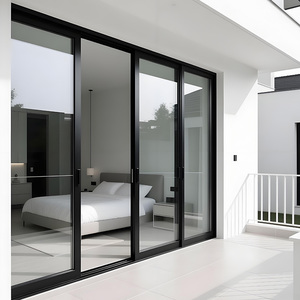
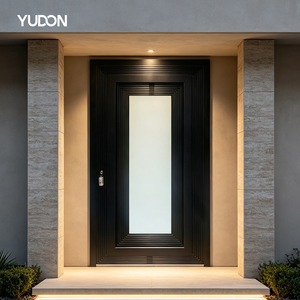
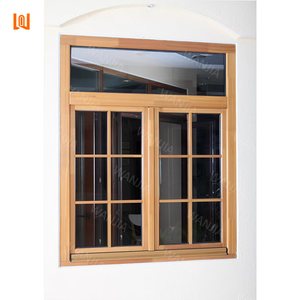
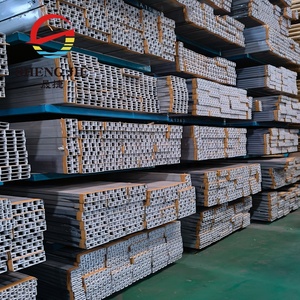
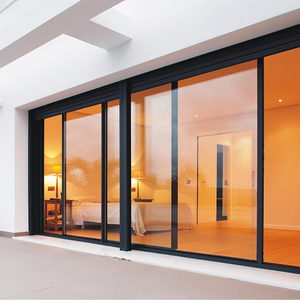
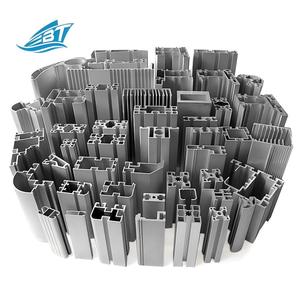
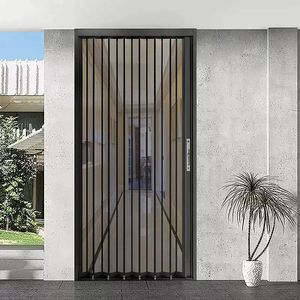
1. Executive Summary & B2B Procurement Ecosystem in China
The global demand for high-performance fenestration has driven rapid advancement in Aluminium Mesh Doors and Security Screen Systems. Modern architecture requires building envelopes that deliver uncompromised structural integrity, forced-entry resistance, thermal efficiency, and ventilation without sacrificing optical clarity. China—specifically the Foshan manufacturing cluster in Guangdong Province—has established itself as the world's premier production hub for architectural aluminum extrusions, system mesh doors, and hardware assembly.
Leading Chinese manufacturers like Zenic Window & Door Technology Co., Ltd. leverage advanced 6063-T5 and 6061-T6 alloy extrusion lines, combined with automated precision CNC machining, electro-static fluorocarbon (PVDF) powder coating, and high-tensile 304/316 marine-grade stainless steel security mesh. For international developers, architects, and importers, sourcing aluminum mesh doors directly from verified Chinese OEMs offers a strategic combination of structural engineering compliance, bespoke design adaptability, and optimized unit economics.
2. Structural Engineering & Metallurgy Standards
High-end aluminum security mesh doors are engineered systems built on two critical components: the structural aluminum profile matrix and the security mesh infill.
2.1 Aluminum Profile Alloys & Temper Specifications
Superior door systems utilize virgin 6063-T5 or 6061-T6 aluminum alloys with profile wall thicknesses ranging from 1.4 mm for interior residential screen doors to 2.0 mm–3.0 mm for heavy-duty exterior security folding and lift-and-slide doors. Unlike recycled aluminum scrap, virgin 6063-T5 alloy exhibits precise tensile yield strength (minimum 170 MPa) and elongation rates that prevent frame distortion under extreme wind loads and mechanical impact tests.
2.2 Stainless Steel Mesh Metallurgy & Weave Specs
Security screen performance relies heavily on the quality of the woven wire mesh. Premier suppliers utilize AISI 304 or AISI 316 marine-grade stainless steel wire, engineered with wire diameters between 0.70 mm and 1.00 mm. The mesh density typically adheres to an 11-mesh or 14-mesh weave per square inch.
| Mesh Category | Wire Alloy | Wire Diameter | Mesh Count | Shear & Impact Resistance Standard | Key Application |
|---|---|---|---|---|---|
| Diamond Security Mesh | AISI 316 Marine Stainless | 0.80 mm – 1.00 mm | 11 x 11 Mesh | Exceeds AS5039 / Knife Shear Test | High-security villas, luxury patio doors, ground-floor entries |
| Micro-Sightline Fly Screen | AISI 304 Stainless Steel | 0.50 mm – 0.70 mm | 14 x 14 Mesh | Basic Insect & Impact Barrier | High-rise apartment balconies, interior sliding mesh doors |
| Anti-Pet / Heavy Screen | High-Tensile Carbon/SS | 0.90 mm | 10 x 10 Mesh | High Scratch & Claw Resistance | Residential patios, high-traffic family homes |
| Thermal-Break Screen Door | 316 Stainless + PA66GF25 | 0.80 mm Mesh | 11 x 11 Mesh | AS2047 / NFRC Thermal Certified | Low-E energy efficient green building developments |
3. Enterprise Manufacturing Advantages: Zenic Window & Door Technology Co., Ltd.
Operating out of Foshan, Guangdong, Zenic Window & Door Technology Co., Ltd. represents the benchmark in export-grade fenestration manufacturing. Spanning a 20,000 m² integrated production base, Zenic supplies custom thermal break aluminum windows, sliding doors, heavy-duty folding doors, and bioclimatic outdoor systems to over 40 countries across North America, Europe, Australia, and the Middle East.
Corner Pin-and-Glue Crimping
Frames feature pneumatic corner crimping injected with two-component polyurethane corner adhesive, providing airtight structural rigidity and preventing corner joint separation.
Multi-Point Lock Integration
Equipped with high-security German or custom multi-point locking hardware, engineered to withstand over 200,000 cycle tests and 1,000 N forced-entry wind loads.
Pressure-Equalized Drainage
Concealed hidden drainage design channels water outwards under severe storm pressure without exposing unsightly drainage caps on the exterior frame face.
By enforcing a strict 100% pre-assembly inspection process before sea-worthy fumigation-free plywood crating, Zenic eliminates field-fitting errors for commercial contractors and wholesale distributors worldwide.
4. Future Procurement Trends & Technological Innovations (2025–2030)
The strategic procurement of aluminum mesh doors is shifting from simple insect screening toward highly integrated architectural envelope solutions. Key industry developments driving global procurement decisions include:
4.1 Polyamide Thermal Break Integration (PA66GF25)
Traditional non-thermal aluminum frames act as thermal bridges, compromising room HVAC efficiency. Future mesh door designs incorporate 24 mm to 34 mm Polyamide PA66 reinforced with 25% fiberglass thermal break strips. When combined with dual-track mesh and double-glazed low-E glass panels, these systems achieve system U-values as low as 1.1 W/m²K, meeting stringent net-zero carbon standards and European CE / US Energy Star requirements.
4.2 Invisible Sightline & Ultra-Slim Frame Profiles
Architectural design favors uninterrupted outdoor vistas. Manufacturers are shrinking visible frame sightlines to as low as 18 mm to 25 mm while utilizing deeper profile extrusions to retain moment-of-inertia structural ratings. Recessed flush threshold tracks allow smooth indoor-to-outdoor transitions compliant with ADA accessibility guidelines.
4.3 Surface Coating Longevity: PVDF & AkzoNobel Powder Coatings
For coastal and humid equatorial environments, salt spray resistance is paramount. Premier suppliers apply AkzoNobel Interpon or Tiger Drylac powder coatings, subjecting extrusions to multi-stage pre-treatment (chromate-free conversion) to guarantee 10-to-25-year gloss retention and pass 1,000+ hour neutral salt spray (NSS) testing.
5. Quality Assurance & Compliance Testing Standard Checklist
When executing OEM/ODM procurement contracts with Chinese suppliers, foreign buyers must verify that technical submittals comply with international testing codes:
- AS5039 / AS5041 (Australian Security Standard): Requires mesh doors to pass dynamic impact tests, knife shear tests, jemmy resistance tests, and pull tests.
- NFRC & AAMA Compliance (North America): Validates thermal transmittance (U-Factor), Solar Heat Gain Coefficient (SHGC), and air leakage ratings.
- CE Marking (EN 14351-1): Mandatory for European Union project submittals, verifying resistance to wind load, watertightness, and dangerous substance emission limits.
- ISO 9001:2015 Certification: Ensures factory-wide quality control management from incoming billet chemical analysis to final crate sealing.
Frequently Asked Procurement Questions (FAQ)
Essential guidance for developers, architects, and trade buyers sourcing mesh doors from China.
Ready to Upgrade Your Project Fenestration Requirements?
Contact Zenic's engineering team today to receive CAD shop drawing reviews, technical submittal files, and direct factory quotation pricing within 24 hours.