Featured Commercial & Residential Aluminium Outdoor Doors
High-precision fenestration units engineered in Foshan, China. Built with 6063-T5 virgin alloy profiles, polyamide thermal barriers, multi-point locking hardware, and architectural glass.
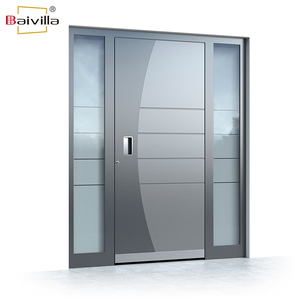
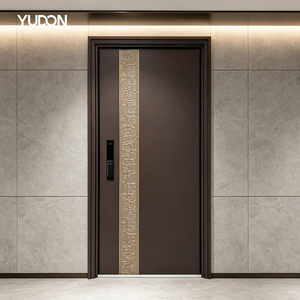
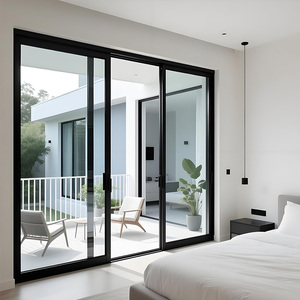
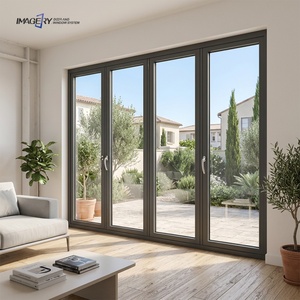
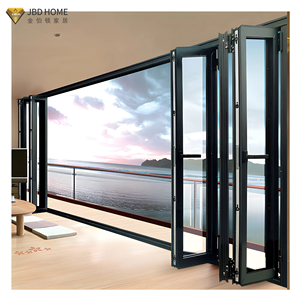
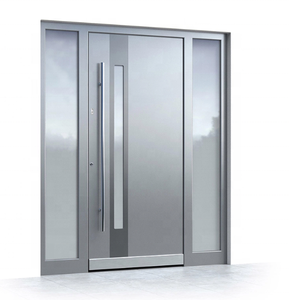
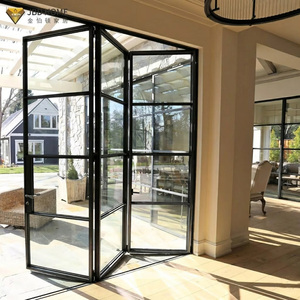
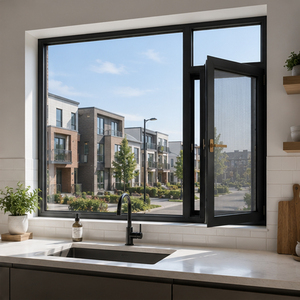
Navigating the Ecosystem of Top China Aluminium Outdoor Doors Manufacturers
In the contemporary architectural landscape, the global demand for high-performance outdoor aluminium door systems has shifted significantly from standard mechanical barriers toward intelligent, ultra-thermally insulated, and hurricane-rated exterior fenestration envelopes. China—specifically the specialized industrial cluster of Foshan, Guangdong—produces over 60% of the world’s architectural aluminum profile solutions. However, evaluating and partnering with top China aluminium outdoor doors manufacturers requires a deep technical understanding of profile extrusion alloys, thermal break polyamide science, surface treatment longevity, and international structural compliance.
As building energy codes tighten globally—such as the EU Energy Performance of Buildings Directive (EPBD) and North American ASHRAE 90.1 standards—outdoor doors can no longer be evaluated merely by visual aesthetics. Modern exterior aluminium entry and patio doors serve as critical structural barriers against thermal transfer, wind-driven rain penetration, seismic displacement, and forced entry. Premier manufacturers like Zenic Window & Door Technology Co., Ltd. have re-engineered standard aluminum doors into multi-layered thermal defense systems using virgin 6063-T5 alloy profiles, structural corner crimping with injected epoxy, and multi-cavity PA66 GF25 thermal breaks.
Future Procurement & Engineering Trends in Outdoor Aluminium Doors
Key technological shifts driving specification choices among architects, facade consultants, commercial developers, and high-end residential builders worldwide.
Ultra-Low Thermal Transmittance (PA66 GF25)
Traditional non-thermal aluminium doors suffer from high thermal conductivity (K-value ~200 W/mK). Sourcing trends favor multi-chamber polyamide thermal breaks (PA66 reinforced with 25% glass fiber), reducing overall system U-values down to 1.1–1.4 W/m²K when combined with Low-E Argon-filled double or triple Insulated Glass Units (IGU).
Narrow Sightline & Panoramic Structural Glazing
Modern architectural design prioritizes ultra-slim interlocking stiles (down to 20mm–25mm sightlines) for panoramic bifolding and lift-sliding doors. To maintain structural integrity against wind pressure (>1,000 N), manufacturers utilize structural glass bonding and reinforced steel insertion inside 2.0mm–3.0mm wall thickness aluminum extrusions.
Biometric & Smart Access Control Integration
Exterior front doors for luxury villas and clubhouses are evolving into IoT security hubs. Sourcing orders increasingly specify embedded 3D facial recognition, optical fingerprint scanners, electronic password keypads, and integrated video intercom systems compatible with smart home protocols (Zigbee, Matter, Control4).
Severe Weather & Hurricane Impact Resistance
With coastal urbanization increasing, global buyers require hurricane-rated exterior doors compliant with AS2047 (Australia) and NFRC/AAMA (North America). Advanced manufacturing involves laminated safety glass (PVB/SGP interlayers), multi-point locking gear boxes, and continuous EPDM double-lip weatherstripping.
High-Durability Coastal Finishes (Qualicoat Class 2)
To resist salt spray corrosion, chalking, and UV degradation in tropical or marine regions, top Chinese factories employ PVDF (Fluorocarbon 3-coat) spraying, anodizing (Class 25), and Qualicoat-certified powder coatings capable of exceeding 3,000 hours of neutral salt spray (NSS) chamber testing.
DFMA & Prefabricated Modular Installation
To mitigate rising overseas jobsite labor costs, developers favor Design for Manufacture and Assembly (DFMA). Outdoor doors are delivered fully assembled, pre-glazed, pre-drilled with installation flanges, and protected in export-grade plywood sub-frames for rapid, plug-and-play field installation.
Why Leading Global Specifiers Partner with Zenic Window & Door Technology
Headquartered in Foshan, Guangdong—the primary capital of China's aluminum extrusion industry—Zenic Window & Door Technology Co., Ltd. operates a modernized 20,000 m² production facility dedicated exclusively to high-end architectural systems. Built on 15+ years of export engineering experience, Zenic bridge-builds the gap between custom architectural design and industrial mass-manufacturing precision.
| Technical Parameter | Zenic Factory Engineering Standard | Standard Commercial Grade Suppliers | Architectural Advantage |
|---|---|---|---|
| Raw Aluminum Billet | 100% Primary Virgin 6063-T5 Alloy (Wall thickness 2.0mm–3.0mm) | Recycled alloy scrap or thin 1.2mm–1.4mm profile walls | Higher structural load capacity, resistance to wind deflection, superior surface coating adhesion. |
| Thermal Insulation | PA66 GF25 Polyamide strip with multi-cavity insulation foam insert | PVC plastic strips or non-thermal solid aluminum frames | Dramatically reduced heat gain/loss, zero interior condensation risk, lower HVAC operational costs. |
| Corner Joint Assembly | Cast aluminum corner keys with pneumatic crimping & 2-component glue injection | Simple mechanical screw joining without liquid sealant | 100% airtight and watertight frame joints that never sag, rack, or leak water under heavy storm pressure. |
| Sealing Gasket System | Continuous EPDM vulcanized rubber gaskets (3-line sealing architecture) | Low-grade PVC or short-lived foam tape strips | Exceptional acoustic insulation (Rw up to 42 dB) and 30+ year resistance to ozone aging and UV cracking. |
| Hardware Load Rating | Heavy-duty stainless steel rollers & multi-point locking gear (200,000 cycles) | Standard single-point latch hardware rated for <20,000 cycles | Smooth fingertip operation for sashes up to 400 kg; high security against forced intrusion (RC2 standard). |
Frequently Asked Sourcing & Engineering Questions
Answers to common procurement, compliance, and technical questions asked by global developers, architects, and importers.
What is the minimum order quantity (MOQ) and standard lead time for OEM projects?
Our baseline Minimum Order Quantity starts from 50 pieces (or 100 square meters) per project schedule. We allow mixed window and door types within one container order to optimize container freight volume. Standard production lead time is 15 to 25 calendar days after shop drawing approval and deposit receipt, depending on surface finish (e.g., custom RAL powder coating vs wood-grain transfer) and glass configuration.
How do Zenic outdoor aluminum doors achieve low U-values for green building energy codes?
Thermal performance is achieved by combining three structural elements: (1) High-grade Polyamide PA66 GF25 thermal break profiles that separate the outer aluminum skin from the inner frame; (2) Insulated Glass Units (IGUs) incorporating Low-E coatings, warm-edge silicone spacer bars, and 90% Argon gas filling; and (3) Multi-cavity perimeter EPDM rubber seal gaskets that eliminate air infiltration.
What international building code certifications do your outdoor doors comply with?
Zenic door systems are engineered and tested to meet international standards across key markets. Our series hold test reports and certifications for NFRC, AAMA, and CSA (North America), AS2047 and AS1288 (Australia & New Zealand), CE Marking (European Union EN 14351-1), and ISO 9001 quality management standards. Full factory submittal packages and test reports are provided during project drawing reviews.
How do you prevent ocean freight corrosion and shipping damage for pre-glazed units?
Every completed door sash and outer frame undergoes strict multi-layer export packaging: First, profiles are wrapped with protective scratch-resistant film and EPE foam corners. Second, units are enclosed in heavy-duty plastic heat-shrink wrapping to seal against ocean air moisture. Finally, products are packed inside fully enclosed, fumigation-free plywood crates equipped with shock-absorbing bottom pallet bases for forklift handling.
Can Zenic customize aluminum door profiles according to architect shop drawings (OEM/ODM)?
Yes. Over 70% of our production consists of customized OEM/ODM projects for commercial developments, residential luxury communities, and brand distributors. Our in-house engineering team uses AutoCAD and SolidWorks to evaluate structural wind load calculations, create custom profile extrusion dies, match precise RAL colors, and integrate third-party smart hardware or locks specified by the buyer.
Request Your Custom Project Quote & System Catalog
Send us your window and door schedules, architectural CAD drawings, or project specifications. Our technical engineering team will review your requirements and provide CAD shop drawings, U-value calculations, and competitive factory-direct pricing within 24 hours.