1. Executive Summary & The Foshan Aluminum Manufacturing Advantage
The global demand for high-performance architectural envelope solutions has transformed how commercial developers, structural engineers, and luxury homebuilders source fenestration products. Aluminum balcony doors represent a critical intersection of structural integrity, thermal efficiency, acoustic attenuation, and modern architectural minimalism. When procuring aluminum balcony doors, global buyers overwhelmingly turn to Foshan, China—the undisputed international epicentre of aluminum profile extrusion, surface treatment, and window system engineering.
China accounts for over 55% of world primary aluminum production, with Foshan housing the highest density of advanced CNC tooling facilities, powder-coating automation, and certified testing laboratories in Asia. Key manufacturers such as Zenic Window & Door Technology Co., Ltd. leverage this vertically integrated supply chain to engineer high-grade thermal break system doors that meet or exceed rigorous international building codes, including North American NFRC/AAMA ratings, European CE EN 14351-1 standards, and Australian AS2047 certifications.
Information Gain Insight: Sourcing directly from top-tier Foshan OEM/ODM manufacturers yields a 35% to 50% cost advantage over European system integrators, without sacrificing technical performance. Modern Chinese system suppliers utilize identical PA66-GF25 polyamide thermal break strips, German-made Siegenia or GU hardware, and AkzoNobel powder coatings.
2. Engineering & Structural Specifications Benchmark
Selecting the optimal balcony door system requires a rigorous evaluation of structural load capacity, thermal conductivity parameters, and weatherproofing geometry. Premium manufacturers engineer their door profiles using primary 6063-T5 architectural grade aluminum alloy, boasting a minimum wall thickness of 2.0mm for load-bearing balcony sashes.
Key Technical Performance Indicators:
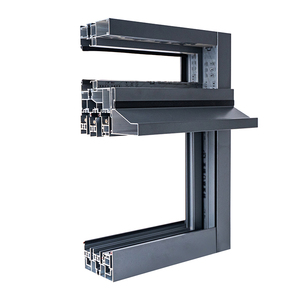
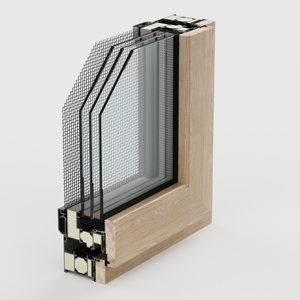
- Thermal Break Integration (PA66-GF25): High-end systems feature 24mm to 34mm multi-chamber Polyamide 66 reinforced with 25% glass fiber. This breaks the thermal bridge between exterior and interior profile surfaces, driving system U-values down to 1.1–1.6 W/m²K.
- Acoustic Isolation (STC / Rw Ratings): Double and triple-glazed units using laminated acoustic PVB interlayers achieve sound transmission class (STC) ratings between 38 dB and 45 dB, keeping urban high-rise balconies quiet and serene.
- Structural & Wind Pressure Resistance: Heavy-duty lift-and-slide door systems are engineered to withstand extreme design pressures up to 5,000 Pa (compliant with ASTM E330 and AS2047 design pressures), rendering them suitable for coastal hurricane zones and super-tall residential towers.
- Multi-Sealing Gasket Architecture: Utilizing ternary EPDM continuous vulcanized rubber gaskets across three sealing layers ensures zero water penetration under cyclic dynamic pressure testing (ASTM E331 air/water infiltration resistance).
| System Type | Frame Depth | U-Value (W/m²K) | Max Glass Specs | Wind Load (Pa) | Ideal Application |
|---|---|---|---|---|---|
| Heavy-Duty Lift & Slide | 110mm – 160mm | 1.1 – 1.4 | 8mm + 16Ar + 8mm Low-E | ≥ 4,500 Pa | Luxury Villas, Coastal Resorts |
| Minimalist Narrow-Stile Sliding | 65mm – 90mm | 1.4 – 1.8 | 6mm + 12Ar + 6mm Toughened | ≥ 3,500 Pa | Modern Condos, Urban Balconies |
| Thermal Break Bi-Fold Door | 75mm – 80mm | 1.3 – 1.6 | 6mm + 16Ar + 6mm Double Pane | ≥ 3,000 Pa | Terrace Openings, Commercial Horeca |
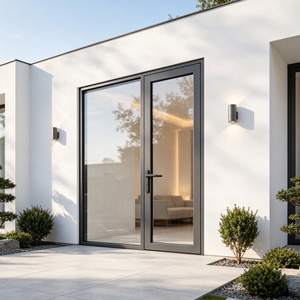
| Outward French Balcony Door | 65mm – 90mm | 1.2 – 1.5 | 6.38 Laminate + 12Ar + 6mm Low-E | ≥ 4,000 Pa | European Style Residential Towers |
3. Modern Manufacturing Technology & Enterprise Capabilities
Leading suppliers operating out of Guangdong province have transitioned from traditional assembly workshops to automated Industry 4.0 production environments. Zenic Window & Door Technology Co., Ltd. exemplifies this transition across its 20,000 m² state-of-the-art facility.
CNC Precision Cutting
German 5-axis CNC machining centers guarantee profile cut tolerances within ±0.1mm, ensuring air-tight corner crimping and perfect hardware alignment.
Qualicoat Powder Coating
Automated vertical spray lines apply AkzoNobel or PPG fluorocarbon (PVDF) finishes, offering 25+ years of resistance against coastal salt spray and harsh UV radiation.
Corner Injection & Glue Pinning
Dual-component corner crimping sealant injection bonds mechanical joints, eliminating water seepage at sash corners under extreme downpours.
4. Future Procurement Trends for Aluminum Balcony Doors (2025–2030)
As architectural trends evolve and international carbon emission standards tighten, structural buyers must align their procurement criteria with upcoming technology shifts:
A. Ultra-Slim Panoramic Sightlines with High Load Capacity
Architects are demanding minimal frame visibility to maximize natural light and unobstructed views. Sourcing focus has shifted to ultra-narrow interlock stiles (as thin as 18mm to 25mm) capable of holding massive glass panels weighing up to 400kg per leaf using stainless steel concealed heavy-duty tandem rollers.
B. Smart Home & Motorized Automation Integration
Modern luxury balcony doors are no longer purely mechanical. Top manufacturers now pre-wire concealed brushless motors into the head frame, allowing integration with KNX, Somfy, or Smart Life automation networks. Magnetic levitation drive systems offer silent opening, obstacle detection, and automatic closing triggered by rain sensors.
C. Low-Carbon Recycled Aluminum & EPD Verification
European and North American developers increasingly require Environmental Product Declarations (EPD). Suppliers utilizing green aluminum smelted via hydropower (with recycled post-consumer aluminum content > 30%) offer lower embodied carbon ratings, helping commercial developments achieve LEED or BREEAM Gold/Platinum certifications.
D. Concealed Water-Equalized Sub-Frame Drainage
Traditional visible drainage caps are being replaced by hidden downward pressure-equalized channel systems. Water drains through step-down sub-frames into concealed outer sills, preventing wind-driven backflow during tropical storms.
5. Step-by-Step Supplier Audit & Procurement Guide for B2B Buyers
Navigating cross-border procurement requires a systematic vetting workflow to eliminate compliance, delivery, and quality risks:
- Step 1: Shop Drawing & Wind Load Submittal Verification
Require the manufacturer's engineering office to provide CAD detail sections and Structural Calculation Reports based on project wind loads (ASCE 7-16 or Eurocode 1). - Step 2: Profile Billet & Hardware Certificate Audit
Ensure the factory uses virgin 6063-T5 aluminum ingots rather than remelted scrap. Audit hardware specifications—demanding genuine German hardware (ROTO, HOPO, SIEGENIA) or premium certified domestic locks. - Step 3: Glass Unit Specification Verification
Glass accounts for 70%+ of door surface area. Specify dual-sealed insulated glass units (IGU) featuring aluminum or warm-edge structural spacers, filled with 90%+ Argon gas and Low-E soft coatings. - Step 4: Pre-Shipment Pre-Assembly Inspection
Require 100% pre-assembly of trial frames at the factory to test smooth locking operation, corner alignment, and gasket continuity prior to seaworthy crating.
Factory Export Packaging Protocol: Zenic protects completed frames with protective film, EPE foam padding, corner armor, and fully enclosed, fumigation-free plywood crates, ensuring zero transit breakage during transoceanic shipping.
6. Frequently Asked Questions (FAQ) for Global Buyers
What is the minimum order quantity (MOQ) for custom project sourcing?
Our standard factory MOQ starts from 50 square meters or 15–20 sets for custom project orders. We support mixed orders containing sliding balcony doors, casement windows, and fixed curtain wall units within a single FCL container.
How do Foshan thermal break balcony doors perform against coastal salt-water corrosion?
All marine-grade export door profiles undergo multi-stage chromate-free pretreatment followed by Qualicoat Class 2 powder coating or PVDF (Fluorocarbon) coating (minimum 40 microns). They are tested for 3,000+ hours in neutral salt spray (NSS) chambers without blistering or color fading.
What is the standard production lead time from deposit to container loading?
Standard lead times range from 15 to 25 calendar days following final CAD shop drawing sign-off and color chip verification. Custom profile die extrusion orders may add 10–14 days to the initial tooling phase.
Can Chinese manufacturers customize door dimensions to fit local regional codes (e.g., USA NFRC or Australia AS2047)?
Yes. Custom engineering is standard practice. Zenic designs door systems tailored specifically to regional installation methods—including nail fin frames for North American timber stud framing, sub-head/sub-sill channels for Australian masonry, and flush threshold drain systems for European passive houses.
How do lift-and-slide doors differ from standard sliding balcony doors?
Lift-and-slide systems utilize specialized gear operators. Turning the handle 180 degrees lifts the entire sash off the rubber weather-seals onto high-load wheels, allowing effortless movement of 300kg+ sashes. When closed, the door lowers back onto continuous gaskets, delivering superior water tightness and acoustic sealing compared to traditional friction sliders.
7. Partnering with Zenic Window & Door Technology Co., Ltd.
As a leading Foshan-based fenestration manufacturer, Zenic Window & Door Technology Co., Ltd. acts as an engineering partner for architects, real estate developers, and building material wholesalers across 40+ countries. Operating out of a modern 20,000 m² production hub, Zenic delivers complete, factory-glazed aluminum window and balcony door systems backed by comprehensive technical support and export documentation.