Featured China Manufactured Aluminum Windows & Doors Systems
Explore our premier range of heavy-duty, thermal break aluminum fenestration systems. Engineered for international structural codes, hurricane resistance, sub-grade moisture proofing, and luxury residential projects.
Engineering Blueprint: Why Architectural Aluminum Dominates Sub-Grade Basement Storm Fenestration
When specifying window systems for sub-grade residential basements, subterranean living spaces, and vulnerable ground-level envelopes, global architectural firms, real estate developers, and wholesale importers face extreme environmental constraints. Unlike standard upper-story fenestration, basement storm windows operate under continuous pressure from subterranean soil moisture, hydrostatic water build-up during heavy rainstorms, thermal bridge condensation, and strict municipal life-safety regulations (such as International Residential Code IRC Section R310 egress standards).
China—and specifically the manufacturing cluster located in Foshan, Guangdong—has become the global epicenter for precision aluminum fenestration. Premier manufacturers such as Zenic Window & Door Technology Co., Ltd. integrate raw aluminum extrusion, multi-cavity thermal break assembly, automated CNC machining, and automated insulated glass unit (IGU) sealing within unified 20,000+ m² facilities. Sourcing directly from top China aluminum basement storm windows manufacturers provides developers with direct access to customizable, laboratory-tested systems at a fraction of Western European or North American fabrication costs.
Sub-Grade Moisture Mitigation & Pressure-Equalized Drainage
Basement environments suffer from chronic dampness and potential storm water ingress during severe weather events. Advanced Chinese manufacturers resolve this through pressure-equalized frame cavities paired with multi-stage EPDM (Ethylene Propylene Diene Monomer) gasket sealing networks. Rather than relying on superficial exterior caulk, these frames utilize stepped internal drainage tracks fitted with one-way check valves that allow trapped condensation and storm overflow to escape outward while blocking wind-driven rain pressures up to 1,000 Pa.
Why Leading Global Specifiers Partner with Foshan Fenestration Hubs
An in-depth look at our technical manufacturing infrastructure, rigorous quality assurance protocols, and global compliance credentials.
Prime 6063-T5 Extrusion Alloys
Utilizing exclusively virgin aluminum billets with strict wall thicknesses between 2.0mm and 3.0mm. Eliminates structural deflection under subterranean earth loading and extreme wind pressure.
PA66-GF25 Polyamide Thermal Strips
Structural thermal breaks using 25% glass-fiber reinforced polyamide (PA66-GF25) isolate interior and exterior profiles, reducing thermal conductivity to achieve U-values down to 1.1 W/m²K.
Global Compliance & Testing
Certified to international fenestration standards including NFRC, CE marking, CSA, AS2047 (Australia), AAMA, and ISO 9001 quality management protocols.
Integrated CNC & Corner Crimping
Precision automated 45° corner crimping combined with dual-component structural corner adhesives guarantees 100% airtight, liquid-tight frame integrity under sub-grade conditions.
Heavy Export Freight Packaging
Units are individually wrapped in protective EPE buffer foam, fitted with reinforced plastic corner guards, and sealed in solid fumigation-free plywood crates for zero-damage global delivery.
Direct OEM/ODM Engineering Support
Bespoke CAD profile customization, tailored architectural powder coating (AkzoNobel / PPG finishes), and custom hardware configuration tailored to regional buyer codes.
Future Procurement Trends for Global Basement Storm Window Sourcing
As international building codes become increasingly stringent regarding energy efficiency targets (such as the EU Energy Performance of Buildings Directive and Net-Zero Ready Homes in North America), the global procurement strategy for sub-grade fenestration is undergoing rapid evolution. Purchasing directors, architectural specifiers, and construction project managers must align with four core future trends:
1. Transition to Vacuum Insulated Glass (VIG) & Triple-Pane Low-E Units
Standard double-pane glazing is rapidly giving way to triple-pane IGUs filled with 90%+ Argon gas and double silver Low-E coatings. Looking toward 2026-2030, Vacuum Insulated Glass (VIG)—which features a micro-vacuum gap providing thermal insulation equivalent to solid masonry walls—is emerging as the gold standard for basement storm windows. Chinese suppliers are investing heavily in automated VIG manufacturing lines, enabling ultra-thin glazing units that achieve U-values under 0.6 W/m²K without heavy frame depths.
2. Stringent Egress & Multi-Functional Life-Safety Integration
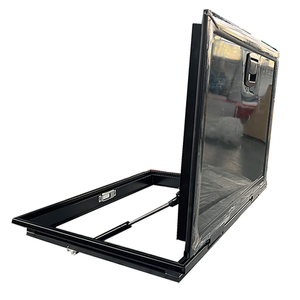
Municipal building inspectors in North America and Europe now strictly enforce emergency escape and rescue opening (Egress) standards for all sub-grade habitable bedrooms. Sourcing directors are prioritizing specialized Inswing Tilt-and-Turn and Smart-Hatch Emergency Egress Aluminum Windows. Future procurement contracts require dual-action hardware systems capable of full 90-degree clear opening under emergency conditions while maintaining child-safety limiting latches and heavy-duty multi-point security locking during normal operation.
3. Low-Carbon Aluminum Sourcing & CBAM Compliance
With the implementation of the European Union's Carbon Border Adjustment Mechanism (CBAM) and corporate ESG initiatives worldwide, buyers are scrutinizing the carbon footprint of structural metals. Future-ready Chinese manufacturers are transitioning to hydro-powered and solar-powered aluminum smelting facilities, utilizing low-carbon primary aluminum billets with full Environmental Product Declarations (EPDs). Sourcing from carbon-audited suppliers ensures seamlessly clear import customs clearance.
4. Smart Micro-Ventilation & Sensor-Integrated Storm Frames
Basements are prone to Radon gas accumulation and elevated relative humidity. Future procurement demands feature aluminum window frames pre-engineered with smart trick-ventilation channels and automated moisture sensors. These systems monitor indoor air quality and actuate motorized micro-opening mechanisms during safe weather conditions, closing and locking automatically upon rain sensor trigger events.
Technological Innovations Driving Next-Generation Basement Fenestration
Manufacturing technological trends in China's fenestration sector are centered on structural longevity, aesthetic minimalist design, and extreme environmental resistance. Key technological developments include:
AAMA 2605 Fluoropolymer Surface Coatings
Basement windows near ground level face continuous exposure to lawn chemicals, dirt splatter, de-icing salts, and UV radiation. Next-generation aluminum extrusions utilize FEVE and PVDF fluoropolymer coatings tested to AAMA 2605 specifications. These coatings withstand over 3,000 hours of continuous salt spray testing (ASTM B117) without chalking, fading, or film integrity degradation.
Acoustic Soundproofing Engineering (STC 40+ dB)
As urban basements are converted into luxury home theaters, office suites, and rental apartments, sound isolation is paramount. Modern aluminum storm windows incorporate asymmetrical glass thickness configurations (e.g., 6mm outer + 12Ar + 8mm inner laminated glass) alongside multi-chamber EPDM seals to achieve Sound Transmission Class (STC) ratings exceeding 42 dB, effectively muting street noise and lawn equipment.
Hidden Concealed Hinge Systems
Eliminating traditional exposed surface hinges removes thermal bridge pathways and improves burglar resistance. Concealed heavy-duty stainless steel hinge friction stays support sash weights up to 120 kg while allowing a completely flush interior frame aesthetic.
High-Security RC2 / RC3 Burglar Resistance
Basement windows are prime targets for intrusion. Modern Chinese aluminum storm windows are engineered with multi-point mushroom-head locking cams, anti-pry corner keeps, and laminated security glass that resist physical break-in attempts in compliance with European EN 1627 RC2 and RC3 standards.
B2B Material Comparison: Basement & Storm Fenestration Matrix
Technical comparison evaluating standard material performance parameters under subterranean and severe storm environmental conditions.
| Performance Criteria | Architectural Thermal Aluminum | Vinyl (uPVC) | Structural Steel | Solid Timber / Wood |
|---|---|---|---|---|
| Tensile Yield Strength | High (>110 MPa) | Low (~35-45 MPa) | Very High (>250 MPa) | Moderate (~40 MPa) |
| Sub-Grade Moisture Resistance | Immune (Zero Rust/Rot) | Immune to rot | Vulnerable to oxidation/rust | Highly vulnerable to rot/mold |
| Frame Dimensional Stability | Excellent (Minimal Expansion) | Poor (High Thermal Expansion) | Excellent | Poor (Swells with humidity) |
| Thermal Insulation (U-Value) | 1.1 - 1.6 W/m²K (Thermal Break) | 1.3 - 1.8 W/m²K | 2.5 - 5.0 W/m²K (Poor) | 1.4 - 1.9 W/m²K |
| Storm Wind Pressure Resistance | Up to 5,000 Pa (Hurricane) | Up to 2,000 Pa | Up to 6,000 Pa | Up to 2,500 Pa |
| Profile Sightline Width | Ultra-Slim (Max Daylight) | Bulky & Thick | Ultra-Slim | Thick Frame Depth |
| Design Service Life | 40 - 50+ Years | 15 - 20 Years | 25 - 30 Years (Maintained) | 15 - 25 Years |
Frequently Asked Questions (FAQ) for Overseas Buyers
Detailed technical and logistics answers addressing common inquiry intent from international importers, contractors, and developers.
Partner with Foshan’s Premier Aluminum Window Manufacturing Facility
With over 15 years of dedicated manufacturing experience, Zenic Window & Door Technology Co., Ltd. stands as an industry leader in engineering high-performance thermal break aluminum window systems, security entrance doors, and architectural shading solutions. Operating from our state-of-the-art 20,000 m² production hub in Foshan, China, our certified engineering team supports project partners across more than 40 countries—delivering structural reliability, energy savings, and uncompromised architectural beauty.
Ready to Elevate Your Project Fenestration Specifications?
Send us your window schedule, elevation drawings, or OEM requirements today. Our senior structural engineers will review your specs and provide a comprehensive CAD submittal, compliance analysis, and factory-direct price quotation within 24 hours.