Product Catalog
Engineered Aluminum Window & Door Systems
Precision-fabricated high-performance fenestration solutions tested to international energy and structural standards.
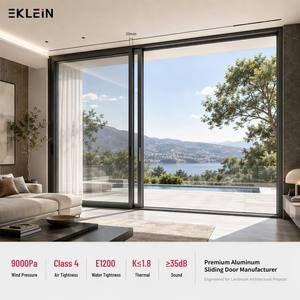
Minimalist Black Frame Aluminum Sliding Door Narrow Profile Divider
Get a Quote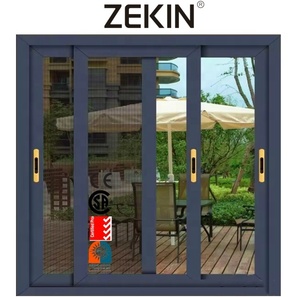
Sliding Window Hurricane Impact Proof Aluminum Energy Efficient NFRC AS2047 Glass Sliding windows Double Glass Aluminum Window
Get a Quote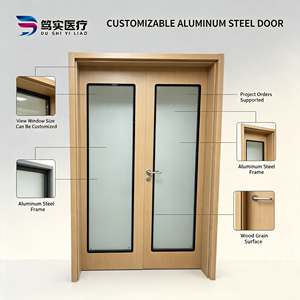
Dushi Custom Wood Grain Aluminum Alloy Double Swing Door Large Size Observation Tempered Glass Window Modern Antibacterial
Get a Quote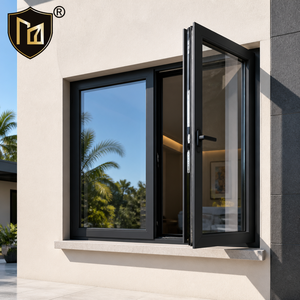
Hurricane Impact Outward Open Aluminum Casement Window Thermal Break Double Glazed NFRC CE AS2047 Modern Villa Exterior OEM
Get a Quote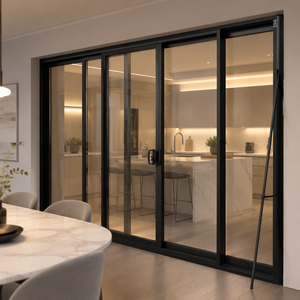
Customized Size Sliding Doors Double Glass Aluminum Doors Heat Insulation Energy Efficient Balcony Sliding Patio Door for Sale
Get a Quote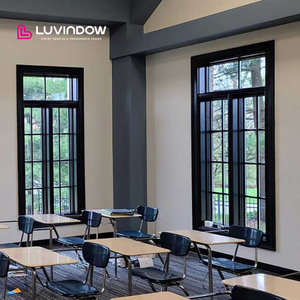
American Style Double Safety Glass Residential Window Aluminum Clad Wood Crank Open Windows
Get a Quote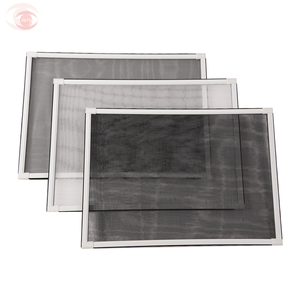
Hot Selling Adjustable Expandable Aluminum Door Windows Accessories Fly Insects Mosquito Mesh Sliding Screen Window Frame Kit
Get a Quote
Executive Sourcing Report
Navigating the Sourcing Landscape for China Aluminum Glazed Windows
The global architectural fenestration sector has undergone a profound transformation. As building codes worldwide tighten thermal envelope metrics—demanding lower U-factors, superior Solar Heat Gain Coefficients (SHGC), and strict air-tightness ratings—selecting a qualified China aluminum glazed windows factory and supplier has evolved from a basic commercial transaction into a critical risk-management discipline. China, particularly the industrial clusters within Foshan, Guangdong, accounts for over 45% of global architectural aluminum profile extrusions and finished assembly exports. However, navigating this vast ecosystem requires a deep technical understanding of profile metallurgy, polyamide thermal barrier integration, glass processing standards, and international compliance matrices.
Modern architectural projects—ranging from high-density multi-family residential towers to luxury coastal villas—no longer tolerate legacy aluminum frames that act as thermal bridges. Leading Chinese OEMs now leverage advanced 6063-T5 virgin aluminum alloys combined with PA66GF25 (25% glass-fiber reinforced polyamide) thermal break strips, enabling window systems to achieve total assembly U-values below 1.1 W/m²K. This document serves as an enterprise-grade procurement whitepaper for architects, structural engineers, real estate developers, and commercial building material importers seeking to audit, qualify, and partner with top-tier Chinese fenestration manufacturers.
1.1 W/m²K
Ultra-Low U-Value Capability
5000 Pa
Peak Wind Load Resistance
PA66 GF25
Structural Thermal Barrier
200K Cycles
Hardware Endurance Test
1. Technical Audit: Metallurgical and Structural Integrity
The foundation of any structural architectural window system lies in the chemical composition and mechanical temper of its aluminum profiles. Top-tier manufacturers in China strictly utilize virgin 6063-T5 or 6060-T6 architectural grade aluminum alloys. Lower-tier suppliers frequently blend scrap aluminum, introducing impurities such as excess iron or copper, which drastically compromises corrosion resistance and leads to premature oxide layer breakdown in coastal environments.
Structural wall thickness is another non-negotiable metric. To comply with rigorous international testing standards such as North America’s AAMA/WDMA/CSA 101/I.S.2/A440 or Australia’s AS2047, load-bearing window sashes must maintain profile wall thicknesses ranging between 1.4mm to 2.0mm for residential units, and up to 3.0mm for heavy-duty commercial curtain walls or panoramic sliding doors. When evaluating a prospective Chinese factory, procurement teams must verify the factory's internal extrusions via Mill Test Certificates (MTC) and Tensile Yield Strength reports (ensuring yield strengths exceed 110 MPa for T5 tempers).
| System Class | Frame Depth Range | Structural Wall | Thermal Break Strip | Glazing Configuration | Target U-Value |
|---|---|---|---|---|---|
| Standard Commercial | 60mm - 75mm | 1.4mm - 1.6mm | 14.8mm PA66GF25 | 5mm + 12A + 5mm Low-E | 1.8 - 2.2 W/m²K |
| High-Thermal Residential | 80mm - 90mm | 1.8mm - 2.0mm | 24mm - 34mm PA66GF25 | 6mm + 16Ar + 6mm Triple Low-E | 1.1 - 1.4 W/m²K |
| Hurricane Impact System | 100mm - 120mm | 2.0mm - 3.0mm | 32mm Multi-Chamber | 6mm Toughened + 1.52SGP + 6mm + 12A + 6mm | 1.2 - 1.5 W/m²K |
| Passive House / Ultra-Low Energy | 110mm - 150mm | 2.2mm - 3.0mm | 39mm Aerogel Filled | Triple IGU with Warm Edge Spacers | < 0.8 W/m²K |
2. Thermal Break Engineering and Glazing Integration
Conduction through metal frames accounts for up to 30% of standard building envelope thermal loss. China’s premier window manufacturers solve this challenge using multi-cavity polyamide thermal barriers. Unlike cheap PVC strips—which expand and contract at rates radically different from aluminum, leading to frame delamination and seal failure—high-grade PA66GF25 thermal break strips exhibit a thermal expansion coefficient virtually identical to aluminum alloy. This ensures structural integrity under extreme diurnal temperature swings from -30°C to +80°C.
In terms of glass integration, leading Chinese fenestration suppliers house fully automated Insulated Glass Unit (IGU) processing lines. Modern high-efficiency glazed units combine double or triple toughened safety glass with double-silver or triple-silver Low-Emissivity (Low-E) soft coatings (such as PPG Solarban series equivalents). The space between glass panes is filled with 90%+ concentration Argon gas and sealed with continuous warm-edge spacer bars (e.g., Technoform or Swisspacer) to eliminate edge-seal condensation and lower thermal conductivity.
CNC Precision Crimping
Automated dual-corner crimping machines utilizing injected cast-aluminum corner keys and dual-component polyurethane corner adhesive (e.g., Weiss Cosmogran) guarantee airtight, watertight frame joinery.
EPDM Triple-Seal Gaskets
Continuous synthetic EPDM rubber gaskets (co-extruded with foam rubber cores) provide seamless perimeter air sealing, preventing air infiltration and reducing acoustic transmission up to STC 45 dB.
Fluorocarbon PVDF Powder Coating
Surface treatment lines utilizing AkzoNobel or PPG Qualicoat Class 2 / Class 3 certified PVDF fluorocarbon coatings provide 25+ years of resistance against color fading, salt spray corrosion, and severe UV degradation.
Concealed Drainage Sub-Tier
Advanced pressure-equalized hidden drainage slots prevent rain wind-backpressure from driving water into the interior envelope, accommodating rainfall intensities exceeding 500 mm/hr.
Multi-Point Security Locks
Hardware integration with tier-1 global brands (Siegenia, Hoppe, Roto) and premium Chinese engineered hardware (CMECH, Kin Long) provides multi-point mushroom head locking systems rated to PAS 24 security standards.
Structural Silicone Structural Glazing
Factory silicone application using Dow Corning / Dowsil 983 two-part structural silicone adhesive ensures high dynamic load distribution for frameless glass facades and hurricane impact systems.
Industry Insight
Future Sourcing & Procurement Trends (2025–2030)
As international carbon border adjustments and zero-carbon building mandates take effect, the global sourcing matrix for architectural fenestration is shifting rapidly. Importers and procurement directors must align with Chinese factories that actively adopt next-generation technologies:
A. Ultra-Narrow Sightlines & Minimalist Panoramic Systems
Architectural demand is moving aggressively toward invisible frame profiles. Modern minimalist sliding doors now feature interlocking stile widths down to 18mm, while supporting single glass panels weighing up to 500 kg via motor-assisted lift-and-slide stainless steel roller systems. Factories capable of maintaining micro-tolerances (+/- 0.5mm across 6-meter profile spans) are capturing high-end residential export market share.
B. Vacuum Insulated Glass (VIG) Integration
While traditional double glass IGUs rely on 12mm to 16mm argon gas gaps, Vacuum Insulated Glass (VIG) creates a 0.1mm micro-vacuum seal between two glass sheets. This achieves a revolutionary glass center U-value of 0.4 to 0.6 W/m²K in a profile thickness less than half that of standard triple glazing. Forward-thinking Foshan factories are currently retrofitting assembly jigs to accommodate VIG profiles for European and North American cold-climate projects.
C. Smart Building Automation & Integrated Shading
Sensors embedded directly into aluminum frames are transforming passive windows into active building management nodes. Automated motorized actuators driven by RS485 or wireless Zigbee/KNX protocols interface with central HVAC systems to enable natural night-purge ventilation. Additionally, integrated motorized magnetic blind systems sealed within cleanroom IGUs eliminate maintenance while offering dynamic solar heat gain control.
Manufacturing Audit
Factory Footprint & Quality Management Protocol
Located in the heart of China’s aluminum processing hub—Foshan, Guangdong—Zenic Window & Door Technology Co., Ltd. operates a modern 20,000 m² integrated production campus engineered specifically to serve overseas architectural, commercial, and wholesale procurement standards.
Unlike regional workshops operating manual chop saws and basic screw jigs, Zenic’s production floor is equipped with fully automated 5-axis CNC machining centers (Elumatec/Emmegi equivalents) that execute profile cutting, lock mortising, water slot milling, and hinge hole drilling in a single continuous clamping pass. This guarantees absolute dimensional accuracy, eliminate human error, and ensures micro-precise corner crimping alignment across complex window schedules.
Global Testing & Certification Compliance Matrix
To ensure frictionless customs clearance and local building code approval, Zenic fenestration series undergo rigorous third-party physical testing verified by recognized international laboratory authorities:
- North America (NFRC / AAMA / CSA): Tested for thermal transmittance (U-factor), solar heat gain coefficient (SHGC), air leakage (ASTM E283), structural wind load (ASTM E330), and water penetration resistance (ASTM E547). Certified hurricane impact series feature laminated SGP Interlayer glass passing Florida TAS 201/202/203 missile impact tests.
- Australia & New Zealand (AS2047 / AS1288): Verified frame deflection strength under extreme wind pressures (N6 rating up to 5,000 Pa deflection pressure), water resistance reaching 700 Pa, and glass compliance with human impact safety codes.
- Europe (CE EN 14351-1): Full compliance with EU construction product regulations, featuring low-emissivity glass certifications, air permeability Class 4, and water tightness Class E900.
- ISO 9001:2015 Quality Management System: Every order follows a strict 14-step Quality Control protocol spanning raw aluminum billet spectrometry inspection, powder coating thickness checks (minimum 60-80 microns), corner joint tensile testing, and 100% pre-assembly mock-up testing prior to export crating.
Buyer Knowledge Base
Frequently Asked Sourcing & Technical Questions
Essential technical answers for real estate developers, contractors, architects, and building material distributors.
What is the Minimum Order Quantity (MOQ) and sample lead time for custom project orders?
Our standard project MOQ starts from 50 pieces or 100 square meters. Importers may combine multiple fenestration types (e.g., casement windows, sliding doors, fixed glazing) within a single container shipment. Custom profile shop drawings are completed within 48 hours, and physical hand-held cut corner samples or full-size prototype units are dispatched within 7–10 working days.
How does your factory ensure profile color consistency across large multi-container orders?
We maintain strict raw powder quality control by partnering exclusively with Qualicoat-approved coating suppliers (AkzoNobel, Tiger, Jotun). All profiles are treated via automated vertical coating lines with computerized digital powder dosing. Every batch is verified using spectrophotometers to guarantee color difference delta E < 0.5 under D65 daylight standards.
What thermal U-value performance can your windows achieve for cold climate zones?
By utilizing 80mm+ profile depths integrated with 34mm multi-cavity PA66GF25 polyamide thermal break strips, warm-edge spacers, and triple-pane IGU glass (featuring dual Low-E coatings filled with Argon gas), our window assemblies achieve certified overall U-factors as low as 1.1 W/m²K (0.19 BTU/h·ft²·°F). Custom passive-house lines can reach U-values < 0.8 W/m²K.
What packaging protocols protect large glazed units from breakage during ocean freight container transit?
Finished windows undergo a 5-layer export protective wrapping process: (1) Surface protective film on all metal profiles, (2) EPE foam corner guards, (3) Vacuum plastic wrap enclosing the unit, (4) Heavy-duty corrugated cardboard casing, and (5) Custom-built IPPC-certified fumigated solid wooden crates or steel-framed A-frame transport racks loaded via specialized forklift equipment. Glass breakage rate across international freight routes is maintained below 0.1%.
Can your factory produce OEM/ODM custom profiles to match existing architectural specifications?
Yes. Over 60% of our production output consists of OEM/ODM custom manufacturing. Our in-house tooling facility can design and extrude custom aluminum profile dies within 14 days based on your CAD/BIM specifications. We also support private labeling, custom hardware branding, custom carton printing, and bespoke extrusion die ownership agreements.
What is your typical production lead time from order confirmation to sea freight dispatch?
Standard manufacturing lead times range from 15 to 25 working days following final CAD shop drawing sign-off and deposit confirmation. For custom anodized or specialty wood-grain finishes, lead time is typically 25 to 30 days. We ship FOB Foshan, Shenzhen, or Guangzhou ports, and can arrange DDP/DAP door-to-jobsite logistics for North American, European, and Australian project destinations.
Accelerate Your Project Sourcing Today
Submit your architectural window schedule or project elevations. Our fenestration engineering team will review your specs and deliver structural feedback, U-value calculations, and factory-direct pricing within 24 hours.