Featured Architectural Systems
Factory-direct thermal break window units, heavy-duty sliding systems, and structural fixed glazing engineered to international building codes.
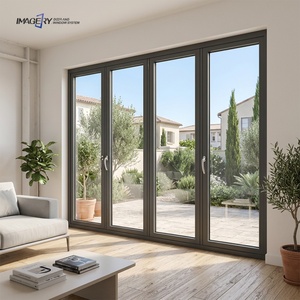
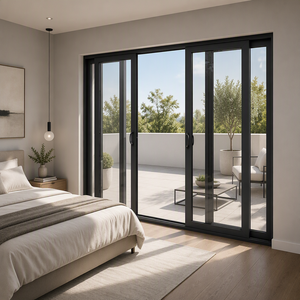
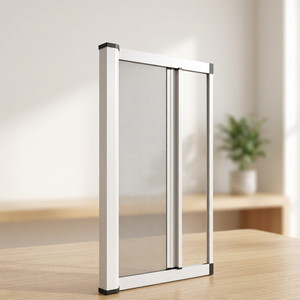
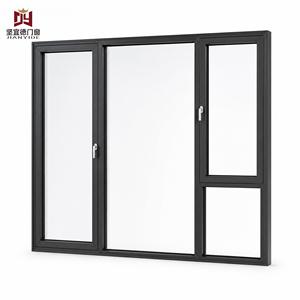
Architectural-Grade Aluminum Fixed Glass Windows: Technical Standards
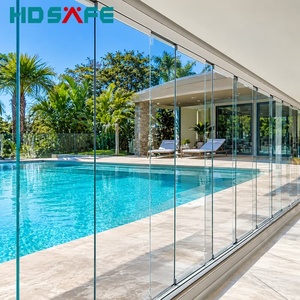
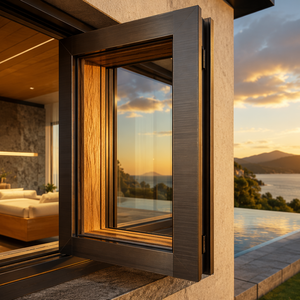
In modern high-performance architecture, aluminum fixed glass windows (often specified as picture windows or architectural vision glazing) serve as crucial envelope components. Unlike operable fenestration units requiring complex mechanical sashes, fixed glass window assemblies are permanently secured within structural aluminum frames. This design maximizes natural daylight penetration, enhances structural rigidity, and eliminates air infiltration vulnerabilities inherent to operable joints.
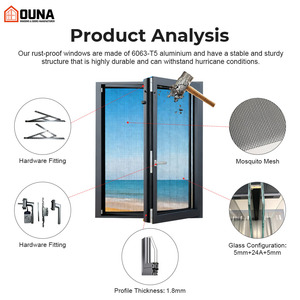
As a leading export-oriented manufacturing base in Foshan, China—Zenic Window & Door Technology Co., Ltd. engineers thermal break aluminum fixed glazing systems engineered explicitly for high-wind loads, stringent thermal mitigation, and demanding acoustic damping across North American, European, Australian, and Middle Eastern climate zones. By utilizing virgin 6063-T5 aluminum alloy extrusions paired with multi-chamber polyamide thermal barriers (PA66-GF25), our fixed window systems offer structural stability with deflections restricted under heavy dynamic wind pressure loads ($L/175$ or $L/240$ structural criteria).
From custom architectural villas to high-rise commercial curtain wall transitions, fixed frame windows serve as the benchmark for energy conservation. Because the unit contains no moveable sashes, the thermal bridge is confined strictly to the perimeter frame profile and the glass edge spacer zone. When combined with insulated glass units (IGUs) incorporating low-emissivity (Low-E) soft coatings, warm-edge spacers, and argon gas filling, overall thermal transmittance ($U_w$) can be engineered down to an impressive 1.1 W/m²K.
Engineering Features & Performance Metrics
Virgin 6063-T5 Profile Integrity
Extruded from 100% primary aluminum billet with wall thicknesses ranging from 2.0 mm to 3.0 mm. Guarantees maximum yield strength, resistance to dynamic wind forces, and zero structural deflection over decades of load exposure.
Polyamide Thermal Barriers
Integrated PA66-GF25 structural fiberglass-reinforced polyamide strips physically isolate the interior and exterior aluminum frames, effectively stopping conductive heat transfer and eliminating interior condensation risks.
Triple-Sealed EPDM Gaskets
Continuous synthetic rubber seals manufactured from automotive-grade EPDM form a pressurized defense barrier against water entry, wind driven rains, and sound transmission (STC ratings up to 45 dB).
Comprehensive Technical Specifications Matrix
Detailed engineering benchmarks across ZENIC fixed glass window profile series.
| Performance Vector | Standard Specification | High-Performance / Commercial Upgrade | International Compliance Standards |
|---|---|---|---|
| Aluminum Alloy Grade | 6063-T5 Prime Billet (2.0mm wall) | 6063-T6 Structural Reinforcements | ASTM B221 / GB 5237 |
| Thermal Transmittance ($U_w$) | 1.4 - 1.8 W/m²K (Double Glazed) | 1.1 - 1.2 W/m²K (Triple Low-E + Argon) | NFRC 100 / EN ISO 10077 |
| Air Infiltration / Permeability | Class 4 (ASTM E283 ≤ 0.1 cfm/ft²) | Air Tightness ≤ 0.05 m³/(m·h) | AAMA / WDMA / CSA 101 / AS2047 |
| Water Resistance Pressure | 450 Pa (Passes ASTM E331) | up to 750 Pa Static / Dynamic Pressure | BS EN 12208 / AS4420 |
| Acoustic Insulation Damping | STC 35 / OITC 29 | STC 42 - 46 (Laminated Acoustic Glass) | ASTM E90 / ISO 140-3 |
| Surface Finish Durability | Qualicoat Class 1 Powder Coating | AAMA 2605 Fluoropolymer (PVDF) 3-Coat | AAMA 2604 / 2605 / ISO 2360 |
Future Procurement Trends in Commercial Glazing (2025–2030)
As global building codes pivot rapidly toward net-zero operational carbon and embodied carbon transparency, the architectural specification landscape for aluminum fixed glass windows is undergoing significant evolution. B2B importers, real estate developers, and facade contractors are no longer sourcing windows solely based on initial purchase cost. Instead, structural procurement strategies focus on four mega-trends:
1. Embodied Carbon & EPD Transparency: Aluminum is an energy-intensive metal to refine, making recycled content and clean-energy smelting critical procurement metrics. Forward-thinking buyers prioritize manufacturers capable of supplying Environmental Product Declarations (EPDs) demonstrating low embodied carbon (< 4.0 kg CO2e/kg aluminum) achieved via hydro-powered extrusion billets.
2. BIM Integration & Modular Off-Site Prefabrication: To combat rising site labor costs in North America, Europe, and Australia, window assemblies are being specified as fully glazed, prefabricated modular panels. Factories must deliver units with tight tolerances (± 1.0mm) ready for immediate crane hoisting and clip-in structural anchoring, backed by comprehensive Building Information Modeling (BIM) LOD 350 objects.
3. Extreme Weather Resilience & Impact Engineering: Dynamic global climate shifts have elevated requirements for structural wind-load pressure resistance and missile impact ratings. Coastal region developments now require fixed glass window systems tested under Florida Miami-Dade TAS 201/202/203 protocol or Australian AS1170.2 cyclonic standards, utilizing heavy laminated glass combinations ($8mm\ \text{Tempered} + 1.52mm\ \text{SGP} + 8mm\ \text{Tempered}$).
4. Smart Tinting & Electrochromic Integration: The integration of dynamic glazing (EC glass) into fixed aluminum profile frameworks enables buildings to adjust Solar Heat Gain Coefficient (SHGC) dynamically from 0.41 down to 0.09 without motorized interior shading, drastically lowering peak summer HVAC cooling requirements.
Enterprise Manufacturing Dominance: Foshan Production Base
Situated in Foshan, Guangdong Province—the epicenter of global industrial aluminum processing—Zenic Window & Door Technology Co., Ltd. spans over 20,000 square meters of specialized manufacturing footprint. Our integrated operational chain consolidates architectural profile extrusion, precision CNC machining, automatic corner crimping, structural silicone bonding, automated IGU assembly, and rigorous quality assurance under one standardized roof.
Our commitment to global E-E-A-T (Experience, Expertise, Authoritativeness, Trustworthiness) standards is backed by physical testing credentials and international certifications:
Precision CNC Fabrication
Utilizing 5-axis German-machined CNC milling centers, frame components are cut, routed, and prepunched with sub-millimeter precision to guarantee seamless corner joining and flawless structural alignment.
Rigorous Multi-Gate QC
100% of finished window frames undergo water tightness testing, structural squareness checks, powder coat thickness verification (ELCOMETER), and optical glass distortion inspections prior to crating.
Export-Grade Protective Packaging
To eliminate maritime shipping damages, window units are sealed in EPE protective wrap, fitted with structural plastic edge guards, and encased within fumigation-free solid plywood crates featuring heavy-duty lifting straps.
B2B Procurement & Engineering FAQ
Answers to critical questions asked by architectural specifiers, developers, and trade importers.
Accelerate Your Architectural Project With Direct Factory Supply
Submit your project window schedules, structural elevations, or architectural tender requirements. Our engineering team will return comprehensive shop drawings, structural calculations, and factory-direct pricing within 24 hours.
Contact Us