NFRC Certified
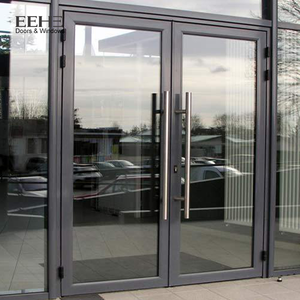
EEHE NFRC Certified Aluminum Double Swing Door Sound Insulation Commercial Patio Entrance Doors
Sound Rating: STC 42 dB
Glass Type: Double Insulated
Examine our high-performance storefront entrances engineered for extreme durability, wind-load resistance, sound insulation, and thermal efficiency.
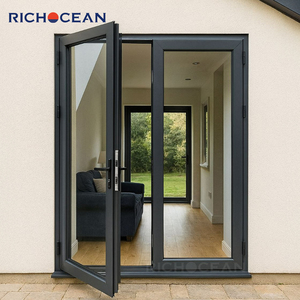
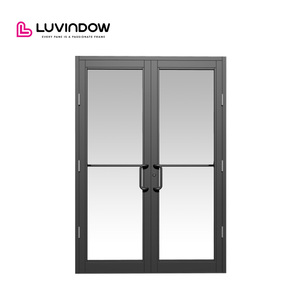
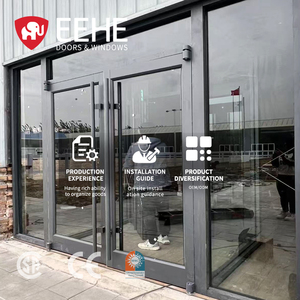
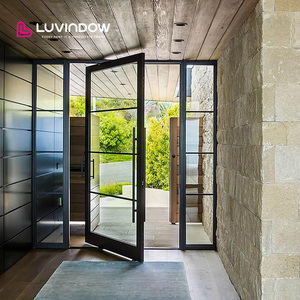
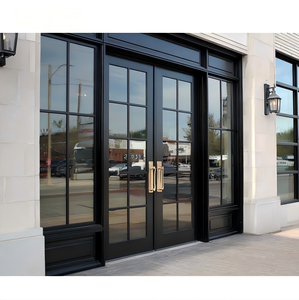
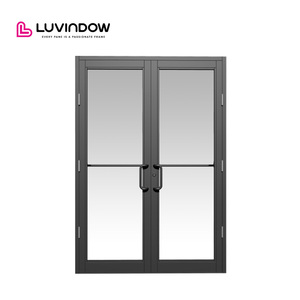
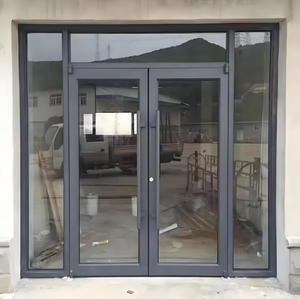
Headquartered in Foshan, China—the world's capital for aluminum extrusions and structural glass engineering—ZENIC Window & Door Technology Co., Ltd. supplies verified storefront assemblies built to withstand extreme mechanical loads and strict thermal codes.
We utilize 100% virgin 6063-T5 structural aluminum alloys with minimum 2.0mm wall thickness. Scrap metal is strictly banned to prevent micro-cracking and guarantee maximum tension resistance under structural wind load pressure.
Our storefront profile systems integrate imported PA66GF25 (25% glass fiber reinforced polyamide) thermal break strips. This mitigates conductive thermal bridge transfer, eliminating interior condensation and sharply dropping commercial HVAC energy loads.
Every production run undergoes strict quality control. Our products hold lab-tested verification and certifications across NFRC (North America), CE (Europe), AS2047 (Australia), CSA (Canada), and ISO 9001 quality management benchmarks.
Modern retail storefronts have shifted from simple visual barriers into multi-functional, energy-generating, high-security structural skins. Here is how modern metallurgical and glass engineering is redefining storefront specs.
Modern commercial shop fronts are rapidly incorporating Polymer Dispersed Liquid Crystal (PDLC) switchable smart glass. By applying a low-voltage current, storefronts dynamically transition from transparent showroom displays during operational hours to opaque privacy barriers off-hours, providing instant security without aesthetic compromise.
Traditional thick aluminum face plates are giving way to structural silicone glazing (SSG) and narrow frame profiles (down to 25mm visible sightlines). Utilizing high-modulus structural adhesives allows the glass to carry part of the wind shear load, achieving expansive clear-span glass heights up to 4.5 meters without structural deflection.
Coastal extreme weather events have driven strict adoption of ASTM E1886/E1996 and Florida Building Code (FBC) impact standards. Next-gen storefront swing and automatic doors utilize SentryGlas® (SGP) ionoplast interlayers, preventing structure breach even when impacted by large missile debris at 34 m/s.
A critical weakness in conventional commercial shop fronts is the floor threshold. Cold air migrates directly through solid aluminum sills. ZENIC’s engineering team utilizes a dual-component thermal-break threshold incorporating a heavy-duty polyamide strip with EPDM continuous wiper gaskets, achieving zero frost line formation and preventing water ingress up to 750 Pa pressure differential.
| Performance Parameter | Standard Commercial Storefront | ZENIC High-Performance Thermal Storefront | Architectural Advantage |
|---|---|---|---|
| Aluminum Alloy Profile | Recycled 6063-T5 (1.4mm - 1.6mm) | Virgin 6063-T5 (2.0mm - 3.0mm) | High structural integrity, no frame twist under high usage |
| Thermal Transmittance (U-Value) | 3.5 - 4.8 W/m²K | 1.1 - 1.8 W/m²K | Reduces commercial HVAC electricity consumption by up to 35% |
| Sound Transmission (STC) | 28 - 32 dB | 38 - 44 dB | Crucial for hotel entrances, urban retail, and busy street fronts |
| Gasket & Sealing System | Standard PVC / Rubber Strips | Continuous Co-Extruded EPDM Gaskets | Superior weatherability, UV protection, and 25-year non-aging life |
| Hardware & Hinge Rating | 50,000 Cycles (Standard Offset Pivots) | 200,000+ Cycles Heavy Duty Bearings | Prevents door sags and latching alignment failures in retail hubs |
Commercial building owners, main contractors, and project developers are shifting their procurement strategies. Understanding these macroeconomic trends ensures your project remains future-proof.
Global green building certifications such as LEED v4.1, BREEAM, and WELL require Environmental Product Declarations (EPD). Future storefront procurement will demand full transparency regarding embodied carbon across profile extrusion, anodizing, and glass manufacturing.
Due to rising job-site labor costs in North America, Western Europe, and Australia, developers are abandoning stick-built storefronts. Factory-assembled, fully glazed unitized shop front assemblies shipped in ocean-ready crates are becoming the industry standard.
Manual swing doors are increasingly retrofitted or specified with concealed automated swing operators, facial recognition access control, and motorized multi-point lock latching system tie-ins connected to central Building Management Systems (BMS).
Rather than selecting vendors strictly on initial unit purchase price, procurement teams evaluate long-term maintenance costs, hardware replacement cycle availability, gasket lifespan, and warranty backing over a 15 to 25-year operational lifecycle.
Direct technical answers to common queries raised by international buyers, facade consultants, and general contractors.
Our baseline Minimum Order Quantity (MOQ) starts at 50 sets/pieces per project order. However, mixed product categories (e.g., combining commercial swing entrance doors with storefront curtain wall profiles or casement windows) within a single container loading are fully supported. Standard manufacturing lead time ranges from 15 to 25 calendar days following shop drawing engineering sign-off and initial deposit confirmation. Expedited fast-track delivery is available for urgent commercial fit-outs.
Non-thermal break aluminum frames act as direct thermal conductors, allowing exterior heat or cold to transfer inside, creating frame sweating, mold growth, and excessive air conditioning bills. Thermal break aluminum shop front doors incorporate a structural Polyamide PA66GF25 strip that physically isolates the exterior and interior aluminum extrusions. This achieves U-values down to 1.1 W/m²K, meets strict energy codes (such as ASHRAE 90.1 or Title 24), and prevents interior glass fogging.
Yes. ZENIC custom engineers storefront profiles to align directly with target destination structural and energy mandates. Our door assemblies carry verified testing to NFRC (U-factor and SHGC), CE marking (EN 14351-1), AS2047 (air infiltration, water penetration, and ultimate strength), and AAMA 101 standards. Full lab test reports, CAD cross-section details, and engineering calculations are supplied during the shop drawing submittal phase.
For seaside installations or industrial urban settings subject to salt spray and atmospheric acid exposure, we specify Fluorocarbon (PVDF) coating (minimum 3-coat system, 40+ microns thickness) conforming to AAMA 2605 specifications, or 25-micron anodic oxide finishes (Anodized Class 1). These surface treatments guarantee zero blistering, chalking, or color fading for 20+ years.
All finished assemblies undergo a rigorous 5-layer export packaging protocol: (1) Protective surface film on profiles, (2) Shock-absorbing EPE foam wrap, (3) Heavy-duty rubber corner protectors, (4) Fumigation-free solid plywood crates, and (5) Container steel strapping with anti-humidity desiccant bags. Our historical breakage rate remains below 0.05% across over 40 export destinations.
Absolutely. We regularly operate as an OEM/ODM manufacturing partner for global window distributors, facade contractors, and system brand houses. We can extrude custom profile dies, brand protective film with your company logo, and integrate specified commercial hardware brands including Dorma, Hoppe, GU, Siegenia, Kin Long, or custom panic hardware and automatic operators.
Submit your architectural elevations, door schedules, or tender specifications today. Our senior structural engineers will return a complete commercial quotation, CAD profile submittals, and thermal calculations within 24 hours.