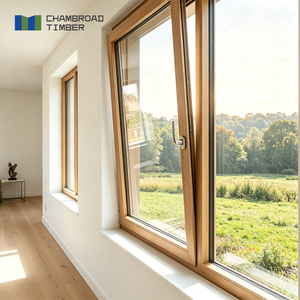
Aluminum Clad Wood Windows Triple Glazed Low-E Glass PHI Certified Energy Star Rated Soundproof
Uw ≤ 0.8 W/m²K
Triple Low-E
PHI Certified
Inquire Now
Engineered to meet rigorous EU standards (EN 14351-1), our profile systems combine Polyamide PA66 thermal breaks with multi-layer EPDM seals, optimized for Hungary's Pannonian continental climate.
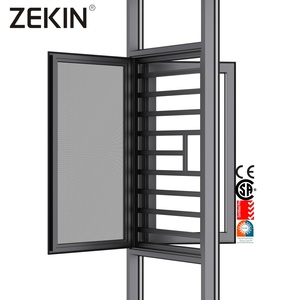
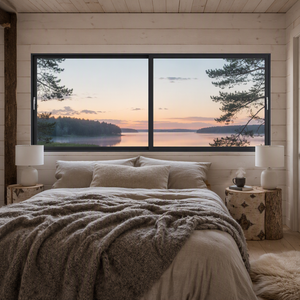
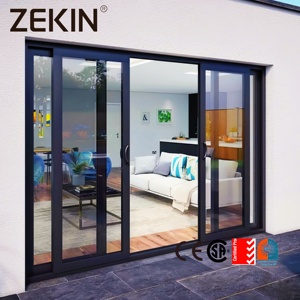
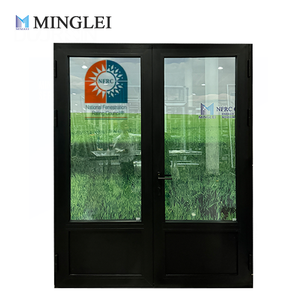
Hungary's architectural landscape is undergoing a decisive shift toward high-performance, energy-efficient building envelopes. Driven by EU climate neutrality mandates and the stringent Hungarian National Building Regulations (7/2006. (V. 24.) TNM rendelet and OTÉK guidelines), architects, general contractors, and residential developers across Budapest, Debrecen, Szeged, and the Lake Balaton region are moving away from traditional plastic/uPVC frames in favor of thermally broken architectural aluminium systems.
The Pannonian climate presents severe thermal swings—blistering summers reaching temperatures above +38°C combined with freezing winter blasts dropping down to -15°C. Uninsulated or improperly thermal-broken aluminium doors and windows act as thermal bridges, resulting in severe interior condensation, frame warping, and exorbitant HVAC operational costs. Supplying high-quality fenestration to Hungary requires a deep technical understanding of profile extrusion alloy chemistry, Polyamide (PA66 GF25) thermal barriers, Argon-filled Low-E insulated glass units (IGUs), and watertight sealing systems.
In accordance with updated Hungarian energy standards for Nearly Zero-Energy Buildings (nZEB / Közel nulla energiaigényű épületek), exterior windows and sliding patio doors installed in modern residential projects must achieve an overall thermal transmittance value of Uw ≤ 0.9–1.1 W/m²K, with passive house projects demanding Uw ≤ 0.8 W/m²K. Standard non-thermal break frames are restricted strictly to interior partitioning.
| System Parameter | Standard Market Specification | Zenic Export Grade (EU Compliance) | Impact on Hungarian Projects |
|---|---|---|---|
| Aluminium Alloy Billet | Recycled or mixed alloy scrap (1.2mm wall) | Virgin 6063-T5 Profile (1.4mm to 2.0mm wall thickness) | Prevents structural deflections under Pannonian high wind loads (up to 1200 Pa). |
| Thermal Barrier Material | PVC or low-grade nylon strips | Polyamide PA66 GF25 (24mm–34mm multi-chamber strips) | Ensures dimensional stability from -20°C to +80°C without shear cracking. |
| Glazing Configuration | Single or double toughened glass | Triple Glazed (6mm Low-E + 12Ar + 5mm + 12Ar + 6mm) Warm Edge | Achieves Ug values down to 0.5 W/m²K, cutting heat loss by up to 68%. |
| Weather & Water Sealing | Standard rubber strips | Continuous Co-Extruded EPDM Gaskets (3-stage barrier) | Prevents rainwater penetration under intense driving storms common in Central Europe. |
| Acoustic Rating (Rw) | 28 dB – 32 dB | 38 dB – 45 dB (Laminated Acoustic Glass options) | Crucial for Budapest inner-city residential and commercial conversions. |
From ultra-modern lakeside villas along Lake Balaton to high-density apartment block revitalizations in Budapest, our custom sliding and casement systems deliver optimal functional performance.
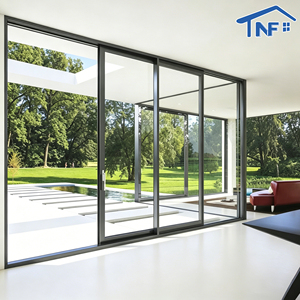
Waterfront developments require massive glazed elevations to maximize views, yet must withstand severe squalls and intense summer UV exposure. Our 110 Heavy-Duty Lift-and-Slide Patio Doors and Panoramic Slim-Frame Sliding Walls utilize anodized or Qualicoat-certified powder coatings to prevent corrosion. Multi-point locking pins and heavy-duty stainless steel tracks enable massive panels (up to 400kg per sash) to glide effortlessly while offering Class 4 air permeability tightness.
In Budapest's Districts V, VI, and VII, inner-city apartment renovations require strict compliance with streetscape aesthetics and acoustic dampening against heavy tram and automotive traffic. Our Aluminum Clad Wood Tilt-and-Turn Systems combine interior natural timber warmth with exterior weatherproof aluminum shielding. When paired with sound-dampening acoustic laminated triple glazing, sound insulation ratings exceed Rw = 42 dB, shielding urban occupants from metropolitan noise pollutions.
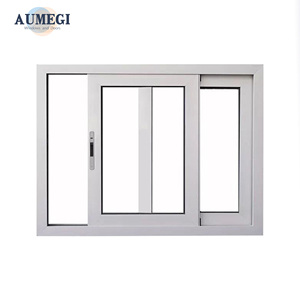
Suburban towns surrounding the capital—such as Budaörs, Szentendre, and Dunakeszi—are experiencing a surge in low-energy family home construction. Our 6063-T5 Multi-Chamber Thermal Break Casement Windows and Smart-Lift Sliding Systems are ideal for low-carbon homes. Featuring hidden drainage channels and integrated motorized sun-shading louvers, these systems help homeowner clients lower annual heating and cooling bills by up to 35%.
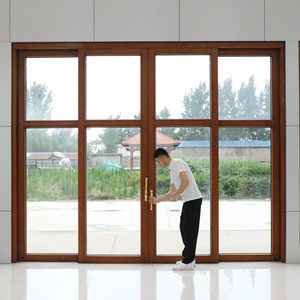
With major industrial hubs growing rapidly in Győr, Debrecen, and Miskolc, commercial office space requires robust curtain walls, automatic entrance doors, and heavy-duty sliding partitions. Our factory produces custom OEM/ODM commercial systems engineered for 200,000+ opening cycles, backed by CE certification and EN 12207 / EN 12208 structural test ratings.
The Hungarian architectural fenestration market is experiencing structural transformations influenced by economic factor shifts, energy prices, and European building policies:
Based in Foshan, China—the epicenter of global aluminum extrusion—our facility combines automated CNC processing with rigorous quality assurance for seamless export to Hungary.
Equipped with double-head precision CNC cutting saws, corner crimping machines, automatic glue injection systems, and dedicated glass assembly lines under one roof.
Fully certified and compliant with CE Marking (EN 14351-1), NFRC, AS2047, CSA, and ISO 9001 quality management systems. Official test documentation provided for project approvals.
We utilize strictly primary 6063-T5 alloy billets with structural wall thicknesses ranging from 1.4mm to 2.0mm, ensuring zero surface pitting and lifetime corrosion resistance.
Complete engineering flexibility: custom extrusions, tailored hardware cutouts, private label packaging, and full RAL surface finish matching (K7/K5 color chart).
Units are fully assembled or Knocked Down (KD), wrapped in multi-layer protective film, EPE foam edge guards, and packed in fumigation-free solid plywood crates for safe ocean freight to Csepel Free Port, Budapest.
Standard production turnaround from shop drawing approval is 15 to 25 days, allowing Hungarian project managers to maintain tight construction schedules.
Essential details on shipping logistics, custom duties, European standards compliance, and technical support.
Yes. All window and door systems intended for European export comply with the harmonized standard EN 14351-1 and carry valid CE marking. We provide complete Performance Declaration (DoP) documents, ITT test reports for air permeability, watertightness, wind load resistance, and thermal transmittance required by Hungarian building inspectors.
We handle export shipments via FOB Foshan/Shenzhen or CIF Koper (Slovenia) / Hamburg (Germany) / Rijeka (Croatia) ports, which serve as the primary ocean gateways for Hungary. From port arrival, containerized goods are moved via bonded railway/truck transport direct to your job site or warehouse in Hungary (e.g., Csepel Free Port, Budapest). Ocean transit time is typically 28–35 days.
Absolutely. Our factory engineering team converts your architectural CAD drawings (DWG/DXF/PDF) or window schedules into precise production shop drawings. We verify structural wind loads, opening dimensions, glass dead-loads, and hardware installation clearances before profile extrusion and cutting begin.
To achieve ultra-low U-values (Uw ≤ 0.8 W/m²K) suitable for passive houses or nZEB standards in Hungary, we specify multi-chamber profiles featuring 34mm Polyamide PA66 GF25 thermal break strips insulated with expanded polyolefin (PE) foam inserts, paired with triple-glazed units (Argon gas, Low-E coating, warm-edge composite spacers).
Our minimum order quantity starts from 50 square meters or 1x20GP container for project orders. For prospective wholesale distributors, fabricators, or showroom partners in Hungary, we provide corner profile sample kits, hardware display boxes, and scaled sample windows upon request.
The most widely specified finish in Central European architecture is Qualicoat-certified matte powder coating in Anthracite Grey (RAL 7016), Jet Black (RAL 9005), and White Aluminium (RAL 9006). Anodized finishes and timber grain heat-transfer options are also widely produced for lakeside villa projects.